
Ever get that uneasy feeling about your retirement plans, even after doing everything you were “supposed” to do? Traditional retirement is failing the middle class because it just doesn’t match the world we live in anymore. That old formula of working 40 years, stuffing money into a 401(k), and retiring at 65? It doesn’t guarantee comfort like it used to.
I see more people worrying about rising costs, taxes on their retirement accounts, and the very real fear of outliving their savings. These days, almost half of middle-class Americans expect to keep working past the “normal” retirement age. They’re juggling debt, bills, and just trying to keep up with life. If you feel like you’re doing everything right but retirement still feels out of reach, well, you’re definitely not alone.
Key Takeaways
- Traditional retirement planning doesn’t work for the middle class anymore.
- Modern risks and rising costs make retirement less secure.
- It’s time to rethink the old ways and find safer financial habits.
What Is Traditional Retirement Planning?

America’s classic retirement dream was built on decades at one job, a pension, and a set age to call it quits. Most of us grew up thinking this was the only real path to security.
History of Retirement in the United States
So when did retirement become “normal”? It really took off in the 20th century. The Social Security Act of 1935 set the tone, offering benefits and picking 65 as the magic number. Before that, people just worked as long as they could.
Back then, you worked for one company (or maybe a few) and retired in your 60s to collect a pension. The model exploded after World War II, when the middle class boomed and job stability was a given. It seemed obvious: work for decades, retire, collect your due.
But times changed. Now, the gap between that old vision and today’s reality feels huge.
How Retirement Was Designed for Previous Generations
Ever notice your parents or grandparents didn’t panic about retirement? The system supported them. Pension plans—those defined benefit plans—offered fixed monthly income after work. Employers paid most of the way, and many folks stuck with one company for life.
With a pension and Social Security, you got predictable cash flow for life. Saving extra was smart, but not essential. Most families didn’t worry about the stock market or running out of money. The plan was simple: reach retirement age, claim your benefits, maybe travel, and trust the checks would keep coming.
Now, I can’t help but wonder if that kind of security is even possible anymore. For my generation, it’s obvious we can’t count on those old promises. If you want a real shot at comfort, you’ve got to look beyond outdated methods.
Why Traditional Retirement Is Failing the Middle Class
I’ve watched so many hard-working people follow the rules and still come up short. The dream of a comfortable retirement keeps slipping further away.
Rising Cost of Living
How can middle-class families get ahead when everything—housing, healthcare, groceries—costs more, but paychecks barely budge? Every year, bills go up, but earnings don’t.
Even a decent salary doesn’t stretch far enough to cover both daily expenses and meaningful retirement savings. This squeeze forces tough choices. Should I pay the mortgage, save for college, or put more away for retirement?
Healthcare alone can eat up big chunks of your budget as you age. Prices keep climbing, and insurance doesn’t cover everything. That means dipping into savings more than you’d like.
It’s not just inflation that hurts. Hidden costs—taxes, repairs, emergencies—can knock you off course. Every dollar you spend today is one less for tomorrow.
Inadequate Retirement Savings
Why do so many diligent savers still worry about running out of money? Most middle-class adults just haven’t saved enough for decades of retirement.
Nearly half of middle-class workers expect to work past the traditional retirement age. Not because they want to, but because they have to. When I look at average 401(k) balances, I see numbers that barely cover a few years of basic costs.
Savings plans count on steady growth, but the market doesn’t always cooperate. Missing a few years of contributions—or tapping your account for emergencies—can make a huge difference. And since people are living longer, the money has to last even longer.
Social Security isn’t enough for most families. It’s a backup, not the whole plan. That’s why we need to face the gap between what we’ve saved and what we’ll really need.
Decline of Pensions and Guaranteed Income
Remember when pensions meant steady, guaranteed income? Those days are almost gone. Very few middle-class workers have pensions now.
Most of us depend on defined contribution plans, like 401(k)s. The risk shifted from employers to us. Instead of a promised monthly check, I have to guess how much I’ll need—and hope the market doesn’t tank. Outliving my savings is my problem now, not my old company’s.
This change means less certainty. My investments might not perform, and my money might not last. I have to plan for market drops, medical emergencies, and a longer lifespan—knowing one mistake could ruin everything.
A pension once brought peace of mind. Now, I have to build my own safety net, and for a lot of people, that net looks pretty thin.
The Role of Investments in Modern Retirement
These days, most people depend on personal investments like 401(k)s and IRAs instead of pensions. That means I’m responsible for my retirement—and the risks that come with it.
Shift from Pensions to 401(k)s and IRAs
I remember when retirement meant a steady pension check. Now, pensions are rare unless you work for the government. I rely on my 401(k) and IRA to build a nest egg. But am I really in control, or just stuck in a system that puts all the pressure on me?
Most companies offer 401(k)s now. I put in money, maybe get a match, and hope the market treats me kindly. It’s a far cry from the old days of predictable payments. The shift from pensions to 401(k)s has left most middle-class workers unprepared, with savings that rarely meet real retirement needs.
IRAs let me save more, but they depend on my choices—and luck. The responsibility for investment decisions lands right on my shoulders.
Investment Risks and Market Volatility
If my retirement savings are all in investments, is my future really secure? Market downturns can erase years of growth in one bad year. I’ve watched my balance swing wildly and wondered if I could still retire if things went south.
Stocks, mutual funds, and bonds can pay off, but there’s no guarantee. Unlike a pension, a 401(k) or IRA depends on my investment picks and the market’s mood. Many retirees worry most about outliving their savings, poor returns, and health costs.
Here’s what keeps me up at night:
Risk
Impact on Retirement
Market crashes
Sudden loss of portfolio value
Low returns
Not enough to cover expenses
Bad timing – retiring during downturn
Sequence risk
If I don’t manage these risks, my savings might not last. The freedom from pensions comes at a price—I carry the weight of market swings myself.
Challenges Facing Baby Boomers

Baby boomers face a retirement that’s nothing like what they expected. The rules changed, and now it’s not just about saving—it’s about surviving new challenges.
Longer Life Expectancy and Retirement Duration
Here’s a reality check: Many of us live longer than our parents did. That sounds great, but it means retirement lasts much longer. If I retire at 65, I could live to 85 or even 90. That’s 20 or 25 years—maybe more—without a paycheck.
The big problem? Most retirement plans weren’t built to pay out for decades. It’s not unusual for savings to run out, forcing people to downsize or even go back to work. The numbers don’t lie. Longer lives stretch expenses while savings shrink, and few plans keep up. The retirement savings gap is getting harder to ignore.
Healthcare and Unexpected Expenses
What keeps people up at night? The fear of health problems draining their savings. Health costs rise with age, and unexpected bills can hit hard. Even with Medicare, coverage has gaps—especially for long-term care or new treatments.
Let’s look at some costs that can blow up a retirement budget:
- Prescription drugs
- Hospital stays
- Out-of-pocket expenses
- Assisted living or home care
One illness or accident can wipe out years of savings. I’ve seen people spend their nest egg on medical care instead of family, travel, or hobbies. Financial security can look pretty fragile when just one health problem changes everything. Boomers are especially at risk, so planning for medical surprises isn’t optional—it’s a must.
The Impact of Social Security
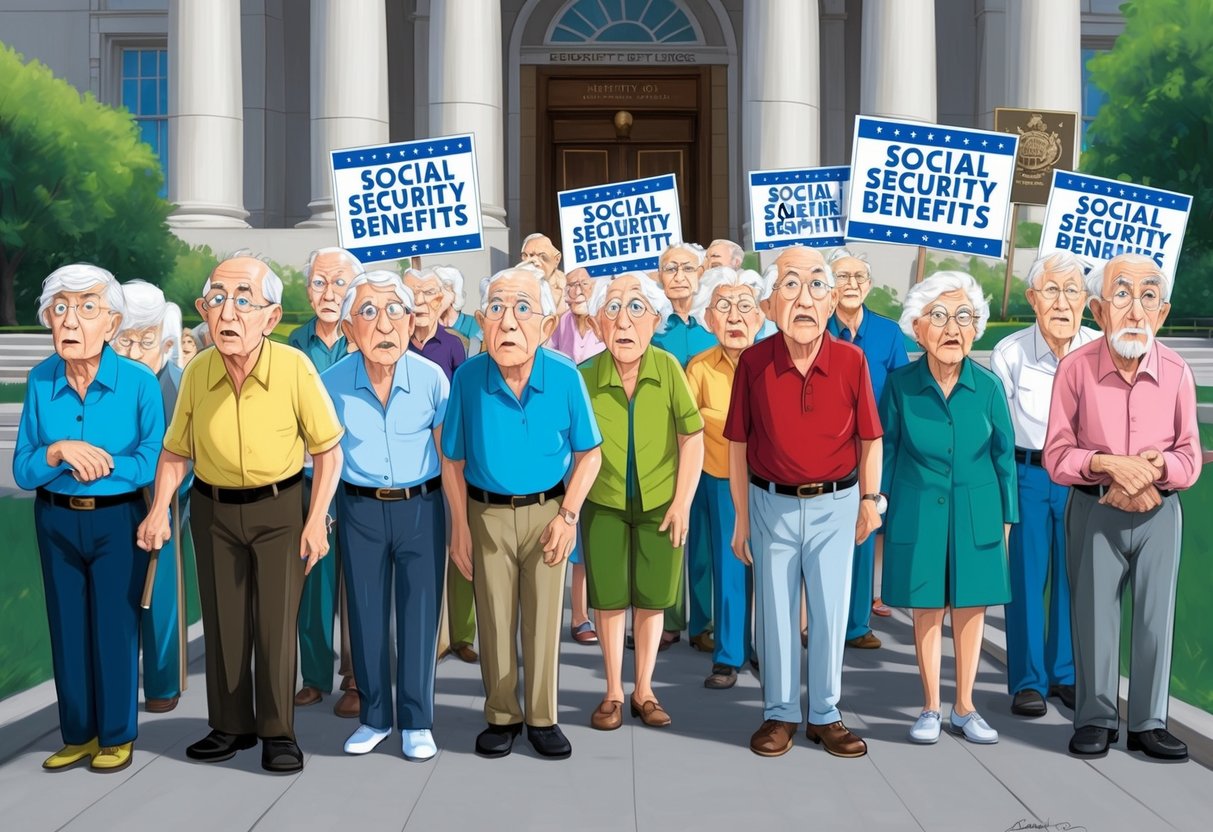
Social Security plays a huge role in my financial planning, but it’s not the whole answer. The rules keep shifting, and honestly, who knows what the future holds for the program?
Reliance on Social Security for Retirement Income
Remember when everyone told us, “Work hard, save, and Social Security will cover the rest”? That promise feels pretty shaky now. For a lot of middle-class families like mine, Social Security still forms the backbone of retirement income.
Recent data shows retirees lean on Social Security for at least half—or even most—of their income. Once you hit 65, these benefits often mean the difference between keeping up with bills or falling behind. I paid in for years, but those checks never really match the paycheck I was used to. They only handle part of my living costs, so any cut in benefits hits my quality of life right away. This government data really drives home how vital those monthly payments have become.
Here’s the tough truth: Social Security alone just isn’t enough. It was always meant as a safety net, not the whole plan. If you counted on it as the main pillar, it’s probably time to rethink your approach.
Uncertainty Around Future Benefits
Can I rely on Social Security being there when I need it most? That question keeps me up some nights. The program faces rising costs, and warnings about shortfalls never seem to stop.
Every new report or headline hints at shrinking benefits, a higher retirement age, or fresh rules to “fix” things. Lawmakers argue, but the answers stay fuzzy. I’ve watched the trust fund inch closer to depletion. People like me, who’ve paid in for decades, really don’t know what we’ll get out.
Retirement planning already feels tough, and the uncertainty just adds to the mess. In recent research, outliving savings and Social Security cuts top the list of middle-class fears. That’s not just nerves—that’s a real risk I have to face.
Tax Advantages and Limitations

A lot of middle-class families use tax-advantaged accounts for retirement. These can save money on taxes, but rules and limits often make them less helpful than you’d hope.
Tax-Deferred Retirement Accounts
When I look at my IRA or 401(k), I see some obvious perks. I put away pre-tax money and pay less in taxes now. The account grows tax-free each year. Over time, that really adds up.
But is it really enough? The tax breaks for retirement savings mostly help higher earners. Most middle-class workers can’t save enough to take full advantage of these tax shelters. Even if I max out my IRA, it’s not life-changing, and if I need the money early, I get hit with penalties. The tax advantages seem to favor those who already have extra cash to stash away.
Here are the key rules for IRAs and 401(k)s:
- Annual contribution limits
- 10% penalty for early withdrawals
- Required minimum distributions after age 73
Even with these drawbacks, a lot of us still count on these accounts. Sometimes it feels like following the rules just isn’t enough for real security.
Changing Tax Policies Affecting Retirement
Tax laws seem to change all the time. Every few years, something shifts. I can’t help but wonder: Will the strategies I use today still work down the road?
Over the years, Congress has changed how withdrawals get taxed. Roth IRAs and catch-up contributions for those over 50 offer some relief, but most tax breaks don’t reach the average earner. In fact, the current tax system puts the middle class at a disadvantage compared to wealthier savers.
If I pull out retirement funds early—even for an emergency—I get slapped with an extra 10% tax on top of regular income taxes. Planning mistakes or sudden needs can cost thousands in penalties. Sometimes it feels like the system punishes you for trying to plan for both security and flexibility.
When policymakers tweak rates or change deduction rules, the middle class usually feels squeezed, not helped. There’s not much room for mistakes, and even small missteps can turn into big setbacks.
Middle Class Retirement Outlook in the Digital Age

The digital age has totally changed how I approach retirement. I see more financial resources than ever, and new platforms make it easier to grab the reins. Still, just having access to info isn’t always enough.
Accessible Financial Information and Tools
A few decades ago, my options for managing money were pretty limited. Now, I can use hundreds of apps, calculators, and robo-advisors built for people like me. I can run different scenarios, tweak numbers, and see how a new savings plan or investment could change my retirement outlook.
But with all these accessible financial tools comes a new problem: information overload. So many voices out there claim to have the answer, and sometimes I end up more confused than confident. Still, these tools let me compare fees, try out different asset mixes, and make choices that actually fit my life. Having that kind of control is a huge shift from the old days of just trusting a broker.
Recent findings show that a lot of the middle class feels uncertain about retirement; nearly half of us expect to work past 65 because of financial pressure. That makes access to clear, easy-to-use tools even more important. Detailed reports like the retirement outlook for the American middle class show just how crucial these resources have become.
Role of Online Platforms Like Yahoo Finance
When I want to check on my investments or catch up on the latest market news, I usually start with platforms like Yahoo Finance.
Why? Well, these sites mix real-time data, expert takes, and easy account tracking—all in one spot.
Yahoo Finance isn’t just a stock ticker. I use it to track my 401(k) and keep an eye on news that could impact my portfolio.
Sometimes, I’ll dig into analyst recommendations before making my next move. Tools like this put market info right at my fingertips.
I can compare mutual funds, check out fresh performance charts, and read strategies actually aimed at middle class investors—without all the confusing jargon.
Does this solve every retirement worry I have? Not really.
Still, Yahoo and similar sites have let me make smarter, faster decisions, without waiting around for someone else’s schedule.
This kind of digital empowerment is honestly changing how I think about saving and how I deal with the ups and downs of retirement planning.