
Planning for retirement can feel overwhelming, but it doesn’t have to be. I’ve seen countless people transform their financial future with the right strategies.
By starting early and choosing smart investment options, you can build a comfortable nest egg for your golden years.

Have you ever wondered if your current savings plan is enough? Many folks I talk to worry they’re falling behind. The good news is, it’s never too late to take control.
Whether you’re just starting out or nearing retirement age, there are powerful tools at your disposal.
From maxing out your 401(k) to exploring dividend-paying stocks, the possibilities are endless.
But which strategies will work best for you? That’s what we’ll explore in this article. I’ll share some insider tips that could change the way you think about retirement investing.
Key Takeaways
- Start early and invest consistently to harness the power of compound growth
- Diversify your portfolio across different asset classes to balance risk and reward
- Regularly review and adjust your investment strategy as you approach retirement
prompts/006-doubleGlazingInquiry.prompt
Human: Hello! I’m interested in getting double glazing. Could you tell me about the benefits?
Understanding Retirement Goals and Time Horizon
When it comes to retirement planning, knowing your goals and time horizon is crucial. These factors shape your entire investment strategy and can mean the difference between a comfortable retirement and financial stress.
Setting Clear Financial Goals
What do you really want in retirement? It’s not just about having enough money to survive. I encourage you to think bigger.
Maybe you dream of traveling the world, starting a business, or helping your grandkids through college. Write these goals down and put dollar amounts next to them.
Be specific. Instead of “I want to travel,” try “I want to take two international trips per year, budgeting $10,000 per trip.” This clarity helps you create a targeted financial plan.
Remember, your goals might change over time. That’s okay. Review them annually and adjust as needed.
Assessing Your Time Horizon
How long until you retire? This is your time horizon, and it’s key to your investment strategy.
The longer your time horizon, the more risk you can generally afford to take.
If retirement is 20+ years away, you might focus on growth-oriented investments. But if you’re planning to retire in 5 years, you’ll likely want a more conservative approach.
Don’t forget to consider your life expectancy. Many people underestimate how long they’ll live in retirement. Plan for a retirement that could last 30 years or more.
The Role of Risk Tolerance in Retirement Planning
How do you feel about market ups and downs? Your risk tolerance plays a big part in your retirement strategy.
It’s not just about how much risk you can handle financially, but emotionally too.
If market swings keep you up at night, a more conservative approach might be best. But if you can stomach some volatility for potentially higher returns, you might lean towards a more aggressive strategy.
Remember, your risk tolerance may change as you get closer to retirement. It’s smart to reassess regularly and adjust your investment mix accordingly.
Types of Retirement Accounts and How They Work
Retirement accounts are powerful tools for building wealth and securing your financial future. Let’s explore some key options that can help you take control of your retirement savings and potentially reduce your tax burden.
Comparing 401(k)s and 403(b)s
Have you ever wondered about the differences between 401(k)s and 403(b)s? Both are employer-sponsored retirement plans, but they serve different sectors. 401(k)s are typically offered by for-profit companies, while 403(b)s are for public schools, nonprofits, and religious organizations.
Here’s a quick comparison:
- Contribution limits: Both have the same annual limit ($22,500 for 2023)
- Employer matching: Available in both, but more common in 401(k)s
- Investment options: 401(k)s often offer more choices
I’ve found that 403(b)s sometimes have lower fees, which can boost your long-term returns. Remember, it’s not just about how much you save, but how efficiently you grow your money.
The Importance of IRAs
IRAs, or Individual Retirement Accounts, are my go-to recommendation for many investors. Why? They offer flexibility and control that employer-sponsored plans can’t match.
There are two main types:
- Traditional IRA: Contributions are tax-deductible now, but withdrawals are taxed in retirement.
- Roth IRA: You pay taxes on contributions now, but enjoy tax-free growth and withdrawals.
Which one is right for you? It depends on your current tax bracket and future expectations.
I often suggest having both to create tax diversification in retirement.
Understanding Tax-Advantaged Accounts
Tax-advantaged accounts are like secret weapons in your retirement arsenal. They allow your money to grow faster by deferring or eliminating taxes on investment gains.
Here’s how they can supercharge your savings:
- Tax-deferred growth: Your investments compound without annual tax drags
- Potential for lower tax rates in retirement
- Some accounts offer tax-free withdrawals
But be careful! Each account type has its own rules and limitations. It’s crucial to understand these to avoid penalties and maximize benefits.
Investment Options for Your Retirement Portfolio

When planning for retirement, it’s crucial to choose the right mix of investments. I’ll show you some key options to consider for your portfolio that can help secure your financial future.
Diversifying with Stocks and Bonds
Stocks and bonds are the foundation of many retirement portfolios. Stocks offer growth potential, while bonds provide stability. I recommend a balanced approach.
Stocks can be exciting. They represent ownership in companies and can grow significantly over time. But they come with risks. The stock market can be volatile, especially in the short term.
Bonds, on the other hand, are like IOUs. They’re generally safer but offer lower returns. Government and corporate bonds can provide steady income in retirement.
How much should you have in each? It depends on your age and risk tolerance.
A common rule is to subtract your age from 110 to get your stock percentage. The rest goes to bonds. But everyone’s situation is unique.
The Benefits of Mutual Funds and Index Funds
Mutual funds and index funds are great tools for retirement investing. They offer instant diversification and professional management.
Mutual funds pool money from many investors to buy a variety of stocks or bonds. They’re actively managed by professionals who try to beat the market.
Index funds, however, simply track a market index like the S&P 500. They’re passively managed and usually have lower fees.
Both types of funds can be excellent choices for retirement portfolios. They spread risk and make investing easier. You don’t need to pick individual stocks or bonds.
I particularly like index funds for their low costs and consistent performance. They often outperform actively managed funds over the long term.
Considering Annuities for Stable Income
Annuities can be a valuable addition to your retirement strategy. They provide guaranteed income for life, which can be very reassuring.
An annuity is a contract with an insurance company. You pay a lump sum or make regular payments. In return, you get a steady stream of income in retirement.
There are different types of annuities:
- Fixed annuities offer a set payout
- Variable annuities have payouts tied to investment performance
- Indexed annuities are linked to a market index
Annuities can provide a steady stream of retirement income, similar to a pension. This can help cover your basic expenses in retirement.
But annuities can be complex and have fees. It’s important to understand the terms before buying one. Consider talking to a financial advisor to see if annuities fit your retirement plan.
Effective Asset Allocation Strategies

Creating the right mix of investments is key to a successful retirement plan. It’s about finding the sweet spot between growing your money and keeping it safe. Let’s explore some smart ways to do this.
Balancing Growth and Security
How do we strike the right balance between making our money grow and keeping it safe? It’s not as hard as you might think. I’ve found that diversification is the secret sauce.
By spreading your money across different types of investments, you can aim for growth while managing risk.
Here’s a simple breakdown:
- Stocks: For growth potential
- Bonds: For stability
- Cash: For emergencies and short-term needs
The trick is to find the right mix for you. Maybe you’re okay with more risk for higher returns. Or perhaps you prefer playing it safer. Either way, the goal is to create a portfolio that helps you sleep at night while still working towards your retirement dreams.
Adjusting Allocation with Age
As we get older, our investment needs change. It’s like how our taste in music evolves over time.
When we’re young, we might be all about that risky rock and roll. But as we age, we might appreciate some smoother jazz.
The same goes for our investments. When we’re younger, we can afford to take more risks. We have time to recover from market dips.
But as retirement gets closer, it’s smart to dial back on risk. Why? Because we have less time to bounce back from big losses.
A common rule of thumb is to subtract your age from 100. That’s the percentage you might consider putting in stocks. So if you’re 40, you might aim for 60% in stocks. But remember, this is just a starting point. Your personal situation might call for a different approach.
Utilizing Target Date Funds
Have you ever wished for an investment that automatically adjusts as you get older? Well, that’s exactly what target date funds do. They’re like a personal chef for your retirement portfolio, adjusting the recipe as you age.
Here’s how they work:
- You pick a fund with a date close to when you plan to retire
- The fund starts out more aggressive, with more stocks
- As you get closer to retirement, it gradually becomes more conservative
These funds can be a great option if you want a hands-off approach to investing. They do the rebalancing for you, so you don’t have to worry about adjusting your portfolio every year. But remember, one size doesn’t fit all.
It’s always a good idea to check if the fund’s strategy aligns with your personal goals and risk tolerance.
Maximizing Contributions and Compounding
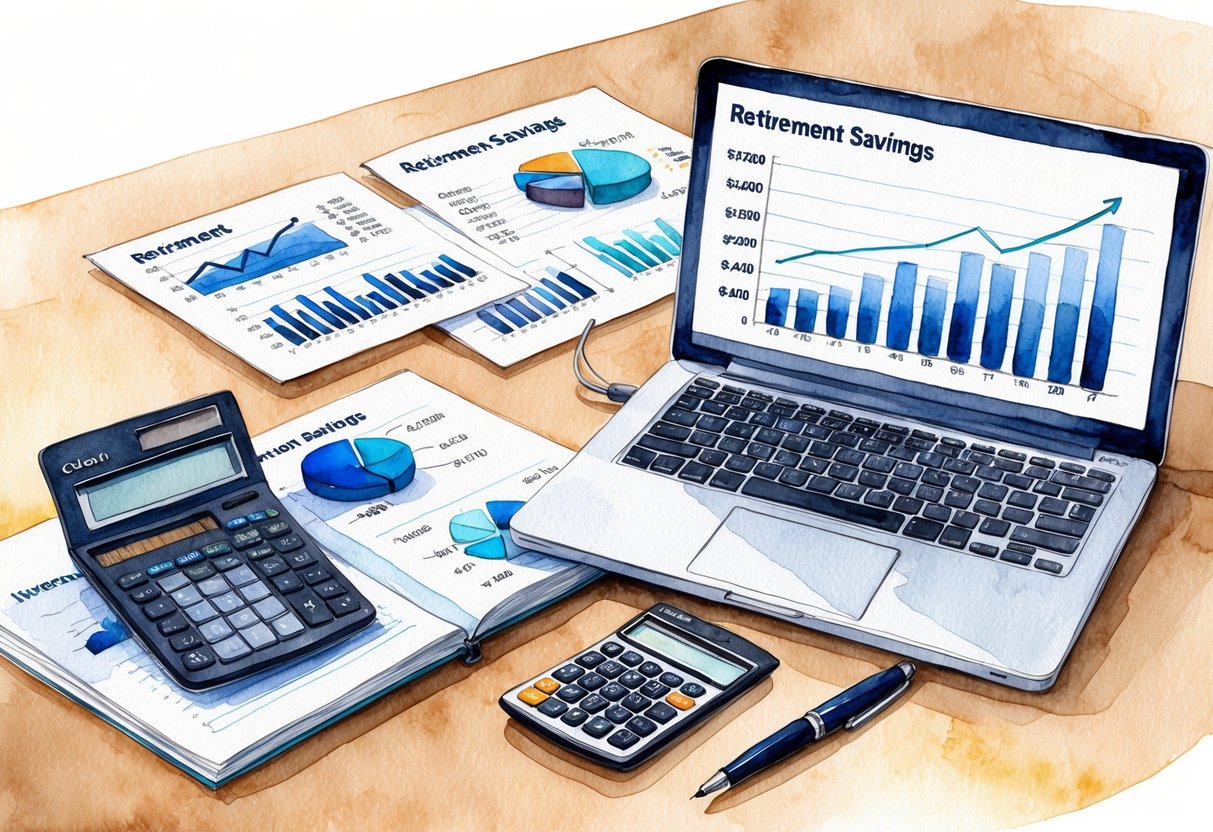
Want to turbocharge your retirement savings? Let’s explore how to make the most of your contributions and harness the incredible power of compounding. These strategies can help you build a robust nest egg for your golden years.
Leveraging Employer Match Programs
Are you leaving free money on the table? Many companies offer 401(k) match programs, but not everyone takes full advantage. I always tell my clients: if your employer offers a match, grab it with both hands!
Here’s how it typically works:
- Your company might match 50% of your contributions up to 6% of your salary
- If you earn $100,000 and contribute 6% ($6,000), your employer adds $3,000
- That’s an instant 50% return on your investment!
Don’t miss out on this opportunity. I’ve seen too many people regret not maximizing their employer match earlier in their careers. It’s one of the easiest ways to boost your retirement savings.
Understanding the Power of Compounding
Ever heard the saying “make your money work for you”? That’s exactly what compounding does. It’s like a snowball rolling downhill, getting bigger and bigger over time.
Here’s a simple example:
- You invest $10,000 and earn 7% annually
- After 10 years, you’ll have about $19,672
- After 30 years, it grows to $76,123
The key is to start early and be consistent. Even small contributions can grow significantly over time.
I always encourage my readers to visualize their money multiplying year after year. It’s a powerful motivator to keep investing.
Contribution Limits and Strategies
Did you know there are limits to how much you can contribute to retirement accounts each year? For 2024, you can put up to $23,000 into your 401(k). If you’re 50 or older, you can add an extra $7,500 as a catch-up contribution.
But what if you’ve maxed out your 401(k)? Don’t stop there! Consider these options:
- Traditional or Roth IRA (subject to income limits)
- Health Savings Account (HSA) if you have a high-deductible health plan
- Taxable brokerage accounts for additional investments
Remember, it’s not just about how much you contribute, but also how you invest those contributions. Diversification is key.
Are you spreading your investments across different asset classes to balance risk and potential returns?
Tax Considerations in Retirement Investing

Tax planning can make or break your retirement strategy. Let’s explore some key ways to optimize your taxes and grow your wealth for the long haul.
Navigating Retirement Tax Advantages
As I’ve learned over the years, smart tax moves can supercharge your retirement savings. Have you considered maxing out your 401(k) or traditional IRA? These accounts let you deduct contributions now and defer taxes until withdrawal. It’s like getting an instant return on your investment.
But don’t stop there. If your employer offers a match, that’s free money on the table. I always tell people - grab every penny of that match. It’s one of the easiest ways to boost your nest egg.
What about after-tax contributions? Some plans allow these, which can be a backdoor to more tax-advantaged saving. Be sure to check if your plan offers this option.
Roth Options and Tax-Free Growth
Now, let’s talk about my favorite retirement account - the Roth IRA. Why do I love it? Simple - tax-free growth and withdrawals. You pay taxes upfront, but then your money grows tax-free for decades. It’s a beautiful thing.
But what if you make too much to contribute directly? Don’t worry, there’s a workaround called a backdoor Roth conversion. It takes some extra steps, but the long-term tax savings can be huge.
For those still working, don’t overlook Roth 401(k)s if your employer offers them. They combine higher contribution limits with Roth tax benefits. It’s a powerful combo for building tax-free wealth.
Required Minimum Distributions and Their Impacts
Here’s a retirement curveball many folks don’t see coming - Required Minimum Distributions (RMDs). Once you hit 72, the IRS forces you to start withdrawing from most retirement accounts. And yes, you’ll owe taxes on that money.
RMDs can push you into a higher tax bracket, affecting your Social Security benefits and Medicare premiums. It’s a domino effect you need to plan for.
One strategy? Consider Roth conversions in lower-income years before RMDs kick in. You’ll pay some taxes now, but potentially save a bundle later. It’s all about playing the long game with your money.
Remember, Roth IRAs don’t have RMDs during your lifetime. That flexibility can be a game-changer for your retirement tax planning.
Planning for Healthcare in Retirement

Healthcare costs can take a big bite out of your retirement savings if you’re not prepared. Let’s look at some smart ways to plan ahead and protect your nest egg from unexpected medical expenses.
Understanding Medicare and Medicaid
Medicare is a federal health insurance program for people 65 and older. It covers many medical needs, but not everything. I always tell my clients to learn about the different parts of Medicare:
- Part A: Hospital insurance
- Part B: Medical insurance
- Part C: Medicare Advantage plans
- Part D: Prescription drug coverage
Medicaid is a joint federal and state program for people with limited income. It can help cover costs that Medicare doesn’t.
Remember, Medicare isn’t free. You’ll still have premiums, deductibles, and copays. I’ve seen too many retirees caught off guard by these expenses.
Utilizing Health Savings Accounts (HSAs)
Want a powerful tool for healthcare costs? Look no further than a Health Savings Account. HSAs offer triple tax benefits:
- Contributions are tax-deductible
- Money grows tax-free
- Withdrawals for qualified medical expenses are tax-free
You can contribute to an HSA if you have a high-deductible health plan. The best part? Unlike flexible spending accounts, HSAs don’t have a “use it or lose it” rule. Unused funds roll over year after year.
I always advise maxing out your HSA contributions if you can. It’s like a secret weapon for your retirement healthcare strategy.
Estimating Healthcare Costs
How much should you save for healthcare in retirement? It’s more than you might think. A 65-year-old retired couple might need $315,000 just for medical expenses in retirement.
What drives these costs? Several factors:
- Inflation in healthcare prices
- Longer life expectancies
- Chronic conditions that develop with age
Don’t forget about long-term care. It’s not covered by Medicare and can be extremely expensive. Have you considered long-term care insurance?
I always tell my clients to start planning early. The sooner you start saving, the better prepared you’ll be for whatever healthcare needs come your way in retirement.
Strategies for Social Security and Pensions

Social Security and pensions are key pieces of the retirement puzzle. Getting the most out of these income sources can make a big difference in your financial security. Let’s look at how to optimize these benefits.
Deciding When to Collect Social Security
When should you start taking Social Security? It’s a question I get asked a lot. The answer isn’t always simple. You can start as early as 62, but your benefits will be reduced. Waiting until your full retirement age (66-67 for most people) gives you 100% of your benefit.
But here’s where it gets interesting: for every year you delay past full retirement age, your benefit grows by 8%. That’s a guaranteed return you won’t find many places! This increase stops at age 70.
So, what’s the best move? It depends on your health, other income sources, and financial needs. If you can afford to wait, it often pays off. But if you need the money sooner, taking it earlier might make sense.
Integrating Pension Income Effectively
Got a pension? Lucky you! But how do you make it work best with your other retirement income? First, understand your options. Lump sum or monthly payments? Survivor benefits?
I always suggest looking at your pension as part of your overall income strategy. It can provide a stable base, allowing you to be more aggressive with other investments.
Remember, pensions often don’t adjust for inflation. So, you might need other investments to keep up with rising costs. Can you use your pension to cover fixed expenses and invest other savings for growth?
Also, consider the tax implications. Pension income is usually taxable. How will this affect your overall tax situation in retirement?
Navigating Retirement Account Withdrawals

Retirement account withdrawals can make or break your financial future. Let’s explore some key strategies to help you make the most of your hard-earned savings.
Understanding the 4% Rule
Have you heard of the 4% rule? It’s a popular guideline for retirement withdrawals. The idea is simple: you withdraw 4% of your portfolio in your first year of retirement, then adjust that amount for inflation each year after.
For example, if I have a $1 million nest egg, I’d start by taking out $40,000 in year one. If inflation is 2% the next year, I’d bump that up to $40,800.
But is this rule foolproof? Not quite. Market conditions and personal circumstances can impact its effectiveness. That’s why it’s crucial to be flexible and adjust as needed.
Strategies for Withdrawal Rate Management
Managing your withdrawal rate is key to making your money last.
I’ve found that being adaptable is crucial. Why? Because life throws curveballs, and markets aren’t always predictable.
One strategy I like is the bucket approach.
It involves dividing your savings into short-term, medium-term, and long-term buckets. This can help you weather market volatility while ensuring you have cash on hand for immediate needs.
Another tip: consider your required minimum distributions (RMDs).
These kick in at age 73 for many retirement accounts. Planning ahead can help you avoid penalties and optimize your tax situation.
Remember, there’s no one-size-fits-all solution.
Your withdrawal strategy should align with your unique financial situation and goals.
Advanced Investment Strategies

Ready to take your retirement investing to the next level?
Let’s explore some powerful strategies that can supercharge your portfolio. These approaches go beyond the basics, offering ways to potentially boost returns and diversify your holdings.
Investing in Dividend Stocks
Dividend stocks can be a great addition to a retirement portfolio.
Why? They offer regular income and the potential for growth. I look for companies with a history of increasing dividends over time. This can help protect against inflation.
Some top dividend-paying sectors include:
- Utilities
- Consumer staples
- Healthcare
Remember, not all high-yield stocks are created equal.
I focus on companies with sustainable payout ratios and strong financials. This helps ensure the dividends keep flowing.
Exploring Growth Stocks and ETFs
Growth stocks and ETFs can add a boost to your retirement savings. These investments aim for capital appreciation rather than immediate income. Think of companies revolutionizing industries or entire sectors poised for expansion.
When considering growth stocks, I ask:
- Does the company have a competitive advantage?
- Is there room for market expansion?
- How strong is the management team?
ETFs offer a way to invest in a basket of growth stocks, spreading risk. This can be especially useful for sectors you’re less familiar with. Technology and healthcare are often prime hunting grounds for growth opportunities.
Considering Cryptocurrencies in Retirement
Cryptocurrencies have emerged as a controversial but potentially lucrative investment option. Should they have a place in your retirement portfolio? It’s a personal decision, but here’s my take.
Crypto can offer:
- Portfolio diversification
- Potential for high returns
- Hedge against inflation
But beware - it comes with significant risks.
Volatility is extreme, and regulatory concerns loom. If you decide to invest, I suggest keeping it to a small portion of your overall portfolio - no more than 5%.
Research is crucial.
Focus on established cryptocurrencies and consider using reputable exchanges. Remember, the crypto world moves fast. Stay informed and be prepared for rapid changes in this space.
Utilizing Technology and Financial Advisors

Technology has changed the game in retirement planning. I’ve seen how it can make our lives easier and our investments smarter. But don’t forget the human touch - a good financial advisor can be worth their weight in gold.
Benefits of Robo-Advisors in Retirement Planning
Robo-advisors are shaking up retirement planning. These digital platforms use algorithms to manage our investments. They’re cheap, easy to use, and available 24/7.
I’m impressed by how robo-advisors can automatically adjust our asset allocation as we get closer to retirement. It’s like having a tireless investment manager working for us round the clock.
But here’s the kicker - some robo-advisors offer tax-loss harvesting. This can save us money on taxes, leaving more cash in our pockets for retirement.
Are robo-advisors perfect? No.
They can’t handle complex financial situations or provide personalized advice. But for many of us, they’re a great starting point.
Choosing the Right Financial Advisor
A good financial advisor is like a trusted partner in our retirement journey. They bring expertise, personalized advice, and a human touch that algorithms can’t match.
But how do we find the right one? I always say, look for someone who:
- Has relevant certifications (CFP, CFA, etc.)
- Understands our unique financial situation
- Communicates clearly and regularly
- Has a fee structure we’re comfortable with
Some advisors are now using AI to enhance their services. This can lead to more accurate forecasts and optimized strategies. It’s like getting the best of both worlds - human wisdom backed by cutting-edge technology.
Remember, a financial advisor should be someone we trust.
Don’t be afraid to ask tough questions or switch if we’re not satisfied. After all, it’s our retirement at stake.
Preparing for the Unexpected

Life can throw curveballs, even during retirement. Smart planning means being ready for anything. Let’s explore two key strategies to protect your financial future.
The Necessity of an Emergency Fund
Have you ever wondered how you’d handle a sudden expense in retirement? That’s where an emergency fund comes in.
I always tell my clients to aim for 3-6 months of living expenses in easily accessible savings.
Why is this so crucial? Think about unexpected home repairs or medical bills. Without a safety net, you might be forced to tap into your retirement accounts early, potentially facing penalties and derailing your long-term plans.
Here’s a quick breakdown of where to keep your emergency fund:
- High-yield savings account
- Money market account
- Short-term CDs (laddered for better access)
Remember, inflation can eat away at your savings.
I recommend reviewing and adjusting your emergency fund annually to maintain its buying power.
Estate Planning Considerations
What happens to your hard-earned wealth when you’re gone? Estate planning isn’t just for the ultra-rich - it’s for anyone who wants to protect their legacy and loved ones.
Key elements of a solid estate plan include:
- A will or living trust
- Power of attorney
- Healthcare directive
- Beneficiary designations
Don’t make the mistake of putting this off.
I’ve seen families torn apart by lack of clear instructions. Regular reviews are essential, especially after major life events like marriages, divorces, or births.
Consider working with an estate planning professional to navigate complex tax laws and ensure your wishes are legally binding. It’s an investment in peace of mind for you and your family.
Staying Informed and Adjusting Strategies

Keeping up with the ever-changing financial landscape is crucial for retirement success. I’ll share some key ways to stay on top of market trends and ensure your investments remain aligned with your goals.
Keeping Abreast of Investment and Market Trends
Are you feeling overwhelmed by the constant flow of financial news? Don’t worry, I’ve got you covered.
Start by focusing on reliable sources like Fidelity Viewpoints for in-depth market analysis. I recommend setting aside 15-30 minutes daily to scan financial headlines and updates.
Pay attention to:
- Economic indicators
- Interest rate changes
- Sector performance
- Global events affecting markets
Remember, knowledge is power.
The more informed you are, the better equipped you’ll be to make smart investment decisions.
Periodic Review and Rebalancing of Investments
When was the last time you took a close look at your portfolio? If you can’t remember, it’s time for a review.
I suggest checking your investments at least quarterly.
Here’s what to do:
- Compare current asset allocation to your target
- Assess performance of individual investments
- Rebalance if needed (usually when allocations are off by 5% or more)
Sticking to your plan is key, but don’t be afraid to make adjustments.
As you age, you might want to shift towards more conservative investments. Remember, your strategy should evolve with your changing needs and goals.