
Diving into the world of passive income can feel like stepping into a whirlwind of opportunity.
Have you ever thought about how technology, specifically chatbots, could be the game-changer in managing lead generation for your business?
By automating customer interactions, chatbots can streamline lead generation and provide consistent, ongoing engagement. This creates a steady flow of potential customers without constant manual input.

I discovered that many businesses are leveraging this technology to not only save time but also to increase their profitability.
Imagine a tool that works tirelessly 24/7, handling inquiries, guiding potential clients through the sales funnel, and nurturing leads until they are ready to engage with your main offerings. These capabilities are exactly what chatbots bring to the table.
If you’re wondering how you can implement this in your own business, you’re in the right place.
The opportunities with chatbots are endless, and uncovering these can lead to significant improvements in your business’s passive income model.
Let’s explore how this technology can enhance your financial strategy.
Key Takeaways
- Chatbots automate lead generation efficiently.
- They nurture leads through ongoing engagements.
- Implementing them enhances stability in passive income.
Understanding the Role of Chatbots in Lead Generation

Have you ever wondered how businesses today are capturing and managing leads so effectively? Chatbots have become a game changer in the world of lead generation.
They can automate processes, qualify potential leads, and even engage with customers directly on websites or social platforms.
The Basics of Lead Generation with Chatbots
Lead generation involves identifying potential customers and guiding them into your sales funnel. Chatbots are perfectly designed for this task.
How do they work in this context? They initiate conversations with website visitors or social media followers.
Acting as the first point of contact, chatbots can answer inquiries, provide product details, and guide users through your services.
Chatbots offer 24/7 availability, which is crucial for reaching a global audience. They don’t tire, and they never need a break. This means capturing leads any time, any day.
It’s like having an employee who works tirelessly for you. Additionally, they can handle multiple conversations simultaneously, ensuring that no potential lead slips through the cracks.
How Chatbots Automate the Lead Capture Process
Chatbots shine in the lead capture process by collecting necessary information automatically. They can prompt users to fill out forms or answer questions directly through the chat interface.
Picture this: a user visits your site, and instead of leaving without interaction, a chatbot starts a conversation.
These automated tools can ask for names, contact information, interests, or any details relevant to your business. The beauty of it is that it feels natural and interactive, which increases the likelihood of engagement.
Imagine the efficiency: while you sleep, your chatbot works to grow your list of potential customers, capturing their details seamlessly.
Methods of Lead Qualification via Chatbots
Not all leads are equal, right? Some are ready to make a purchase, while others might just be browsing.
Chatbots can help qualify these leads by evaluating their responses and behavior. For instance, a chatbot might ask probing questions to gauge a user’s level of interest or readiness to buy.
Moreover, they can use information provided in conversations to categorize leads into different segments.
Wouldn’t it be great to focus on those who are most likely to convert? This process helps in nurturing the right leads, ensuring your efforts are invested wisely.
Chatbot Platforms and Their Features for Lead Management
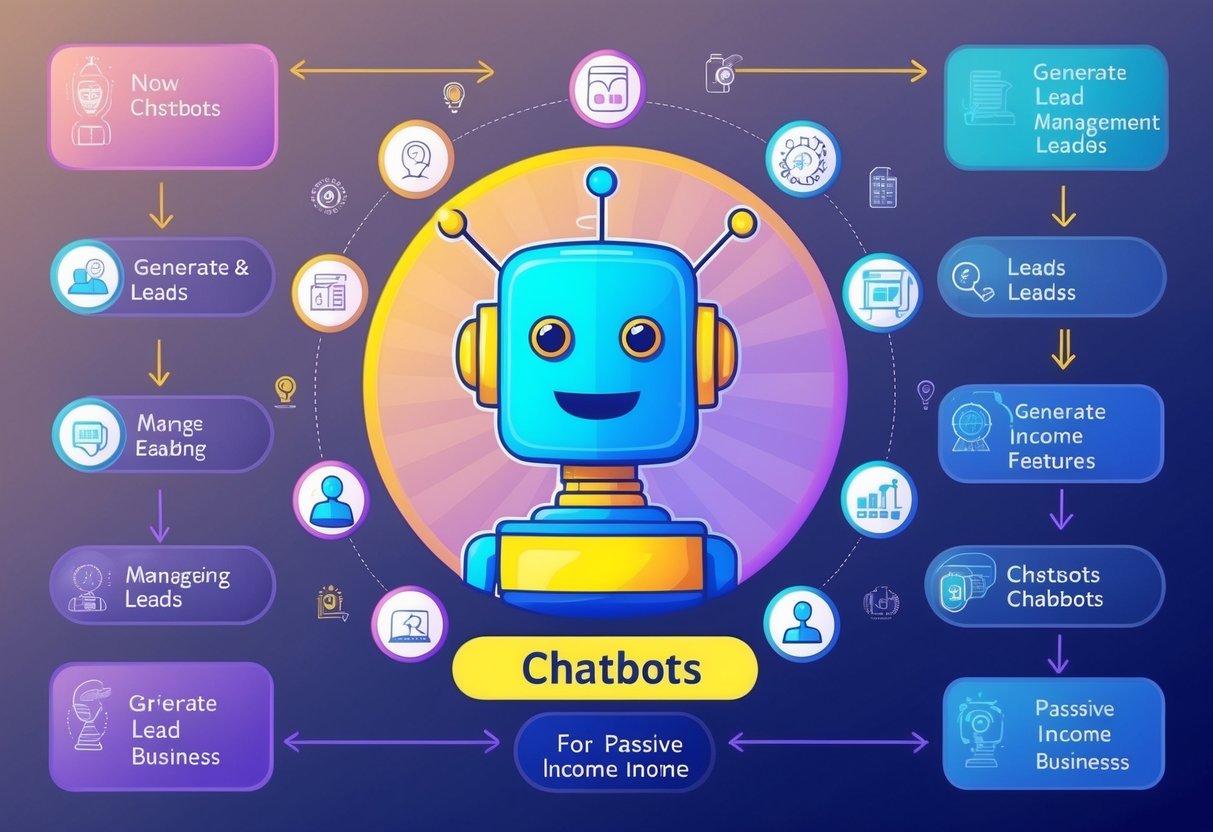
In the world of passive income businesses, chatbots can play a crucial role in lead generation and management. Selecting the right platform and understanding its features can make a big difference in how efficiently leads are handled.
Comparing Chatbot Platforms for Passive Income Ventures
When diving into chatbot platforms, what key aspects should we pay attention to?
First, consider the ease of use. Platforms like BotPenguin offer a user-friendly drag-and-drop interface, making it simple for those without coding skills to create effective chatbots.
Scalability is another important feature. Some platforms can handle thousands of leads at once, which is vital for businesses planning to grow. Integration capabilities with existing tools like CRM systems also streamline processes, making management more efficient.
You might wonder if cost is a factor. Indeed, platforms vary in price, and it’s essential to balance cost with the features you get. Some platforms have custom pricing, which allows for flexibility in planning your business finances.
Key Features to Look for in Chatbot Platforms
What should you look for when selecting a chatbot platform?
Natural language processing is a crucial feature. It allows chatbots to understand and respond to customer queries more effectively, enhancing the user experience. This can lead to higher satisfaction and conversion rates.
Customization is equally important. Platforms that permit personalized message sequences help tailor interactions to specific customer needs.
Additionally, look for platforms that offer robust analytics. These tools provide valuable insights into lead behaviors, helping refine strategies and ultimately improve lead conversion.
Remember, the right features will align with your business goals, streamline operations, and enable you to manage leads efficiently.
The Chatbot-Enabled Sales Funnel
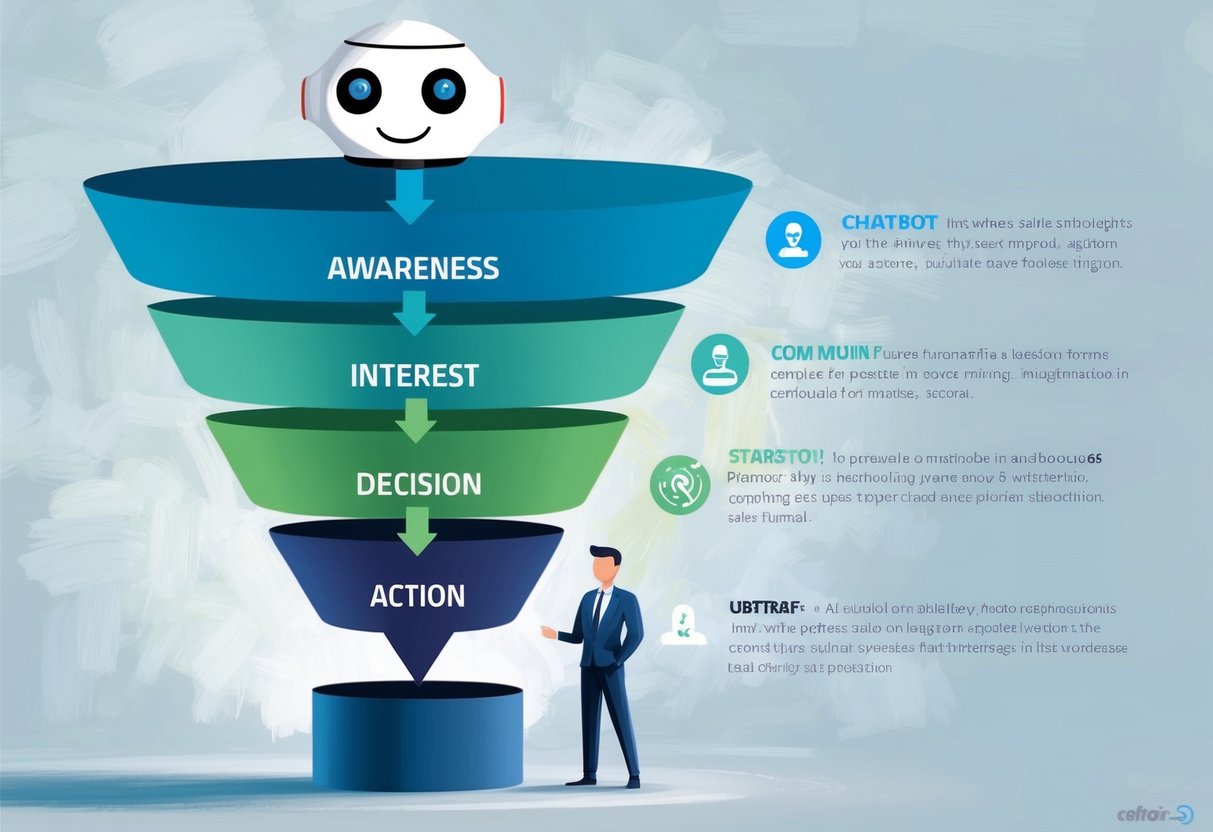
Chatbots can significantly enhance a sales funnel by automating interactions, qualifying prospects, and boosting conversion rates. By designing efficient workflows, these digital tools guide users from initial interest to final purchase, enabling better customer acquisition at every stage of the funnel.
Designing a Chatbot Workflow for Sales Funnels
When I’m creating a chatbot workflow, I focus on mapping out the entire customer journey. This involves identifying every touchpoint where potential customers might interact with the bot.
Awareness, interest, decision, and action stages must be aligned with the chatbot’s capabilities.
I consider what questions the bot needs to ask or what information it needs to gather. List out key objectives like identifying user preferences or highlighting special promotions.
For example, chatbots can ask users about their interests or budget constraints. This interaction tailors the customer experience, ensuring each prospect gets relevant information.
From Prospects to Customers: Chatbots in Action
What role do chatbots play in moving prospects through the funnel?
They’re not just answering questions. They guide and nurture, making recommendations based on user responses.
Imagine a prospect browsing for information. A chatbot steps in, offering tailored options or upselling related products.
Consider their 24/7 availability. Unlike human agents, chatbots are always on. This means they can respond to inquiries at any time, nudging a prospect toward a decision even when I’m asleep.
They’re proactive too. If a user seems uncertain, a chatbot can suggest features or address common concerns, transforming curiosity into commitment.
Analyzing Conversion Rates with Chatbot Interactions
Evaluating chatbot performance is crucial. How do I know if it’s effective?
I analyze conversion rates. This means looking at how many users transition from one funnel stage to the next after interacting with the chatbot.
Data can reveal which parts of the interaction boost sales, helping me refine future approaches.
I might see patterns in what types of interactions lead to higher sales or identify drop-off points where prospects lose interest.
Keeping track of this information informs adjustments in the strategy, ensuring the chatbot continues to effectively guide users and improve the overall efficiency of the sales funnel.
Lead Nurturing and Follow-Up with Chatbots

Converting leads into loyal customers involves more than just initial contact. This is where chatbots come into play, ensuring that potential clients remain engaged and interested in your services through strategic follow-ups and personalized communication.
Strategies for Maintaining Engagement with Leads
How do you keep leads interested without pestering them?
One effective method is leveraging chatbots to maintain consistent and meaningful engagement.
Chatbots can send timely messages that remind your leads about the value your business offers, like a special discount or a personalized feature.
Using chatbots, I can automate messages to check in with leads periodically. This might include educational content or tips related to my services.
For example, offering insights into new products or updates keeps them informed and engaged. I find it useful to maintain a balance between helpful information and promotional content.
A key strategy involves setting up workflows that guide leads through their customer journey. Each message should feel relevant to their stage in the decision-making process.
I believe engagement should be consistent but never overwhelming, allowing leads to control their interaction pace.
Personalization and Timing in Chatbot Communications
Timing and personalization are crucial in ensuring your messages hit the mark.
Imagine a time when a personalized message arrived just when you needed it. That’s the power of a well-timed follow-up.
Using data from previous interactions, chatbots can personalize messages to address specific interests or needs.
I often use chatbots to send messages during optimal engagement times for different segments of my audience. This boosts the chances of leads actually noticing and engaging with the message.
For instance, reminders about exclusive webinars or offers can be sent based on a lead’s past behavior or preferences.
Automated chatbots can adjust communication with leads who require more nurturing, offering a more tailored approach.
The goal is not only to communicate but to initiate meaningful conversations that guide leads towards making a decision.
Effective use of personalization and timing means interaction feels less like a cold call and more like a conversation with a trusted advisor.
Technological Advances in Chatbot Development

Embracing technological advancements in chatbots can greatly enhance how passive income businesses generate and manage leads.
By leveraging natural language processing (NLP) and other innovations, chatbots transform user interactions into efficient opportunities, making them a vital tool for any business seeking to streamline processes.
The Impact of Natural Language Processing on User Experience
Have you ever wished your chatbot conversations felt more like talking to a real person? Natural language processing is the key.
NLP enables chatbots to understand and respond to human language in a way that feels natural. This improvement drastically enhances user experience.
When a chatbot can interpret questions accurately and deliver relevant answers, it builds trust with potential leads.
Imagine a chatbot that can understand slang or different wording choices. This adaptability directly impacts how users perceive their interactions.
Users leave the conversation feeling understood, not frustrated. When you use chatbots that leverage NLP, you transform each chat into a valuable touchpoint that can convert potential customers efficiently. Isn’t technology fascinating when it speaks our language?
The Future of Chatbot Technologies in Lead Management
What if your chatbots could not only engage prospects but also qualify them as potential leads?
The future envisions chatbots integrated with comprehensive lead management systems.
Chatbots can gather data from interactions, analyze user behavior, and efficiently segment leads. They can also automatically follow up, ensuring no potential lead slips through the cracks.
These advances help businesses automate lead management while maintaining a personal touch.
Chatbots will soon be able to handle more complex tasks, from booking meetings to sending reminders.
This evolution opens new ways to maintain consistent engagement with each lead, maximizing the chance of conversion.
By staying ahead in technology, businesses can redefine how they manage their sales funnels.
Best Practices for Implementing Chatbots in Your Business
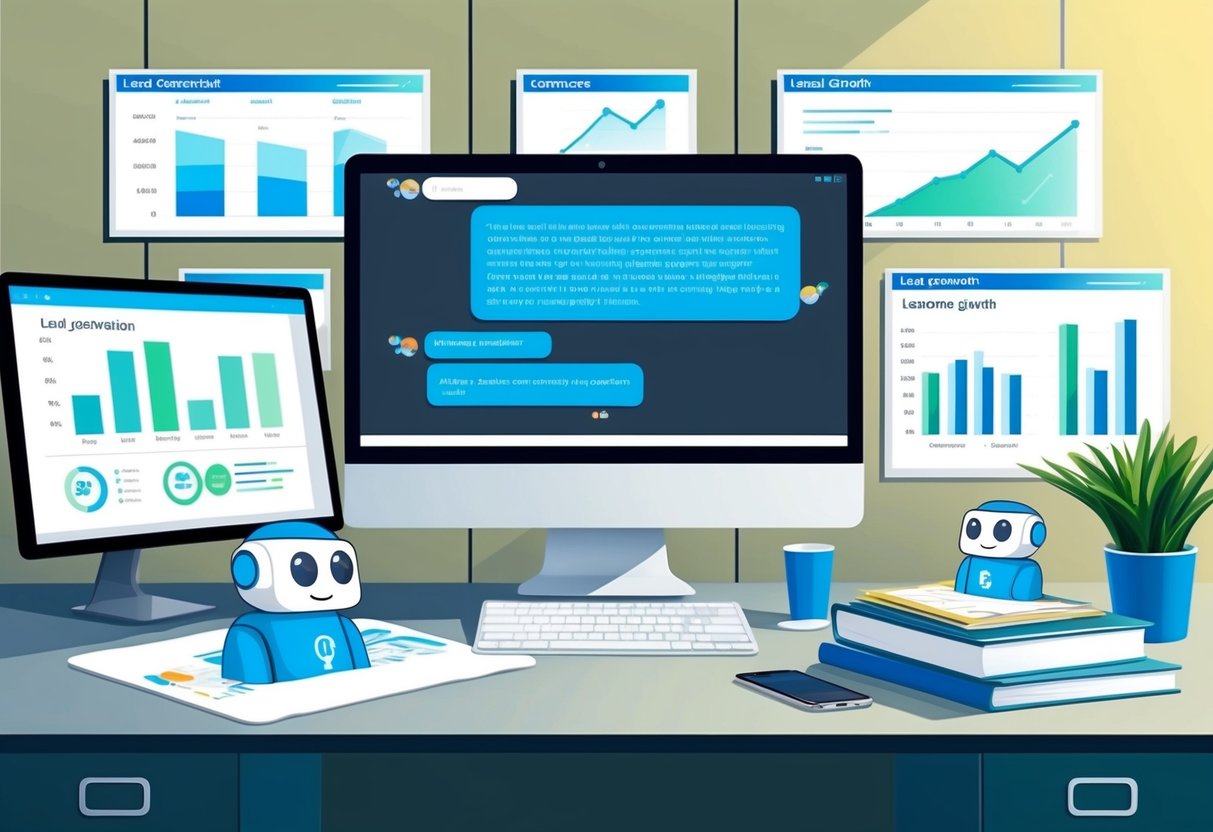
When setting up chatbots for lead generation and managing passive income, it’s crucial to focus on compliance, data protection, and performance monitoring. These factors ensure smooth operations and build trust with users.
Ensuring Compliance and Protecting User Data
Managing personal data responsibly is more than just a preference—it’s a necessity.
With regulations like GDPR and CCPA, businesses must ensure legal compliance by making sure their chatbots handle data securely.
It’s about transparency and gaining user trust.
How do I achieve this?
Start by implementing strong encryption standards.
Regular audits are vital to identify potential vulnerabilities and ensure data protection measures are robust and up-to-date.
Businesses should have clear privacy policies and obtain explicit user consent before collecting or processing data.
Moreover, train employees on data protection practices. They should know how to handle and react to any data breaches.
An informed team is a part of your defense strategy.
I also recommend limiting data access to essential personnel only, further reducing potential risks.
Monitoring and Improving Chatbot Performance
A well-performing chatbot is key to successful lead generation.
I focus on monitoring its effectiveness in real-time. Metrics like response time, user satisfaction, and conversion rates help in assessing performance.
How can improvements be made?
Use these insights to fine-tune the chatbot’s responses and functionalities. Regularly update the language model to include new queries and trends in customer behavior. A/B testing different chatbot versions can also identify which features work best.
Customer feedback is vital.
Encourage users to provide feedback through surveys or quick rating systems. Happy customers often lead to growth in passive income streams.
With this continuous improvement process, businesses can enhance user experience and, in turn, foster better lead management.