
Retirement savings can seem like a daunting task, but it’s one of the most important financial steps we can take. I’ve seen many people struggle with this, wondering how they’ll ever save enough to enjoy their golden years. But don’t worry - it’s not as complicated as it might seem.

The key factors that impact retirement savings are income, spending habits, and investment strategies. These elements work together to shape our financial future. I’ve found that understanding these factors can make a big difference in how we approach saving for retirement.
Many people don’t realize that small changes can lead to big results over time. By tweaking our approach to these key areas, we can significantly boost our retirement nest egg.
Isn’t it time we took control of our financial destiny?
Key Takeaways
- Income, spending habits, and investment choices are crucial for building retirement savings.
- Small, consistent changes in financial behavior can lead to significant long-term results.
- Retirement planning requires a proactive approach to ensure financial security in later years.
Understanding Retirement Savings
Retirement savings are crucial for financial security in our later years. Let’s explore the key concepts and options available to help us build a solid nest egg for the future.
Essential Terminology
When it comes to retirement savings, we need to know the lingo. What’s the difference between defined benefit and defined contribution plans?
A defined benefit plan, like a traditional pension, guarantees a specific payout in retirement. On the other hand, a defined contribution plan, such as a 401(k), allows us to contribute a portion of our salary, often with an employer match.
Vesting is another important term. It refers to our ownership of the retirement benefits. Some plans have immediate vesting, while others require us to work for a certain period before we’re fully vested.
What about compound interest? It’s the magic that makes our money grow over time. The earlier we start saving, the more time our money has to compound and grow.
Types of Retirement Accounts
We have several options when it comes to retirement accounts. The most common are:
- 401(k): Employer-sponsored plan with tax advantages
- Traditional IRA: Individual Retirement Account with tax-deductible contributions
- Roth IRA: After-tax contributions with tax-free withdrawals in retirement
- SEP IRA: Simplified Employee Pension for self-employed individuals
- SIMPLE IRA: Savings Incentive Match Plan for Employees of small businesses
Each account type has its own rules and benefits. For example, a 401(k) often comes with employer matching, which is essentially free money. Roth IRAs offer tax-free growth, but have income limits for contributions.
Have we considered annuities? They can provide a guaranteed income stream in retirement, but come with fees and less flexibility.
The Role of Social Security
Social Security plays a vital part in our retirement planning, but it shouldn’t be our only strategy. It’s designed to replace about 40% of our pre-retirement income. But can we live comfortably on that alone?
The age at which we start claiming Social Security benefits affects our monthly payout. Full retirement age ranges from 66 to 67, depending on our birth year. Claiming early reduces our benefit, while delaying can increase it.
Social Security faces some challenges. With an aging population, will the system be sustainable in its current form? That’s why it’s crucial for us to build our own retirement savings and not rely solely on Social Security.
Factors Impacting Retirement Savings
Saving for retirement isn’t as simple as putting money aside each month. Many factors influence how much we can save and how our savings grow over time. Let’s explore the key elements that shape our retirement nest eggs.
Demographic Factors
Age plays a crucial role in retirement savings. The earlier we start, the more time our money has to grow. I’ve seen compound interest work wonders for those who begin saving in their 20s compared to those who wait until their 40s.
Income level is another major factor. Higher earners typically have more disposable income to save. But don’t be discouraged if you’re not in the top tax bracket! Consistent saving habits matter more than the size of each contribution.
Education often correlates with retirement savings too. Those with higher education levels tend to have better-paying jobs and more financial literacy. But remember, financial education isn’t limited to formal schooling. We can all learn and improve our money management skills.
Behavioral Finance Aspects
Our mindset about money significantly impacts our saving habits. Do you view retirement savings as a burden or an investment in your future?
Optimism and forward-thinking are key psychological factors for successful retirement saving. If we believe in a bright future, we’re more likely to sacrifice today for tomorrow’s comfort.
Risk tolerance also plays a role. Are you comfortable with market fluctuations, or do you prefer safer, lower-yield investments? Finding the right balance is crucial.
Interestingly, some companies use behavioral tricks to boost employee savings. Auto-enrollment in 401(k) plans has been shown to increase participation rates dramatically. It’s amazing how small nudges can lead to big changes in our financial behavior!
Gender Gap in Retirement Savings
Unfortunately, a significant gender gap exists in retirement savings. Women, on average, save less for retirement than men. Why is this?
One factor is the wage gap. Women typically earn less over their lifetimes, leaving less money for savings. Career interruptions for childcare or elder care also impact women’s earning potential and savings rates.
Women tend to live longer than men, meaning their retirement savings need to stretch further. This makes the savings gap even more concerning.
But it’s not all bad news! I’ve seen more women taking control of their finances, investing wisely, and closing this gap. Education and awareness are key to bridging this divide.
Economic Sentiment and Market Conditions
Our confidence in the economy can influence our saving behavior. During economic booms, we might feel more optimistic and increase our savings rate. But in downturns, fear might lead us to pull back.
Market conditions directly impact our retirement accounts. Bull markets can boost our 401(k) balances, while bear markets might tempt us to make rash decisions. It’s crucial to maintain a long-term perspective and not let short-term fluctuations derail our plans.
Interest rates affect our savings too. Low rates can make traditional savings accounts less attractive, pushing us towards riskier investments. High rates might encourage more saving but can also signal economic trouble.
Strategies for Growing Retirement Savings
Are you ready to supercharge your retirement savings? Let’s explore some powerful strategies that can help you build wealth for your golden years. These approaches will put you on the fast track to financial freedom.
Effective Savings Plan Design
Want to know the secret to a rock-solid retirement savings plan? It’s all about consistency and automation. I always recommend setting up automatic contributions to your retirement accounts. This way, you’re paying yourself first before any other expenses.
Consider maxing out your 401(k) contributions, especially if your employer offers matching. It’s like getting free money! If you’re self-employed, don’t worry. You can open a Solo 401(k) or SEP IRA.
Remember, it’s never too late to start. Even small, regular contributions can add up over time. The key is to make saving a habit and stick to it.
Investment Choices and Diversification
Ever heard the saying “don’t put all your eggs in one basket”? That’s what diversification is all about. I always stress the importance of spreading your investments across different asset classes.
Here’s a simple way to think about it:
- Stocks for growth
- Bonds for stability
- Real estate for income
Consider low-cost index funds for broad market exposure. They’re a great way to get started without needing to pick individual stocks.
Don’t forget about alternative investments like precious metals or even cryptocurrencies. Just remember, these can be riskier, so do your homework first.
Risk Tolerance and Asset Allocation
How much risk can you handle? This is a crucial question when it comes to your retirement savings. Your risk tolerance will shape your asset allocation - the mix of investments in your portfolio.
If you’re young and have time on your side, you might be comfortable with more stocks. As you get closer to retirement, you might want to shift towards more conservative investments.
But here’s the kicker: don’t let fear drive your decisions. Many people make the mistake of being too conservative too early. This can limit your growth potential.
Consider using a risk tolerance questionnaire to help guide your decisions. It’s a great tool to align your investments with your comfort level.
Impact of Compounding Interest
Want to know the eighth wonder of the world? It’s compound interest! This powerful force can turn small, consistent savings into a fortune over time.
Here’s why it’s so powerful: you earn returns not just on your initial investment, but on the returns from previous years too. It’s like a snowball rolling down a hill, getting bigger and bigger.
Let’s look at an example:
- $10,000 invested at 7% annual return
- After 10 years: $19,672
- After 20 years: $38,697
- After 30 years: $76,123
Can you see the magic? The longer you let your money grow, the faster it multiplies. That’s why I always say the best time to start investing was yesterday. The second best time? Today!
Maximizing Retirement Contributions
Boosting your retirement savings isn’t just about putting money aside. It’s about making smart choices that can significantly increase your nest egg. Let’s explore some powerful strategies to supercharge your retirement funds.
Catch-Up Contributions
If you’re over 50, catch-up contributions are your secret weapon. They’re like a turbo boost for your retirement savings.
In 2024, I can add an extra $7,500 to my 401(k) on top of the standard $23,000 limit. That’s a total of $30,500!
For IRAs, the catch-up amount is $1,000. This means I can contribute up to $7,000 if I’m 50 or older.
Why is this important? It gives me a chance to make up for lost time. Maybe I started saving late or had some lean years. Catch-up contributions help me close the gap.
Employer Match Programs
Free money. That’s what employer matching is. Many employers will match a percentage of your contributions, often up to 3-6% of your salary.
Here’s a simple example:
- Your salary: $60,000
- Employer match: 50% up to 6% of salary
- Your 6% contribution: $3,600
- Employer match: $1,800
- Total added to your account: $5,400
That’s an instant 50% return on your investment! I always tell people: at the very least, contribute enough to get the full employer match. It’s like leaving money on the table if you don’t.
Tax Benefits of Retirement Contributions
Tax advantages are the icing on the retirement savings cake. With traditional 401(k)s and IRAs, my contributions are tax-deductible now. This lowers my current taxable income, potentially putting me in a lower tax bracket.
For example, if I’m in the 24% tax bracket and contribute $10,000 to my 401(k), I could save $2,400 on my taxes this year. That’s a significant chunk of change!
Plus, my money grows tax-deferred. I don’t pay taxes on the earnings until I withdraw in retirement. By then, I might be in a lower tax bracket.
Roth options offer a different advantage. I pay taxes now, but my withdrawals in retirement are tax-free. This can be a huge benefit if I expect to be in a higher tax bracket later.
Planning and Management of Retirement Savings

Effective retirement planning requires a combination of financial knowledge, professional guidance, and clear goal-setting.
Financial Literacy and Education
Financial literacy is the foundation of successful retirement planning. I’ve seen many people struggle simply because they lack basic financial knowledge. Here’s what you need to know:
- Understand compound interest - it’s your best friend in long-term savings
- Learn about different investment vehicles like stocks, bonds, and mutual funds
- Grasp the impact of inflation on your savings
Why not start with free online courses or workshops offered by reputable financial institutions? The more you know, the better decisions you’ll make.
Remember, financial literacy isn’t just about numbers. It’s about making informed choices that align with your life goals.
Professional Financial Advice
Can you navigate the complex world of retirement planning alone? Maybe. But should you? I don’t think so. Here’s why professional advice matters:
- Tailored strategies based on your unique situation
- Expertise in tax laws and investment options
- Objective perspective on your financial decisions
A good financial advisor can help you avoid common pitfalls and maximize your retirement savings. They’re not just for the wealthy - they can benefit anyone serious about their financial future.
Don’t be afraid to shop around. Find an advisor who understands your goals and communicates clearly.
Household Financial Planning
Have you ever thought about how your household dynamics affect your retirement savings? Let’s break it down:
- Joint vs. individual accounts: Which works best for your family?
- Balancing short-term needs with long-term goals
- Involving your partner or family in financial decisions
Household financial planning isn’t just about budgeting. It’s about aligning your family’s lifestyle with your retirement goals. This might mean tough conversations about spending habits or priorities.
Consider creating a family financial plan. Review it regularly. Make adjustments as your life circumstances change.
Long-Term Savings Goals
What does your ideal retirement look like? That’s the first question you need to answer. Here’s how to set and achieve long-term savings goals:
- Visualize your retirement lifestyle
- Calculate how much you’ll need
- Break down your big goal into smaller, manageable targets
Remember, long-term goals require patience and consistency. Don’t get discouraged by short-term market fluctuations.
Are you regularly reviewing and adjusting your goals? Life changes, and so should your retirement plan. Stay flexible, but keep your eye on the prize.
Retirement Savings Challenges
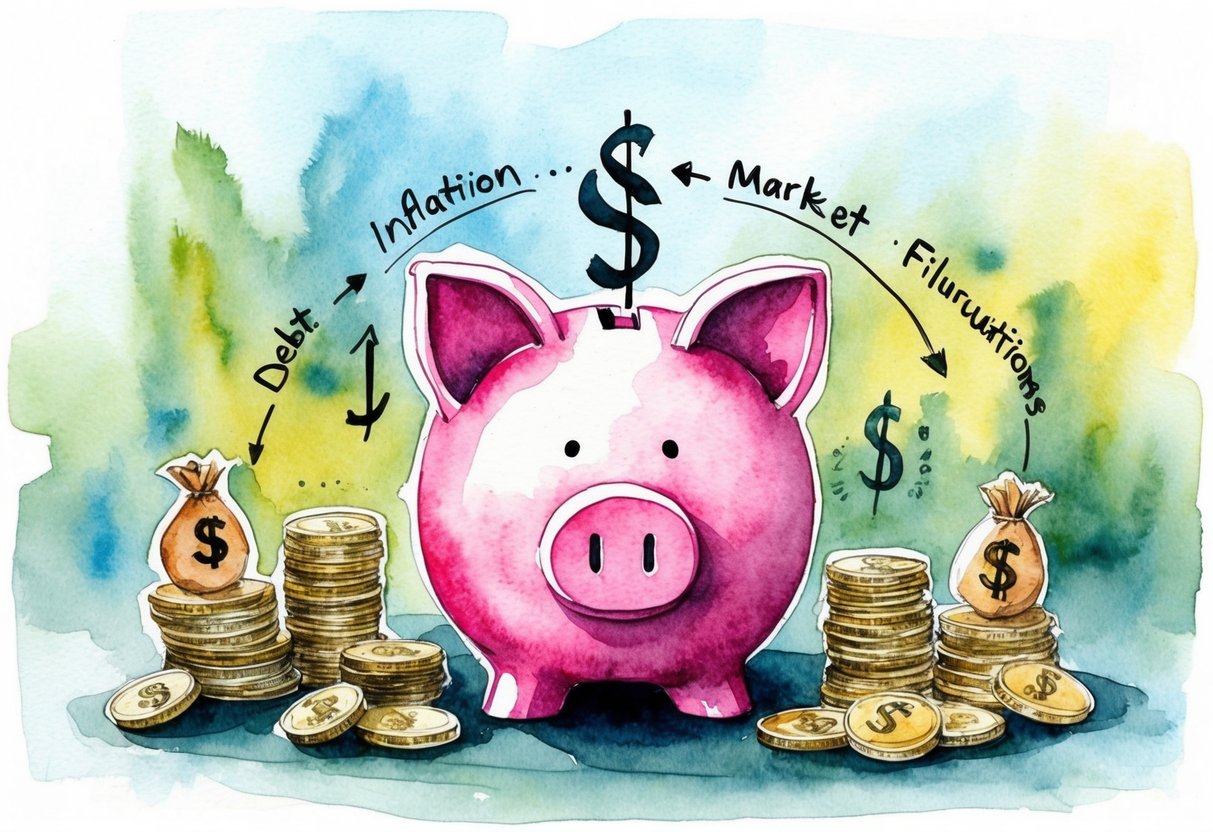
Saving for retirement isn’t always smooth sailing. Many people face hurdles that can derail even the best-laid plans. Let’s explore some common challenges and how to tackle them head-on.
Retirement Preparedness and Readiness
Are you truly ready for retirement? It’s a question that keeps many of us up at night. I’ve seen countless individuals struggle with this issue. The truth is, retirement preparedness varies widely based on income. Those earning over $100,000 annually often have much larger nest eggs than lower-income earners.
But it’s not just about money. Retirement readiness also involves:
- Understanding your future expenses
- Having a clear vision of your retirement lifestyle
- Building multiple income streams
I always advise my clients to start planning early. The sooner you begin, the more time you have to course-correct if needed.
Dealing with Unexpected Expenses
Life has a funny way of throwing curveballs when we least expect them. How many times have you heard of someone’s retirement savings being wiped out by a medical emergency? It happens more often than you might think.
To protect yourself:
- Build an emergency fund
- Consider long-term care insurance
- Stay on top of your health
Remember, unexpected events can drain your retirement savings quickly. That’s why I’m a big believer in creating multiple streams of income. It’s not just about how much you save, but how you protect and grow your wealth.
Saving Amidst Debt and Dependence
Balancing retirement savings with other financial obligations can feel like walking a tightrope. Many of us are juggling mortgage payments, credit card debt, and supporting adult children. It’s no wonder retirement savings often take a backseat.
But here’s the kicker: neglecting your retirement to help others can backfire. You might end up depending on those same people later in life. So, how do we strike a balance?
- Prioritize high-interest debt repayment
- Set clear boundaries with adult children
- Automate your retirement contributions
Remember, you can’t pour from an empty cup. Taking care of your financial future isn’t selfish - it’s smart.
The Future of Retirement Savings

As we look ahead, retirement savings are set to undergo significant changes. Technology, policy shifts, and demographic trends will reshape how we plan for our golden years.
Influence of Technological Advancements
I’ve seen how tech is revolutionizing retirement planning. Automatic enrollment in 401(k) plans is becoming the norm, making it easier for people to start saving early. But that’s just the beginning.
AI-powered robo-advisors are making personalized investment strategies more accessible. They’re helping folks like you and me make smarter decisions with our money.
Mobile apps are putting retirement planning in our pockets. We can track our savings, set goals, and make adjustments on the go. Isn’t it amazing how technology is simplifying what used to be complex financial decisions?
Blockchain might even play a role, potentially making our retirement accounts more secure and transparent. Are you ready for these changes?
Policy Changes and Their Impact
I’m keeping a close eye on policy shifts that could impact our retirement savings. The government is exploring ways to address the retirement savings gap.
New legislation might expand access to employer-sponsored retirement plans. This could be a game-changer for many workers who currently don’t have this option.
Tax incentives for retirement savings could also see changes. We might see more generous credits for low and middle-income savers. Wouldn’t that be a welcome boost?
There’s talk of raising the age for required minimum distributions from retirement accounts. This could give our money more time to grow tax-deferred.
These policy changes could significantly impact how we save and plan for retirement. It’s crucial to stay informed and adapt our strategies accordingly.
Population Aging and Financial Services
As our population ages, the financial services industry is adapting to meet new needs.
We’re seeing a shift towards products that offer guaranteed income in retirement.
Annuities and other insurance products are becoming more popular.
They’re helping retirees ensure a steady stream of income, even if they live longer than expected.
Financial advisors are focusing more on decumulation strategies.
It’s not just about saving anymore, but also about spending wisely in retirement.
Healthcare costs are a growing concern.
New financial products are emerging to help us plan for these expenses.
Have you considered how you’ll handle potential healthcare costs in retirement?
The rise of multi-generational households is influencing retirement planning too.
We’re seeing more products that cater to this trend, helping families plan together.