
Relying on Social Security alone for retirement is like building a house on a shaky foundation. Social Security was never meant to pay for all retirement needs; it usually covers just a portion of pre-retirement earnings. So, why do some still pin their hopes solely on it? Perhaps it feels easier than navigating the complexities of other investment options, but that choice carries significant risks.  What if Social Security benefits decrease or fail to keep up with inflation? It’s not just a possibility—it’s a growing concern. With the program’s costs outpacing its income thanks to shifts in demographics, the reliability of this safety net becomes questionable. Times have changed, and we need to adapt our retirement strategies to stay secure. Consider broadening your approach to retirement planning. Investing in diverse income sources is key to ensuring a stable and fulfilling retirement. Learning to manage your finances wisely now can make all the difference in your golden years.
Key Takeaways
- Social Security covers only part of retirement income.
- The reliability of Social Security is uncertain due to demographic changes.
- Diversified income sources increase retirement security.
Understanding Social Security and Its Purpose
 I’ve often considered how Social Security functions and the reasoning behind its creation. Understanding this system sheds light on its role and importance in our financial planning. Let’s take a closer look at the history, funding, and benefits structure of Social Security.
Historical Context and Formation of Social Security
Social Security was born during the Great Depression, a challenging time that demanded innovative solutions. Introduced in 1935 by President Franklin D. Roosevelt, it aimed to provide financial support for retirees and reduce poverty among the elderly. This groundbreaking program has evolved but maintains its core mission of delivering financial security. As we navigate our careers, remembering this historical context can help us appreciate the system’s purpose and limitations.
How Social Security Is Funded
Funding Social Security depends on a delicate balance. Ever wonder where the money comes from? It’s primarily from payroll taxes paid by employers and employees. The funds collected go into the Social Security Trust Fund, which then distributes benefits to retirees and disabled individuals. With each paycheck, Generation X, Millennials, and even Gen Z contribute to this pool. But as the demographics shift, sustaining this funding model poses challenges, raising questions about future availability for younger generations.
Social Security Benefits Structure
Understanding Social Security benefits can seem complex, yet they’re crucial for planning a stable retirement. Benefits are calculated based on your average indexed monthly earnings during your 35 highest-earning years. These benefits provide essential financial support but are not meant to be your sole income source. By planning supplemental savings, I ensure a more secure retirement. The reality is, relying solely on Social Security could lead to financial strain during your golden years.
The Risks of Relying Solely on Social Security
 Relying only on Social Security for retirement income can be risky. Legislative changes, inflation challenges, and potential depletion of funds all pose serious threats to financial stability in retirement.
Legislative Changes and Political Pressure
Have you ever wondered how much political decisions can affect your future? Social Security often faces political pressure, which can lead to legislative changes affecting benefits. These changes are not always in the best interest of retirees, making it risky to depend solely on this income source. Lawmakers may decide to change the benefits structure, raise the retirement age, or alter cost-of-living adjustments. These potential adjustments bring uncertainty. It’s important to remember that Social Security was designed to supplement other retirement income. Depending solely on it leaves you vulnerable to these shifts.
Challenges from Inflation and COLAs
Do your dollars buy as much today as they did ten years ago? Inflation is one of the biggest risks to relying solely on Social Security. While Social Security provides cost-of-living adjustments, these adjustments often lag behind actual inflation rates. This means your benefits may not keep pace with rising living expenses. Inflation gradually erodes purchasing power, affecting your ability to cover daily expenses like groceries and healthcare. Relying on Social Security alone may not be enough to manage these costs over time. That’s why it’s crucial to consider additional income streams to maintain a comfortable lifestyle.
Projection of Social Security Fund Depletion
Ever thought about what happens if the trust funds supporting Social Security run dry? There’s a looming concern: the projected depletion of the Social Security trust funds by 2034. Without changes, the funds may not be able to pay full benefits, potentially leading to across-the-board cuts. This creates significant uncertainty for those who plan to rely solely on Social Security when they retire. Instead of being caught off guard, it’s wise to plan for other sources of income to secure financial stability. Diversifying your retirement savings can help protect against these future uncertainties and ensure that financial goals remain achievable.
Comparing Social Security to Other Retirement Income Sources
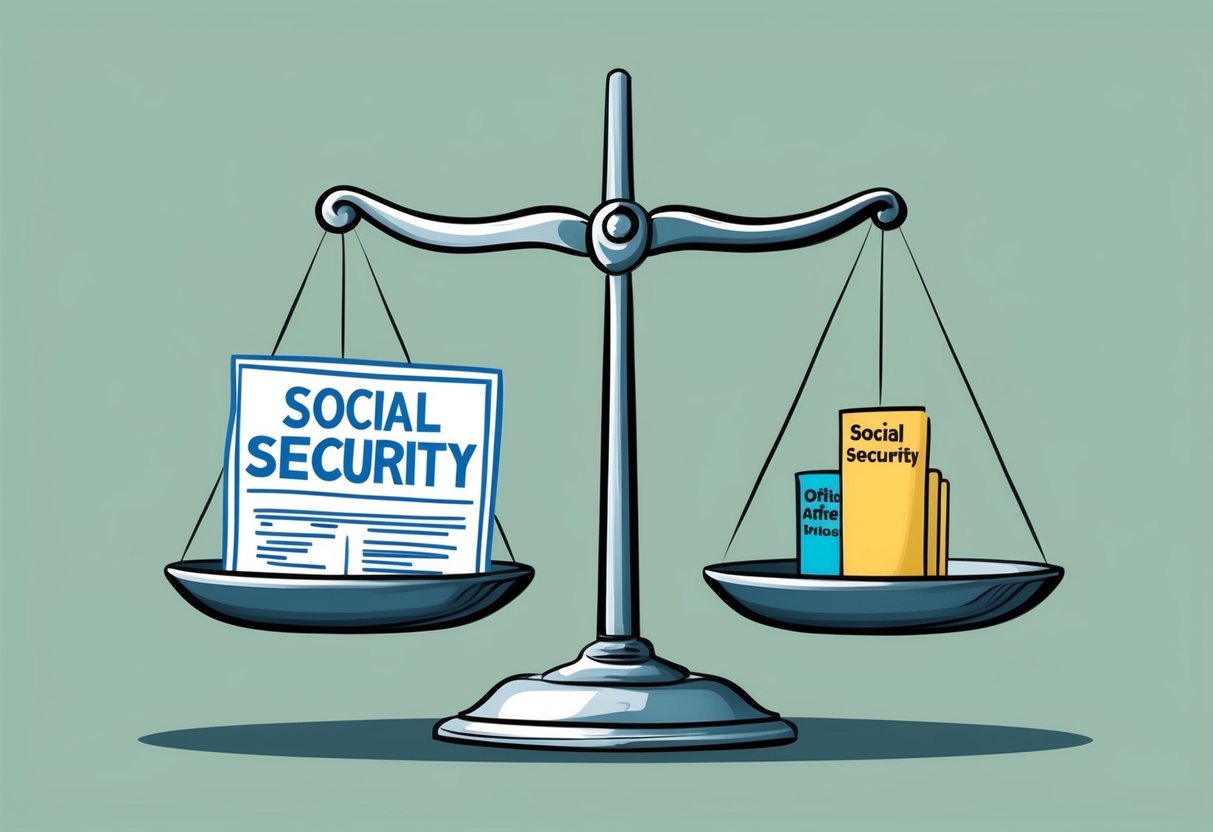 Social Security may provide a safety net, but it’s crucial to explore additional income avenues for a comfortable retirement. Other potential sources include pension plans, personal savings, and tax-advantaged accounts, each offering unique benefits and challenges.
Pension Plans and Employer-Sponsored Benefits
Pension plans and employer-sponsored benefits can play a significant role in your retirement strategy. These plans are a form of retirement savings often provided by employers, promising a stable income after retirement based on your salary and years of service. Have you considered how this regular monthly income can supplement your Social Security? Unlike Social Security, pensions are usually predictable and not subject to financial market whims. Yet, fewer employers offer traditional pensions today. Many have shifted to 401(k) plans, where the onus is on you to contribute and invest wisely. Recognize the importance of participating in these benefits when available. It can make a substantial difference to have this reliable stream complement your other savings.
Personal Savings and Investment Strategies
Relying solely on Social Security is a risky move given its limitations. Personal savings and investments can bridge the gap between your current savings and your ideal retirement lifestyle. Have you built a diversified portfolio that includes stocks, bonds, or mutual funds? Wise investments can potentially increase your wealth and offer more financial freedom. However, investing demands education and attention. It’s not just about picking the hottest stock but creating a plan that suits your risk tolerance and retirement goals. Investment strategies should evolve with your financial situation. Cautiously balancing riskier assets with safe ones can help secure a prosperous future without over-reliance on governmental support.
Tax-Advantaged Retirement Accounts
Tax-advantaged accounts like IRAs and 401(k) plans are powerful tools for retirement savings. They offer tax benefits that can significantly enhance your savings potential. Have you tapped into the power of these accounts to build a nest egg? Contributions can often reduce taxable income while providing room for growth through investment. Consider both traditional and Roth IRAs. Traditional accounts may reduce your taxable income now, but Roth accounts grow tax-free, providing tax-free withdrawals later. Each option offers distinct advantages depending on your current and expected tax situations. Exploring these can help you maximize retirement savings and reduce your dependence on Social Security.
Strategies for Maximizing Retirement Security
 Navigating retirement planning can be challenging, especially when relying solely on Social Security. To maximize security, it’s essential to focus on setting clear savings goals, diversifying income streams, and preparing for longevity and cognitive risks. Let’s explore how these strategies can strengthen your financial future.
Understanding Retirement Savings Goals
Setting realistic retirement savings goals is the first step. How much should your nest egg be? I often prioritize creating a replacement income plan that covers at least 70-80% of my pre-retirement income. This can include calculating expected expenses during retirement, considering healthcare costs, and accounting for potential lifestyle changes. Creating a monthly budget helps me stay on track. I find it useful to regularly review and adjust my savings objectives to reflect any changes in financial situations. Leveraging retirement accounts like 401(k)s or IRAs can provide significant tax advantages and aid in building a robust financial cushion. Remember: starting early and contributing consistently makes a significant difference.
Diversification of Income Streams
Relying on a single income stream isn’t wise; it’s like putting all your eggs in one basket. I seek out diverse income sources to maintain financial stability. In addition to Social Security, other options include pensions, annuities, and investment returns. I often explore investments in stocks, bonds, or real estate to diversify my portfolio. Rental properties can offer consistent income, while dividend-paying stocks might provide a reliable cash flow. Having these various sources minimizes risk and can protect me from economic fluctuations that might impact one income stream. By spreading income sources, I create a robust safety net that ensures financial security, no matter the market conditions. What income streams can you add to your plan today?
Longevity and Cognitive Risks Planning
With increasing life expectancies, longevity risk poses a real concern. Ensuring that my retirement funds last through these extra years is crucial. I usually consider investments in long-term care insurance to safeguard against unexpected healthcare costs related to aging. Cognitive risks, such as dementia or Alzheimer’s disease, can significantly impact finances. Preparing legal documents like a power of attorney early on helps manage these potential situations. To prepare, I often plan with a financial advisor to account for possible cognitive decline. Considering these aspects in retirement planning helps build a secure framework to protect against both physical and cognitive risks as I grow older.
The Importance of Early and Ongoing Retirement Planning
 Retirement planning is crucial to securing a stable future, and it differs at various life stages. Each generation needs unique approaches, considering factors like retirement age and investing options, to maximize their benefits.
Starting Early: Strategies for Millennials and Gen Z
When I think about the younger crowd, like Millennials and Gen Z, it’s clear: the earlier you start, the better. Why wait to invest and plan for the future when time is your greatest ally? By taking advantage of compound interest, even small amounts can grow significantly over time. Consider using tax-advantaged accounts like 401(k)s or IRAs. These accounts not only help reduce taxable income now but also allow money to grow tax-free. Diversification is also key. Don’t put all your eggs in one basket. Stocks, bonds, and mutual funds each serve their purpose. Embrace technology with robo-advisors and investing apps, which make it easier to begin.
Mid-Life Adjustments for Generation X and Baby Boomers
In the middle of your career, life may feel like a whirlwind. But making mid-life adjustments can significantly impact your retirement. Many Gen X and Baby Boomers have realized they may not have saved enough, and I’m here to say, it’s not too late. Reevaluating your financial situation can have a massive effect. Increase your contributions. If your employer offers a match on retirement plans, ensure you’re contributing enough to get the full benefit. This is essentially free money. Monitor your investments. Adjust your portfolio based on your risk tolerance and the time left until retirement. It may be smart to shift to safer investments, protecting what you’ve built over time. Consider reducing debt, as this increases your financial flexibility.
Adapting Retirement Plans for Seniors
For seniors, the time to act is now. Many might ask: Is it too late to adjust my plan? Not at all. It’s crucial to assess buying power and how to make the most of your nest egg. As you approach retirement age, focus on maximizing social security benefits. Delaying benefits can increase the average monthly benefit, proving beneficial long-term. Plan to handle healthcare costs, as these can eat into savings quickly. Consider long-term care insurance if necessary. Lastly, keep an eye on inflation. Rising costs can significantly impact your retirement funds, so adjust your budget accordingly, keeping a cushion for unforeseen expenses.