
Planning for retirement can be daunting, but creating a solid cash flow plan doesn’t have to be. I’ve seen countless people struggle with this, but there’s a simple solution. By focusing on generating steady income streams and managing expenses, you can build a retirement plan that stands the test of time.  Have you ever wondered how to make your money work for you in retirement? It’s all about balance. You need to strike the right mix between your income sources, investments, and spending habits. This isn’t just about saving money - it’s about creating a system that keeps cash flowing even when you’re no longer working. But where do you start? I’ll walk you through the key steps to create a bulletproof cash flow plan for your golden years. We’ll look at everything from estimating your income needs to setting up investment buckets that can provide steady cash flow. Are you ready to take control of your financial future?
Key Takeaways
- Create multiple income streams to ensure steady cash flow in retirement
- Balance your investment portfolio to provide both growth and income
- Regularly review and adjust your spending plan to maintain financial stability
Understanding Retirement Cash Flow
Cash flow is the lifeblood of a secure retirement. It's not just about how much money you have, but how it flows in and out of your accounts. Let's break down the key elements of retirement cash flow planning.Assessing Current Financial Status
I always start by taking a hard look at where I am financially. What assets do I have? How much debt? It’s crucial to be honest here. I list out all my income sources - salary, investments, rental properties. Then I tally up my expenses. Here’s a simple way to categorize your finances:
- Assets: Savings, investments, property
- Liabilities: Mortgage, credit card debt, loans
- Income: Salary, dividends, rental income
- Expenses: Bills, groceries, entertainment
Don’t forget about hidden costs like insurance premiums or property taxes. These can sneak up on you if you’re not careful.
Projecting Retirement Expenses
Now, I imagine my future retirement lifestyle. Will I travel more? Move to a cheaper area? It’s important to be realistic here. Retirement expenses often change over time. I break my expenses into three categories:
- Essential: Housing, food, healthcare
- Important: Hobbies, gifts, small luxuries
- Discretionary: Travel, big purchases
Healthcare costs usually go up as we age. I make sure to factor that in. It’s better to overestimate expenses than be caught short.
Anticipating Inflation and Market Volatility
Inflation is like a silent thief, stealing your purchasing power over time. I always plan for it. Historically, inflation has averaged about 3% per year. That means what costs $100 today might cost $180 in 20 years. Market volatility can throw a wrench in the best-laid plans. I don’t panic sell when markets dip. Instead, I create a diverse income stream to weather market storms. Some ways to protect against inflation and volatility:
- Invest in stocks for growth
- Consider real estate for steady income
- Look into inflation-protected securities
Remember, a good retirement cash flow plan is flexible. It adapts to changing markets and personal circumstances.
Income Sources and Investments
Planning for retirement means building a strong foundation of [diverse income streams](/building-multiple-streams-of-income/). Let's explore the key ways to ensure a steady cash flow during your golden years.Diversifying Income Streams
I always tell my clients that relying on a single income source in retirement is like putting all your eggs in one basket. It’s risky! Instead, aim for a mix of income streams. This could include:
- Social Security benefits
- Pension payments
- Investment dividends
- Rental income
- Part-time work
By diversifying, you’re protecting yourself from the unexpected. If one income source takes a hit, you’ve got others to fall back on. It’s all about creating a safety net for your financial future.
Social Security and Pensions
Social Security is often the bedrock of retirement income for many Americans. But are you maximizing your benefits? Did you know that delaying your claim can increase your monthly check? As for pensions, they’re becoming rarer, but if you have one, it’s gold. Make sure you understand your pension plan inside and out. Some key questions to ask:
- When can I start receiving payments?
- Is there a lump sum option?
- How does my pension adjust for inflation?
Remember, these guaranteed income sources can provide a stable base for your retirement cash flow.
Utilizing Investments
Investments are your ticket to growing wealth and generating income in retirement. But what’s the right mix? I recommend a balanced approach:
- Stocks for growth potential
- Bonds for stability
- Real estate for diversification
Consider setting up a bucket strategy for your investments. This means dividing your portfolio into short-term, medium-term, and long-term buckets. It can help you manage risk while ensuring you have cash available when you need it. Don’t forget about dividend-paying stocks. They can provide a steady stream of income without you having to sell your assets.
Rental Income and Part-Time Employment
Want to boost your retirement income? Consider becoming a landlord. Rental properties can provide a consistent cash flow and potential tax benefits. But remember, being a landlord isn’t passive income - it’s a job! Part-time work is another great option. It’s not just about the money. It can keep you active, engaged, and provide a sense of purpose. Some ideas to consider:
- Consulting in your field of expertise
- Teaching or tutoring
- Turning a hobby into a small business
The key is to find something you enjoy that also adds to your bottom line. Isn’t that what retirement should be about?
Cash Flow Management Strategies
 Managing your retirement cash flow is crucial for financial security. Let’s explore key strategies to keep your money working for you, not against you.
Cash Cushion and Liquid Reserves
I always tell my clients: “Cash is king, especially in retirement.” A solid cash cushion acts as your financial safety net. How much should you keep? Aim for 1-2 years of living expenses in easily accessible accounts. Why so much? It protects you from market downturns. You won’t be forced to sell investments at a loss to cover bills. Plus, it gives you peace of mind. No more sleepless nights worrying about unexpected expenses. Where to keep it? Consider high-yield savings accounts or short-term CDs. They offer better returns than traditional savings while keeping your money liquid. Remember, this isn’t about growing wealth – it’s about preserving it.
Utilizing Withdrawal Strategies
Ever heard of the 4% rule? It’s a starting point, not a hard rule. The idea is to withdraw 4% of your portfolio in year one, then adjust for inflation each year after. But here’s the kicker: One size doesn’t fit all. Your withdrawal rate depends on factors like:
- Portfolio composition
- Market conditions
- Life expectancy
- Spending habits
I’m a fan of the bucket approach. It divides your money into three buckets: near-term, mid-term, and long-term. This strategy helps balance safety and growth. Don’t forget to be flexible. In good market years, maybe you can splurge a little. In down years, tighten the belt. It’s all about adapting to keep your nest egg intact.
Tax-Efficient Withdrawals
Want to keep more of your hard-earned money? Pay attention to taxes. The order in which you tap your accounts can make a big difference. Generally, I suggest this withdrawal order:
- Required Minimum Distributions (RMDs)
- Taxable accounts
- Tax-deferred accounts (traditional IRAs, 401(k)s)
- Tax-free accounts (Roth IRAs)
Why this order? It helps minimize your tax bill over time. But remember, everyone’s situation is unique. What works for your neighbor might not work for you. Consider Roth conversions in low-income years. They can reduce future RMDs and provide tax-free growth. It’s like giving yourself a raise in retirement!
Investment Portfolio and Asset Allocation
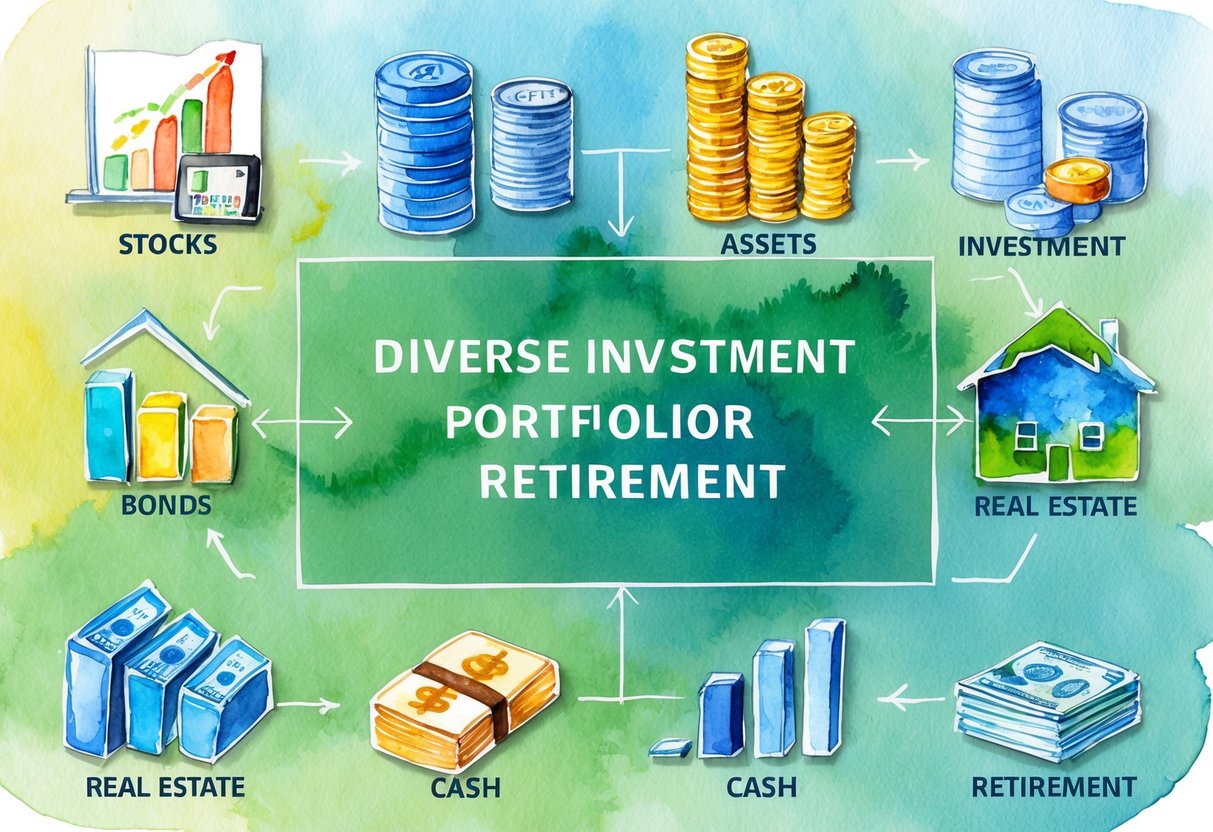 Creating a solid investment portfolio and asset allocation strategy is key to a bulletproof retirement cash flow plan. Let’s explore how to build a portfolio that aligns with your goals and risk tolerance, while maximizing returns.
Evaluating Risk Tolerance and Investment Goals
When I talk about risk tolerance, I’m referring to how much market volatility you can stomach without losing sleep. Are you the type who panics at every market dip, or can you ride out the storms? Your investment goals also play a crucial role. Are you looking for steady income or aggressive growth? To assess your risk tolerance, ask yourself:
- How would I react if my portfolio dropped 20% in a year?
- Do I need this money in the next 5, 10, or 20 years?
Remember, your risk tolerance may change as you get closer to retirement. It’s essential to reassess periodically and adjust your strategy accordingly.
Asset Classes and Rebalancing
I always stress the importance of diversification across different asset classes. This typically includes:
- Stocks (equities)
- Bonds (fixed income)
- Real estate
- Cash and cash equivalents
The key is finding the right mix that matches your risk tolerance and goals. A balanced portfolio might include 40% to 60% in stocks, with the rest in bonds and other assets. Rebalancing is crucial. As market values change, your asset allocation can drift from your target. I recommend reviewing and rebalancing your portfolio at least annually. This disciplined approach helps you buy low and sell high automatically.
Yields and Returns
When it comes to retirement income, many investors focus solely on yields. But what about total returns? Yields provide current income, while capital appreciation can offer long-term growth. Consider this: A stock paying a 2% dividend but growing at 8% annually might be more valuable than a bond yielding 4% with no growth potential. For a retirement portfolio, I suggest a mix of:
- Dividend-paying stocks for income and growth
- Bonds for stability and regular interest payments
- Real estate investment trusts (REITs) for potential high yields
Remember, chasing the highest yields can be risky. Focus on sustainable yields and total returns that align with your overall strategy.
Tax Considerations and Treatment
 Taxes can make or break your retirement plan. Smart tax strategies can help you keep more of your hard-earned money and stretch your savings further. Let’s dive into some key tax issues you need to know about.
Understanding Tax Implications
I’ve seen too many retirees caught off guard by unexpected tax bills. Don’t let that be you! Your retirement income sources will likely be taxed differently than your working years. Social Security benefits may be partially taxable, depending on your total income. Pension payments are usually fully taxable. And remember, withdrawals from traditional 401(k)s and IRAs are taxed as ordinary income. To lower your tax burden, consider:
- Spreading withdrawals across tax brackets
- Using Roth accounts strategically
- Harvesting investment losses to offset gains
- Making qualified charitable distributions
Be proactive! Work with a tax pro to model different scenarios and find the optimal approach for your situation.
Roth versus Traditional IRA
Ah, the age-old Roth vs. traditional IRA debate. Which is better? It depends on your unique circumstances. Traditional IRAs offer upfront tax deductions but future withdrawals are taxed. Roth IRAs provide no immediate tax break, but qualified withdrawals in retirement are tax-free. Are your taxes likely to be higher or lower in retirement? If higher, Roth contributions might make sense. If lower, traditional could be the way to go. Don’t forget about Roth conversions! Converting traditional IRA funds to Roth can be a powerful strategy, especially in low-income years. You’ll pay taxes now, but future growth is tax-free. Think long-term. The power of tax-free compounding in a Roth account can be significant over decades.
Capital Gains and Required Minimum Distributions
Smart investors know how to use capital gains to their advantage. Long-term capital gains (assets held over a year) are taxed at lower rates than ordinary income. In 2024, married couples filing jointly pay 0% on gains up to $89,250! I love using tax-loss harvesting to offset gains. Sell underperforming investments to realize losses and use those to reduce your tax bill. Don’t forget about Required Minimum Distributions (RMDs)! At age 73, you must start withdrawing from traditional IRAs and 401(k)s. These can push you into higher tax brackets if you’re not careful. Consider strategies like:
- Qualified Charitable Distributions to satisfy RMDs
- Roth conversions before RMDs kick in
- Spreading RMDs across the year to manage cash flow
Plan ahead to minimize the tax impact of RMDs on your retirement income.
Retirement Lifestyle and Spending Patterns
 Planning for retirement isn’t just about saving money. It’s about creating a lifestyle that matches your dreams and your wallet. Let’s dive into how to shape your golden years.
Lifestyle Goals and Retirement Budgeting
Have you ever asked yourself, “What do I really want from retirement?” It’s crucial to paint a clear picture. Do I want to travel the world or stay close to family? Will I downsize my home or splurge on a beach house? Once I’ve set my goals, it’s time to crunch the numbers. I need to estimate my monthly expenses, including:
- Housing costs
- Food and utilities
- Healthcare premiums
- Entertainment and hobbies
- Travel
I’ll create a spending plan that aligns with my income sources. This might include Social Security, pensions, and investment withdrawals. By tracking my current spending, I can get a realistic idea of my future needs.
Adjusting to Changes and Unforeseen Expenses
Life throws curveballs, doesn’t it? That’s why I need to build flexibility into my plan. Inflation can erode my purchasing power, so I’ll factor in a 2-3% annual increase in expenses. What about unexpected costs? I’ll set aside an emergency fund for:
- Home repairs
- Car replacements
- Medical emergencies
I’ll review my plan regularly. As my needs change, so will my budget. Maybe I’ll spend more on travel in early retirement and less as I age. Cash flow management is key to adapting to these shifts.
Long-Term Healthcare and Care Costs
Here’s a tough question: Who will take care of me if I can’t take care of myself? Long-term care is expensive and often overlooked in retirement planning. I’ll research long-term care insurance options. It might seem pricey now, but it could save me a fortune later. I’ll also consider:
- In-home care costs
- Assisted living facilities
- Nursing home expenses
By planning ahead, I can protect my assets and ensure quality care. I might even explore alternatives like aging in place or community care programs. The goal is to maintain my dignity and financial security, no matter what happens.
Financial Advice and Professional Guidance
 Getting expert help can make a big difference in your retirement planning. I’ve seen how the right guidance can turn a shaky plan into a rock-solid strategy. Let’s look at some key ways to get the support you need.
Working with a Financial Advisor
A good financial advisor can be worth their weight in gold. They’ll help you see the big picture and catch things you might miss. But how do you find the right one? Start by asking friends and family for recommendations. Look for advisors who specialize in retirement planning. When you meet with them, ask about their experience and approach. Don’t be shy about discussing fees. Some advisors charge a flat rate, while others take a percentage of your assets. Make sure you understand how they’re paid. A skilled advisor will help you create a personalized plan. They’ll look at your goals, risk tolerance, and current finances. Then they’ll suggest strategies to help you reach your targets.
Financial Institutions and Services
Banks and credit unions offer more than just savings accounts. Many have retirement-specific products that can boost your cash flow. Look into high-yield savings accounts for your emergency fund. These can earn you more interest while keeping your money accessible. Consider opening an IRA if you don’t have one already. Traditional IRAs offer tax breaks now, while Roth IRAs give you tax-free withdrawals in retirement. Some institutions offer cash flow management tools specifically for retirees. These can help you track your income and expenses in real-time. Don’t forget about online banks. They often have lower fees and higher interest rates than traditional banks.
Automating Retirement Transactions
Automating your finances can save you time and reduce stress. It’s like having a personal assistant managing your money. Set up direct deposit for your pension and Social Security payments. This ensures your income arrives on time, every time. Use automatic bill pay for your regular expenses. You’ll never miss a payment, and you’ll always know how much is going out each month. Consider automatic transfers to your savings or investment accounts. This way, you’re building your nest egg without even thinking about it. Many banks offer alerts when your balance drops below a certain level. This can help you avoid overdraft fees and keep your cash flow on track. Remember, automation is a tool, not a replacement for active management. Review your transactions regularly to catch any errors or changes in your spending patterns.
Creating Your Retirement Cash Flow Plan
 A solid retirement cash flow plan is key to financial freedom. It helps you map out your income, expenses, and savings to ensure a comfortable future. Let’s dive into the essential steps.
Establishing Retirement Goals
What do you want your retirement to look like? This is the first question I ask my clients. Your goals shape your entire plan. Do you want to travel the world? Start a business? Help your grandkids with college? Write down your dreams. Be specific. Instead of “travel more,” try “take two international trips per year.” This clarity helps you estimate costs and plan accordingly. Consider these common retirement goals:
- Maintain current lifestyle
- Pay off debts
- Leave an inheritance
- Pursue hobbies or education
Remember, your goals may change. That’s okay. The key is to start with a clear vision.
Developing an Income Plan
Now, let’s talk money. How will you fund those goals? Your income plan is crucial. It’s like building a money machine that works for you. Start by listing all potential income sources:
- Social Security
- Pensions
- 401(k) and IRA withdrawals
- Rental properties
- Part-time work
Next, estimate how much each source will provide. Be conservative. It’s better to have extra than to run short. Consider annuities for guaranteed income. They can provide a steady “paycheck” in retirement, reducing stress about market fluctuations. Don’t forget about taxes. Work with a tax pro to maximize your after-tax income.
Assessing and Managing Liabilities
What about the money going out? This is where many retirement plans fall short. They focus on income but forget about expenses. Start by tracking your current spending. Where does your money go? Categorize expenses:
- Essential (housing, food, healthcare)
- Discretionary (travel, hobbies, gifts)
- Debt payments
Now, project these into retirement. Some costs may decrease (commuting), while others increase (healthcare). Look for ways to reduce liabilities. Can you pay off your mortgage? Downsize your home? Every dollar saved is one less you need to earn. Maintain liquidity for unexpected expenses. I recommend keeping 3-6 months of expenses in easily accessible accounts.