
Planning for retirement can seem overwhelming. Many people struggle with figuring out how much they’ll need to cover their expenses after they stop working. But it doesn’t have to be complicated.
You can estimate your retirement expenses by expecting to spend between 55% and 80% of your current annual income each year in retirement.

Retirement brings changes to your spending habits. Some costs may go down, like work-related expenses. Other costs might go up, especially healthcare.
It’s important to think about what kind of lifestyle you want in retirement. Do you plan to travel more? Take up new hobbies? These choices will affect your budget.
I always recommend using a retirement expenses worksheet to get a clearer picture of your future needs. This tool can help you map out different scenarios and see where you stand in relation to your retirement goals.
Remember, planning ahead now can save you a lot of stress down the road.
Key Takeaways
- Estimate your yearly retirement expenses at 55-80% of your current income
- Factor in lifestyle changes and increased healthcare costs when budgeting
- Use online tools to calculate your specific retirement needs and savings goals
Understanding Retirement Planning
Planning for retirement is crucial for financial security in your later years. It involves setting clear goals, making smart investment choices, and understanding your risk tolerance. Let’s explore the key aspects of effective retirement planning.
Defining Retirement Goals
What do you want your retirement to look like? This is the first question I ask my clients. Your retirement goals shape your entire financial strategy.
Do you dream of traveling the world? Or maybe you want to start a business?
Write down your goals. Be specific. Instead of “I want to travel,” try “I want to visit Europe for 3 months each year.” This clarity helps you calculate the money you’ll need.
Remember, your goals may change over time. That’s okay. The important thing is to have a target to aim for. Without clear goals, how can you know if you’re on track?
Importance of a Retirement Plan
A solid retirement plan is your roadmap to financial freedom. It’s not just about saving money - it’s about making your money work for you.
Think of your retirement plan as a business plan for your future. It should outline:
- Your income sources (pension, Social Security, investments)
- Your expected expenses
- Your savings strategy
- Your investment approach
Creating a retirement plan helps you stay focused and motivated. It also allows you to adjust your strategy as your circumstances change.
Without a plan, you’re just guessing. And in the world of finance, guessing can be costly. Don’t you want the peace of mind that comes with knowing you’re prepared?
Assessing Risk and Investment Strategy
Your investment strategy is the engine that powers your retirement plan. But how much risk should you take?
Risk tolerance varies from person to person. It depends on factors like:
- Your age
- Your financial goals
- Your current savings
- Your income stability
Generally, younger investors can afford to take more risks. As you get closer to retirement, you might want to shift to more conservative investments.
But remember, playing it too safe can be risky too. Inflation can eat away at your savings if your money isn’t growing fast enough. The key is finding the right balance for your unique situation.
Consider diversifying your investments. This spreads your risk and can potentially increase your returns. Think about a mix of stocks, bonds, real estate, and maybe even some alternative investments.
Budgeting for Retirement
Creating a retirement budget is crucial for financial security in your golden years. It helps you plan for expenses and ensure your savings last. Let’s explore some key aspects of budgeting for retirement.
The 80% Rule and its Alternatives
The 80% rule suggests you’ll need about 80% of your pre-retirement income to maintain your lifestyle. But is this accurate for everyone? I don’t think so. Your needs might be different.
Some retirees spend more initially, splurging on travel or hobbies. Others spend less, especially if they’ve paid off their mortgage. I’ve seen successful retirees living comfortably on 60-70% of their pre-retirement income.
What’s your ideal percentage? Consider your goals and lifestyle. Will you downsize? Travel more? Start a business? These factors impact your budget needs.
Managing Living Expenses and Inflation
Living expenses in retirement can surprise you. Have you thought about how inflation might affect your budget? It’s a silent wealth-eroder.
Here’s a quick breakdown of common expenses:
- Housing (including property taxes and maintenance)
- Food and groceries
- Transportation
- Utilities
- Insurance premiums
I recommend reviewing your expenses yearly. Are there areas where you can cut back? Can you negotiate better rates on services?
Don’t forget about fun! Budget for entertainment, hobbies, and travel. Life’s too short to pinch pennies on everything.
Estimating Health Care Costs
Healthcare can be a major expense in retirement. Have you factored it into your budget? Many people underestimate these costs.
Medicare helps, but it doesn’t cover everything. You might need supplemental insurance. Dental care, vision care, and long-term care often require separate planning.
Consider setting up a Health Savings Account (HSA) if you’re eligible. It offers tax advantages and can be a great way to save for future medical expenses.
What about prescription drugs? Their costs can add up quickly. Research your options for coverage and consider generic alternatives when possible.
Income Sources and Savings
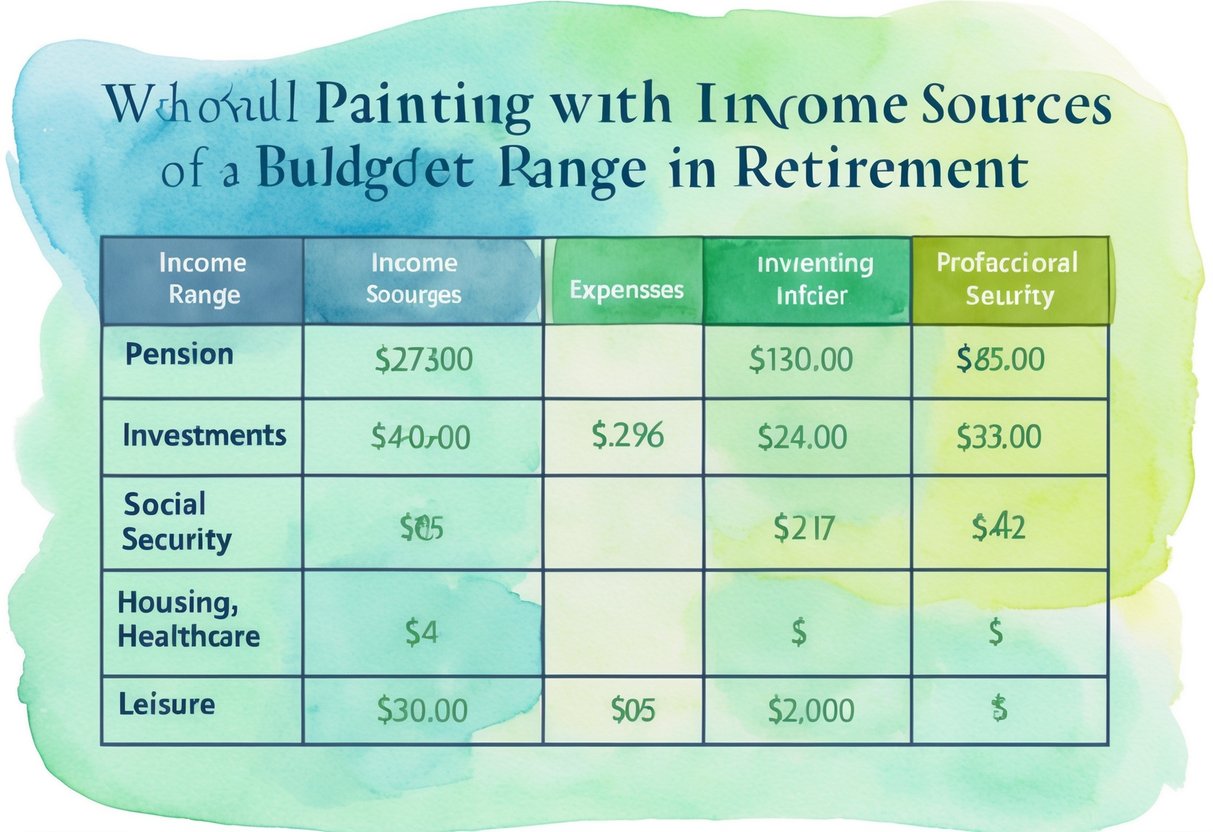
Planning for retirement income is crucial. Let’s explore the main sources of funds you’ll rely on in your golden years and how to make the most of them.
Social Security Benefits Overview
Social Security is a key part of most retirees’ income. But don’t count on it to cover all your needs. The average monthly benefit is about $1,500. That’s not much to live on.
To get the most from Social Security:
- Wait until full retirement age (66-67) to claim
- Consider delaying until 70 for maximum benefits
- Check your earnings record for accuracy
Remember, Social Security was meant to be just one part of your retirement plan. It’s not enough on its own.
Retirement Accounts and Pensions
401(k)s, IRAs, and pensions can provide steady income in retirement. But you need to start early and contribute consistently.
With a 401(k):
- Contribute enough to get the full employer match
- Increase contributions each year
- Consider a Roth option for tax-free withdrawals later
IRAs offer more investment choices. I prefer Roth IRAs for tax-free growth.
Pensions are becoming rare. If you have one, understand its terms and payout options.
The Role of Personal Savings
Your personal savings are the wild card in retirement planning. This is where you have the most control.
I always say, “Pay yourself first.” Treat savings like a bill you must pay each month.
Some strategies I use:
- Automate transfers to savings accounts
- Cut unnecessary expenses
- Look for ways to boost income
Don’t just save - invest wisely. A diversified portfolio can help your money grow faster than inflation.
Remember, your personal savings are your safety net. They give you flexibility and peace of mind in retirement.
Investing for Retirement

Investing for retirement is crucial for building wealth and securing our financial future. It’s not just about saving money; it’s about making our money work for us. Let’s explore some key strategies to maximize our retirement investments.
Building a Diversified Portfolio
I always tell my clients that diversification is the key to reducing risk. It’s like not putting all our eggs in one basket.
A well-balanced portfolio should include:
- Stocks: For growth potential
- Bonds: For stability and income
- Real estate: As a hedge against inflation
- Cash: For liquidity and emergencies
I recommend spreading investments across different sectors and geographic regions. This approach helps protect against market volatility.
Remember, the goal is to balance risk and reward based on our individual goals and risk tolerance.
Understanding Fees and Tax Advantages
Fees can eat away at our returns, so it’s crucial to keep them in check. I always look for low-cost index funds and ETFs. They often outperform actively managed funds in the long run.
When it comes to taxes, retirement accounts offer significant benefits:
- Traditional 401(k)s and IRAs: Contributions are tax-deductible now, but withdrawals are taxed later.
- Roth accounts: We pay taxes on contributions now, but withdrawals in retirement are tax-free.
I suggest maximizing contributions to tax-advantaged accounts before investing in taxable ones. It’s a smart way to keep more of our hard-earned money.
Retirement-Focused Investment Products
There are several investment products designed specifically for retirement:
- Target-Date Funds: These automatically adjust asset allocation as we approach retirement.
- Annuities: They provide guaranteed income in retirement, but watch out for high fees.
- REITs: Real Estate Investment Trusts offer exposure to real estate without direct property ownership.
I’m a fan of low-cost index funds for most investors. They provide broad market exposure and are easy to manage.
But remember, what works for one person might not work for another. It’s essential to consider our unique financial situation and goals when choosing investments.
Health Care and Insurance

Planning for health care costs in retirement is crucial. Let’s explore the key aspects you need to consider to protect your financial well-being.
Medicare and Eligibility
Are you ready for Medicare? It’s essential to understand how it works.
Medicare eligibility typically begins at age 65. I always remind people to sign up three months before their 65th birthday to avoid gaps in coverage.
Medicare has different parts:
- Part A (hospital insurance)
- Part B (medical insurance)
- Part D (prescription drug coverage)
Did you know the standard monthly premium for Part B in 2024 is $174.70? That’s a cost you’ll need to factor into your budget.
Don’t forget about supplemental coverage. Many retirees opt for a Medigap policy to cover what Medicare doesn’t.
Long-Term Care Insurance
Have you considered what would happen if you needed extended care? Long-term care insurance can be a game-changer. It covers services that Medicare doesn’t, like assisted living or in-home care.
The best time to buy long-term care insurance? In your 50s or early 60s, when premiums are lower. Don’t wait until you need it – by then, it might be too late or too expensive.
Remember, the cost of long-term care can quickly deplete your savings. I’ve seen it happen to many families. Planning ahead can save you and your loved ones from financial stress.
Out-of-Pocket Expenses and Deductibles
Even with insurance, you’ll face out-of-pocket costs. These can add up quickly if you’re not prepared. Let’s break it down:
- Deductibles: The amount you pay before insurance kicks in
- Copayments: Fixed amounts for services or prescriptions
- Coinsurance: Your share of the cost for a service
In 2024, the Part B annual deductible is $240. That’s just the start. You’ll need to budget for regular health expenses too.
Want to be prepared? Consider a Health Savings Account (HSA) if you’re eligible. It’s a tax-advantaged way to save for medical expenses. The money grows tax-free and can be used for qualified health costs in retirement.
Lifestyle Considerations
Retirement brings exciting changes to your daily life. It’s crucial to plan for how you’ll spend your time and money in this new chapter. Let’s explore some key areas to consider.
Housing after Retirement
Where will you live when you retire? This is a big decision that impacts your finances and quality of life.
Many retirees choose to downsize to a smaller home or condo. This can free up cash and reduce maintenance costs.
I’ve seen some clever housing moves by retirees. One couple I know sold their large family home and bought two smaller properties - a condo in the city and a cabin by the lake. This gave them the best of both worlds.
Consider your location carefully. Do you want to be close to family? Or maybe move to a warmer climate? Don’t forget to factor in healthcare access and cost of living.
Budgeting for Hobbies and Vacations
Retirement is your time to enjoy life! But fun activities cost money.
Make a list of hobbies and trips you’d like to pursue. Then, estimate the costs and build them into your budget.
Have you always wanted to learn photography? Or maybe take an RV across the country? Retirement lifestyle planning helps you align your interests with your finances.
I recommend setting aside a “fun fund” in your retirement budget. This way, you can enjoy life without guilt or financial stress. Remember, experiences often bring more happiness than material things.
Longevity and Lifestyle Changes
We’re living longer than ever before. This is great news, but it means your retirement savings need to last longer too. Plan for at least 20-30 years of retirement.
As you age, your needs and wants may change. You might need more medical care or in-home assistance. Or you may decide to move closer to family for support.
Life insurance can provide peace of mind for your loved ones. But do you still need it in retirement? That depends on your individual situation.
Stay flexible in your planning. Review your lifestyle and budget regularly. This way, you can adapt to changes and make the most of your golden years.
Professional Financial Advice

Getting expert help can make a big difference for your retirement plans. A good advisor will look at your whole financial picture and help you make smart choices. Let’s explore how to find the right help and plan for future health needs.
Choosing a Financial Advisor
I’ve seen many people struggle to pick the right financial advisor. It’s not easy, but it’s worth the effort.
What should you look for? First, check their credentials. Are they a Certified Financial Planner (CFP) or Certified Public Accountant (CPA)? These pros have special training in retirement planning.
Next, ask about their experience. Have they worked with people like you? Can they show you a sample retirement plan? Don’t be shy about asking for references.
Fees matter too. Some advisors charge a percentage of your assets, others a flat fee. Which is better for you? It depends on your situation. Always ask for a clear breakdown of costs.
Planning for Healthcare and Longevity
Healthcare is often the biggest surprise expense in retirement. Have you thought about how you’ll pay for it? Medicare helps, but it doesn’t cover everything.
I always tell my clients to look into long-term care insurance. It’s not cheap, but it can save you from huge bills later.
What about your family health history? If you have longevity in your genes, you might need to plan for a longer retirement.
Transportation and home maintenance costs can sneak up on you too. As you age, you might need to modify your home or pay for more services. Have you factored these into your plan?
A good retirement advisor can help you figure out these tricky parts. They’ll look at your whole financial picture and help you make a plan that covers all the bases.
Finalizing Your Retirement Strategy
As we wrap up our retirement planning journey, let’s focus on two crucial aspects that can make or break your financial future. These strategies will help you determine how much you can safely spend and when to start your golden years.
Implementing the 4% Rule
The 4% rule is a handy guideline for retirement spending. Here’s how it works:
- In your first year of retirement, withdraw 4% of your savings.
- Adjust this amount for inflation each year after.
For example, if I have $1 million saved, I’d withdraw $40,000 in year one. This rule aims to make your money last 30 years or more.
But is it foolproof? Not quite. Market conditions and personal factors can impact its effectiveness. I always suggest being flexible. In good years, spend less. In tough times, tighten your belt a bit.
Remember, this is a starting point. Your unique situation might call for adjustments. Have you considered how your spending might change over time?
Retirement Age and Timing
When should you retire? It’s not just about hitting a magic number on the calendar.
Here are key factors to weigh:
- Financial readiness: Have you saved enough?
- Health: Can you enjoy retirement activities?
- Work satisfaction: Do you still find fulfillment in your job?
- Social Security benefits: Delaying can increase your monthly check.
I’ve seen too many people rush into retirement unprepared. Don’t make that mistake.
Take a hard look at your retirement plan. Are you on track to meet your goals?
Consider a phased approach. Could you work part-time for a few years?
This can ease the transition and boost your savings. What skills do you have that could generate income in retirement?