
Have you ever wondered why some people effortlessly slide into retirement while others find themselves stuck and struggling to let go? I’ve often observed how a fixed mindset can be a significant roadblock. A fixed mindset can delay your retirement by preventing you from embracing new opportunities and adapting to changes needed for a fulfilling and financially secure retirement. This challenge often stems from deeply held beliefs about one’s abilities and potential.  In my conversations with those nearing retirement, I’ve found that mental health and emotional readiness play a critical role. People with a fixed mindset might resist exploring alternative retirement plans or hesitate to seek advice, holding tightly to a narrow view of what retirement looks like. What if the key to a successful retirement wasn’t just about saving money but about transforming how we think? Retirement planning isn’t just about dollars and cents; it’s also about the mindset shift required to embrace this new chapter. Could the solution to your retirement concerns lie in nurturing a growth mindset? By being open to learning and adapting, you can discover pathways to a retirement that’s not only financially stable but also mentally enriching and rewarding.
Key Takeaways
- A fixed mindset can hinder retirement progress.
- Emotional readiness is crucial for a successful retirement.
- Adopting a growth mindset opens new retirement possibilities.
Understanding the Fixed Mindset
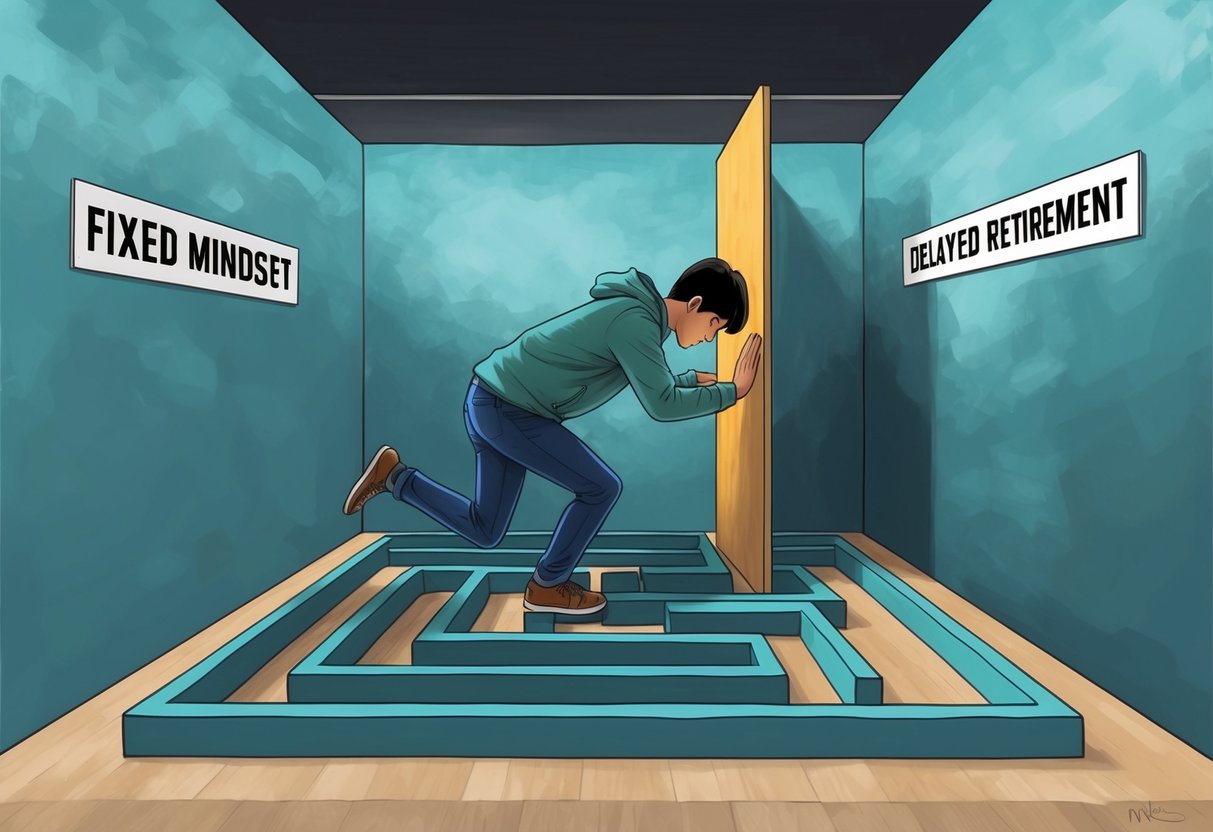 Our minds can greatly influence our ability to plan for retirement. A fixed mindset can sometimes hold us back from making the necessary financial changes to secure our future. Let’s explore the nature of a fixed mindset and how it might affect our finances.
Definition and Characteristics
A fixed mindset is the belief that abilities and talents are innate and unchangeable. People with this mindset often see challenges as threats rather than opportunities. This can lead to avoiding new experiences or ventures. Since skills are seen as fixed, there might be little motivation to develop new ones. A fixed mindset often affects mental well-being. When challenges are tough, self-doubt creeps in, making it easy to feel inadequate. Recognizing this mindset’s traits can be the first step in transforming how we perceive our abilities.
Fixed Mindset and Personal Finance
A fixed mindset can limit our financial growth. If you believe your financial skills are unchangeable, you may shy away from learning about investments or new money-saving strategies. This can keep you stuck in the same financial habits, preventing growth. Moreover, this mindset can hinder your ability to adapt to financial setbacks. Viewing mistakes as failures rather than learning experiences can delay retirement plans. Negative beliefs about financial ability can create a reluctance to seek advice, leaving potential opportunities unexplored. It’s crucial to break out of this pattern to achieve financial freedom. Embracing a mindset shift can open up new paths toward securing your financial future.
Psychological Factors in Retirement Planning
 When it comes to retirement planning, psychological factors play a crucial role. Many people find themselves stuck due to anxiety and mental barriers. How do these factors impact retirement decisions?
Anxiety and Its Impact on Decisions
Anxiety often creeps in when thinking about the future. It can make retirement planning feel daunting. Worry about savings, investments, and future expenses can become overwhelming. Do you sometimes feel paralyzed by the thought of not having enough saved up? This feeling can lead to poor decision-making, like delaying important financial plans. Anxiety affects mental health, making it tough to focus on goals. It’s important to recognize these feelings so they don’t control your decisions. Calming strategies and proper guidance can help. Seeking advice from a financial advisor might ease those worries and lead to better planning.
Overcoming Mental Barriers to Planning
Are old beliefs holding you back? Many of us carry mental barriers that prevent us from acting. This can include doubts about our ability to manage money or fear of making mistakes. But these barriers can be overcome. Understanding these barriers is the first step in retirement planning. Change your mindset by focusing on empowerment and knowledge. You have the tools to succeed, and there are resources to help you grow your financial literacy. Belief in your abilities can increase happiness and confidence. This mindset shift leads to proactive planning. Embrace these changes and prepare for a more secure future. Retirement planning isn’t just about money; it’s about achieving peace of mind.
Implications of Delaying Retirement
 Thinking about putting off retirement? There’s plenty to consider. Extending your work life can change your financial outlook, affect your health, and impact how you interact with loved ones. Let me guide you through these important aspects.
Financial Consequences
Delaying retirement offers both pros and cons financially. By working longer, you can accumulate more savings, boosting your financial security. This means you might have more money to tap into when you eventually retire. Additionally, staying employed often increases your Social Security benefits. You’re not just putting money in the bank; you’re enhancing your future payouts. On the flip side, if you wait too long to start enjoying your retirement, you might miss out on some of those plans you’ve been dreaming about. If your investments are in for the long haul, decisions around working longer should be made wisely to balance fun and finances.
Health and Well-Being
When it comes to health, delaying retirement can have mixed effects. Staying active at work could keep your mind sharp and your body moving. Interaction with colleagues and tackling projects might even contribute to mental well-being, helping stave off some declines often associated with aging. Yet, working longer may also increase stress or related health issues, which could impact physical health. The key is to ensure that work isn’t purely a source of stress but includes restorative activities that contribute to personal health and happiness. Healthy living remains crucial, so make sure to spend time on your well-being while considering these choices.
Social and Family Dynamics
Working beyond the typical retirement age can reshape your social life and family dynamics. You may feel more productive and socially engaged by continuing to work, maintaining friendships and professional relationships. This social activity might provide satisfaction beyond just financial rewards. But, does staying on the job limit the time you can spend with family? Consider how this might affect your relationships, especially in terms of family support and the availability to enjoy life with loved ones. Reflect on what brings you true happiness. I strive to find a balance that supports both my financial and familial goals.
Strategies for Achieving Financial Security
 Reaching financial security takes more than just saving; it involves understanding and effectively using the tools available. By focusing on retirement accounts and building a strong financial foundation, you can set yourself up for a secure future.
Importance of Retirement Accounts
Retirement accounts are one of the most important tools for securing your future. They offer tax advantages that can make your money grow faster over time. Think of accounts like 401(k)s or IRAs, which provide a way to save consistently. These accounts often benefit from employer contributions, creating a powerful savings multiplier. Why would anyone turn down free money? If your employer offers a match, take advantage of it. This can significantly boost your retirement savings. Also, diversifying within these accounts is key. It’s essential to balance risk with potential returns. A mix of stocks, bonds, and other assets can help. Understanding contribution limits is critical, as maximizing these can lead to greater wealth accumulation. Staying informed and adjusting your strategy as you age ensures you’re on track to meet your retirement goals.
Crafting a Financial Foundation
A solid financial foundation is essential for financial security. How can you build it? Start with a budget that reflects your lifestyle and priorities. Track your spending carefully to identify where you can cut unnecessary expenses. Use this freed-up money to pay down high-interest debt and boost your savings. Creating an emergency fund is crucial. Aim to save at least three to six months of living expenses. This fund acts as a financial cushion, protecting you from unexpected events and preventing you from dipping into retirement savings early. Investing in education about personal finance can be a game-changer. The more you know, the better decisions you can make. Owning a home, if affordable, can also be a great way to build equity. Prioritize these steps, and you’ll be laying the groundwork for a secure financial future.
Nurturing a Growth Mindset for Retirement Success
 Embracing a growth mindset in retirement is about adapting to new challenges and setting clear, achievable goals. This approach can transform your retirement journey into a time filled with opportunity and happiness. By shifting how we think and plan, we can ensure a more fulfilling retirement experience.
Adapting Mindset and Strategies
How do we prepare for the uncertainty that comes with retirement? The key lies in being open to change and growth. Retirement isn’t just about stopping work; it’s a new phase of life that requires fresh thinking. Adopting a growth mindset means being willing to learn and adapt, which helps in overcoming the challenges retirement often presents. I’ve found it essential to frequently update my strategies. Keeping tabs on financial trends and adjusting my investment approaches ensure I remain on track. By continually learning and staying informed, I increase my chance of achieving my goals. Instead of fearing the unknown, I view retirement as a new adventure, offering various ways to explore and learn.
Setting Realistic and Achievable Goals
Setting goals that are both realistic and achievable is crucial for retirement success. It starts with understanding what my desired lifestyle looks like. Do I want to travel? Spend more time with family? Once I determine this, I can outline specific goals to achieve it. I focus on short-term and long-term objectives, writing them down to stay accountable. Breaking larger goals into smaller steps makes them seem more attainable. Each milestone reached is a win that keeps me motivated. This method not only reduces anxiety but also keeps the retirement journey exciting and aligned with my vision for happiness.
Seeking Professional Guidance
 Navigating the path to a comfortable retirement can feel overwhelming. Some vital steps can simplify the process, ensuring peace of mind and thorough preparation.
Role of Financial Advisors
Why struggle to manage the complexities of retirement planning alone when financial advisors can offer clear, personalized advice? These professionals help tailor a strategy based on your unique circumstances, like career stage, savings, and family needs, which can help avoid common pitfalls. With a fixed mindset, it’s easy to overlook the benefits of seeking external guidance. Financial advisors bring expertise and an outsider’s perspective, identifying growth opportunities and ensuring you’re not missing critical aspects of your plan. They also keep up with changes in tax laws and investment options, providing insights you might not have considered. Do you know how your decisions today will impact your finances tomorrow? With a financial advisor’s help, making informed decisions becomes more straightforward and potentially more lucrative.
Utilizing Retirement Calculators
Have you used a retirement calculator lately? These tools offer a snapshot of your financial future, projecting how much you’ll need to save to achieve your retirement goals. By entering information like current savings, expected expenses, and retirement age, a retirement calculator can reveal if you’re on track. It helps you identify gaps in your savings plan and suggests areas where adjustments could make significant differences. This can inspire a shift from a fixed to a growth mindset, as it provides concrete data on how small changes affect future outcomes. Retirement calculators, when used alongside advice from financial advisors, create a comprehensive approach. They offer a clearer picture of what lies ahead and highlight areas where you may need to adjust your strategy to secure a more comfortable future.
Planning for an Aging Population
 As our society ages, it’s crucial to consider how demographic changes will influence our future plans. This shift impacts how we approach retirement, healthcare, and financial security.
Adapting to Demographic Shifts
Have you considered what it means for society as more people age? By 2035, the U.S. will have more individuals over 65 than under 18. This change demands new strategies. Communities must plan for accessible infrastructure, like safe roads and public transport, to support older adults’ mobility. We must also account for increasing healthcare needs. Chronic conditions tend to rise with age. So, investing in comprehensive, high-value healthcare can better support an older population. Balancing these factors is key. A shift in mindset is required from seeing aging as a problem to planning proactively for it.
Social Security in the Future
What does the future hold for Social Security? As the population ages, more people will rely on this crucial safety net. However, with the retirement age rising, planning for it becomes essential. The proposal to raise the Social Security full retirement age to 67 shows our need to adapt. Social Security will remain vital, but we can’t only count on it. We need to explore additional savings or income sources. It’s like building a safety net with multiple layers. We need to think about how to ensure well-being and financial stability for ourselves and future generations. Balancing our retirement goals with these shifts is vital to securing a comfortable future.