
Ever notice how families work for decades to build wealth, only to watch it disappear a generation or two later? It’s not just bad luck. There are actual patterns here, and if I want my family’s money to stick around, I need to understand them.

I’ve tried following traditional financial advice, but sometimes it just feels incomplete. Most of us want more than comfort—we want something that lasts. So, how do I make sure my hard work actually benefits future generations?
1) Lack of financial education for heirs

I’ve watched fortunes shrink because nobody taught the next generation what to do with money. It’s just a tool, right? But if you don’t know how to use it, it gets heavy real fast.
Families pour years into building wealth, then heirs stumble. Why? Usually, nobody gave them a financial education. If my kids inherit assets but not the skills, what’s going to happen?
Schools skip over real-life money lessons. Can my kids read a balance sheet? Do they get how investing works, or how taxes eat up returns? Without those basics, even a big inheritance can drain away.
I’ve noticed that building money habits early actually helps. Research shows that teaching financial skills keeps wealth around longer and helps people make smarter choices (more on this here). Why gamble with their future?
2) Absence of structured succession planning

I’ve seen families lose nearly everything by the third generation. One of the biggest reasons? They skipped structured succession planning. Too many people avoid the tough talks about who’s going to run the family business or manage the assets.
People hope the next generation will just figure it out. But without a plan, chaos usually follows. Arguments and confusion eat away at what took years to build.
When you use structured succession planning, everyone gets clear guidance. It spells out who’s in charge and what comes next. Even more, it helps prevent family feuds that can wreck both relationships and bank accounts.
It takes more than a will. True succession planning means training future leaders, sharing financial know-how, and sometimes bringing in outside experts. Families protect wealth when everyone knows their role and the plan is out in the open.
If you keep putting off these decisions, it can get expensive fast. I’ve heard too many stories of regret. Why not start now? If you want to see how the pros handle it, check out how family offices tackle succession planning challenges.
3) Poor wealth management practices

I’ve watched families build fortunes, then lose them because of sloppy money habits. When you don’t make smart investments or keep an eye on things, wealth just slips away.
Ever see an inheritance fade in a few years? It usually happens because nobody made a plan or set clear goals. Sometimes, people even forget the basics like taxes and budgeting. Money doesn’t multiply on its own.
Families sometimes skip legal structures or estate planning, leaving the door open for mistakes. Saving and investing isn’t enough—I think you’ve got to protect and grow what you’ve built.
With careful planning and some rules, family money can outlast three generations. Ignore these basics, though, and it disappears before you know it. Even the richest families can lose everything through avoidable blunders—real-world examples prove it.
4) Lifestyle inflation leading to overspending

When you make more money, it’s easy to want more stuff. Ever get a raise and suddenly feel like you deserve a nicer car or a bigger house? That’s lifestyle inflation at work.
I see families move into luxury neighborhoods or send kids to expensive schools, thinking it’s just the next step. But as spending creeps up, saving and budgeting often fall by the wayside.
Many third-generation heirs grow up comfortable and never learn the discipline that built the wealth. When big expenses become normal, it’s easy to lose track. Little luxuries add up faster than you’d think.
Wealth often disappears when spending rises but earnings or investments don’t keep pace. Lifestyle inflation is a big reason families lose wealth. If we don’t set limits and watch our spending, the money can vanish—one purchase at a time.
5) Failure to instill core family values

What happens when you pass down money but not the values that built it? I’ve seen that wealth rarely survives without trust, responsibility, and a sense of purpose. Money alone doesn’t teach the next generation how to keep it—or use it wisely.
Some families assume their kids will just figure it out. Without guidance, though, you get distrust, broken relationships, and bad decisions. It’s easy to spend mindlessly when nobody taught you discipline or hard work.
Am I showing my own kids what it took to succeed? If I don’t, I’m risking more than just dollars. Wealth can vanish if the next generation isn’t ready to handle it with strong values and real purpose.
Values like honesty, perseverance, and respect don’t just show up. I have to model them and talk about them if I want my legacy to last. Isn’t that what really matters?
6) Inadequate estate and inheritance planning

I keep seeing families work hard, build wealth, and then lose it because they never set up a clear plan for passing it on. Does your estate plan cover everything—from taxes to stepchildren? If you skip the details, you invite confusion and conflict.
A lot of people think a will is enough. Inheritance gets messy if you don’t have real conversations or set up the right legal tools. Problems usually show up when it’s too late to fix them.
Without strong planning, you’re fighting the odds. Sixty percent of wealth disappears by the second generation, and 90% is gone by the third. I don’t want that for my family, and I bet you don’t either.
Estate and inheritance planning isn’t just about money. It’s about protecting your values and making sure your life’s work ends up in the right hands—not in court or with the taxman.
7) No mentorship or coaching on money use

I’ve seen families pass down assets, but they forget to pass down wisdom. Money without guidance is like handing over car keys to someone who’s never driven. What do you think happens?
When parents don’t teach their kids how to handle money, the third generation is left to guess. Schools usually skip real-world money lessons. So where are kids supposed to learn?
Mentorship really matters. A trusted mentor or financial coach helps the next generation dodge big mistakes. Want your kids to make smart choices? Point them toward someone who’s already been there.
From what I’ve seen, lack of planning and mentorship often leads to wealth disappearing by the second or third generation. Experts call it the “three-generation curse,” and it’s usually about not planning or teaching—not about not earning enough. Clear communication and real-life guidance really do make a difference.
8) Overreliance on the initial wealth creator

I keep seeing this play out: one person—the original wealth builder—carries the whole family’s financial future. If everything rides on that one individual, what happens next? The next generation misses out on learning how to create, grow, or even protect what they inherit.
Why do families fall into this? Maybe it just feels easier to believe success will trickle down. But if kids and grandkids never get nudged to think for themselves about money, they start relying on decisions made long before their time.
Honestly, I think real financial security means everyone in the family should learn about money. Do your kids actually know how the family wealth came to be? Have they taken any smart risks or learned from tiny mistakes? If they haven’t, that money isn’t really safe.
Families who talk about financial goals, responsibilities, and the reasons behind their choices tend to have a better shot at beating the third-generation curse. Teaching independence with money really does make a difference.
9) Ignoring tax-efficient wealth transfer strategies

Ever wonder why so many families can’t hold onto their money past the second generation? It’s not just about spending too much or poor planning. Taxes can quietly eat away at wealth faster than you’d think.
If I ignore estate, gift, and capital gains taxes, a big chunk of my savings could end up with the government instead of my kids. Even simple mistakes—like putting the wrong asset in my will or forgetting annual gifting rules—can really hurt.
Tax laws change all the time, and they’re confusing, but ignoring them just makes things worse. I wouldn’t leave my front door unlocked at night, so why should I let a lifetime of work slip away without a fight?
Using things like trusts, annual gifts, and insurance can help my family sidestep those hidden tax traps that ruin legacies. Families who focus on tax-efficient wealth transfer keep more money where it belongs—not just for the next generation, but for the one after that, too.
10) Failure to diversify investments

It’s so tempting to stick with what feels familiar. Plenty of families pour everything into one investment—maybe real estate, maybe a business. It feels safe, but is it really?
I’ve watched families lose nearly everything because they didn’t spread out their risk. If a market crashes or a business tanks, the entire nest egg can disappear overnight.
Would I bet my family’s future on one horse? No way. Mixing investments—stocks, real estate, and other assets—adds a layer of safety. If one thing drops, the others can soften the blow.
Some families only realize this after it’s too late. Diversification can be the difference between keeping your wealth or starting from scratch. If you want to dig deeper, check out how failing to diversify investments can hurt generational wealth.
Understanding Wealth Transfer Dynamics
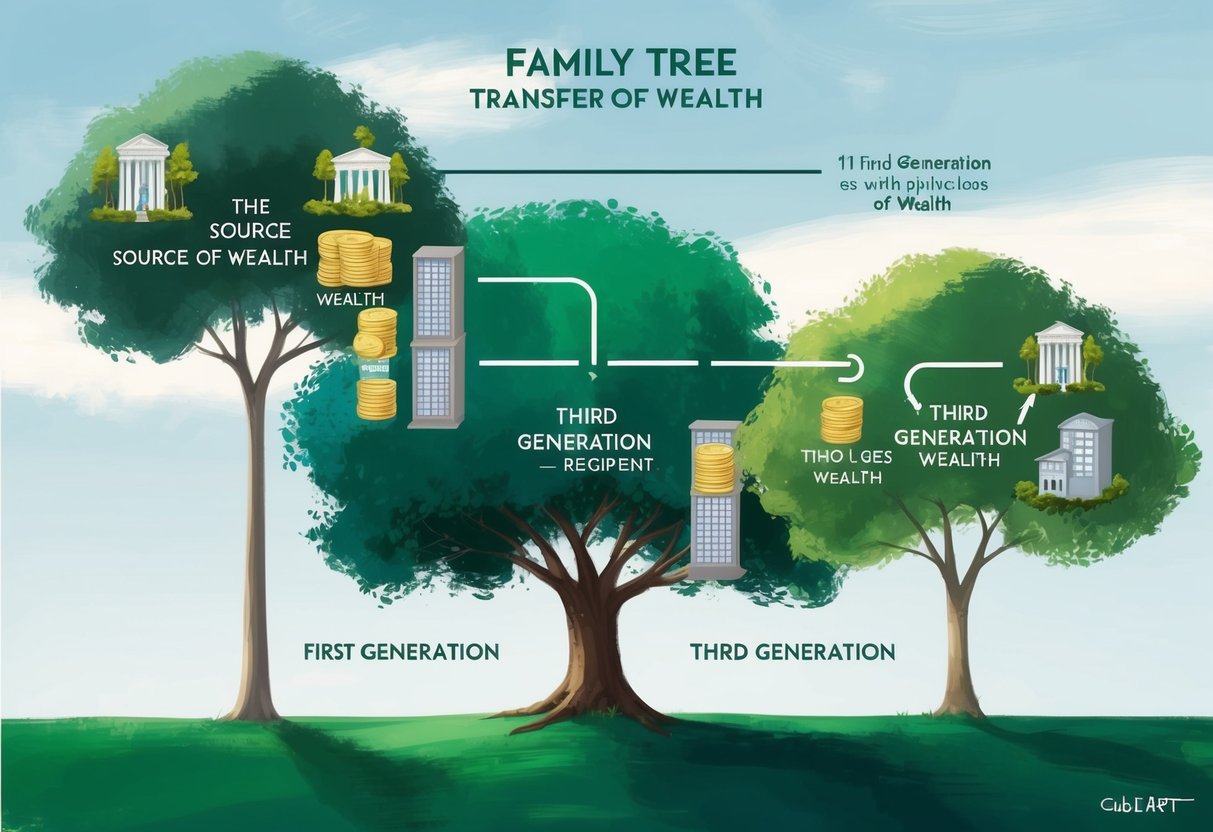
Most families work hard to build wealth. But keeping it across generations? That’s a whole different challenge.
A mix of mistakes can chip away at money and spark conflict, even when everyone means well.
The Role of Family Governance
I’ve learned that just handing over assets doesn’t guarantee lasting wealth. When families skip setting clear rules and roles, their fortune often slips away.
Family governance means passing down not just wealth, but also values and guidelines for using it. For example, families can set up a family council or hold yearly meetings.
In these meetings, everyone knows the rules—no one has to guess who’s in charge or how money decisions get made. That kind of clarity really cuts down on confusion and arguments.
I like when families split up responsibilities early. Younger members can start with small tasks, like tracking one investment. Over time, they pick up more, learning as they go.
This slow hand-off builds trust and a sense of accountability. Without it, families risk falling into the third-generation trap where inherited money just fades away.
Communication Across Generations
I’ve seen poor communication tear families apart. When parents avoid talking about money, kids are left guessing or dreaming up wild ideas.
It’s not just about sharing numbers. It’s about teaching what to do with them.
Open, honest conversations help everyone understand why certain decisions got made. They also create space to share worries, plans, and hopes for the future.
When families talk openly, they’re less likely to repeat old mistakes. Setting up regular family meetings—where even teens get a say—can help.
I’ve used written guidelines or a family mission statement to keep everyone on track. Research shows most families lose wealth because they lack clear communication and trust.
If I want our success to last, building a culture of openness matters just as much as earning more money.
Strategies to Preserve Multi-Generational Wealth

Keeping wealth in the family isn’t just about luck or working hard. I’ve found that putting smart structures in place and teaching financial skills really makes a difference when you’re trying to protect assets for the next generation.
Establishing Trusts and Structures
Why do wealthy families use trusts and legal structures? These tools help control and distribute assets, avoid expensive probate, and lower taxes for future generations.
When families put things like real estate or investments into a trust, they build a legal wall around them. That wall protects assets from divorce, lawsuits, or bad spending decisions.
If you care about legacy, a clear legal structure isn’t optional. Families often set up rules or milestones—like only giving out money if a child graduates college or turns a certain age.
This helps keep money from being wasted too soon. Trusts, LLCs, or family limited partnerships aren’t just for the ultra-wealthy. Even modest estates benefit from this level of planning, as wealth managers often point out.
Key benefits of using trusts:
- Asset protection from creditors
- Tax efficiency
- Privacy and control over distributions
Financial Literacy and Education
Ever wonder why some smart, hardworking families still lose their wealth after a few generations? Honestly, it’s usually because no one teaches them how to handle money. Schools rarely cover real-life money skills, so families end up carrying that responsibility.
I’ve seen families sit down for regular money talks, coaching their kids about saving, investing, and even giving back. When families set up shared money rules or write a kind of “ethical will,” they’re really building habits that stick. If you start teaching kids about budgeting and investing early, you give them a real shot at making every dollar count.
A lot of experts recommend families meet, talk about their values, and try to agree on a vision for the future. It’s a way for everyone to understand where the money came from and how to keep it around. That goes further than the usual advice, at least in my experience—and Paramount Wealth seems to agree.
A simple checklist to build financial literacy at home:
- Hold family money meetings at least once a year
- Involve kids in basic budgeting and investing decisions
- Choose learning goals for each family member