
Are you tired of watching your hard-earned savings stagnate? You’re not alone. Imagine earning passive income without the worry of extra taxes chipping away at your profits. Tax-free municipal bonds offer a unique way to build a stable income stream while keeping your tax bill low. These bonds, issued by local and state governments, provide interest payments that are often exempt from federal taxes and sometimes state and local taxes too.  I often hear concerns about the risks and rewards of various investment strategies. Municipal bonds stand out as an appealing choice for those seeking stability and predictability. They allow you to support public projects while benefiting from regular, tax-free interest payments. These bonds can be a valuable addition to your financial strategy, whether you’re planning for retirement or aiming to fund your children’s education. Consider how investing in municipal bonds could enhance your financial security without the stress of unpredictable fluctuations in the stock market. There are various types of municipal bonds and funds to explore, making it essential to understand the options available. This journey might just lead you to a more secure financial future.
Key Takeaways
- Municipal bonds offer tax-free interest income.
- Investing in these bonds can provide financial stability.
- Tax considerations enhance the attractiveness of municipal bonds.
Understanding Municipal Bonds
 Municipal bonds can be a powerful tool for generating tax-free income. They offer unique benefits that attract investors looking for a steady revenue stream while minimizing tax liabilities. Curious about how they can fit into your financial strategy?
What Are Municipal Bonds?
Municipal bonds, often called munis, are debt securities issued by cities, states, or other local government entities. These bonds help fund public projects like schools, roads, and water systems. Investors lend money to the issuer for a specific period, receiving interest payments in return. The key advantage of municipal bonds is their tax-exempt status, which can mean significant savings for those in higher tax brackets. This tax break might be what you need for a more comfortable retirement or extra funds for your children’s education. Does it make sense to let the government work for you by providing tax benefits?
Types of Municipal Bonds
There are primarily two types of municipal bonds: general obligation bonds and revenue bonds. General obligation bonds are backed by the full faith and credit of the issuing authority, meaning they can use any means at their disposal, such as taxes, to repay investors. In contrast, revenue bonds are tied to specific projects like toll roads or utilities, repaid from the income generated by those projects. Each type carries different risks and benefits, and choosing between them depends on your risk tolerance and financial goals. Would a reliable general obligation bond or a potentially higher-yielding revenue bond suit your needs better?
How Municipal Bonds Work
When you purchase a municipal bond, you’re essentially lending money to a municipal entity. These bonds come with a maturity date, which is when the principal, or face value, is returned to you. The interest rate or coupon is usually fixed, but the bond’s market value can fluctuate before maturity. Knowing the bond’s maturity date is crucial since it impacts your investment timeline. If you’re looking for reliable income and have a long-term perspective, municipal bonds might align well with your financial goals. Do traditional investment routes match the stability and tax benefits that munis offer?
Advantages of Investing in Municipal Bonds
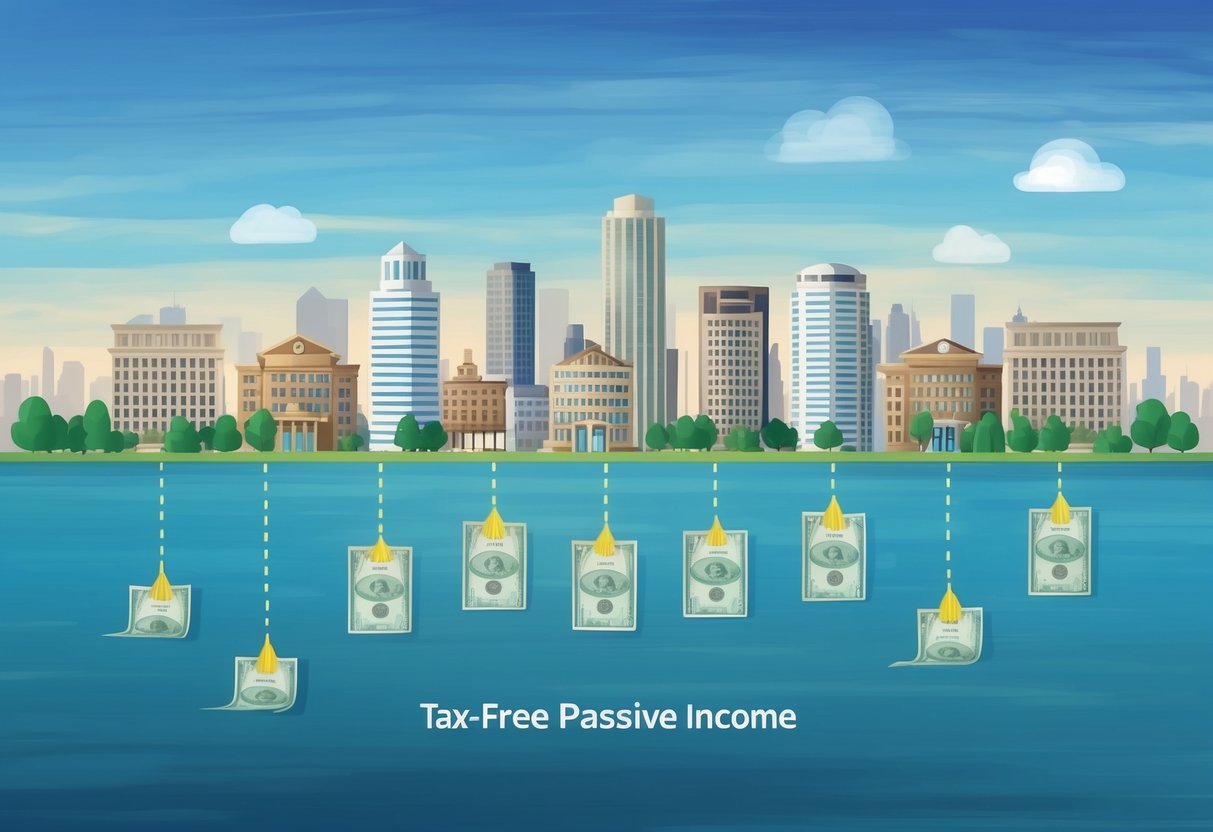 When I consider investing in municipal bonds, several advantages come to mind. These bonds offer tax-exempt income and lower default risk compared to other types of investments. Additionally, they’re smart to hold in a portfolio due to the way they can handle interest rates.
Tax-Exempt Income
Municipal bonds often provide tax-free income at the federal level. This means I don’t have to pay federal taxes on the interest earned, which can increase overall returns. This feature is especially beneficial for individuals in higher tax brackets. Some bonds are even exempt from state and local taxes if I reside in the state where the bond is issued. This makes them particularly attractive for growing a stable and tax-efficient income stream.
Lower Default Risk
Municipal bonds typically feature a lower default risk compared to other bonds. Most municipalities have strong credit quality, backed by government revenue or taxes. Historically, the default rate for these bonds has been quite low. This reliability gives me confidence in their stability, especially when planning for future financial needs. It’s reassuring to know that in many cases, the interest payments are secured by essential services or projects that the community relies on.
Interest Rate Considerations
Interest rates can influence bond prices and yields. However, municipal bonds often maintain relative stability. When interest rates rise, bond prices generally fall, but high credit quality bonds might be less volatile. This makes them a dependable choice during interest rate changes. For those like me, looking to diversify income and minimize risk, municipal bonds can serve as a solid component of a well-rounded portfolio. The ability to earn consistent income while potentially avoiding significant price drops is a valuable quality.
Comparing Municipal Bonds to Other Investments
 When evaluating where to place your hard-earned money, understanding how municipal bonds measure up against other choices is crucial. Let’s explore how munis compare to corporate bonds and equity investments.
Municipal Bonds vs. Corporate Bonds
Municipal bonds, often called “munis,” generally offer tax-free interest income, making them attractive for those in higher tax brackets. Corporate bonds typically don’t have this benefit. The coupon rate on munis may be lower than on corporate bonds, but the tax advantages often level the playing field for investors seeking steady income. Interest and Yield: Assessing the effective yield based on your tax bracket can make munis appealing. For example, to compete with a muni yielding 4.50%, a corporate bond must yield at least 5.77% for someone in the 22% tax bracket. Risk and Stability: Corporate bonds might offer higher yields, but they come with increased risk. Companies can default, affecting your return. Munis are generally considered safer, as they’re backed by local governments.
Munis and Equity Investments
While equities can deliver growth through dividends and capital gains, they bring volatility. Stocks might soar, but they can tumble just as easily. Can you weather the emotional rollercoaster of the stock market? Municipal bonds, in contrast, offer more predictability with their fixed interest payments. They don’t provide the growth potential of stocks but do offer diversification to temper risk. They’re essential in a balanced portfolio, acting as a stabilizing force amid market fluctuations. Diversification Strategy: Pairing munis with equities helps smooth out returns over time. The steady income from munis can offset the unpredictability of the stock market, giving you a reliable income stream regardless of market swings. This approach is often a keystone for those nearing retirement, relying on dependable income rather than risking volatile returns.
Municipal Bond Funds
 Investing in municipal bond funds can offer you tax-free income and a smart way to balance risk across your portfolio. You might be wondering how to maximize your returns while keeping your investment strategy simple. Let’s dive into key areas like diversification and Net Asset Value.
Diversification through Bond Funds
Why put all your eggs in one basket? When it comes to municipal bond funds, diversification is a powerful tool. These funds allow you to spread your investment across various bonds, which reduces the risk that comes with investing in a single bond issuer. Think of it as having a safety net that cushions you from market volatility. Municipal bond funds often hold a mix of bonds from different states and sectors. This variety helps stabilize returns, especially valuable when some bonds may underperform. Investing in these funds means you’re not just relying on one state or municipality to perform well. Instead, you benefit from the broad exposure to different regions and economies.
Understanding Net Asset Value (NAV)
Have you ever wondered how the value of your investment is calculated? The Net Asset Value (NAV) of a municipal bond fund represents its market value per share. It’s like the price tag for the fund, calculated daily based on the total value of all the securities in the fund minus its liabilities. Changes in NAV can tell you how well the fund is managed. When you buy shares in a fund, you pay the current NAV. As market conditions change, this NAV can rise or fall, influencing the value of your shares. Understanding NAV helps you make informed decisions about when to buy or sell shares. It’s crucial for aligning your financial goals with your investment’s performance.
Tax Considerations for Municipal Bond Investors
 Investing in municipal bonds, often seen as a way to achieve tax-free passive income, comes with its own set of tax considerations. It’s important to understand how the tax-equivalent yield works, how the Alternative Minimum Tax might affect you, and what the tax implications are for Social Security recipients.
Calculating the Tax-Equivalent Yield
The tax-equivalent yield helps compare municipal bonds to taxable investments. To calculate it, I need to know my tax bracket. For example, if a municipal bond yields 2.5% and I’m in the 25% tax bracket, my tax-equivalent yield is higher. The formula is: Tax-Equivalent Yield = Municipal Bond Yield / (1 - Tax Rate) This shows me the rate I’d need from a taxable bond to match the municipal bond’s returns. Understanding this concept helps me make informed decisions on whether these bonds truly offer superior benefits over taxable options.
Alternative Minimum Tax and Your Investments
Municipal bonds aren’t immune to the Alternative Minimum Tax (AMT). This tax system ensures that high earners pay a minimum amount of tax, regardless of deductions and credits. Some municipal bonds, known as private activity bonds, are subject to AMT. If a large portion of my investments includes these bonds, I should assess how AMT might affect my total tax obligation. It’s vital for me to know which bonds I have, to predict the impact on my tax situation and avoid unexpected liabilities.
Tax Implications for Social Security Recipients
For Social Security recipients, municipal bond interest could affect taxation. Though interest is tax-free, it counts towards your provisional income. Provisional Income consists of:
- Half of Social Security benefits
- Plus other income, including tax-exempt interest
If my provisional income exceeds certain thresholds, part of my Social Security benefits could become taxable. It’s important for me to monitor this threshold to manage how bond investments could unknowingly increase my taxes, affecting overall income. Understanding these dynamics helps in planning effectively and maximizing the benefits of both municipal bonds and Social Security income.
Risks Associated with Municipal Bonds
 Investing in municipal bonds offers tax advantages, but it is important to understand the associated risks. Key risk factors include the bond issuer’s creditworthiness, changes in interest rates, and potential defaults.
Credit Risk Factors
Municipal bonds are not risk-free. Credit risk refers to the possibility that the bond issuer may face financial difficulties and fail to meet payment obligations. Government entities issue these bonds, but some have varying levels of fiscal health. For instance, a city experiencing economic decline might struggle to generate enough revenue to pay bondholders. Credit ratings, provided by agencies like Moody’s or Standard & Poor’s, help assess this risk. Bonds with lower ratings usually offer higher yields to compensate for increased risk. It’s crucial to research these ratings to make informed decisions.
Interest Rate Risk
Interest rate risk is another consideration for municipal bond investors. When interest rates rise, bond prices generally decline. This inverse relationship can impact bond values, especially if you decide to sell before maturity. Imagine holding a bond with a 3% yield while new bonds offer 4%. Wouldn’t you face a loss if you needed to sell your bond? This risk is vital for those who might need liquidity. Considering whether interest rates might rise or fall over your investment horizon can guide better financial planning.
Assessing Default Rates
Default rates on municipal bonds are typically low, but they do occur. Default risk involves the issuer failing to make scheduled interest payments or repay the principal at maturity. While rare, defaults can bring significant financial loss. An example is when cities, like Detroit, filed for bankruptcy, leading to bondholders facing losses. Historical default rates for municipal bonds are low compared to other bonds, which can be reassuring. However, it’s essential to consider economic trends and specific regional risks. Researching past default incidents and economic forecasts can provide insight into potential future risks.
Strategies for Municipal Bond Investing
 Investing in municipal bonds requires strategic planning to maximize returns and minimize risks. The key strategies involve diversifying investments, choosing bonds with suitable maturity dates, and deciding between active and passive management.
Building a Diversified Muni Portfolio
Ever wonder why diversification is so crucial? It’s all about managing risk and potential returns. By spreading investments across different municipal bonds, I can balance the risk-reward profile of my portfolio. Municipal bonds vary in credit quality and issuer type—state bonds, city bonds, or agency bonds. This means choosing a mix across them helps cushion against localized economic downturns or sector-specific issues. Creating a diversified muni bond portfolio isn’t just about variety; it’s about thoughtful selection. Incorporating bonds with varied maturity dates and issuers helps in adjusting to market shifts, ensuring consistent passive income. Investing across different regions and sectors within municipal bonds could further safeguard against geographical risks.
Long-Term vs. Short-Term Bonds
How do I decide between long-term and short-term bonds? It’s about evaluating goals and risk tolerance. Long-term municipal bonds generally offer higher yields but come with greater interest rate risk. They are a good fit for those seeking greater returns over a longer period without needing to sell in the near future. In contrast, short-term bonds can act as a hedge against interest rate hikes, offering greater stability. They typically have lower yields but are less sensitive to market interest fluctuations. Choosing between the two depends on my timeline and risk appetite. For those seeking stability and predictable cash flow, a mix with an inclination towards one type, based on current market conditions and personal goals, might be ideal.
Active vs. Passive Investment Approaches
When it comes to choosing an investment approach, do I go active or passive? With active management, there’s the benefit of having experienced managers who adapt strategies to market changes—they look out for potential gains or mitigate risks through strategic trades. For example, BlackRock’s strategies involve experts finding opportunities and managing risks. On the other hand, a passive approach, like investing in broad municipal bond indexes, offers lower fees and steady returns without the need for constant oversight. These often follow popular municipal bond indices, focusing on long-term stability. My choice between active and passive investment should align with my personal preference for involvement, potential returns, and cost considerations.
The Secondary Market for Municipal Bonds
 Navigating the secondary market for municipal bonds can be a smart way to gain passive, tax-free income. Today, people are seeking more control over their investments as they face uncertainties about their financial future. Let’s explore how buying and selling bonds post-issuance and understanding market value fluctuations can be beneficial.
Buying and Selling Bonds Post-Issuance
After bonds are issued, they don’t just disappear—there’s a whole world waiting in the secondary market. It’s like a bustling marketplace where investors can trade their holdings. When bonds are initially issued, they’re often bought by institutions or individuals at a set price. Post-issuance, these bonds are traded, providing liquidity and flexibility. Why is the secondary market important? Because it offers everyone the chance to adjust their investments. If you hold a bond and need cash, you can sell it. Want to grab one that wasn’t available initially? You can buy it here. Buying and selling in the secondary market add dynamism to your portfolio, enhancing opportunities to fine-tune investment strategies.
Understanding Market Value Fluctuations
Market value in the secondary market can be full of surprises. It’s influenced by interest rates, economic forecasts, and even the issuing entity’s credit rating. A bond’s value may rise or fall, reflecting how its interest payment rate compares to current rates. When interest rates go up, the market value of existing bonds often goes down, and vice versa. For anyone investing, recognizing these fluctuations is crucial. By keeping an eye on interest rate trends and economic indicators, you can make informed decisions. Can you see the potential of grabbing a bond when its market value dips but its long-term potential remains strong? Understanding these dynamics can provide strategic opportunities.
Maximizing After-Tax Returns
 When planning for retirement, maximizing after-tax returns becomes essential. Tax-free municipal bonds can play a crucial role in this strategy. These bonds not only provide tax advantages but also generate a stable stream of income that can be reinvested to further enhance your financial future.
Assessing Investment Performance
How can you tell if your investments are truly working for you? The key is to evaluate bond yields after accounting for taxes. Tax-free municipal bonds can offer more favorable returns than similar taxable investments. To assess this, compare the after-tax returns of your municipal bonds with other fixed-income securities. Consider the bond ratings and the issuer’s creditworthiness. These factors affect the bond’s risk and its potential return. A higher credit rating generally means lower risk but might offer lower yields. Yet, tax advantages often make these bonds a better choice for many investors.
Reinvesting Bond Interest
How can you make the most out of the interest you earn? By reinvesting the bond interest, you harness the power of compounding, which can significantly increase your wealth over time. This reinvestment strategy allows you to purchase more bonds without needing additional funds from your pocket. Reinvesting also helps in building a larger income stream. As you buy more bonds using the interest generated, your overall bond investment grows, potentially offering more significant after-tax returns. This continuous cycle reinforces the benefits of tax-free income from municipal bonds, ensuring that your retirement savings are working at their full potential.