
When it comes to smart tax planning, passive investors like us need to use every tool at our disposal.
With the rise of automated investment tools, managing investments has never been easier or more efficient.
But how do we ensure that these tools are not just about convenience?
The key is in leveraging these tools to optimize our investment strategy while maintaining a focus on tax efficiency. This is not just about saving money, but about making informed decisions that align with our financial goals.
Many of us have grown tired of the complexities and costs of traditional investment advice. That’s where automated tools come into play.
They provide a streamlined approach to managing our investments without the need to be constantly hands-on.
These tools offer us the ability to build a tax-efficient investment portfolio that can help protect and grow our wealth.
By using automated platforms, we can better target our financial goals and minimize unnecessary costs.
This is about more than just automating the process. It’s about choosing the right platform to enhance our financial future.
Automated tools should be an integral part of our financial planning strategy. They offer us the potential for significant tax benefits, enabling us to focus on what truly matters: our work, our family, and our future.
Key Takeaways
- Automated tools boost tax efficiency for passive investors.
- Choosing the right platform enhances financial planning.
- A focused strategy can save money and build wealth.
Understanding the Basics of Passive Investing
Embracing passive investing can feel like tending to a self-sufficient garden. The focus is on strategic decisions such as asset allocation and diversification to grow investments over the long term. Here’s how these strategies work.
The Role of Asset Allocation
You might wonder, what does asset allocation really mean?
It’s about how I spread my investments across different types of assets, such as stocks, bonds, or real estate.
It’s not a one-size-fits-all; it depends on my financial goals and stage of life.
Imagine if I put all my money in one basket, say, only in tech stocks. If the tech market crashes, so does my portfolio. Implementing a balanced asset allocation reduces such risks.
I spread out my investments to improve potential returns and reduce exposure to market volatility. Using automated tools, I can adjust my allocations to stay in line with my changing investment goals.
Diversification and Risk Tolerance
Diversification might seem like financial jargon, but it’s crucial for managing risk.
Suppose my portfolio only focuses on one sector. It’s like betting everything I have on a single horse. By diversifying, I’m spreading my bets.
What’s my risk tolerance? It’s about how much risk I’m comfortable taking, considering my financial situation and goals.
A diversified investment strategy helps me maintain this balance.
I place my savings in various asset classes and sectors, reducing the negative impact of any single asset’s poor performance. With the right mix, I not only align with my goals but also sleep easier at night, knowing my investments are not overly exposed to market downsides.
The Power of Automated Investment Tools

In a world where time is money, automated investment tools have revolutionized how we manage and grow wealth. By leveraging technology, these tools can offer precise financial management without requiring constant human intervention.
Robo-Advisors Vs. Human Financial Advisors
Have you ever wondered if a robo-advisor could offer the same insight as a seasoned financial advisor?
Robo-advisors are designed to simplify investing by using algorithms to manage portfolios efficiently and cost-effectively. Unlike human advisors, they operate 24/7, providing continuous service without breaks. They excel in managing low-cost passive funds, automatically adjusting portfolios based on market trends.
Financial advisors bring personal experience and insight, crucial for comprehensive wealth planning. However, the convenience and lower fees of robo-advisors make them attractive for many investors.
The choice often boils down to personal preference and the complexity of one’s financial situation. Does the personal touch of a human advisor outweigh the efficiency and consistency of a robo-advisor?
Advantages of Automated Rebalancing
Automatic rebalancing is another powerful feature offered by many robo-advisors. This process involves periodically adjusting the assets in a portfolio to maintain a desired level of risk or asset allocation.
Imagine a tool that keeps your investments aligned with your goals, without you lifting a finger.
This method saves time and reduces emotional investing decision pitfalls. Over time, market fluctuations can skew your portfolio. Automated rebalancing ensures that your investments remain on track, providing peace of mind.
By using such automated tools, I can focus more on long-term goals rather than the day-to-day management of my portfolios. This approach is a straightforward way to maintain investment discipline.
Tax Considerations for Passive Investors

When thinking about taxes, it’s crucial to look at how different accounts are taxed and how you can minimize tax impacts. Understanding how to manage taxable accounts, retirement accounts, capital gains, and tax-loss harvesting can help in maximizing your investment returns. By using strategies wisely, you can save yourself some significant amounts over time.
Taxable Accounts and Retirement Accounts
Have you ever considered the differences in how taxable and retirement accounts are treated?
With taxable accounts, you pay taxes on dividends and capital gains each year. This means your annual returns might be lower due to taxes on earnings.
On the other hand, retirement accounts like 401(k)s or IRAs offer tax advantages. Contributions to a traditional retirement account might lower your taxable income, and the gains grow tax-deferred until withdrawal.
Roth IRAs, although not tax-deductible, allow for tax-free withdrawals in retirement if certain conditions are met. Knowing these benefits can influence where you decide to place your investments.
Capital Gains and Tax-Loss Harvesting
What about capital gains? You’ll face two types: short-term and long-term.
Short-term gains, from selling assets held for less than a year, are taxed at your ordinary income rate. Long-term gains, from selling assets held for more than a year, enjoy lower tax rates, often making them more appealing.
Tax-loss harvesting can help offset gains. By selling losing investments, you can potentially reduce taxable gains. This strategy can balance your portfolio and lessen the tax impact.
For example, if you have realized gains from some stocks, selling others at a loss could offset those gains. This makes tax-loss harvesting a valuable tool in managing tax liabilities.
Evaluating the Costs of Investment Management

Understanding the costs associated with investment management is crucial for making smart financial decisions. From traditional expense ratios and management fees to the various costs associated with robo-advisors, it’s essential to know where every dollar goes.
Expense Ratios and Management Fees
When it comes to investment management, expense ratios and management fees are key factors.
Expense ratios are essentially the annual fees charged by funds, expressed as a percentage of your investment. They can seem small, say 0.5%, but over time, they compound and eat into your returns.
Management fees, on the other hand, are charges for the expertise and time of financial managers. These are often higher in actively managed funds compared to passive funds.
It’s vital to ask yourself: are the returns justifying the fees you’re paying?
In a world where every percentage point counts, identifying funds with lower expense ratios without sacrificing performance is essential.
Assessing the True Cost of Robo-Advisors
Robo-advisors offer an attractive alternative with their automated, rebalanced portfolios. They usually charge a lower annual fee compared to human advisors.
The key question is, are you truly saving?
While basic packages might come with low fees, extra features and services like tax-loss harvesting can hike up costs.
Some top picks for robo-advisors include Wealthfront and Betterment, which are known for low overheads and efficient management. These platforms also offer insights and tools to help navigate the fee structures.
Pay close attention to whether these added services align with your financial goals and if they are worth the additional investment.
Building a Tax-Efficient Investment Portfolio
Creating a tax-efficient investment portfolio involves using thoughtful strategies to enhance after-tax returns. By incorporating tax-smart strategies and understanding the impact of account management on taxes, it’s possible to optimize portfolio growth while minimizing tax liabilities.
Incorporating Tax-Smart Strategies
In building my investment portfolio, I focus on strategies like tax-loss harvesting and choosing tax-efficient funds.
Tax-loss harvesting allows me to offset gains by selling investments that have lost value. This approach can significantly lower my annual tax bill and free up money for other investments.
Selecting tax-efficient funds is another crucial step.
Funds that minimize trading within portfolios often reduce tax burdens. For instance, some mutual funds trade less frequently, helping me keep more of my gains. By prioritizing these types of investments, I can grow my portfolio while legally lowering taxes.
Furthermore, I consider asset location. Tax-inefficient assets, such as bonds, are best placed in tax-deferred accounts like 401(k)s or IRAs.
This helps me shield income from immediate taxation, optimizing overall returns. It’s about finding the right home for each investment.
The Impact of Account Management on Taxes
Account management plays a significant role in my tax optimization journey.
Where I hold my investments can dramatically impact my after-tax returns.
Tax-advantaged accounts, such as Roth IRAs, allow me to withdraw funds tax-free in retirement. This provides a powerful tool for managing taxes long-term.
It’s also vital to understand capital gains tax rates.
By holding onto investments for over a year, I can benefit from lower long-term capital gains rates. This strategy reduces the taxes I owe and maximizes my profits.
Additionally, staying mindful of contribution limits and withdrawal rules for various accounts is critical.
By carefully managing these aspects, I can effectively plan for retirement while minimizing unexpected tax hits. This focused approach ensures that my wealth grows efficiently within the tax landscape.
Selecting the Right Automated Investment Platform
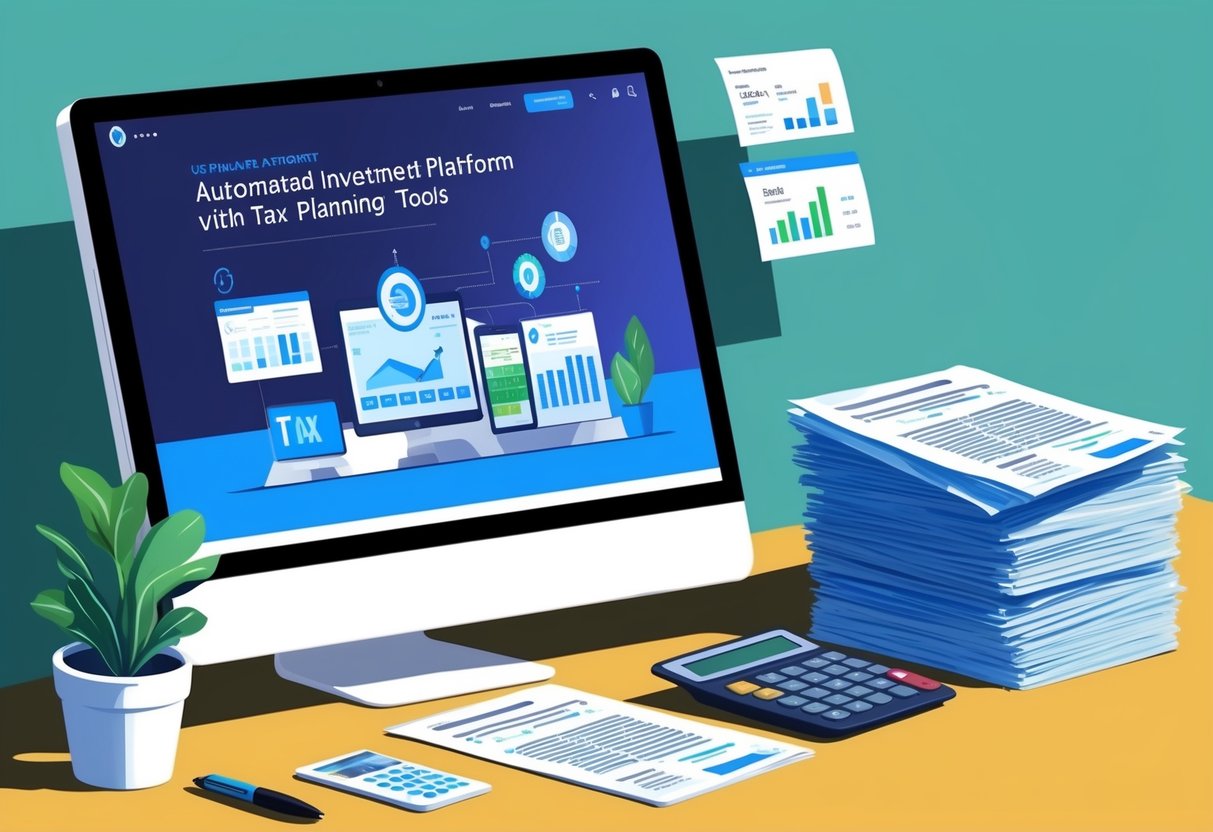
When choosing an automated investment platform, focusing on tax efficiency and ease of use is crucial. You need to look at platforms offering tax-loss harvesting, low account minimums, and access to human advisors.
Top Robo-Advisors for Tax Efficiency
Finding a robo-advisor with excellent tax efficiency can make a significant difference to your investment returns.
Betterment is known for its strong tax-loss harvesting capabilities.
Are you looking to maximize your tax savings while investing passively? Betterment might be the answer with its user-friendly platform and customizable portfolios.
Another standout is Wealthfront, which is often praised for its comprehensive tax strategy, including tax-loss harvesting and direct indexing.
The choice between these platforms can boil down to user preference and additional services like banking products. Don’t forget to check out options like Empower if you’re interested in a holistic financial planning approach.
Factors to Consider: Account Minimums and Access to Human Advisors
Account minimums can be a deal-breaker.
Vanguard Personal Advisor Services tends to require a higher minimum, but it offers a hybrid model combining a personalized advisor service with automatic management. This could be ideal if you prefer some human touch alongside automated investing.
What about the flexibility of lower account minimums like Sofi Automated Investing? Is the ability to get started with little capital more appealing?
Furthermore, platforms like Vanguard Digital Advisor offer a more basic service, appealing to those seeking simplicity yet requiring substantial starting balance. Access to human advisors sets these platforms apart from strictly automated systems, making them a compelling choice for those who want experienced guidance.
Enhancing Your Financial Planning with Automated Tools
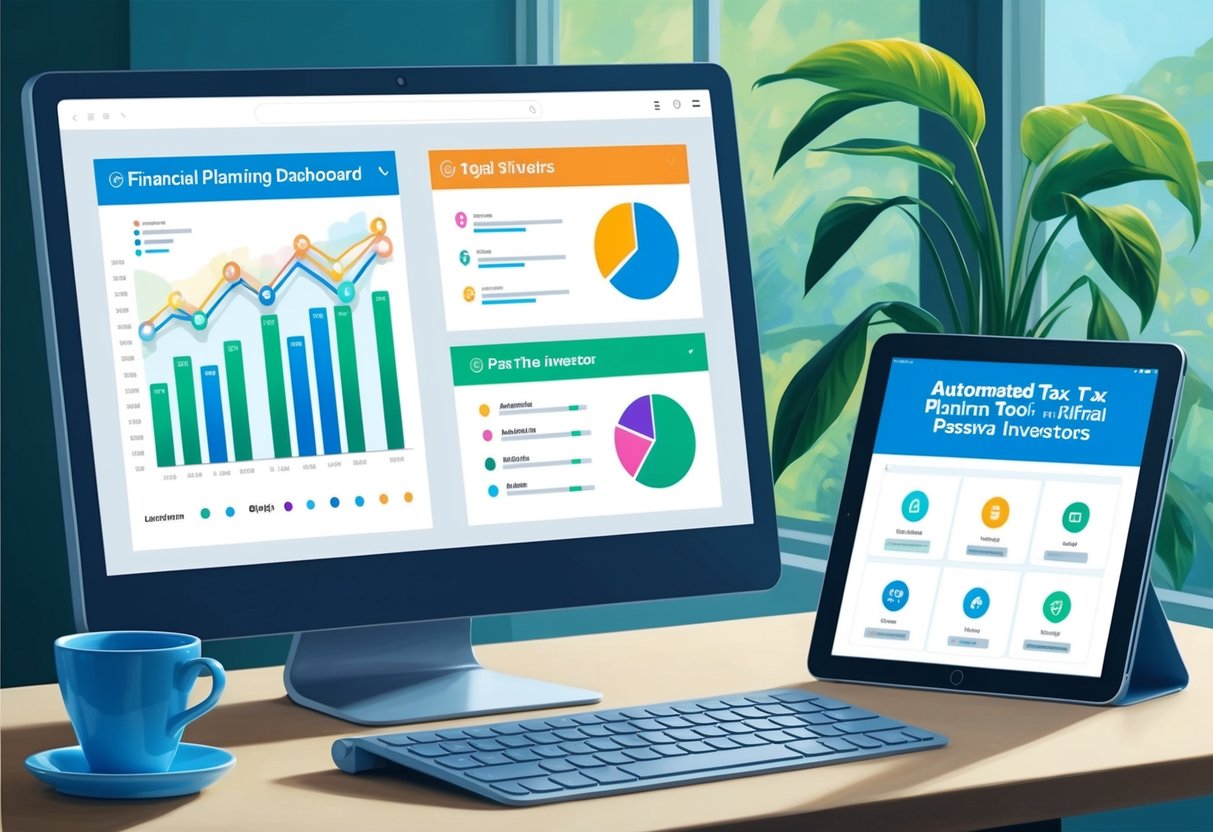
Using automated tools, I can streamline the process of reaching financial goals.
These tools assist in setting precise investment objectives, tracking net worth, and helping achieve financial milestones efficiently.
Setting Investment Goals and Time Horizon
When planning my investments, clear goals are vital.
I start by defining what I want to achieve—whether it’s funding my child’s education or ensuring a comfortable retirement.
Automated financial tools help me assess my current financial standing and guide me in setting attainable goals based on my time horizon.
Time horizons are unique to everyone. Some might aim for a short-term goal, like buying a house in five years, while others look decades ahead to retirement.
Setting clear timelines enables me to choose investments that align with my objectives. Automated tools provide insights into risk levels and potential returns, allowing for adjustments when needed.
Monitoring Net Worth and Achieving Financial Goals
Tracking my net worth gives me a real sense of progress.
Automated tools conveniently gather data from all my accounts and compile it into easy-to-understand reports.
Know your net worth: it’s what I always remind myself, as it encapsulates all assets and liabilities.
Monitoring these figures offers a clear view of whether my strategies are effective.
If I’m not on track, these tools can highlight where adjustments are needed.
Perhaps I need to save more aggressively or reevaluate my asset allocation.
By using these insights, I maintain focus on my financial goals, actively working towards them with confidence and precision.