
Planning for retirement can feel like a guessing game. How much do you need to save? How much can you safely spend each year? For years, the 4% rule was the gold standard. But times change, and so do retirement strategies.  The 3% rule is now considered a safer approach for making your retirement savings last. This new guideline suggests withdrawing 3% of your nest egg in your first year of retirement, then adjusting that amount for inflation each year after. It’s a more conservative strategy that aims to protect your savings in today’s economic climate. Why the shift? Lower expected investment returns and longer life expectancies play a big role. The 3% rule gives you a better chance of not running out of money. It’s like packing an extra sandwich for a long hike - better to have it and not need it than the other way around.
Key Takeaways
- The 3% withdrawal rate offers a more conservative approach to retirement spending than the traditional 4% rule.
- This new guideline aims to make retirement savings last longer in today’s economic environment.
- Working with a financial expert can help tailor your retirement strategy to your unique situation and goals.
Understanding the 4% Rule
The 4% rule has been a cornerstone of retirement planning for decades. It's a simple guideline that many have relied on, but is it still relevant today? Let's explore its origins and how it holds up under scrutiny.Origins and Evolution of the 4% Rule
Bill Bengen, a financial advisor, introduced the 4% rule in 1994. He analyzed historical data to find a safe withdrawal rate that would make retirement savings last 30 years. His research showed that retirees could withdraw 4% of their portfolio in the first year and adjust for inflation each year after. I’ve seen this rule change lives. It gave people a clear target for their retirement savings. But like any rule of thumb, it has its limits. The world of finance is always changing, and what worked in the past might not work today.
Analysis of Withdrawal Rates and Portfolio Longevity
How long will your money last? That’s the million-dollar question. The 4% rule aims to make your nest egg last 30 years. But what if you live longer? Or what if the market takes a nosedive right when you retire? Recent studies suggest a 3% withdrawal rate might be safer. Why? Lower expected returns and longer lifespans. A 3% rate could make your money last 50 years or more. That’s peace of mind for early retirees or those worried about outliving their savings. But here’s the kicker: your personal withdrawal rate depends on your unique situation. How much risk can you handle? What’s your investment mix? These factors all play a role in determining your ideal withdrawal rate.
Why the Shift to the 3% Rule
The move from the 4% rule to the 3% rule is a big deal for retirement planning. It's all about being more careful with our money as we face new challenges in the market.Market Conditions and Lower Expected Returns
I’ve seen a lot of changes in the markets over the years, and let me tell you, things aren’t what they used to be. Remember when we could count on steady returns? Those days are gone. Now, we’re looking at lower expected returns across the board. Why is this happening? It’s simple. Interest rates have been low for a long time. Bonds aren’t giving us the safety net they once did. And stocks? They’re more unpredictable than ever. What does this mean for your retirement portfolio? You need to be smarter and more cautious. The old 4% rule just doesn’t cut it anymore. It’s too risky in today’s world.
Recent Studies and Revised Strategies
I’ve been digging into the latest research, and it’s eye-opening. New studies are showing that the 4% rule might leave you short in retirement. That’s scary stuff. But here’s the good news: experts are coming up with better strategies. They’re looking at real market data and using more realistic projections. The result? A shift to the 3% rule. This new approach is all about playing it safe. It gives your money a better chance of lasting through your whole retirement. And isn’t that what we all want? To enjoy our golden years without worrying about running out of cash?
Comparing the 3% and 4% Rules
 The 3% rule offers a more conservative approach to retirement planning than its predecessor. It aims to provide greater security and longevity for your nest egg in today’s economic landscape.
Prospect of Longer Retirement Span
Have you considered how long your retirement savings need to last? With increasing life expectancy, the 4% rule might not cut it anymore. The 3% rule accounts for potentially longer retirements, reducing the risk of outliving your savings. I’ve seen many retirees underestimate their lifespan. It’s a common mistake. The 3% rule provides a buffer, allowing for a retirement span of 30 years or more. This extra cushion can be crucial, especially if you retire early or have a family history of longevity. Remember, it’s better to have money left over than to run out too soon. The 3% rule helps ensure you’re covered, even if you live well into your 90s or beyond.
Addressing the Risk of Running Out of Funds
What’s your biggest fear about retirement? For many, it’s running out of money. The 3% rule directly tackles this concern by lowering the safe withdrawal rate. I’ve found that this more conservative approach can significantly reduce the risk of depleting your nest egg. It’s especially important in today’s volatile market conditions. By withdrawing less each year, your retirement savings have a better chance of weathering economic downturns. But isn’t 3% too little to live on? Not necessarily. It’s about finding the right balance between enjoying your retirement and ensuring your money lasts. With proper planning and budgeting, 3% can still provide a comfortable lifestyle while offering greater peace of mind.
Incorporating Social Security and Pensions
 When planning for retirement, it’s crucial to consider all sources of income. Social Security and pensions can play a significant role in supplementing your savings and providing financial stability.
Role of Guaranteed Income Sources
Social Security and pensions are valuable because they offer guaranteed income. Unlike investments that can fluctuate with market conditions, these sources provide a steady stream of money throughout retirement. How much can you rely on these sources? For many retirees, Social Security replaces about 40% of their pre-retirement income. Pensions, if you’re lucky enough to have one, can add another substantial chunk. But here’s the million-dollar question: Should you base your entire retirement strategy on these guaranteed sources? I’d say no. Why? Because inflation can erode their purchasing power over time. Instead, think of Social Security and pensions as your retirement foundation. Build on top of that with your personal savings and investments. This approach gives you more control and flexibility over your financial future.
Timing Benefits to Optimize Income
When should you start claiming your Social Security benefits? It’s a decision that can significantly impact your retirement income. Claiming early at 62 means smaller monthly checks, but you’ll receive them for a longer period. Waiting until 70 maximizes your monthly benefit, but you’ll have fewer years to collect. What about your pension? Some plans offer lump-sum payouts instead of monthly payments. Which option is better for you? The answer depends on your unique situation. Consider factors like:
- Your health and life expectancy
- Other sources of income
- Your risk tolerance
Remember, timing is everything. By strategically planning when to tap into these income sources, you can potentially boost your overall retirement income and make your savings last longer.
Designing a Retirement Portfolio for the 3% Rule
 The 3% rule requires a thoughtful approach to building your retirement nest egg. Let’s explore how to construct a portfolio that can support this safer withdrawal rate while still providing growth potential.
Asset Allocation and Diversification
When I design a retirement portfolio for the 3% rule, I focus on balancing safety and growth. It’s crucial to spread your investments across different asset classes. Here’s a simple breakdown I often recommend:
- 50-60% stocks
- 30-40% bonds
- 5-10% cash
- 5-10% alternative investments
This mix helps protect against market volatility while still allowing for growth. I always say, “Don’t put all your eggs in one basket!” It’s not just a cliché – it’s solid financial advice.
Incorporating Bonds and Annuities for Stability
Bonds and annuities play a key role in providing stability to your retirement portfolio. I’ve seen many retirees benefit from the steady income these investments can provide. For bonds, I suggest a ladder approach:
- Short-term bonds (1-3 years)
- Medium-term bonds (4-7 years)
- Long-term bonds (8+ years)
This strategy helps manage interest rate risk. As for annuities, they can offer a guaranteed income stream. But remember, not all annuities are created equal. I prefer simple, low-cost options that complement your overall strategy.
Equities and Growth Potential
Even with the 3% rule, your portfolio needs growth to keep up with inflation. That’s where equities come in. I recommend a mix of:
- Large-cap stocks for stability
- Mid-cap and small-cap stocks for growth
- International stocks for diversification
Consider dividend-paying stocks too. They can provide a nice income boost. But don’t chase yield at the expense of quality! I always look for companies with strong financials and a history of dividend growth.
Adapting to Changing Economic Factors
 The world of finance is never static. As we plan for retirement, we need to be ready to adjust our strategies based on the economic climate.
Adjusting for Inflation and Cost of Living
Have you ever noticed how a dollar doesn’t stretch as far as it used to? That’s inflation at work. It’s a silent thief, slowly eroding our purchasing power. To combat this, I always recommend building an inflation adjustment into your retirement plan. Let’s say you start with a 3% withdrawal rate. Each year, you’ll need to increase that amount to keep pace with rising costs. How much? A good rule of thumb is to use the Consumer Price Index (CPI) as a guide. But don’t just set it and forget it. Keep an eye on inflation forecasts and be ready to tweak your plan. Remember, it’s not just about surviving retirement - it’s about thriving.
Responding to Market Fluctuations
Have you ever been on a roller coaster? The stock market can feel a lot like that. Up one day, down the next. So how do we deal with these ups and downs? First, diversification is key. Don’t put all your eggs in one basket. Spread your investments across different asset classes. Second, be prepared for bear markets. They’re a natural part of the economic cycle. When they hit, don’t panic. Instead, consider it a buying opportunity. Remember, stocks tumble, but they also recover. Lastly, be flexible with your withdrawal rate. In good years, you might stick to 3%. In tough years, you might need to tighten your belt a bit. It’s all about adapting to the market conditions.
Retirement Withdrawal Strategies
 Choosing the right withdrawal strategy can make or break your retirement plan. I’ve found that a well-designed approach can help your money last longer and give you peace of mind.
Fixed vs. Flexible Withdrawal Systems
Fixed withdrawal systems, like the 4% rule, are simple but risky. They don’t adjust for market changes. What happens if the market tanks right after you retire? You could run out of money fast. Flexible systems are smarter. They let you adjust your withdrawals based on how your investments perform. In good years, you can take out a bit more. In bad years, you tighten your belt. I like the idea of setting a floor for your essential expenses. Cover those with fixed income sources like Social Security or annuities. Then use a flexible system for the rest. Are you willing to be flexible with your spending? It could mean the difference between running out of money and leaving a legacy.
Using TIPS Ladder for Inflation-Proof Income
Inflation is the silent killer of retirement plans. How can you protect yourself? Enter the TIPS ladder. TIPS (Treasury Inflation-Protected Securities) are government bonds that adjust with inflation. By creating a ladder of TIPS with different maturities, you can set up a steady, inflation-proof income stream. Here’s how it works:
- Buy TIPS that mature in different years
- As each TIPS matures, use the money for that year’s expenses
- Rinse and repeat
The beauty of this system? Your income keeps pace with inflation automatically. No more worrying about rising prices eating away at your buying power. Have you considered how inflation might impact your retirement? A TIPS ladder could be your shield against this often-overlooked threat.
Effective Retirement Planning with Financial Experts
 Planning for retirement can be complex. Getting expert help can make a big difference in your financial future. Let’s look at how to work with professionals and handle important tax rules.
Consulting a Financial Planner for Personalized Advice
Have you ever felt lost trying to plan your retirement? I know I have. That’s why I turned to a financial planner for help. These experts can create a custom plan just for you. A good planner will look at your whole financial picture. They’ll ask about your goals, income, and risk tolerance. With this info, they can suggest the right mix of investments. They might recommend strategies you haven’t thought of. For example, they could advise on when to claim Social Security or how to cut taxes. Some planners, like those at Charles Schwab, offer free consultations. Remember, not all advice is equal. Look for a fiduciary who puts your interests first. Ask about their fees and credentials before you commit.
Required Minimum Distributions and Tax Considerations
Did you know the government can force you to take money from your retirement accounts? It’s true, and it’s called Required Minimum Distributions (RMDs). RMDs start at age 72 for most retirement accounts. The amount you must withdraw is based on your account balance and life expectancy. If you don’t take them, you’ll face steep penalties. These withdrawals can push you into a higher tax bracket. That’s why it’s crucial to plan ahead. A smart strategy is to start taking distributions earlier to spread out the tax hit. Consider converting some traditional IRA money to a Roth IRA. You’ll pay taxes now, but future withdrawals will be tax-free. This can save you money in the long run.
Building a Conservative Portfolio for the Long Term
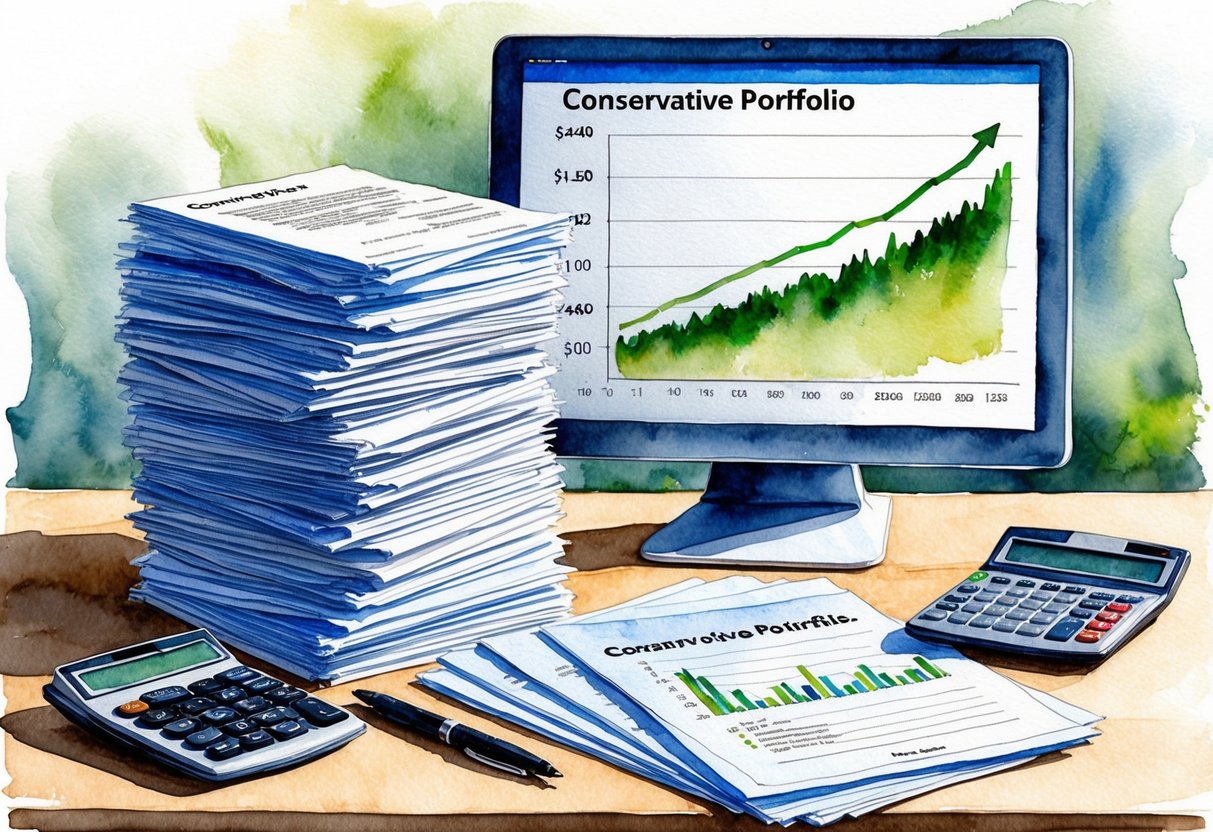 A conservative portfolio is key to making your retirement savings last. It’s all about balancing risk and reward to protect your nest egg while still allowing for growth.
Importance of a Conservative Approach
Why go conservative? It’s simple - we want our money to outlive us, not the other way around. A conservative portfolio typically has a lower stock allocation, reducing the impact of market volatility on your savings. I’ve seen too many retirees get burned by aggressive portfolios. They chase high returns but end up depleting their savings too quickly. That’s why I recommend a more balanced approach. What does this look like in practice? Think 40-50% stocks, with the rest in bonds and cash. This mix can provide steady growth while cushioning against market downturns.
Strategies for Longevity Risk Management
Living longer than expected is great, but it presents a financial challenge. How do we make sure our money lasts as long as we do?
- Diversification: Don’t put all your eggs in one basket.
Spread your investments across different asset classes and sectors.
- Regular rebalancing: Keep your portfolio in check by adjusting your investments periodically.
- Consider annuities: These can provide a guaranteed income stream for life, helping to manage longevity risk.
- Stay flexible: Be prepared to adjust your withdrawal rate based on market conditions.
In tough years, you might need to tighten your belt a bit. Remember, a conservative approach doesn’t mean no growth. It’s about finding the right balance to keep your money working for you throughout retirement.