
Retiring comfortably isn’t just about hoarding a big nest egg. I’ve seen too many people focus solely on savings, only to find themselves stressed and cash-strapped in retirement. The secret to a worry-free retirement is creating steady, reliable cash flow that covers your expenses and then some.  Think about it: What good is a million-dollar portfolio if it doesn’t generate enough income to support your lifestyle? That’s why I encourage a shift in mindset. Instead of obsessing over a magic savings number, let’s talk about building income streams that keep flowing long after you’ve left the 9-to-5 grind. Ready to rethink your retirement strategy? I’ll show you how to set up cash flows that work for you, not the other way around. With the right approach, you can retire sooner and more comfortably than you ever thought possible.
Key Takeaways
- Focus on creating steady income streams rather than just accumulating savings
- Develop a flexible spending plan that adapts to your changing needs in retirement
- Optimize your investments and assets to generate consistent cash flow over time
Understanding Cash Flow in Retirement
Let's talk about cash flow in retirement. It's not just about how much money you have saved up. It's about how that money moves in and out of your pocket. What is cash flow? Simply put, it's the money coming in versus the money going out. In retirement, your income sources might change, but your expenses often don't. Here are some common retirement income sources:- Social Security benefits
- Pension payments
- Investment income
- Rental property income
But what about expenses? They don’t magically disappear when you stop working. You still need to pay for:
- Housing
- Food
- Healthcare
- Transportation
- Entertainment
The key is to have more money coming in than going out. Sounds easy, right? But here’s the catch: liquidity matters too. You need to be able to access your money when you need it. I always ask myself: “How can I create steady cash flow that covers my expenses?” It’s not about having a big pile of money sitting in the bank. It’s about creating streams of income that keep flowing, month after month. Remember, retirement cash flow planning isn’t a one-time thing. It’s an ongoing process. Your needs will change, and so will your income sources. Stay flexible and keep reviewing your plan.
Creating a Sustainable Spending Plan
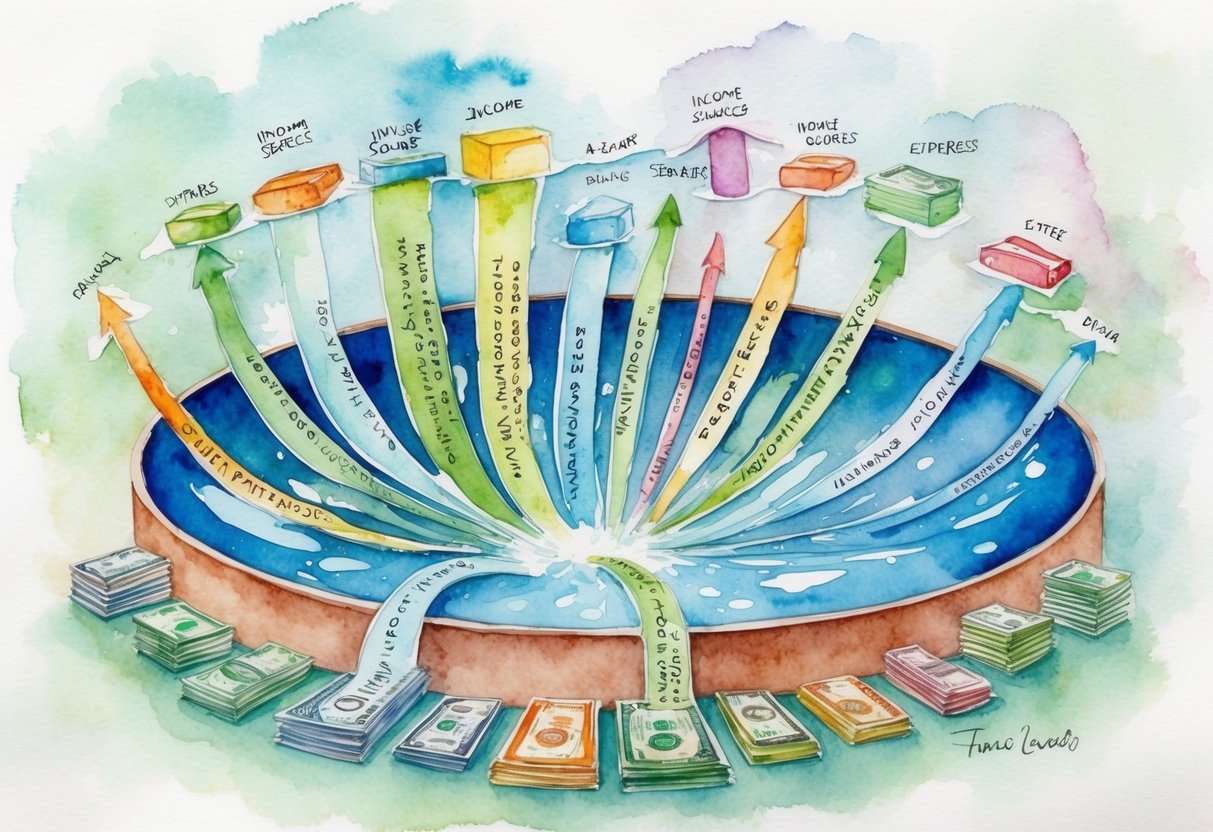 A sustainable spending plan is crucial for a comfortable retirement. It’s not just about how much you save, but how you manage your cash flow. Let’s look at two key aspects of creating a plan that works.
Assessing Retirement Expenses
How much will I really need in retirement? This is the million-dollar question. Start by listing all your current expenses. Now, which ones will change? Some might go down, like work-related costs. Others could go up, such as healthcare. Don’t forget about fun! Travel, hobbies, and spoiling the grandkids should be part of your plan. I like to break expenses into “needs” and “wants.” Needs are non-negotiable, while wants offer flexibility. Here’s a simple way to categorize:
- Needs: Housing, food, healthcare, utilities
- Wants: Travel, dining out, entertainment
Remember, your income needs in retirement might be less than you think. Many retirees find they spend less overall.
Factoring in Inflation
Inflation is the silent thief of purchasing power. It’s easy to overlook, but vital to consider. Think about it - a dollar today won’t buy as much in 20 years. How do I protect against inflation? One strategy is to aim for investments that historically outpace inflation. Stocks, real estate, and certain bonds can help. Another approach is to create a cash flow driven retirement plan. This means focusing on income-generating assets that can grow over time. Consider these inflation-fighting tactics:
- Invest in dividend-growing stocks
- Look into real estate investment trusts (REITs)
- Explore Treasury Inflation-Protected Securities (TIPS)
By planning for inflation, I ensure my spending power stays strong throughout retirement.
Optimizing Retirement Income Streams
Creating a steady cash flow in retirement requires careful planning and [smart strategies](/investment-strategies-for-retirement/). Let's explore how to make the most of your retirement income sources.Maximizing Social Security Benefits
Did you know that the timing of when you claim Social Security can significantly impact your benefits? I’ve seen many retirees leave money on the table by claiming too early. Waiting until full retirement age or even up to age 70 can increase your monthly benefit by up to 8% per year. But what if you need income sooner? Consider this strategy: claim spousal benefits while letting your own benefit grow. This can work well for married couples with different earning histories. Remember, Social Security is just one piece of the puzzle. It’s designed to replace only about 40% of your pre-retirement income. That’s why we need to look at other income streams too.
Utilizing Retirement Assets
Are you sitting on a nest egg but unsure how to turn it into income? Let’s talk about the bucket approach. I like to think of it as dividing your assets into three buckets:
- Short-term (1-2 years of expenses)
- Medium-term (3-7 years)
- Long-term (8+ years)
This strategy helps manage sequence of returns risk - the danger of depleting your portfolio too quickly if the market drops early in your retirement. What about required minimum distributions (RMDs)? Don’t forget, these kick in at age 72 for traditional IRAs and 401(k)s. Plan ahead to avoid unnecessary tax hits.
Exploring Investment Returns
Is your portfolio still working hard for you in retirement? It should be! I’m a fan of focusing on cash flow rather than just chasing high yields. Consider dividend-paying stocks. They can provide regular income and potential for growth. But don’t put all your eggs in one basket. A mix of bonds, REITs, and even some growth stocks can help balance your portfolio. What about annuities? They can provide guaranteed income, but be cautious of high fees. Always read the fine print and consider consulting with a financial advisor before making any big decisions.
Tax Planning for Retirement
 Smart tax planning can make a huge difference in your retirement income. By understanding how taxes work and using the right strategies, you can keep more of your hard-earned money.
Understanding Retirement Taxation
When it comes to retirement taxes, not all accounts are created equal. Traditional IRAs and 401(k)s offer tax-deferred growth, but you’ll pay taxes when you withdraw. Roth accounts, on the other hand, grow tax-free. What’s the best mix? I’d say it depends on your situation. If you expect to be in a lower tax bracket in retirement, traditional accounts might make sense. But if you think you’ll be in a higher bracket, Roth could be the way to go. Don’t forget about Social Security either. Up to 85% of your benefits could be taxable, depending on your other income. That’s why it’s crucial to plan ahead and consider the timing of your benefits.
Strategizing Capital Gains and Income
Capital gains can be a powerful tool in your retirement tax strategy. Long-term capital gains are taxed at lower rates than ordinary income. So, how can you use this to your advantage? One approach is to diversify your accounts. By holding different types of investments in different account types, you can control your taxable income each year. For example, you might keep high-growth stocks in a Roth IRA and bonds in a traditional IRA. Another strategy is tax-loss harvesting. By selling losing investments to offset gains, you can lower your overall tax bill. But remember, the key is to reinvest wisely, not just to save on taxes. What about required minimum distributions (RMDs)? They can push you into a higher tax bracket if you’re not careful. Consider converting some traditional IRA money to a Roth before RMDs kick in. Yes, you’ll pay taxes now, but it could save you more in the long run.
The Role of Financial Advisors in Retirement
 Financial advisors can play a crucial part in planning for retirement. They offer expertise to help maximize your savings and investments. But how do you choose the right advisor, and what can you expect from their services?
Certified Financial Planner versus Investment Adviser
When seeking financial guidance, it’s important to understand the difference between a Certified Financial Planner (CFP) and an Investment Adviser. A CFP has broader knowledge, covering areas like taxes, estate planning, and insurance. An Investment Adviser focuses mainly on investment strategies. I’ve found that CFPs often take a more holistic approach to retirement planning. They look at your entire financial picture, not just investments. Investment Advisers, on the other hand, specialize in managing your portfolio. Which is better for you? It depends on your needs. Do you want comprehensive financial planning or just investment advice?
Making the Most of Financial Advice
To get the most out of your financial advisor, be clear about your goals. Are you aiming for early retirement? Want to travel the world? Your advisor can help tailor a plan to your specific dreams. Don’t be afraid to ask questions. A good advisor will explain things in terms you understand. They should also be open about their fees and how they’re compensated. Remember, it’s your money - you have the right to know how it’s being managed. Regular check-ins are key. Your life changes, and so should your financial plan. I recommend meeting with your advisor at least once a year to review and adjust your strategy. This way, you’re always on track for the retirement you want.
Innovative Retirement Income Products
 Are you tired of the same old retirement advice? I’ve got some fresh ideas for you. Let’s look at some new products that can boost your cash flow in retirement. Have you heard of fixed index annuities? These combine the safety of fixed annuities with the growth potential of index funds. They can provide a steady income stream while protecting your principal. What about reverse mortgages? They’ve come a long way. For homeowners over 62, they can turn home equity into tax-free cash flow. It’s not for everyone, but it’s worth considering. Investment options are evolving too. Retirement income funds are gaining popularity. These funds aim to provide regular payouts while managing risk. Here’s a quick comparison of these options:
Product
Key Benefit
Potential Drawback
Fixed Index Annuities
Principal protection
Limited growth
Reverse Mortgages
Tax-free cash flow
Reduces inheritance
Retirement Income Funds
Regular payouts
Market risk
I’m excited about new developments on the horizon. For example, the Nuveen Secure Income Account is set to launch in 2024. It promises a fresh approach to retirement income.
Managing Risks to Retirement Cash Flow
 Retirement cash flow isn’t just about having enough money. It’s about protecting that money from risks that could derail your plans. Let’s look at two key strategies to keep your cash flowing smoothly.
Mitigating Sequence of Returns Risk
Have you ever thought about how market timing could impact your retirement? That’s where sequence of returns risk comes in. It’s the danger of facing poor investment returns early in retirement when you’re withdrawing funds. To fight this risk, I recommend:
- Building a cash buffer
- Using a bucket strategy
- Being flexible with withdrawals
A cash buffer of 1-2 years of expenses can help you avoid selling investments in down markets. The bucket strategy divides your portfolio into short-term, medium-term, and long-term needs. This approach lets you ride out market volatility without panicking.
Planning Required Minimum Distributions (RMDs)
Did you know the government requires you to take money from certain retirement accounts after age 72? These are called Required Minimum Distributions (RMDs). Failing to take RMDs can result in hefty penalties. To manage RMDs effectively:
- Start planning early
- Consider Roth conversions
- Use RMDs for charitable giving
By converting some traditional IRA funds to Roth IRAs before RMDs kick in, you can reduce future required withdrawals. This strategy can help manage your tax burden and give you more control over your retirement cash flow.
Growing Wealth Through Compounding
 Have you ever wondered how the rich get richer? It’s not just about saving money. The real secret is compound interest. This powerful force can turn even small investments into substantial wealth over time. What exactly is compound interest? It’s when you earn returns not just on your initial investment, but also on the interest you’ve already earned. Think of it as interest on interest. Here’s a simple example:
- Initial investment: $10,000
- Annual interest rate: 5%
- Time period: 20 years
After 20 years, that $10,000 could grow to about $27,126. That’s nearly triple your initial investment! But here’s the kicker - the longer you let your money compound, the more dramatic the growth. If you start investing early and consistently, you can build significant wealth for retirement. I always tell my clients to focus on three key factors:
- Time
- Rate of return
- Consistency
The earlier you start, the more time your money has to grow. A higher rate of return can accelerate growth. And consistently adding to your investments boosts the compounding effect. Remember, it’s not about getting rich quick. It’s about leveraging the power of compound interest in your investment portfolio to build lasting wealth. Are you ready to put this powerful tool to work for your retirement?