Are you tired of watching your hard-earned money get eaten away by taxes? You’re not alone. Tax-advantaged accounts can be a game changer for your passive income investments. They offer significant benefits by allowing your investments to grow without the usual tax burden. This makes them an attractive option for anyone looking to secure a financial future.  Think about those investment goals you’ve set for yourself. Are they enough to give you peace of mind? By strategically using these accounts, you can maximize your returns. It’s not about working harder; it’s about working smarter with what you have. An effective investment strategy can be the key to unlocking the potential of your passive income streams. Whether you’re investing in real estate or other ventures, having the right strategy can make all the difference. Have you considered seeking professional guidance to fine-tune your tax planning? It can be the push you need to reach new financial heights.
Key Takeaways
- Tax-advantaged accounts boost passive income.
- Smart investing maximizes financial goals.
- Professional advice refines tax strategies.
Understanding Passive Income
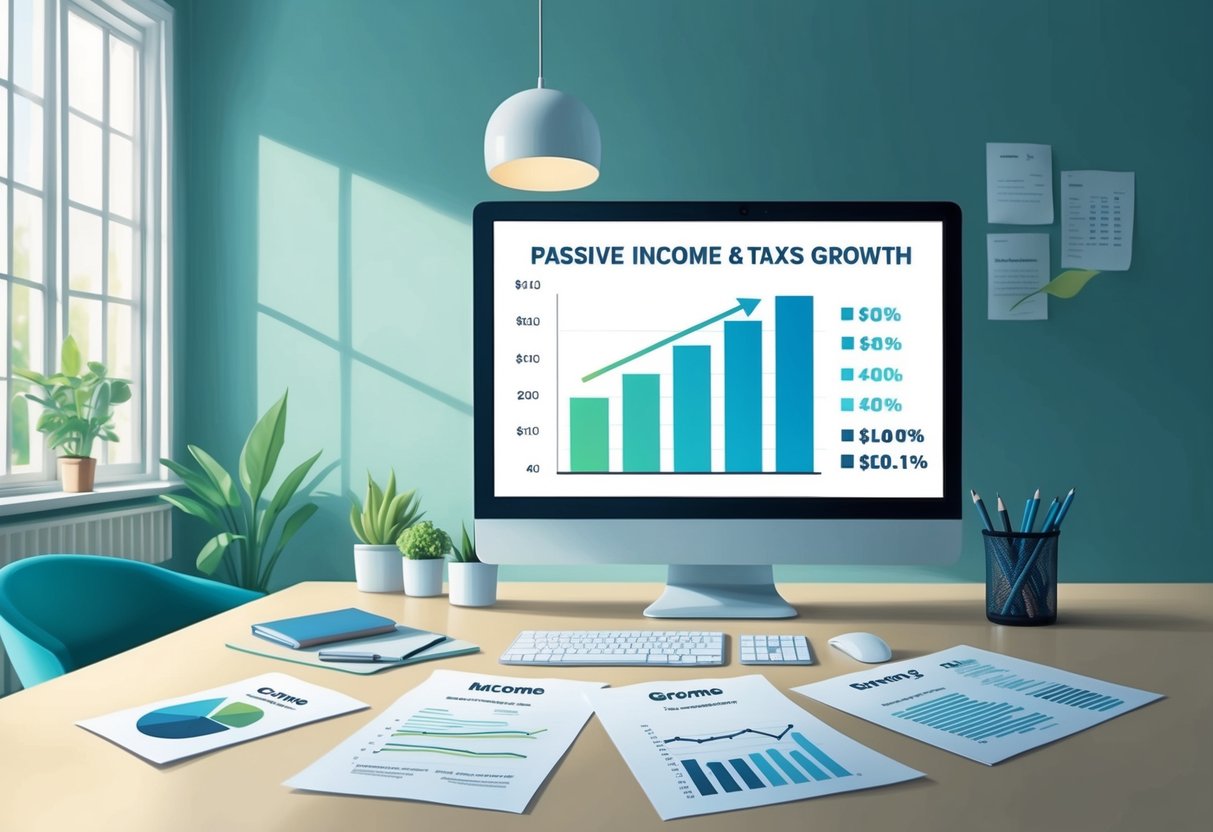 Passive income is a powerful tool for achieving financial independence. It involves income streams that require minimal active effort to maintain. Let’s explore the different types of passive income, compare it to active income, and consider the tax implications involved.
Types of Passive Income
When I think about passive income, rental income is often the first that comes to mind. Owning properties and leasing them out can provide a steady income stream without daily oversight. Another form is royalties, which are payments for intellectual property like books or music. These can offer long-term earnings after the initial work is done. Dividends from stock investments also fall under this category. Unlike earnings from a job, these don’t require regular effort from me once I’ve made the investment. High-yield savings accounts provide another option, though usually with lower returns. By diversifying these income streams, I can build a more secure financial future.
Passive vs. Active Income
Have you ever wondered about the main difference between passive and active income? Active income requires my continuous effort, like a job. I’m trading my time for money, which limits how much I can earn. In contrast, passive income doesn’t demand my constant attention. This means I can potentially earn more by allowing my investments to work for me. Why does this matter? Passive income can give me more freedom. Instead of being tied to a schedule, I can develop a flexible lifestyle. Transitioning from active to passive income can be challenging, but the benefits, like financial security and independence, are worth it in the long run.
Tax Implications of Passive Income
Navigating taxes around passive income is crucial. Rental income, for instance, is generally taxed at my regular income rate. This can affect how much of this income I get to keep. Investing in tax-advantaged accounts or using tax shelters can help reduce my tax liability, increasing the funds available to reinvest or spend. Another point to consider is that passive income from investments like Real Estate Investment Trusts (REITs) or Master Limited Partnerships (MLPs) might have unique tax treatments. By planning and understanding these details, I can take steps to lower taxes and boost my passive income.
Essentials of Tax-Advantaged Accounts
 Navigating tax-advantaged accounts can make your passive income investments more profitable. These accounts can offer you either tax-deferred growth or tax-free growth, which leads to significant tax savings. In this section, I will guide you through the important account options like IRAs and 401(k)s that could transform your financial future.
Tax-Deferred vs. Tax-Free Accounts
Do you know the difference between tax-deferred and tax-free accounts? Tax-deferred accounts, like traditional IRAs and 401(k)s, allow investments to grow without being taxed until you withdraw the money. This can be advantageous if you expect to be in a lower tax bracket during retirement. On the other hand, tax-free accounts, such as Roth IRAs and Roth 401(k)s, involve paying taxes on contributions upfront. The benefit? Your investments grow tax-free, and you won’t owe taxes when you withdraw the funds. This could be ideal if you foresee higher taxes in retirement.
Traditional IRAs and 401(k)s
Have you considered how traditional IRAs and 401(k)s could impact your retirement savings? These accounts allow you to contribute pre-tax money, which reduces your taxable income for the year. For many, this immediate tax-saving incentive is a strong motivator. I find these accounts particularly appealing since they don’t only lower taxable income now but also offer the potential for tax-deferred growth. Keep in mind, though, that withdrawals in retirement will be taxed as ordinary income. Understanding the tax implications of these accounts can be crucial for effective planning.
Roth IRAs and Roth 401(k)s
Why might Roth IRAs and Roth 401(k)s be right for you? These accounts offer a different tax advantage. Although you contribute after-tax dollars, they provide tax-free growth and tax-free withdrawals in retirement. This means every cent you withdraw is yours to keep. I appreciate the flexibility these accounts offer. They’re especially useful for those who expect to be in a higher tax bracket down the road. Despite the immediate tax hit, the long-term benefits might outweigh the initial cost. So, might these options fit your future retirement plans better?
Maximizing Returns with Account Types
 Strategically choosing the right account types can significantly impact your returns. By understanding the nuances of brokerage accounts, retirement accounts, and education savings plans, you can optimize your investments for passive income and long-term growth.
Brokerage Account Considerations
When it comes to brokerage accounts, flexibility is key. They allow for buying and selling a wide range of securities, including stocks, bonds, and mutual funds. With these accounts, you can capitalize on capital gains, dividends, and interest. One thing to keep in mind is the tax implications. Capital gains taxes apply to profits from sales, while dividends and interest are usually taxed as ordinary income. It might be wise to balance long-term and short-term investments here to manage your tax liability effectively. Are you also considering whether to reinvest dividends or withdraw them as income? This choice can influence your investment strategy and affect the compounding potential. Navigating these options strategically can enhance the growth of your brokerage account investments.
Retirement Accounts for Long-Term Growth
Retirement accounts such as 401(k)s and IRAs offer strategic ways to foster long-term growth. These accounts are designed to capitalize on tax advantages. Contributions to traditional IRAs and 401(k)s typically reduce taxable income, and earnings grow tax-deferred until withdrawal. Roth IRAs, on the other hand, allow tax-free growth and tax-free withdrawals on qualified distributions. So, when should you draw from these accounts? Timing is everything. The compounding effect over decades can be substantial, and optimizing withdrawal strategies can minimize your tax burden during retirement. Planning not to withdraw too early is crucial due to penalties. The design of these accounts encourages disciplined saving and longer-term horizons. In this way, they support building wealth for a more comfortable retirement.
Education Savings Accounts: 529 Plans
Saving for your child’s education while maximizing investment income is possible with 529 plans. These plans offer tax-free growth and tax-free withdrawals when funds are used for qualified education expenses. What’s enticing about 529 plans is their flexibility. You can change the beneficiary if another family member needs the funds. Additionally, some states provide tax deductions or credits for contributions to these plans, adding another layer of financial incentive. Are you considering other education savings options? Perhaps you’ve wondered if you can use funds for other expenses. While 529 plans primarily support education, some changes in legislation have expanded their use to certain apprenticeship programs and even K-12 tuition. Leveraging these accounts prudently can align with your financial goals in supporting your children’s future without derailing your retirement savings.
Investing Strategies for Tax Efficiency
 Creating a tax-efficient investment strategy is essential to keep more of your hard-earned money. Key tactics include choosing the right asset location, selecting tax-efficient investment vehicles, and using tax loss harvesting to manage and reduce your tax liabilities. Let’s break down these strategies to make the most of your investments.
Asset Location and Allocation
Where should I place my investments for maximum tax efficiency? Asset location is about deciding which investments to hold in taxable accounts versus tax-advantaged accounts like IRAs or 401(k)s. In general, it’s smart to hold bonds and dividend-paying stocks in tax-advantaged accounts to shield them from taxes. Stocks expected to grow over time may be better in taxable accounts where you can use long-term capital gains rates. Asset allocation plays an important role, too. Balancing your portfolio between equities, bonds, and other assets can affect your tax liability. For example, index funds and ETFs often have lower turnover rates, leading to fewer taxable events.
Tax-Efficient Investment Vehicles
Which investments help minimize taxes? Choosing tax-efficient investment vehicles is crucial. Look for tax-efficient funds and ETFs, which tend to have lower turnover than actively managed funds. This helps reduce capital gains taxes. Municipal bonds can also be a good choice, as their interest is typically tax-free on the federal level and sometimes even on the state level if you’re a resident. Consider investments with lower dividend yields for taxable accounts to avoid higher tax rates. Some funds specifically focus on tax efficiency, aiming to minimize taxable distributions.
Utilizing Tax Loss Harvesting
How can I use losses to save on taxes? Tax loss harvesting involves selling investments that have declined in value to offset capital gains. This strategy allows you to reduce your taxable income by offsetting the gains with losses, lowering your tax bill. Additionally, if losses exceed gains, you can use up to $3,000 per year to offset ordinary income and carry over any additional losses to future years. Keep in mind the “wash sale” rule, which prevents you from claiming a loss if you repurchase a substantially identical security within 30 days. By carefully planning and timing your trades, you can effectively utilize tax loss harvesting to enhance your tax efficiency.
Understanding and Reducing Tax Burden
 Are you tired of high taxes eating into your investments? There are strategies to minimize this bite. Understanding the nuances of capital gains, income tax rates, and leveraging deductions and credits can greatly reduce your tax burden.
Capital Gains Tax Strategies
When it comes to capital gains, timing is everything. What’s the difference between short-term and long-term capital gains? It comes down to the holding period. If you sell an investment held for over a year, you can qualify for long-term capital gains rates, which are often lower than ordinary income rates. Holding investments longer can save you money. Consider how tax-loss harvesting works. By selling investments at a loss, you offset gains with these losses. This can reduce your taxable income. But don’t forget the “wash sale rule,” which prohibits buying the same investment type within 30 days. Consistently reviewing your portfolio with a keen eye on the calendar and market conditions can maximize your returns and minimize taxes. What tactical shifts can you make today to lift that burden?
Income Tax Rate Considerations
Everyone hates paying high taxes on their ordinary income, right? This makes strategic decisions within tax brackets crucial. Shifting your income to a lower bracket through smart investments helps trim down your tax bill. Investing in tax-advantaged accounts like traditional IRAs or 401(k)s can also defer taxes, offering immediate relief. It’s like putting your money in a tax-time capsule until you retire. Are you taking full advantage of these options? Pay attention, too, to how dividends and capital gains from stocks can be taxed differently. Understanding these distinctions allows for more strategic planning. Are you aware of how your income sources impact your tax situation?
Deductions and Credits for Investors
Tax deductions and credits aren’t just for big corporations. As an individual investor, utilizing them smartly can slash your tax bill. Think about deductions like mortgage interest or investment-related expenses. These can lower your taxable income substantially. Tax credits, on the other hand, offer a more direct benefit, reducing your actual tax bill. Credits like the Retirement Savings Contributions Credit can reward you for saving for the future. Who wouldn’t want a little extra for being financially prudent? Making a checklist of eligible deductions and credits ensures no opportunity is missed. Are you taking advantage of every deduction and credit available to you to lighten your tax load?
Special Considerations for Real Estate Investments
 Investing in real estate comes with some special tax considerations. It’s important to understand the benefits like mortgage interest deductions and depreciation that can significantly impact your returns.
Tax Advantages of Rental Properties
You might wonder how owning rental properties can play into your tax strategy. Rental properties offer several tax benefits that are worth considering. For instance, they generate income that can sometimes be sheltered from taxes through various deductions. When you own rental properties, you can deduct expenses such as maintenance, property management, and even insurance costs. Many investors take advantage of tax treatment specifically designed for real estate. These can help reduce your taxable income, making real estate investment both appealing and financially savvy.
Mortgage Interest and Property Taxes
What about the costs of financing? Mortgage interest is often one of the largest deductions available to real estate investors. Paying interest on a loan used to purchase a rental property can substantially reduce your taxable income. This is a powerful benefit that can increase your net income from renting out properties. On top of that, property taxes are deductible as well. This means you can write off the amount you pay in property taxes on your rental. By knowing these deductions, you can ensure that your investment property remains as profitable as possible.
Depreciation and Passive Losses
Have you considered how depreciation affects your investment? Depreciation allows you to write off the cost of the property over time, even as it might appreciate in market value. This can provide a non-cash deduction that reduces your taxable income every year. On the flipside, passive real estate investors face limitations on offsetting losses with active income. Under these rules, passive losses can only offset passive income, such as rental income or income from Real Estate Investment Trusts (REITs). Being aware of these nuances helps in making informed investment decisions that align with your financial goals.
Professional Guidance and Tax Planning
 Navigating taxes with passive income can be tricky. It’s crucial to have a clear strategy for retirement and minimizing taxes. Here, I delve into the benefits of seeking expert help and planning your financial future wisely.
Working with a Tax Professional
Why struggle with complex tax rules when a tax professional can streamline the process? A seasoned expert ensures you comply with IRS regulations and identifies hidden opportunities to save money. They can uncover tax planning strategies that match your financial goals and help avoid common pitfalls. A financial advisor can also collaborate with your tax professional, offering a comprehensive approach to managing investments and taxes. It’s about working smarter, not harder, with a team that understands your unique situation.
Planning for Retirement and Required Distributions
Retirement planning isn’t just about saving; it’s about timing and strategy. One critical aspect is understanding Required Minimum Distributions (RMDs). If you’re over 72 and have tax-deferred retirement accounts, RMDs become a reality. They impact your tax bill, so planning ahead is essential. Working with a tax professional can clarify the timing and amounts, ensuring you stay compliant and reduce unnecessary tax burdens. It’s not just about reaching financial independence; it’s about sustaining it wisely.
Strategies for Minimizing Taxes
Wouldn’t it be great to keep more of your hard-earned money? That’s where strategic tax planning comes in. Consider Roth conversions as a way to minimize tax liability over time. Shifting funds from traditional IRAs to Roth IRAs can potentially lower future taxes. A tax professional can guide you through this process, evaluating if it aligns with your long-term goals. Additionally, leveraging tax credits and deductions can further reduce your tax bill. It’s about making your money work for you, not the other way around.