

Understanding how capital gains tax rates can impact passive investments is crucial for anyone looking to maximize their investment returns. Taxation on these gains can significantly influence the overall profitability of your investment strategies. Capital gains tax rates, particularly on passive investments, play a key role in determining your financial success. Are you ready to dive deeper into this topic and discover ways to align your investment strategy with tax considerations? For many, passive investments are an attractive option due to their potential for generating wealth with less active involvement. Yet, taxation can often eat into these gains, potentially derailing your long-term financial plans. Do you know how different tax brackets and filing statuses might affect what you owe in capital gains tax? Whether you’re planning for retirement or managing current investments, understanding capital gains tax can present new opportunities for strategic financial management. By evaluating how these taxes influence your passive investments, you can make more informed decisions. Ready to explore strategic management tips and uncover the true impact of capital gains taxes on your portfolio?
Key Takeaways
- Capital gains tax affects investment profitability.
- Filing status and tax brackets matter.
- Strategic tax management boosts investment returns.
Understanding Capital Gains Tax
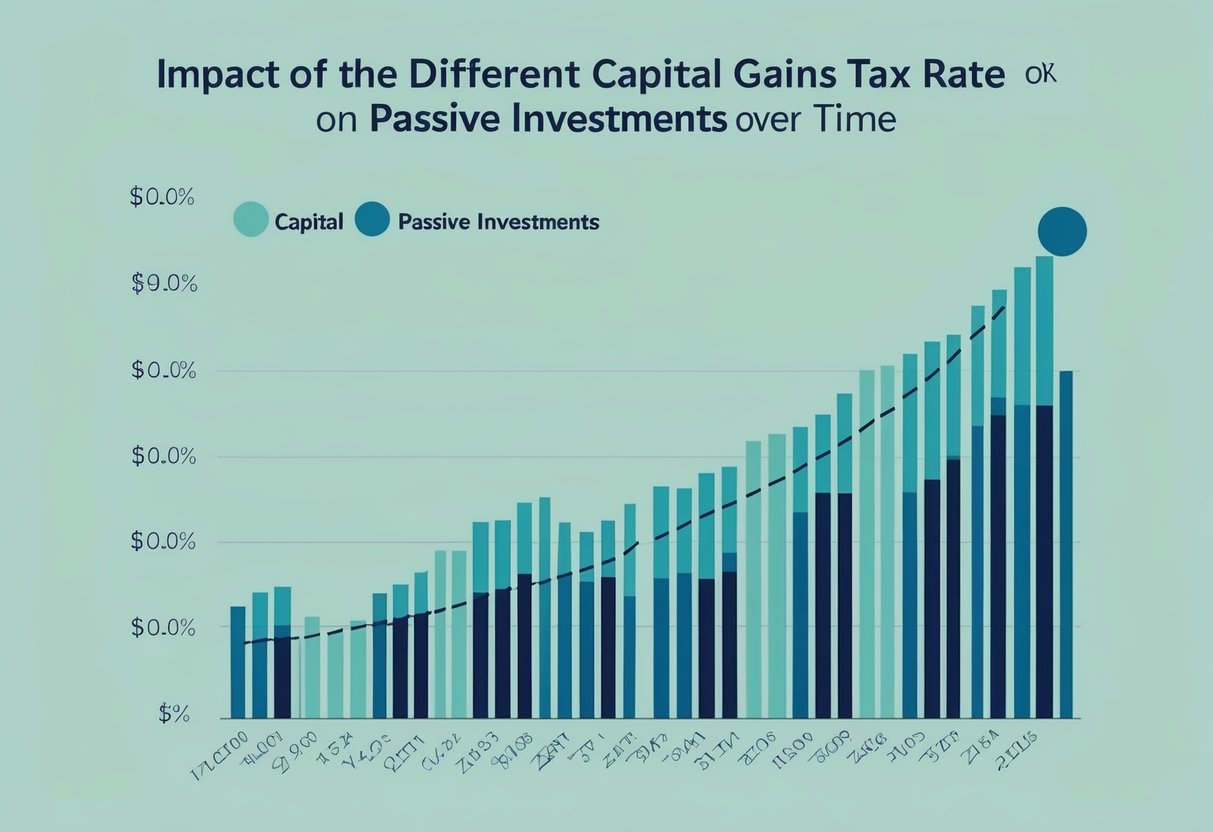 Navigating the landscape of capital gains tax is vital for investors looking to optimize their returns. These taxes, applied to the profits from the sale of investments, can significantly impact your financial strategy. Let’s explore some key concepts to better understand this tax.
Defining Capital Gains and Losses
Capital gains occur when you sell an asset for more than you paid for it. Conversely, if you sell it for less, you incur a capital loss. These can apply to stocks, bonds, real estate, and more. Are all gains equal? Not exactly. They’re categorized based on how long you’ve held the asset. Short-term gains apply to assets held for one year or less, while long-term gains extend beyond a year. Why does this matter? Long-term gains often benefit from favorable tax rates. This distinction is crucial for planning your investment strategy. Think of long-term holdings as your ticket to potentially lower taxes. Not all assets will yield profits every time. Understanding losses can help offset gains, reducing your taxable income. So, when planning sales, consider both gains and losses for optimal tax benefits.
The Importance of Taxable Income Categories
Taxable income categories play an important role in determining how much you owe on your capital gains. Income levels can directly affect the tax rate on long-term capital gains. For instance, if your income is lower, your tax rate on these gains might be 0%. In other brackets, it could be 15% or 20%. Do you see how crucial it is to align your investment strategy with your income level? When comparing capital gains to ordinary income, capital gains often face lower rates. This distinction is vital for your investment success and long-term financial security. Recognizing these taxable income categories allows you to make informed decisions and keep your investments as tax-efficient as possible.
Capital Gains Tax Rates Explained
 In the world of investments, understanding capital gains tax rates is crucial. These taxes differ based on the type of gain and your income level. Grasping these differences can significantly impact your financial strategy and decision-making.
Short-Term vs. Long-Term Capital Gains
Did you know that the duration you hold an investment affects how much tax you pay? That’s right. Short-term capital gains apply to assets sold within a year of purchase. These gains are taxed as ordinary income, which means the rate can be quite high, depending on your tax bracket. On the other hand, long-term capital gains apply to assets held longer than a year. These are typically taxed at lower rates, such as 0%, 15%, or 20%, depending on your income level. The favorable tax rates for long-term gains encourage investors to keep their investments for extended periods, potentially offering a strategic advantage.
Determining Your Capital Gains Tax Rate
How do you determine what your capital gains tax rate is? It’s based on your taxable income for the year. For long-term capital gains, if you’re in a lower tax bracket, you might pay a rate of 0%. But if your income is higher, expect rates around 15% or 20%. It’s important to consider your entire income picture, as this influences what rate you’ll pay on capital gains. By understanding your taxable income, you can plan when to sell assets and potentially optimize your tax obligations. This knowledge empowers you to make more informed financial decisions, ensuring your investments work harder for you.
Tax Brackets and Filing Status
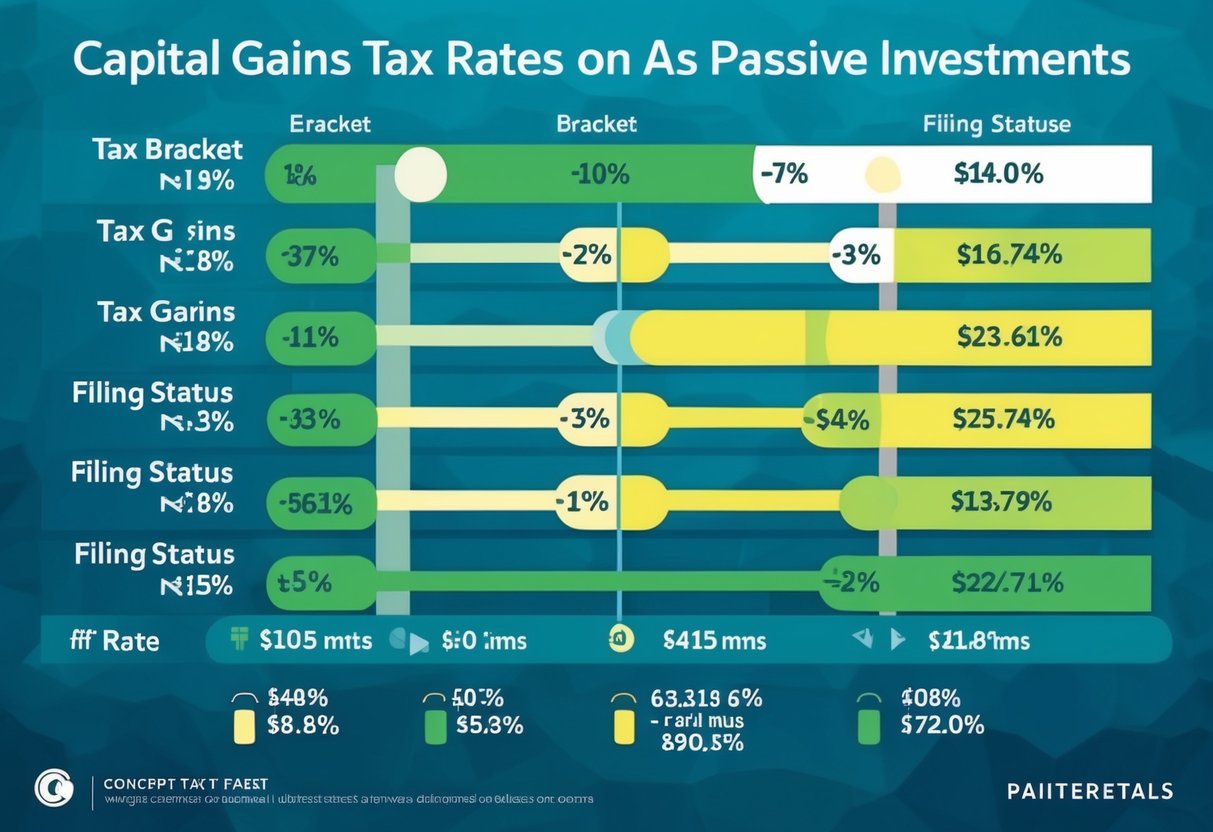 Understanding how tax brackets and filing status affect your capital gains can make a big difference in your financial planning. It’s essential to know how your income and filing category influence the amount of tax you owe.
Matching Tax Brackets to Income Levels
Have you ever thought about how your income affects your taxes? In 2024, capital gains tax rates match three different tax brackets: 0%, 15%, and 20%. Your taxable income determines which bracket you fall into. For instance, if you’re single, a taxable income of up to $47,024 puts you in the 0% bracket. A higher income could push you into the 15% or even 20% bracket. This structure allows you to minimize your tax liability by staying within a lower bracket. So, how do you make the most of it? By planning your asset sales strategically. Avoid selling too many assets in a single year if this will push you into a higher bracket. This way, you maintain control over how much tax you pay and when.
How Filing Status Affects Capital Gains Tax
Does your filing status really matter? You bet it does. Filing status—single, married filing jointly, or head of household—plays a big role in how much capital gains tax you owe. For married couples filing jointly, the income thresholds for each bracket are higher. In 2024, a couple can enjoy gains up to $96,700 without paying any federal income tax on them. This makes it easier to manage tax payments and focus instead on growing your investments. The right filing status can add up to significant savings. It’s about choosing the status that aligns with your financial strategy. By understanding these subtleties, you empower yourself to make smarter decisions for your future.
Retirement Planning and Investment Strategies
 When it comes to retirement planning, capital gains tax rates can greatly impact your investment outcomes. Let’s explore how to handle these taxes in your retirement accounts, how to incorporate tax-advantaged accounts, and strategies to minimize taxes on your investments.
Capital Gains Concerns for Retirement Accounts
Why should I be concerned about capital gains in my retirement accounts? That’s a question I often hear. In tax-advantaged accounts like an IRA or 401(k), capital gains taxes are deferred until withdrawals begin, usually at retirement. This allows investments to grow without the immediate tax bite. However, when money is eventually withdrawn, it is taxed as ordinary income, which can be a financial surprise if not planned for. Understanding how long-term capital gains, which apply to assets held for over a year, intersect with your overall retirement financial plan is important. For instance, some states, such as Washington, impose specific capital gains taxes that might affect your retirement savings strategy. Planning ahead can save money and reduce stress when you retire.
Incorporating Tax-Advantaged Accounts
Tax-advantaged accounts are a key player in any retirement strategy. Accounts like Roth IRAs offer a way to invest for retirement without the burden of capital gains taxes later, as withdrawals are typically tax-free. Wouldn’t it be nice not to worry about taxes during retirement? By contributing to a Roth IRA, you can manage your taxable income levels and potentially stay in lower capital gains tax rates. Moreover, the Roth IRA is a powerful tool for estate planning, as it allows tax-free growth and withdrawals, providing a sense of security in retirement.
Investment Strategies for Minimizing Taxes
Minimizing taxes isn’t just smart; it’s essential. By investing in tax-efficient mutual funds, like index funds, or opting for tax-managed funds, I can lower the burden of capital gains taxes. These funds are designed to generate less taxable income. Holding investments for over a year to qualify for long-term capital gains rates (0%, 15%, or 20%) can also benefit my financial plans. Income thresholds dictate these rates, so understanding your income bracket is crucial for leveraging these rates to your advantage. Utilizing strategies like this in retirement empowers me to build a healthy financial future, ensuring my savings last through my golden years.
Impact on Passive Investments
 When it comes to passive investments, understanding how capital gains tax rates can affect your returns is crucial. Passive income from real estate and other investments plays a big role in your financial portfolio. Here are some important points to consider.
Tax Implications for Passive Income
Why should you care about passive income tax rates? Well, they can have a significant impact on your overall tax liability. Passive income often comes from investments like dividends, interest, or rental properties. The tax rates for this income vary and are generally lower than those for earned income. Dividends and long-term capital gains can qualify for preferential rates, such as 0%, 15%, or 20%, depending on your income bracket. The Net Investment Income Tax (NIIT) adds another layer, imposing an additional 3.8% on investment income for high earners. Understanding these tax elements is essential to optimize your investments and lower your tax bill.
Real Estate and Passive Activity Losses
Real estate is a popular avenue for passive investments, but what about passive activity losses? These occur when your expenses exceed your rental income. According to the IRS, you can only offset passive activity losses against passive income unless you meet the test for material participation. Holding investment properties for over a year can qualify gains for lower long-term capital gains rates, reducing your tax burden. Using strategies like 1031 exchanges can defer taxes by reinvesting sale proceeds into similar properties. These tactics are crucial for managing your portfolio effectively and maximizing your returns.
Strategies for Capital Gain Tax Management
 Navigating capital gain tax management can seem confusing, but with the right strategies, it’s possible to minimize your tax burden. I’ll share insights on techniques like tax-loss harvesting and understanding capital loss carryovers to effectively manage your passive investments.
Tax-Loss Harvesting Techniques
Have you ever considered using your losses to your advantage? Tax-loss harvesting involves selling investments at a loss to offset gains elsewhere in your portfolio. This can help reduce your net capital gain. For example, if you have a significant gain in a particular stock, you could sell another investment that has lost value. This way, the loss helps balance out the capital gain, potentially lowering your overall taxable income. Remember, these losses can offset gains dollar for dollar. What’s more, if your capital losses exceed your capital gains, you can apply up to $3,000 (or $1,500 if married filing separately) of the excess loss against other ordinary income. This approach not only saves taxes now but also allows for a more strategic repositioning of your portfolio for future gains.
Understanding Capital Loss Carryovers
Planning for the future is crucial. With capital loss carryovers, you’re allowed to carry forward any net capital loss you couldn’t use in the current year to offset gains in future years. This strategy helps you reduce your taxable net short-term capital loss. Suppose you couldn’t fully utilize your losses this year. In that case, these losses can roll over to benefit you in the coming tax years. This ensures that even if you’ve experienced a downturn, you can still strategically manage future tax liabilities. So what does this mean for you? Capital loss carryovers provide a valuable tool for managing your long-term tax obligations. This strategy ensures your portfolio remains as tax-efficient as possible while gaining flexibility for upcoming financial moves.
Instruments Subject to Capital Gains Tax
 Capital gains tax is a reality for many investments, particularly stocks, bonds, and mutual funds. Each of these financial vehicles has specific tax implications that can impact your overall investment strategy. Understanding these can help you optimize your portfolio and make informed decisions.
Tax Treatment of Stocks and Bonds
When it comes to stocks, capital gains tax applies to the profit you make when selling shares. If you hold a stock for more than a year, any profit is typically taxed at a lower long-term capital gains rate. In contrast, selling stocks within a year can result in higher short-term rates, similar to ordinary income. Qualified dividends from stocks may benefit from favorable tax treatment, often at lower rates than non-qualified dividends. Bonds, including municipal bonds, have their nuances. Interest from municipal bonds is usually exempt from federal taxes, offering a tax-efficient option. Yet, capital gains from selling bonds at a profit are still subject to taxation. Understanding these different outcomes allows for strategic planning in your investment portfolio.
Assessing the Impact on Mutual Funds
Mutual funds hold a collection of stocks, bonds, or other securities, and can complicate tax matters. When mutual funds sell securities at a gain, they distribute these gains to investors, who then may owe taxes. It’s crucial to monitor the mutual fund’s activity to anticipate potential tax implications. Funds often distribute income in the form of qualified dividends, which can reduce the tax burden for investors if the dividends meet specific criteria. On the other hand, if a fund includes a significant amount of qualified small business stock, unique tax breaks could apply. Why do some investments carry greater tax implications than others? It’s about finding efficient investments that align with your financial goals.
Capital Gains and Additional Considerations
 Investors often face various taxes and regulations that can impact their portfolios, especially when it comes to capital gains. Understanding these elements can help in navigating the financial landscape with confidence. Let’s explore two crucial factors that can influence your investment returns: the net investment income tax and how certain deductions and exemptions may affect your investment strategies.
Net Investment Income Tax and Its Effects
Do you know about the net investment income tax (NIIT) and how it affects your bottom line? This tax applies an additional 3.8% on certain investment income if your modified adjusted gross income surpasses specific thresholds. It’s crucial for those with substantial passive income streams. The NIIT targets capital gains, dividends, and other unearned income, and may catch investors by surprise if not planned for. Planning involves adjusting investment strategies or reconsidering income thresholds to mitigate its impact. The extra tax hit can affect retirement savings or funds set aside for your children’s education. Being proactive may involve consulting tax professionals to keep this tax from nibbling away at your returns.
Factors Affecting Itemized Deductions and Exemptions
How do deductions and exemptions shift the landscape of your tax obligations? Capital gains rates intersect with itemized deductions and exemptions, altering your taxable income. These adjustments come into play when filing taxes, often influencing the net returns from investments. Certain deductions, like those for mortgage interest or medical expenses, may be phased out based on income levels, which can mean less sheltering from taxes for investors. Qualified dividend income, typically taxed at lower rates, might also impact the choice between standard deductions and itemizing. Focusing on the fine print of your tax situation and understanding the mechanics of these factors can maximize your tax efficiency and enhance financial stability.