Are you tired of the same old financial advice that hasn’t worked out the way you hoped? I realized that scaling subscription-based services could be the answer to long-term financial growth many are seeking. With the right strategies, these models can provide a steady and predictable income stream, unlocking financial stability. Traditional investing can feel uncertain, but building a business around recurring subscriptions offers a path with more control.  Have you ever wondered why some businesses thrive while others merely survive? The secret often lies in understanding how to attract and retain loyal customers. By offering strong value and adapting to changes, it’s possible to create a business that not only meets current needs but also anticipates future trends. What if you could make informed decisions using data insights to drive growth? This approach allows for better customer experience and reduces the risk of losing subscribers. By being proactive and flexible, your subscription-based service can achieve sustainable growth and withstand market fluctuations.
Key Takeaways
- Subscription models can secure reliable income.
- Customer loyalty is key to long-term success.
- Data-driven strategies enhance business growth.
Understanding Subscription-Based Business Models
 Subscription-based business models have transformed how businesses engage with customers, shifting from one-time sales to ongoing relationships. This approach not only fosters customer loyalty but also offers predictable revenue streams, helping companies plan for long-term growth.
Core Attributes of Subscription Models
Subscription models are defined by continuous engagement and recurring payments. This provides a steady revenue stream, allowing businesses to predict cash flow and business growth with greater accuracy. The focus on ongoing relationships means customers often become more engaged and loyal over time. Flexibility stands as a key attribute. Subscribers can choose plans that fit their needs, allowing for upgrades or downgrades with ease. Personalization also plays a critical role, as services can be tailored to individual preferences, further enhancing customer satisfaction and retention.
Differentiating Subscription Services
What sets one subscription service apart from another? While many offer similar products, the real distinction comes from how they deliver value. Is it through customized experiences or exclusive content? By honing these aspects, a company can differentiate itself effectively. Conditions like ease of cancellation or flexible pricing strategies can also define a service’s reputation in the market. Delivering consistent, high-quality content or services ensures that subscribers feel they’re receiving ongoing value, which can significantly boost renewal rates.
Subscription Economy and Business Growth
The subscription economy is rapidly expanding as more businesses adopt this model. Companies embracing this model see substantial growth potential due to reliable revenue streams and deeper customer insights that guide strategic decisions. Technological advancements have made it easier to scale these models. Automation in billing and customer engagement allows for seamless management, even as subscriber numbers increase. This scalability is crucial for maintaining service quality as businesses grow. Ultimately, those who succeed in this economy typically leverage data to refine and enhance their offerings, ensuring they meet changing customer expectations. This proactive approach not only attracts more subscribers but also drives sustainable growth.
Building A Strong Value Proposition
 A compelling value proposition is essential for turning potential customers into loyal supporters. When you focus on the needs of your audience and market demands, your business can thrive in the competitive subscription market.
Crafting a Customer-Centric Approach
What keeps customers coming back? It’s a service that truly puts them first. A customer-centric approach requires us to understand not just what they need, but also what they value. By identifying their pain points and addressing them directly through our services, we can foster strong customer relationships. This is key to building customer loyalty. Listening actively to customer feedback is crucial. It’s not just about hearing their words but understanding their true concerns and desires. We can use this insight to refine our offerings, ensuring they match the evolving needs of our audience. Personalization also plays a vital role. When customers see their unique preferences reflected in our services, they feel valued and understood. Isn’t that what every business owner aims for?
Aligning Product Offerings with Market Demand
How can we ensure our products resonate with the market? By aligning our offerings with what the market demands. Market research allows us to delve into consumer behavior and assess trends. Knowing what captivates consumer interest is essential for staying ahead of competitors. Our value proposition should highlight how our product solves a problem better than others. Regularly updating our services ensures we meet changing demands, which can strengthen consumer trust and loyalty. It’s all about maintaining relevance. When our products are in sync with market trends, we not only attract new customers but also retain existing ones. This alignment leads to sustained growth and a robust business model.
Leveraging Pricing Strategies
 How can we make the most out of our subscription-based services? Implementing effective pricing strategies is key. By offering tiered pricing and balancing between revenue and customer acquisition, we can maximize both customer lifetime value and growth potential.
Implementing Tiered Pricing and Freemium Models
Tiered pricing remains one of the most effective ways to cater to different market segments. Why limit our potential customer base when we can offer various plans that appeal to different needs and budgets? By doing so, we allow customers to find the right fit for them. This flexibility can enhance customer satisfaction and increase customer lifetime value. In addition, the freemium model can work wonders for attracting new users. Offering a free version of a service allows potential customers to experience our offerings with no risk. The idea here is simple: get them hooked on the value they receive for free, and they might just decide to upgrade.
Balancing Revenue and Customer Acquisition
Finding the right balance between bringing in new customers and maximizing revenue from existing ones is crucial. Have you ever wondered if your pricing strategies are too focused on short-term gains? While attracting new users is important, retaining them and increasing their lifetime value is where the real success lies. Adjusting prices to reflect value can encourage users to move up tiers or renew long-term subscriptions. Offering discounts for extended commitments can also lock in customers for longer periods. Remember, it’s about creating a win-win situation where the customer feels they are getting value for their money, while we ensure a steady revenue stream.
Optimizing Customer Acquisition and Retention
 Scaling a subscription-based service hinges on mastering customer acquisition and retention. It’s important to craft enticing offers for new subscribers while enhancing loyalty to retain existing customers. Effective strategies can drive sustainable growth, increase profitability, and improve customer satisfaction.
Strategies for Attracting New Subscribers
Attracting new subscribers requires a mix of smart strategies. First, are you tapping into the right channels to reach your audience? Social media and targeted advertising can be powerful, but it’s crucial that messages resonate with potential subscribers. Consider offering free trials or limited-time discounts to lower entry barriers. Next, pricing and packaging play vital roles. Bundling services or offering tiered pricing can cater to different customer needs. Have you thought about using cross-selling and upselling techniques? These strategies not only bring in new subscribers but also enhance their initial purchase, boosting your revenue. Finally, focus on data-driven insights. Analyzing customer behavior gives you clues about what attracts them. Make no mistake, understanding these patterns helps optimize marketing efforts and craft offers that align with their preferences.
Enhancing Customer Loyalty and Engagement
Keeping your current subscribers engaged is as crucial as acquiring new ones. Building loyalty is about more than just meeting expectations—it’s about exceeding them. How do you make customers feel valued? Consider loyalty programs that reward them for continued subscriptions or referrals. Communication is key. Regularly engage customers with personalized emails or exclusive content. This keeps interest high and strengthens the connection. Have you considered surveys to gather feedback? By listening to your subscribers, you can tweak services to better meet their needs, reducing churn. Additionally, leverage customer data to identify opportunities for upselling. Offering add-ons or upgrades at just the right time can increase your subscribers’ lifetime value. Remember, a loyal customer is not just a repeat customer—they’re an advocate for your service.
Providing Exceptional Customer Experience
 Creating a remarkable customer experience is key in scaling subscription-based services. This involves tailoring services to meet individual needs and fostering a sense of trust and belonging among users. It’s more than just offering a product; it’s about making each customer feel valued and part of a community.
Personalization and Customer Service
Have you ever wondered why some companies earn unwavering loyalty? The answer often lies in personalization. In today’s market, customers expect services that cater specifically to their needs. This means using customer data to provide tailored experiences. From customized product recommendations to personalized content, personalization can significantly enhance the user experience. I focus on customer service that is responsive and attentive. By training my staff to understand customer preferences and anticipate their needs, I create a more engaging experience. Providing multiple channels for support, like live chat and email, ensures that customers can reach me easily. Real-time feedback through surveys allows me to continually adapt and improve my offerings.
Building Community and Trust
Building a community around your service is like planting seeds for long-term growth. People want to feel connected to others with similar interests. Community platforms, forums, or social media groups can foster interaction, allowing customers to share experiences and feedback. This not only enhances loyalty but also provides invaluable insights into customer expectations. Trust is the bedrock of any lasting relationship. I uphold transparency by sharing how I handle customer data and resolve disputes promptly. Offering guarantees and clear return policies instills confidence. Customers who trust your brand are more likely to stick around and even advocate for you. This word-of-mouth marketing can be instrumental in growing your customer base.
Harnessing Data Analytics for Decision Making
 In the world of subscription-based services, leveraging data analytics can be your secret weapon. It’s all about gaining clear insights into customer behavior and using that data to enhance services consistently.
Gathering Actionable Customer Insights
How do you really get to know your subscribers? By diving deep into the data they generate. This information isn’t just a spreadsheet of numbers; it’s a window into your customers’ preferences and habits. By analyzing this data, I can spot patterns and trends that reveal what keeps customers coming back. Using subscriber analytics allows businesses to adapt and personalize services based on what customers value most. Customer feedback loops are crucial. Regularly gathering feedback and analyzing it helps identify what’s working and what isn’t. The data reveals gaps in services, allowing me to address these issues proactively. This approach not only improves customer satisfaction but also builds loyalty over time. Check out how analyzing subscriber data can enhance service understanding.
Data-Driven Approaches to Service Improvement
Improvement requires using data-driven insights to continually tweak and enhance offerings. With the vast amount of data available today, identifying areas for service enhancement is more accessible than ever. I can pinpoint what needs improvement by reviewing customer engagement metrics and feedback. Utilizing a data-driven decision-making process empowers me to make changes that have a lasting impact. A key part of this is the use of targeted feedback loops. By regularly collecting and analyzing feedback, adjustments can be made in real time to better meet customer expectations. For example, by identifying which features are underutilized, I can decide whether to enhance them or focus on what’s most popular instead. This approach keeps services relevant and competitive, ensuring constant improvement and adaptation to market demands.
Fostering Innovation and Adaptability
 In a world where the only constant is change, staying ahead of the curve is essential. The keys to thriving include leveraging technology and predicting what customers will want next.
Embracing Technological Advancements
In this digital age, technology is reshaping how businesses operate. Have you ever wondered how companies can maintain a strong connection with their customers? By integrating newer technologies into their business models, companies can enhance the customer experience. For instance, AI and data analytics can help personalize services, tailor offerings, and make real-time adjustments. Cloud platforms streamline operations, making businesses agile and responsive. Are you ready to embrace these tools to set your business apart? By doing so, you’re not just adapting; you’re transforming how business is done.
Anticipating Market Trends and Consumer Needs
Understanding customer needs before they arise is not just a skill—it’s an art. Have you noticed how businesses succeeding today often seem to know exactly what you want before you even know it yourself? Studying market trends and consumer behavior is crucial. Businesses can thrive by identifying shifts, such as the growing preference for sustainability or more flexible service options. Think of how companies pivoted to remote services during the pandemic. This kind of adaptability not only meets demands but also builds loyalty. Are you observing your market closely enough to see where it’s headed next? By anticipating these trends, you put yourself in a prime position to innovate effectively and keep customers engaged.
Managing Churn and Subscription Fatigue
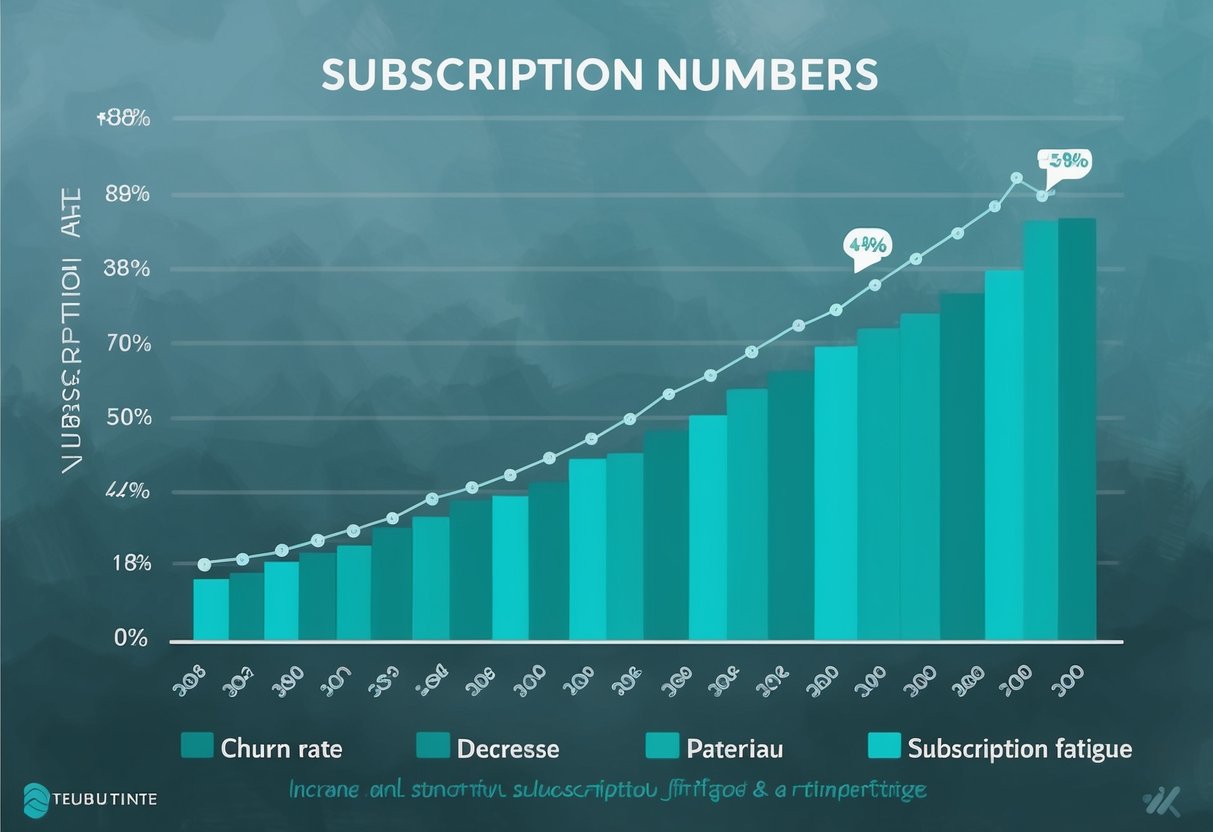 In the world of subscription-based services, managing churn and addressing subscription fatigue are critical for long-term growth. Lowering churn rates can boost customer lifetime value, while tackling subscription fatigue can enhance customer loyalty.
Identifying and Addressing Causes of Churn
What triggers customers to leave? The churn rate, a key metric, gives insight into this. Analyzing patterns helps us find common reasons customers cancel their subscriptions. Often, issues such as poor service quality, lack of value, or better alternatives drive churn. To combat this, implementing feedback systems is vital. Regular communication with subscribers helps us understand their needs and pain points. By addressing these issues promptly, we can improve the customer experience and boost retention. Personalization is another powerful tool. Tailoring services or offers based on user behavior not only meets customer expectations but also strengthens loyalty.
Mitigating the Risks of Subscription Fatigue
Have you ever felt overwhelmed by too many subscription services? This is the essence of subscription fatigue. Over 60 percent of streaming consumers now experience this, leading to cancellations. Understanding these frustrations is necessary to keep subscribers engaged. To mitigate this, I focus on refining the value proposition. Emphasizing unique benefits and regularly refreshing content can make a service stand out. Offering flexible plans or bundling services gives customers the freedom to choose according to their preferences. Leveraging technology, like AI-driven personalization, helps tailor content and recommendations, keeping the experience fresh and relevant. This reduces the risk of fatigue and promotes long-term customer loyalty.
Ensuring Regulatory Compliance and Security
 Navigating the world of subscription-based services involves not only building a great product but also ensuring that regulatory compliance and security are top priorities. This means maintaining data privacy standards and understanding the legal requirements that govern subscription models.
Upholding Data Privacy and Security Standards
Have you ever wondered what happens to your personal data when you sign up for a service? It’s crucial to handle this data with care. For businesses, ensuring data privacy means meeting standards like the General Data Protection Regulation (GDPR) if your service attracts European visitors. This regulation compels companies to protect personal information and notify users about data breaches swiftly. Security protocols should be as robust as a strong safety net, preventing unauthorized access and safeguarding sensitive data from breaches. Regular audits and updates to security measures form the backbone of trustworthy businesses. Customer trust is built when they know their information is secure. After all, would you trust a company that didn’t prioritize your privacy?
Navigating the Legal Landscape of Subscriptions
Is your subscription model ready to meet legal challenges? Businesses need to stay informed about the intricate legal landscape that governs subscriptions. Each region might have different laws regarding automatic renewals and consumer rights. Understanding these can prevent potential fines and damage to your reputation. Ensuring compliance with local regulations is paramount. It sets a solid foundation for sustainable growth and customer satisfaction. By prioritizing compliance, companies minimize legal risks and secure long-term success. The key lies in staying proactive and knowledgeable about changing laws, providing clarity and transparency to your customers.
Scaling Strategies for Subscription Businesses
 Are you ready to take your subscription business to the next level? Let’s explore how we can sustain growth while strategically preparing for the future. A strong focus on scalability and effective implementation is crucial for long-term success.
Sustaining Business Growth and Scalability
In a subscription-based model, scalability is key. By ensuring your systems and processes can handle increased demand, you’ll pave the way for steady business growth. Scalability means expanding without compromising quality. For instance, can your customer service handle a sudden influx of queries? What about your supply chain? Imagine you start with a small subscriber base. Over time, recurring revenue grows, creating a solid foundation for expansion. But this requires strategic planning. Think of using cloud-based services to manage operations efficiently. These tools can provide valuable insights, helping you make data-driven decisions. Continually assessing and enhancing your business model is crucial. Are there barriers to entry that could be reduced? By offering unique value and improving customer experiences, your subscription service can stand out. Remember, growth doesn’t happen overnight.
Strategic Implementation for Long-Term Success
Strategically growing a subscription business involves deliberate planning. From pricing strategies to marketing campaigns, each element needs careful consideration. Developing a strong brand identity is vital; it helps create loyal customers. What about barriers to entry for competitors? You need to protect your niche with unique offerings. Pricing strategies should balance attracting new subscribers and maintaining profitability. It’s a delicate dance between growth and sustainability. Another key aspect is leveraging customer feedback. It guides service improvements and innovation. Strategic partnerships can also boost reach and resources. Think of collaborative ventures that align with your business goals. By implementing strategies with foresight and precision, you’ll not only grow your business but also ensure long-term success. This strategic focus helps maintain security, appealing to those who seek stable investment opportunities in uncertain times.