
Money doesn’t grow on trees, but it can disappear faster than leaves in autumn. In today’s unpredictable economy, keeping your hard-earned wealth safe is more crucial than ever. Creating a solid financial plan is the foundation for protecting your family’s wealth and building a lasting legacy.  I’ve seen countless people struggle to maintain their wealth over the years. The good news? There are proven strategies to safeguard your finances, even when the economic winds shift. From smart investing to tax optimization, the right approach can make all the difference. Are you ready to take control of your financial future? Let’s explore some of the most effective ways to preserve your wealth, no matter what curveballs the economy throws your way.
Key Takeaways
- A comprehensive financial plan is essential for long-term wealth preservation
- Diversifying investments across different asset classes helps protect against market volatility
- Regular review and adjustment of your financial strategy is key to adapting to economic changes
Understanding Wealth Preservation
 Wealth preservation is crucial in today’s unpredictable economy. It’s about protecting what you’ve worked so hard to build. But how can we shield our assets from the ever-present threats of market swings and rising prices?
Components of Wealth Preservation
Wealth preservation isn’t just about hoarding cash under your mattress. It’s a multi-faceted approach that requires careful planning and strategy. Have you considered diversification? It’s not just a fancy word - it’s a lifeline for your wealth. I always recommend spreading your assets across different investment types. This might include stocks, bonds, real estate, and even precious metals. Why put all your eggs in one basket when you can build a fortress of financial security? Risk management is another key piece of the puzzle. It’s about understanding your tolerance for financial ups and downs and adjusting your strategy accordingly. Are you prepared for the next market downturn? Don’t forget about tax efficiency. I’ve seen too many people lose chunks of their wealth to Uncle Sam. Smart tax planning can help you keep more of what you’ve earned.
Impact of Inflation on Wealth
Inflation is like a silent thief, slowly eroding the value of your hard-earned money. Have you ever noticed how a dollar doesn’t stretch as far as it used to? To preserve wealth in the face of inflation, I always stress the importance of investments that can outpace rising prices. This might include stocks of companies with strong pricing power or real estate investments that can adjust rents upward. I also recommend considering inflation-protected securities. These are designed to maintain purchasing power even as prices rise. It’s like having a shield against the inflation monster. Remember, cash might feel safe, but it’s actually losing value every day it sits idle. Are you making your money work as hard as you do?
Developing a Robust Financial Plan
 A solid financial plan is the foundation for preserving wealth in uncertain times. It helps you stay on track, weather storms, and build long-term security. Let’s explore the key components of a robust plan that can safeguard your financial future.
Setting Financial Goals
What do you want to achieve financially? It’s crucial to set clear, measurable goals. I recommend starting with short-term objectives like paying off credit card debt or saving for a vacation. Then, move on to medium-term goals such as buying a home or funding your kids’ education. Finally, focus on long-term aspirations like retirement. Here’s a simple goal-setting framework:
- Specific: “Save $50,000 for a down payment”
- Measurable: Track progress monthly
- Achievable: Adjust based on your income and expenses
- Relevant: Align with your values and life stage
- Time-bound: Set a target date
Remember, goals aren’t set in stone. Review and adjust them regularly as your life changes.
Emergency Fund Essentials
Do you have a financial safety net? An emergency fund is your first line of defense against unexpected expenses or income loss. I suggest aiming for 3-6 months of living expenses, kept in a readily accessible savings account. Start small if you need to. Even $1,000 can make a difference in a pinch. Gradually increase your fund over time. Treat it like a bill – set up automatic transfers to build your emergency savings. Don’t touch this money unless it’s a true emergency. Job loss, major medical expenses, or urgent home repairs qualify. A new TV or vacation don’t.
Incorporating Insurance into Your Strategy
Have you protected yourself against major financial risks? Insurance is a key part of wealth preservation. It safeguards your assets and income from potentially devastating losses. Essential types of insurance to consider:
- Health insurance
- Life insurance (especially if you have dependents)
- Disability insurance
- Homeowners or renters insurance
- Auto insurance
- Umbrella liability policy (for high net worth individuals)
Review your coverage annually. As your wealth grows, you may need to increase your limits or add new policies.
Estate Planning Fundamentals
What will happen to your assets when you’re gone? Estate planning isn’t just for the wealthy. It’s about ensuring your wishes are carried out and your loved ones are protected. Key estate planning documents include:
- Will
- Trust (if needed)
- Power of attorney
- Healthcare directive
Don’t put this off. Without a proper estate plan, the courts may decide how to distribute your assets. This can lead to family disputes and unnecessary taxes. Update your estate plan regularly, especially after major life events like marriage, divorce, or the birth of a child.
Tax Planning and Optimization
Smart tax moves can help you keep more of your hard-earned money. Let's explore how to shrink your tax bill and grow your wealth through savvy planning.Understanding Tax Liabilities
Do you know how much you’re really paying in taxes? I’ve found that many people don’t. It’s crucial to grasp your total tax burden, including income tax, capital gains, and property taxes. Start by reviewing your recent tax returns. Look at your effective tax rate - that’s the percentage of your income that goes to taxes. It might surprise you. Next, consider future tax liabilities. Will you be in a higher bracket soon? Are there big capital gains coming? Planning ahead is key. I always say, “It’s not about how much you make, it’s about how much you keep.” Understanding your tax situation is the first step to keeping more.
Using Tax-Efficient Investment Vehicles
Want to grow your wealth faster? Tax-efficient investments are your secret weapon. These are accounts and assets that help minimize your tax burden. Here are some powerful options:
- 401(k)s and IRAs: Contribute pre-tax dollars and grow your money tax-deferred.
- Roth IRAs: Pay taxes now, enjoy tax-free growth and withdrawals later.
- Municipal bonds: Earn interest that’s often free from federal (and sometimes state) taxes.
- ETFs and index funds: These typically generate fewer taxable events than actively managed funds.
Remember, it’s not just what you invest in, but where you hold those investments. Strategic asset location can boost your after-tax returns significantly.
Strategies for Tax Reduction
Ready to slash your tax bill? Here are some powerful strategies I’ve used to help my clients keep more of their wealth:
- Maximize retirement contributions: This lowers your taxable income now.
- Harvest tax losses: Offset capital gains by selling underperforming investments.
- Give to charity: Donations can reduce your taxable income.
- Consider a health savings account (HSA): It’s triple tax-advantaged!
Tax planning services can help you navigate complex strategies like:
- Roth conversions
- Qualified Opportunity Zones
- 1031 exchanges for real estate
Remember, the tax code is complex and always changing. Isn’t it time you had a proactive tax strategy? Your future self will thank you.
Investment Strategies for Wealth Preservation
Preserving wealth requires smart investment moves. I've found that a mix of strategies can help protect and grow your money, even when the economy is shaky.The Role of Diversification
Diversification is key to wealth preservation. I always say, “Don’t put all your eggs in one basket.” Why? Because spreading your investments across different assets can lower your risk. A diversified investment portfolio might include:
- Stocks
- Bonds
- Real estate
- Commodities
- Cash
Each asset type responds differently to market changes. When one goes down, another might go up. This balance can help protect your wealth. I recommend reviewing your portfolio regularly. As you age, you might want to shift to more conservative investments. But don’t forget about growth potential. Even in retirement, you need your money to keep working for you.
Real Estate Investments
Real estate can be a solid wealth preservation strategy. Why? It’s tangible, and people always need places to live and work. Here are some ways to invest in real estate:
- Rental properties
- Real Estate Investment Trusts (REITs)
- Commercial real estate
Rental properties can provide steady income. REITs offer a way to invest in real estate without directly owning property. Commercial real estate can yield high returns but often requires more capital. Real estate can also act as a hedge against inflation. As prices rise, so do property values and rents. This can help preserve your wealth’s purchasing power over time.
Role of Retirement Accounts
Retirement accounts are crucial for wealth preservation. They offer tax benefits that can help your money grow faster. Two popular options are:
- Traditional IRA
- Roth IRA
Traditional IRAs offer tax-deductible contributions. You pay taxes when you withdraw in retirement. Roth IRAs work the opposite way. You pay taxes on contributions now, but withdrawals in retirement are tax-free. The power of these accounts lies in compound interest. Your earnings grow on top of your earnings, creating a snowball effect over time. I always tell people: start early and contribute consistently. Even small amounts can grow significantly over decades. Don’t leave free money on the table if your employer offers a 401(k) match.
Savings and Account Types for Wealth Buildup
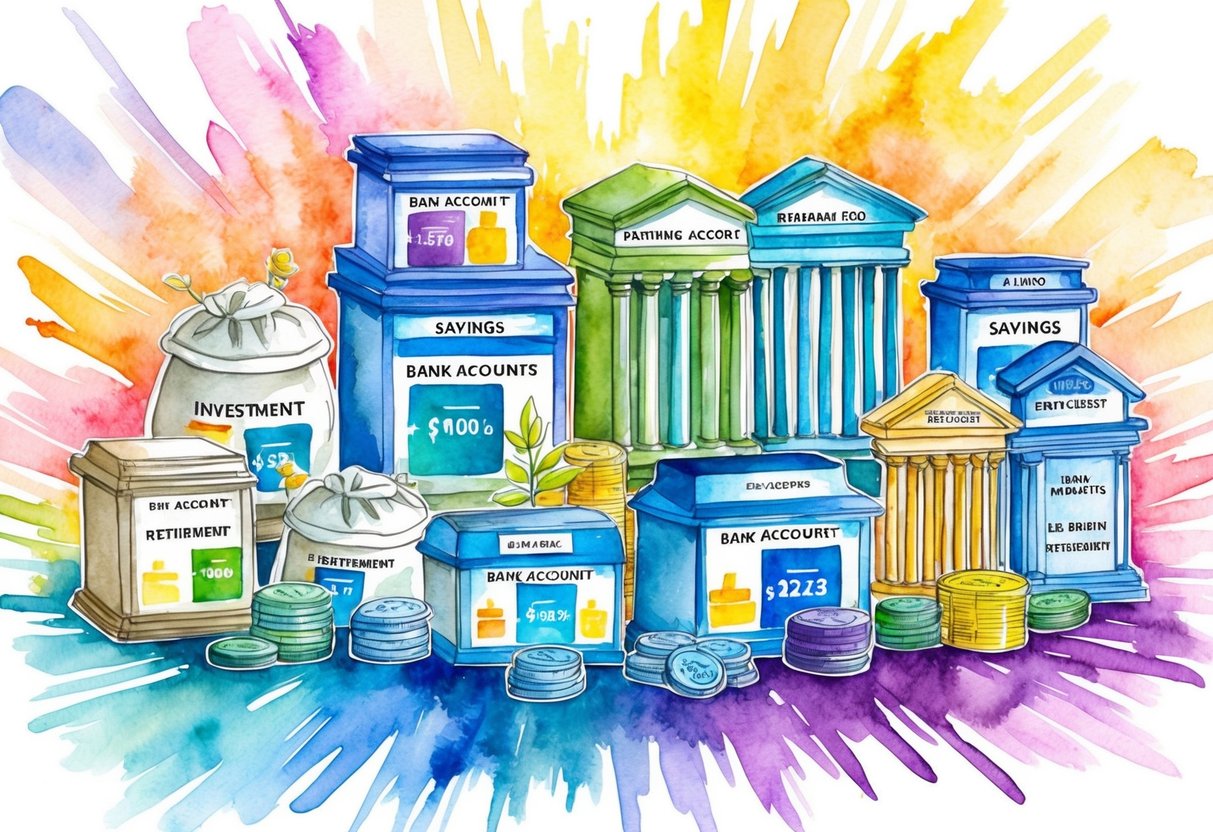 Building wealth isn’t just about earning money; it’s about putting that money to work. Let’s explore some smart ways to grow your savings and set yourself up for financial success.
High-Yield Savings Accounts
High-yield savings accounts are a game-changer for your money. I’ve seen too many people leave their cash sitting in low-interest accounts, missing out on easy gains. These accounts offer interest rates way above the national average. Why settle for pennies when you can earn dollars? Many online banks offer high-yield accounts with no minimum balance and no monthly fees. Your money stays liquid, so you can access it anytime. Here’s a quick comparison:
Account Type
Average Interest Rate
Traditional
0.01% - 0.05%
High-Yield
1% - 3% or more
Remember, even small differences compound over time. Don’t let your money sleep – make it work for you!
Certificates of Deposit (CDs)
CDs are like time capsules for your cash. You agree to lock away your money for a set period, and the bank rewards you with a higher interest rate. It’s a win-win. Here’s how CDs can work for you:
- Choose terms from a few months to several years
- Typically offer higher rates than savings accounts
- Guaranteed returns, unlike stocks or bonds
But be careful – breaking a CD early often comes with penalties. I always say, “Only lock away money you won’t need for a while.” CDs can be a great way to earn more on your savings without taking on much risk. Just make sure you ladder your CDs to keep some funds accessible.
Retirement Account Options
Retirement accounts are wealth-building powerhouses. Are you making the most of yours? Let’s look at some options:
- Traditional IRA: Contributions are tax-deductible now, but you’ll pay taxes when you withdraw.
- Roth IRA: You pay taxes on contributions now, but withdrawals in retirement are tax-free.
- 401(k): Often comes with employer matching – that’s free money!
Which one is right for you? It depends on your tax situation and retirement goals. I always ask myself, “Will I be in a higher tax bracket now or in retirement?” Retirement accounts offer tax advantages that can supercharge your wealth buildup. Don’t miss out on these opportunities to grow your nest egg.
Leveraging Trusts for Wealth Preservation
 Trusts are powerful tools for protecting and passing on wealth. They offer unique benefits for estate planning and creating a lasting family legacy. Let’s explore how trusts can help secure your financial future.
Revocable vs. Irrevocable Trusts
When it comes to trusts, I’ve found that understanding the difference between revocable and irrevocable trusts is crucial. Revocable trusts give you flexibility. You can change or cancel them anytime. They’re great for managing assets during your lifetime. Irrevocable trusts, on the other hand, are set in stone. Once created, you can’t easily modify them. But here’s the kicker - they offer stronger asset protection and tax benefits. Why? Because you’ve given up control, the assets are no longer considered part of your estate. Which one is right for you? It depends on your goals. Are you looking for flexibility or maximum protection? That’s a question only you can answer.
Benefits of Trusts in Estate Planning
Trusts shine when it comes to estate planning. They offer control over how and when your assets are distributed. Want to ensure your grandkids use their inheritance for college? A trust can do that. Trusts can also help you:
- Avoid probate
- Reduce estate taxes
- Protect assets from creditors
- Maintain privacy
I’ve seen trusts work wonders for families wanting to preserve wealth across generations. They can be tailored to fit your unique situation and goals. But remember, setting up a trust isn’t a DIY project. It’s complex. You’ll need help from legal and financial pros to get it right. Is the effort worth it? If preserving your legacy matters to you, I’d say absolutely.
Insurance as a Wealth Protection Tool
 Insurance is a powerful way to safeguard your assets and secure your family’s future. Let’s explore how different types of insurance can help you preserve your wealth in uncertain times.
The Importance of Life Insurance
Life insurance is more than just a safety net - it’s a cornerstone of smart financial planning. I’ve seen too many families struggle after losing a breadwinner. Don’t let that be you. Life insurance can:
- Replace lost income
- Pay off debts
- Fund your children’s education
- Cover funeral expenses
But here’s a secret: it’s not just for death benefits. Some policies build cash value over time, which you can borrow against tax-free. It’s like having a hidden savings account. Are you maximizing this wealth preservation tool? If not, you might be leaving money on the table.
Annuities and Wealth Preservation
Worried about outliving your savings? Annuities could be your answer. They’re like a personal pension plan you buy for yourself. Here’s how they work:
- You invest a lump sum or series of payments
- The insurance company guarantees you regular payouts for life
It’s a way to create your own “retirement paycheck.” But be careful - not all annuities are created equal. Some have high fees that can eat into your returns. I recommend looking into:
- Fixed annuities for steady, guaranteed income
- Variable annuities if you want potential for growth (but can handle some risk)
Remember, the key is to start early. The sooner you begin, the more security you’ll build for your golden years.
Long-Term Care Insurance and Planning
Did you know that 70% of people over 65 will need long-term care at some point? It’s a sobering statistic, but one we can’t ignore. Long-term care insurance protects your nest egg from being drained by nursing home or in-home care costs. Without it, you could be spending $100,000 or more per year out of pocket. Key benefits:
- Covers costs not typically paid by health insurance or Medicare
- Allows you to receive care at home if possible
- Preserves your assets for your heirs
Don’t wait until it’s too late. The best time to buy is in your 50s or early 60s when premiums are lower and you’re more likely to qualify.
The Role of Professional Financial Advice
 Getting expert help can make a big difference in growing and protecting your wealth. A good advisor will guide you through market ups and downs and help you make smart money moves.
Selecting the Right Financial Advisor
Finding the right financial advisor is crucial. I always tell people - don’t just pick the first name you see in the phonebook! Look for someone who understands your goals and has a track record of success. What should you ask a potential advisor? Here are some key questions:
- What’s your investment philosophy?
- How do you get paid?
- What certifications do you hold?
Remember, a great advisor is like a coach for your money. They should challenge you to think differently and push you out of your comfort zone. Have you ever considered how much wealth you could build with the right guidance?
The Value of Continuous Professional Guidance
Why is ongoing advice so important? Markets change. Laws change. Your life changes. A skilled financial professional helps you adapt. I’ve seen too many people try to go it alone, only to make costly mistakes. Did you know that emotions often lead to poor investment decisions? A good advisor can keep you level-headed when markets get rocky. Regular check-ins with your advisor help ensure you’re on track. They can spot opportunities you might miss and help you avoid pitfalls. Isn’t peace of mind worth the investment in professional guidance?
Managing Risks in an Unpredictable Economy
 In today’s ever-changing financial landscape, protecting our wealth requires smart strategies. I’ve found that understanding market volatility and diversifying investments are key to weathering economic storms.
Navigating Market Volatility
Market ups and downs can be nerve-wracking, but they’re a normal part of investing. How can we stay calm when the market’s acting crazy? First, I always remind myself that volatility is temporary. Markets have historically trended upward over long periods. Knee-jerk reactions often lead to poor decisions. Second, I keep cash reserves. This gives me peace of mind and prevents forced selling during downturns. I aim for 3-6 months of living expenses in an easily accessible account. Lastly, I focus on companies with strong fundamentals. Businesses with solid balance sheets and steady cash flows tend to weather market storms better.
Mitigating Risks Through Diversification
Diversification is like not putting all your eggs in one basket. It’s a powerful tool for managing risk in unpredictable times. But how do we do it effectively? I spread my investments across:
- Different asset classes (stocks, bonds, real estate)
- Various sectors (tech, healthcare, consumer goods)
- Geographic regions (domestic and international markets)
This approach helps protect my wealth if one area underperforms. I also consider alternative investments like precious metals or even well-chosen cryptocurrencies for a small portion of my portfolio. Remember, diversification doesn’t guarantee profits or prevent losses. But it can help smooth out returns over time and reduce overall portfolio risk.
Intergenerational Wealth Transfer
 Passing on wealth to future generations isn’t just about money. It’s about creating a lasting legacy and making a positive impact. I’ve found that smart planning and strategic giving can help families build wealth that lasts for generations.
Creating a Lasting Legacy
Creating a lasting legacy starts with a solid estate plan. I always tell my clients to think beyond just passing down assets. What values and knowledge do you want to share? One key strategy is setting up a family trust. This can protect assets and ensure they’re distributed according to your wishes. Financial education is crucial too. I encourage families to have open discussions about money. Teach your kids and grandkids about budgeting, investing, and wealth preservation. Consider creating a family mission statement. This can guide future generations in managing and growing the family wealth.
Charitable Giving and Family Trusts
Charitable giving isn’t just good for the soul - it can be a smart wealth transfer strategy too. Have you thought about setting up a family foundation? A family foundation lets you support causes you care about while potentially reducing your tax burden. It’s a win-win. Donor-advised funds are another option. They’re simpler to set up than private foundations and offer similar benefits. Family trusts can play a big role in charitable giving too. You can set up a trust that makes regular donations to your chosen charities. Remember, involving your family in philanthropic decisions can help instill important values and create a shared sense of purpose.
Practical Tips for Personal Wealth Management
 Protecting and growing your wealth requires smart strategies and disciplined habits. Here are some key tips to help you manage your money effectively in uncertain times.
Budgeting and Saving Wisely
Are you tracking every dollar? I can’t stress enough how crucial this is. Start by creating a detailed budget. List all your income sources and expenses. Be ruthless - cut out unnecessary spending. Put savings first. Aim to save at least 20% of your income. Set up automatic transfers to a high-yield savings account. This way, you pay yourself first. Look for creative ways to reduce costs. Can you negotiate better rates on bills? Are there subscriptions you can cancel? Small savings add up over time. Build an emergency fund. Aim for 3-6 months of living expenses. This protects you from unexpected financial shocks and gives you peace of mind.
Strategies for Paying Down Debt
Debt is a wealth killer. Let’s tackle it head-on. Start by listing all your debts - credit cards, loans, mortgages. Know exactly what you owe and to whom. Consider the debt snowball method. Pay minimum payments on all debts, but put extra money towards the smallest debt. When that’s paid off, move to the next smallest. This builds momentum and motivation. Or try the debt avalanche approach. Focus on the highest interest debt first. This saves you money in the long run. Consolidate high-interest debts if possible. A personal loan or balance transfer credit card can lower your interest rates and simplify payments. Remember, becoming debt-free is a key step in building and protecting your wealth. It frees up cash flow for investing and creates financial stability.