
Navigating the world of dividend investing can feel daunting, especially when it comes to rebalancing a portfolio for maximum growth. Have you found yourself questioning if your portfolio is set up to thrive? With the right strategies, you can automate your dividend portfolio rebalancing and unleash its true potential. By automating your approach, you can ensure optimal growth while managing risk with ease.  I’ve faced the same challenges, but embracing automation in portfolio management changed everything. Imagine having a system that consistently tracks and adjusts your investments without constant monitoring. This not only saves time but can also optimize growth, keeping your financial goals within reach. As you shift focus from manual rebalancing to an automated solution, you’ll find greater peace of mind and performance in your investments. Dive into this approach and discover how you can create a strategic, automated process that transforms your investment strategy. Let’s explore how you can capitalize on dividend growth and investment strategies to build a robust portfolio that’s prepared for the future.
Key Takeaways
- Automate rebalancing for consistent growth.
- Leverage strategic dividend investment.
- Manage risk with minimal effort.
Understanding Dividend Investing
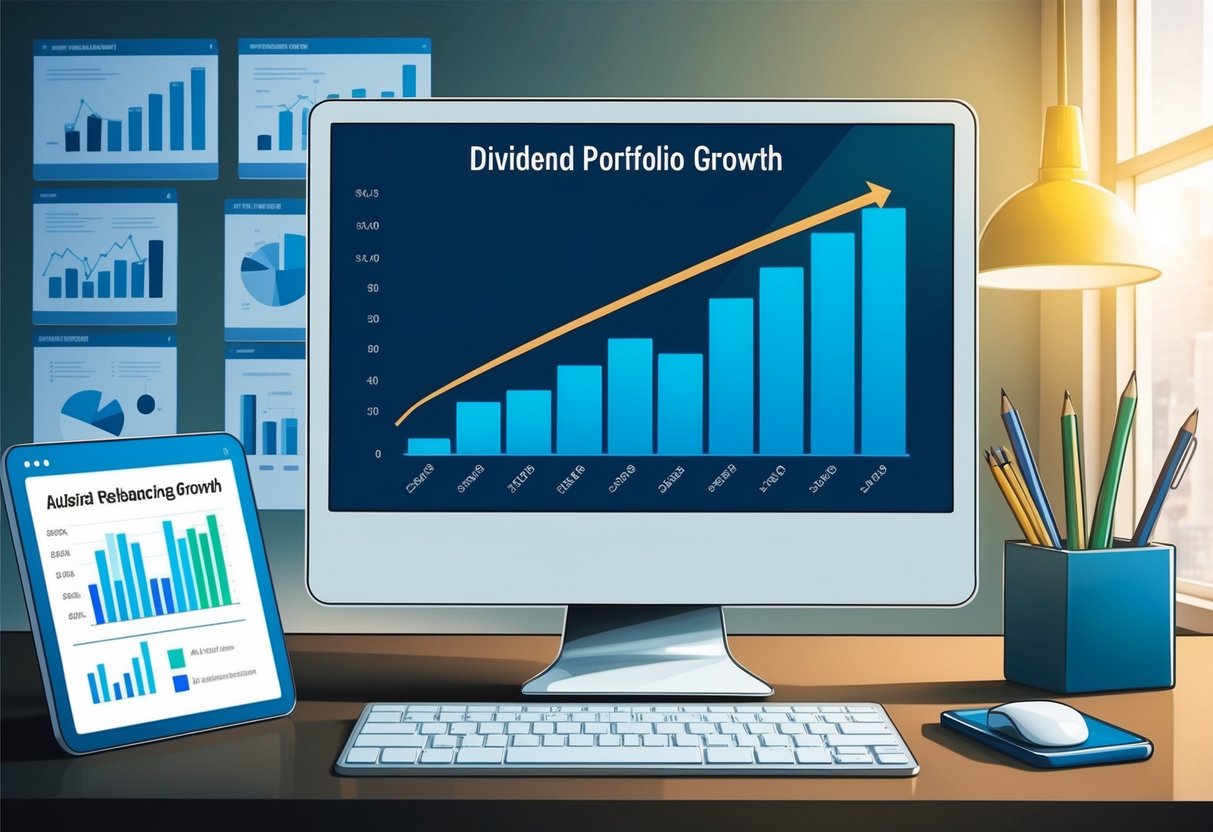 Dividend investing can provide a steady income stream while also helping your portfolio grow. To do it right, it’s important to focus on dividend yield, growth rate, stability, and payout ratio to ensure solid returns and long-term success.
Defining Dividend Yield and Growth Rate
As a dividend investor, it’s essential to understand dividend yield and growth rate. Dividend yield is the annual dividend payment divided by the stock price. It shows how much you earn per dollar invested. For example, if a stock is $100 and offers a $3 annual dividend, the yield is 3%. But remember, a higher yield isn’t always better. Why settle for just the yield when a stock’s dividend growth rate could also supercharge your earnings? The dividend growth rate is the annualized percentage increase in a company’s dividend payment. This indicates how fast dividends are growing yearly. A consistently high growth rate can signal a company’s strong financial health and potential for future returns. I pay close attention to both these figures to ensure my investments not only pay well today but also improve over time.
Assessing Dividend Stability and Payout Ratio
Beyond yields and growth rates, the stability of dividends is crucial. Consistent dividends over many years can suggest a reliable company. Ever wonder how stable a dividend is? I look at the company’s payout ratio. This is the portion of earnings paid out as dividends; calculated by dividing dividends by net income. A lower payout ratio can mean a buffer during tough times, while a higher ratio might indicate risk of cuts if earnings drop. Keeping an eye on these factors helps me understand how likely it is for dividends to continue or grow. I aim to balance high yields with solid company performance to ensure stability and reliability in my investments.
The Principles of Portfolio Rebalancing
 Understanding portfolio rebalancing is key to maximizing growth and managing risks. By knowing what triggers rebalancing, setting precise targets, and being mindful of costs, we can refine our approach for optimal performance.
Portfolio Drift and Rebalancing Triggers
Portfolio drift occurs when asset values change, affecting the original allocation. This happens as some investments grow faster than others. It’s like a ship on the ocean, gradually drifting off course. Do we let it wander or steer it back? I often ask myself this when I notice changes in my portfolio. Rebalancing triggers can help decide when to adjust. These triggers might be based on time, like yearly reviews, or percentage changes in asset value. Spotting these moments is crucial for maintaining a stable investment path. It’s all about getting back to that initial target and risk level to achieve long-term goals.
Rebalancing Strategies and Target Allocation
How do I decide where to aim? That’s what target allocation is about. Setting specific percentages for stocks, bonds, and other assets helps maintain a balance that fits my financial goals. This is where I define what I want my portfolio to look like. Different strategies exist to keep allocations on track. For instance, some choose a calendar-based approach, checking balances yearly, while others rely on threshold strategies that use percentage limits. Finding the right strategy depends on personal goals and risk tolerance. It’s about crafting a plan, sticking to it, and making adjustments when needed.
Transaction Costs and Tax Considerations
Rebalancing isn’t just about shifting numbers. Transaction costs can eat into potential gains. These include brokerage fees and other charges that arise when buying or selling. Understanding these costs helps me make smarter decisions and reduces unnecessary expenses. There’s also the matter of taxes, specifically capital gains tax. Blocking potential surprises can make a big difference. By rebalancing within tax-advantaged accounts or using losses to offset gains, I navigate these waters more smoothly. This way, I keep more of what I earn and set my portfolio up for sustained success.
Creating a Robust Investment Strategy
 When building a strong investment strategy, it’s crucial to tailor the plan to personal needs while focusing on risk management and asset distribution. Your approach must be comprehensive, addressing both asset allocation and diversification to optimize for growth.
Risk Tolerance and Asset Allocation
How much risk are you comfortable taking? Understanding your risk tolerance is key to effective asset allocation. If you lean more conservative, you might prefer a mix with more bonds and fewer stocks. For those who can handle higher risk, a portfolio heavier on stocks could be a better fit. Consider how assets perform over time. Stocks typically have greater potential for growth, but they also come with more volatility. Bonds, meanwhile, offer stability and predictable returns. By balancing these, you align your portfolio with your comfort level and financial goals. This method can be a powerful tool in ensuring the longevity of your investments and providing peace of mind.
Diversification Across Securities
Is all your money tied up in a few investments? Diversification is the secret weapon to safeguard your portfolio from market swings. By spreading investments across different securities, you minimize the risk tied to any single asset’s performance. A well-diversified portfolio might include a mix of stocks, bonds, and possibly other assets like real estate or commodities. Think of each type of security as a building block. Alone, each has weaknesses, but together they form a fortress, protecting your portfolio against various financial storms. This strategy not only reduces risk but also opens you to different growth opportunities. With each asset class reacting differently to economic changes, diversification ensures that your entire investment doesn’t sink if one sector hits a rough patch.
Automating Dividend Portfolio Management
 Managing your dividend portfolio can be more effective when you automate the process. Technology offers tools to streamline trading and take advantage of tax laws, enhancing the growth of your investments.
Leveraging Technology for Efficient Trading
Why spend countless hours manually balancing your portfolio when technology can take the wheel? With platforms like Wealthfront, automation has become a game-changer. Tools enable features like intelligent dividend reinvestment and tax-sensitive rebalancing, ensuring your portfolio is continuously optimized. Automation simplifies complex tasks. For instance, always-on rebalancing helps maintain a balanced investment, reducing unnecessary market exposure automatic rebalancing. With efficiency, my focus can shift to strategy rather than routine tasks. Isn’t it time to let technology do the heavy lifting in trading?
Utilizing Tax-Advantaged Accounts
Did you know that you can protect your dividends from excessive taxation? Leveraging tax-advantaged accounts like IRAs or 401(k)s can shield your earnings from immediate tax implications. These accounts permit your investments to grow, tax-deferred, leading to potential compounding over time. Integrating tax strategies with automated systems maximizes this benefit. Automated rebalancing maintains your desired allocation without triggering unnecessary tax events, incorporating features like Tax-Loss Harvesting. This approach ensures that I minimize tax liabilities while aiming for maximum growth. Wouldn’t you prefer to see more of your investments working for you instead of paying taxes prematurely?
Managing Volatility and Risk Exposure
 When managing a dividend portfolio, it’s crucial to control volatility and minimize risk exposure. Balancing asset types, such as stocks and bonds, can play a vital role in achieving this balance. Understanding market fluctuations is also key to maintaining stability and growth.
The Role of Bonds in a Dividend Portfolio
Why consider bonds in a dividend portfolio? Bonds act as a cushion against the ups and downs of the stock market. Their relatively stable nature can provide a counterbalance during turbulent times. Stocks may offer higher returns, but they also come with higher risk. By including bonds, I can help reduce overall risk exposure while still pursuing growth. Bonds often generate steady income, which can contribute to overall returns. This is especially critical when stocks aren’t performing well. In challenging markets, the predictable income from bonds offers a sense of security. They are essentially my portfolio’s safety net, stabilizing returns and keeping the long-term investment strategy on track. By thoughtfully integrating bonds, I enhance risk management. This makes it easier to weather stock market fluctuations and protect my portfolio against unnecessary volatility.
Adjusting for Stock Market Fluctuations
How can I prepare for inevitable market shifts? Adjusting strategies to handle stock market fluctuations is key. Markets don’t follow a straight path; they are unpredictable. Keeping an eye on changes means I can make timely adjustments to my portfolio. Regular portfolio rebalancing is crucial in maintaining my intended risk exposure. A proactive approach allows me to buy more of undervalued stocks and trim those that have grown. This not only manages risk but also positions my portfolio for future gains. Using techniques like automatic rebalancing ensures my investments align with my goals without constant monitoring. Embracing market fluctuations as opportunities, rather than threats, empowers me to maintain control. With each adjustment, I strive to optimize long-term growth while managing volatility effectively.
Optimizing Cash Flows for Growth
 To grow your dividend portfolio effectively, engaging with cash flow optimization strategies is key. This includes balancing dividends with total return and wisely directing your portfolio’s cash flows for continuous growth.
Balancing Dividends and Total Return
When it comes to managing cash flow in a dividend portfolio, I focus on balancing dividends with the total return. This involves evaluating how dividends fit into your overall financial goals. Are you looking to maximize passive income, or is increasing the total value of your investments more important? Both approaches have their merits, but maintaining the right balance is crucial for effective growth. Consider the historical dividend payout ratios and how they impact your returns. For instance, a lower payout ratio might leave room for future dividend growth, enhancing your total return. Thoughtful analysis helps maintain alignment with long-term goals and guides strategic adjustments for sustained performance.
Directing Portfolio Cash Flows
The way I channel portfolio cash flows can significantly influence growth. Reinvesting dividends is often a straightforward method for compounding wealth. Instead of using dividends for immediate needs, consider redirecting them back into your portfolio. This not only enhances growth potential but also aligns with long-term financial aspirations. Another method is rebalancing with portfolio cash flows. Using dividends and interest payments to meet rebalancing needs helps control costs and keeps the portfolio aligned with risk preferences. This strategy is particularly effective for maintaining stability in taxable portfolios while also aiming for growth. Each decision in managing cash flows should be tailored to fit personal financial goals.