Have you ever found yourself staring at a mountain of financial advice, unsure which path leads to your goals? You are not alone. Many people reach a point where they wonder if there’s a smarter, more effortless way to invest. Enter robo-advisors—these digital platforms promise to simplify investing by using algorithms to manage your money. Robo-advisors offer the benefit of low fees and ease of access, making them an attractive option for passive investment management.  With so many options in the financial world, you might ask, “Is a robo-advisor the right fit for me?” These platforms provide a hands-off approach, automatically adjusting your investments according to market conditions. They strip away the emotion that can cloud investment decisions, offering a disciplined, rule-based strategy. Yet, like all financial tools, there are also drawbacks, such as limited human interaction and customization. It’s important to dive deeper into how these platforms align with your personal financial goals and risk tolerance. You’ll want to consider if their tax strategies or real-world performance meet your expectations. You deserve an investment strategy that suits both your present needs and future ambitions.
Key Takeaways
- Robo-advisors simplify investing with low fees and automated management.
- They offer a disciplined, hands-off investment strategy.
- Consider your financial goals and risk tolerance before choosing a robo-advisor.
Understanding Robo-Advisors
 In today’s fast-paced digital world, robo-advisors offer a new way to handle your investments. These automated platforms can revolutionize how you manage your wealth, making investing simpler and more transparent.
What Are Robo-Advisors?
Robo-advisors are digital platforms that provide automated, algorithm-driven financial planning services with little to no human supervision. They offer a straightforward, cost-effective way to invest, often with lower fees compared to traditional advisors. By using computer algorithms and advanced software, they build and manage your investment portfolio according to your financial goals and risk tolerance. You might ask, why would I use a robo-advisor? These platforms are perfect for those who want a hands-off approach to investing. They eliminate the need to continuously monitor the market and make decisions. By relying on data and set investment strategies, robo-advisors can efficiently manage your portfolio. They help cut through the noise of financial advice, making it easier to focus on what matters: growing your savings.
How Robo-Advisors Work
Robo-advisors begin by gathering information about your financial status and goals through a simple questionnaire. They ask about your risk tolerance, time horizon, and investment preferences. This helps them tailor an investment strategy just for you. Using algorithms, they allocate assets across various classes like stocks, bonds, and real estate. Once set, these platforms continuously monitor your portfolio. They automatically rebalance your assets to maintain your desired level of risk. Most robo-advisors also offer tax-loss harvesting to optimize your tax situation. While they provide convenience and efficiency, it’s essential to remember that they’re based on preset algorithms. As such, they may not perfectly adjust to sudden market changes or personal circumstances, which requires periodic assessment on your part to ensure they align with your needs.
Benefits of Robo-Advisors
 Have you ever considered automating your investment strategy for more consistent growth? Robo-advisors offer a streamlined solution that makes managing investments simpler and more cost-effective. Let’s explore how they transform passive investment management through cost-effectiveness, ease of use, diversification, and automatic rebalancing.
Cost-Effectiveness
When it comes to managing investments, who wouldn’t want to keep expenses low? Robo-advisors deliver this by charging lower fees than traditional financial advisors. Typically, these fees range from 0.25% to 0.50% of assets under management, which is significantly less than what you might pay a human advisor. Plus, many robo-advisors require minimal account balances, making them accessible to a wider range of investors. This means I can keep more of my returns, which makes a big difference over time. Think about it: by reducing costs, I can potentially see better net returns, especially in the long run. Using a robo-advisor is like taking advantage of a sale every day, allowing me to invest smarter, not harder.
Ease of Use
The simplicity of robo-advisors cannot be overstated. Imagine managing your investments from the comfort of your couch. With just a few clicks, I can set my financial goals, choose my risk tolerance, and let the system handle the heavy lifting. Their platforms are user-friendly, often featuring intuitive interfaces that guide me through setup and monitoring. It’s like having a self-driving car for my finances—trustworthy and effortless. Plus, their automated management means I stay on track without getting bogged down by daily market fluctuations or detailed portfolio decisions.
Diversification
Why put all your eggs in one basket when diversification is just a click away? Robo-advisors offer diversified portfolios, spreading my investments across various asset classes. This reduces risk and enhances potential for stable returns. They utilize proven investment strategies to balance stocks, bonds, and other assets, ensuring that my portfolio aligns with my financial goals. By incorporating global assets, as well as specialized strategies like tax-loss harvesting, robo-advisors help me mitigate my tax liabilities. This broad spread of investments is key to maintaining a healthy balance in uncertain markets.
Automatic Rebalancing
Markets can be volatile, which is why regular portfolio rebalancing is crucial. Robo-advisors automatically rebalance my investments, aligning them with my target asset allocation. This ensures that my investment strategy remains consistent with my original goals without me having to intervene frequently. Automatic rebalancing is like a built-in checkup for my portfolio, correcting any drifts that could upset my financial plans. Through continuous monitoring, robo-advisors execute timely adjustments, keeping my long-term strategy steady and on course.
Drawbacks of Robo-Advisors
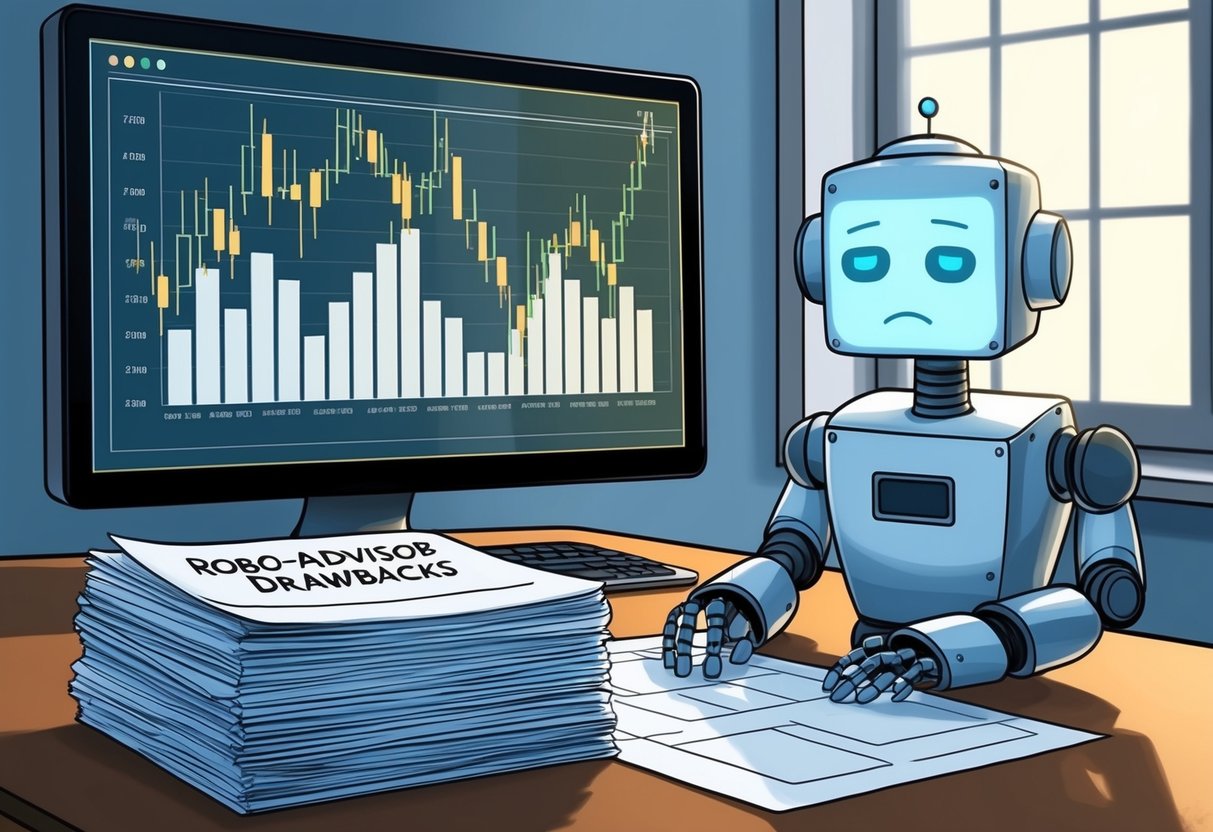 Robo-advisors often seem like a modern solution for passive investment, yet they come with limitations that might not suit everyone. From limited personalization to the absence of human touch, these factors can affect the overall investment experience.
Limited Personalization
Do robo-advisors really understand your unique financial situation? While they use algorithms to manage portfolios based on general data like age and risk tolerance, they often fall short in tailoring investments to your specific needs or goals. For instance, if you have particular tax concerns or ethical investing preferences, a robo-advisor might not fully meet those criteria. This limitation can pose challenges for those who prefer a more hands-on approach to align their investments with their personal values. Many people over 40 have unique financial goals, and achieving these sometimes requires a personalized strategy that generic algorithms might not provide.
Overdependence on Algorithms
Are we trusting algorithms too much with our money? Robo-advisors primarily rely on algorithms to make investment decisions, which can be risky. While these algorithms are designed to react to market changes and optimize portfolio performance, they lack the ability to foresee or react astutely to unusual market conditions. In volatile markets, a robo-advisor might not respond as strategically as a human advisor might. It doesn’t consider factors such as global economic changes or specific market stimuli beyond what’s programmed. This dependence could hinder investors from maximizing returns during unexpected market twists.
Lack of Human Interaction
What happens when you need a real conversation about your financial future? One significant drawback of robo-advisors is the lack of human interaction. When questions arise, or when you need advice tailored to your personal situation, talking to an algorithm is not the same as discussing with a knowledgeable advisor who understands the complexities of your life. For those who value the reassurance that comes from personal advice, this absence can be disheartening. Whether you have questions about setting up a college fund or planning for retirement, that personal touch is often missing. In situations where personal advice is crucial, relying solely on robo-advisors might leave investors feeling isolated and unsupported.
Evaluating Risk Tolerance in Robo-Advising
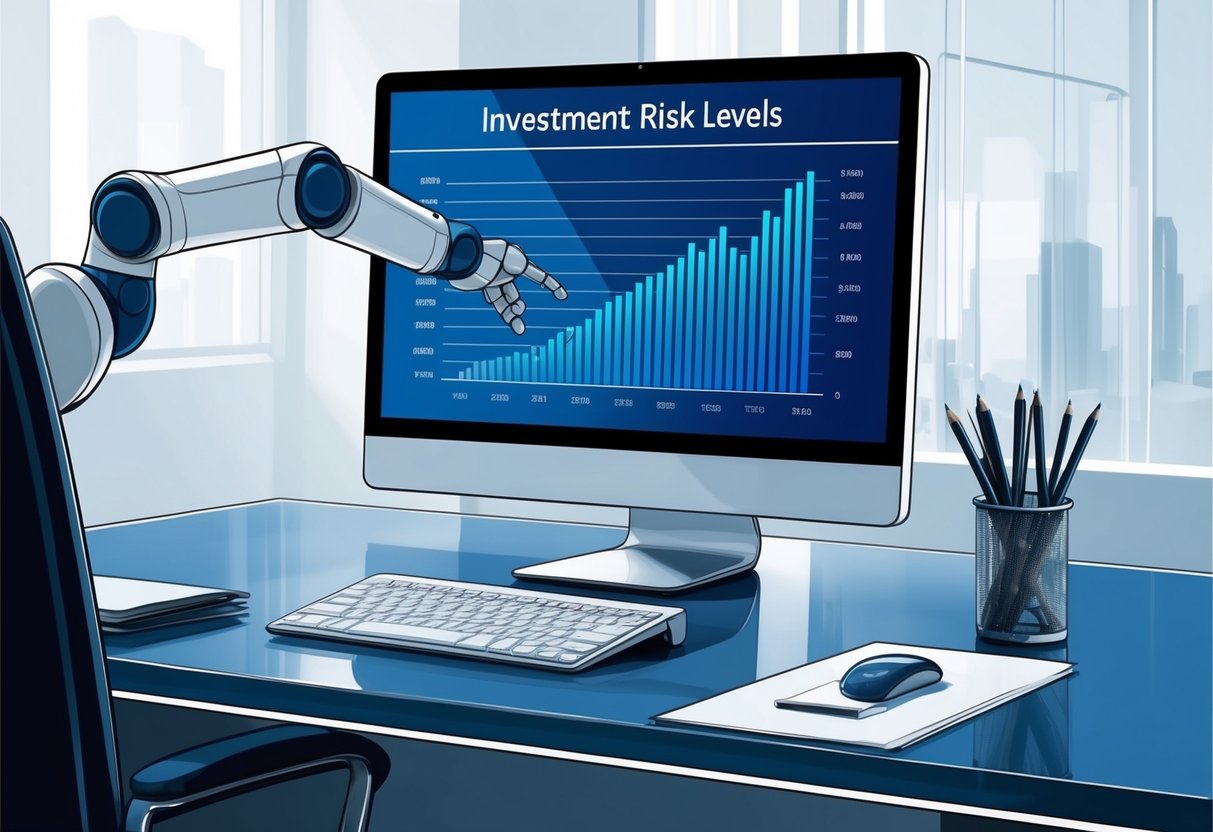 Robo-advisors have become a tool many investors are considering, especially when it comes to managing risk. But how well do these digital platforms assess and handle risk? Let me break it down for you.
Risk Assessment Process
The first step a robo-advisor takes is to evaluate your risk tolerance. This usually involves a series of questions about your financial goals, investment timeline, and how you would react to market changes. It looks at your comfort level with potential losses, your expectations for return, and the time you have until you need access to your money. This risk profile becomes the foundation for creating your investment portfolio. These platforms often use advanced algorithms to analyze your answers. They classify your risk profile into categories like conservative, moderate, or aggressive. Automated systems then suggest a mix of investments that align with your outlined risk tolerance. The process is systematic and fast, but does it capture your true investing mindset?
Algorithmic Responses to Market Changes
Once your risk tolerance is assessed, what happens when the market fluctuates? Robo-advisors use algorithms to adjust your portfolio based on the market conditions. They monitor market trends and can quickly rebalance investments to keep them aligned with your risk preferences. This automation can respond swiftly to changes, potentially minimizing risks you might face during a volatile market. Unlike human advisors, these algorithms don’t panic. They follow predefined rules which can help during sudden market downturns. However, can they replace the human touch and emotional insight? Robo-advisors work tirelessly to maintain your prescribed risk level without emotional biases. Yet, this might lack the personal reassurance some investors seek during uncertain times. When you think about it, are robo-advisors offering a new path to secure investments, or do they miss the nuances that a seasoned human advisor might catch?
Tax Strategies Incorporated by Robo-Advisors
 Robo-advisors can help optimize your investments by using advanced tax strategies. They are designed to ensure your investments grow efficiently, addressing concerns about future financial security.
Understanding Tax-Loss Harvesting
Have you ever wondered how you can make the most of your investment losses? Robo-advisors take losses in your portfolio and turn them into opportunities. By selling investments at a loss, they offset gains elsewhere. This strategy, known as tax-loss harvesting, can significantly reduce your tax bill. What makes this technique even more appealing is its automation. Robo-advisors automatically monitor your portfolio, ensuring you don’t miss out on any chance to lower your taxes. With the right moves, small losses today can mean big savings tomorrow. This kind of efficiency could relieve some of the stress of managing your investments.
Account Types and Tax Efficiency
Are your investment accounts set up in the most tax-efficient manner? Different account types can have varying tax consequences, and robo-advisors take this into account. By placing tax-inefficient investments in accounts like IRAs or 401(k)s, potential taxes are deferred. This strategic placement can mean more money stays invested and growing for you. Imagine having a system that chooses the right account type for each investment so you maximize tax benefits. Robo-advisors offer insights into which investments should reside in taxable versus tax-advantaged accounts. This setup can boost overall returns by minimizing unnecessary tax payments. By automating these decisions, robo-advisors take on the complexities, allowing you to focus on what matters most—your financial goals.
Considerations for Choosing a Robo-Advisor
 Choosing the right robo-advisor involves examining several key factors. These include aligning my financial goals with what a robo-advisor offers, understanding how much involvement I want in my investing, and evaluating the financial commitment required through fees and investment minimums.
Assessing Your Financial Goals
What am I trying to achieve with my investments? Robo-advisors are designed to help with various objectives, from saving for retirement to growing wealth. It’s crucial to identify specific goals. Some robo-advisors offer tools for planning, which can be a perfect fit depending on my targets. For retirement planning or saving for a big purchase, the platform’s features must align with my aspirations. Investigating which robo-advisor specializes in my area of interest ensures that my path to financial growth is effectively supported.
Determining the Right Level of Involvement
How involved do I want to be in the investment process? Robo-advisors are appealing for their hands-off approach. Yet, some might offer options for more personal involvement through custom strategies and educational resources. Balancing between a desire for control and the convenience of automation is crucial. Some platforms might allow me to tweak allocations, while others stick to preset paths. I should think about whether I enjoy managing details or prefer a more passive role.
Fee Structures and Investment Thresholds
Understanding costs and minimums associated with robo-advisors is essential. Many options are available, but each comes with specific fees. Some charge around 0.25% to 0.50% of assets, while others might be less or even free in specific circumstances. I need to be aware of minimum investment requirements. Not all platforms may suit my starting budget. Finding an advisor with fees that align with my financial situation ensures I’m not overstepping my limits while still making smart decisions for the future.
Real-World Performance of Robo-Advisors
 Ever wondered how robo-advisors stack up in the real world? Let’s dive into their track record and compare them with traditional human advisors, looking at how their approaches might impact your investments.
Historical Returns
When considering historical performance, many robo-advisors utilize strategies based on Modern Portfolio Theory. This approach emphasizes diversified investment to minimize risk. While past performance doesn’t guarantee future results, these platforms often show consistent returns that mirror or slightly exceed market benchmarks. The appeal is in their ability to handle large sets of data quickly, making adjustments in response to market shifts. Is this enough for you to switch from a traditional advisor? It depends on how much you trust algorithms over experience.
Comparative Analysis with Human Advisors
There’s a unique tension between robo-advisors and human advisors. Human advisors bring emotional support and personalized advice, which can be invaluable during market downturns. Meanwhile, robo-advisors claim impartial analysis and lower fees, potentially leading to better net returns due to the reduction in costs. A key advantage is the objectivity of algorithms; they eliminate emotional bias, which usually plagues even seasoned investors. Yet, the comfort of a human touch can’t be overlooked. Would you prefer impersonal efficiency or relatable reassurance to navigate your financial journey? This choice really shapes how you manage your investments.