
Have you ever wondered why, despite all the efforts to boost the economy, your retirement plan still feels shaky? The Federal Reserve’s tactics, like keeping interest rates low, seem to help but might actually cause more harm. This illusion of a growing economy hides a real problem — rising inflation and a wider wealth gap that impacts you and your retirement plans. 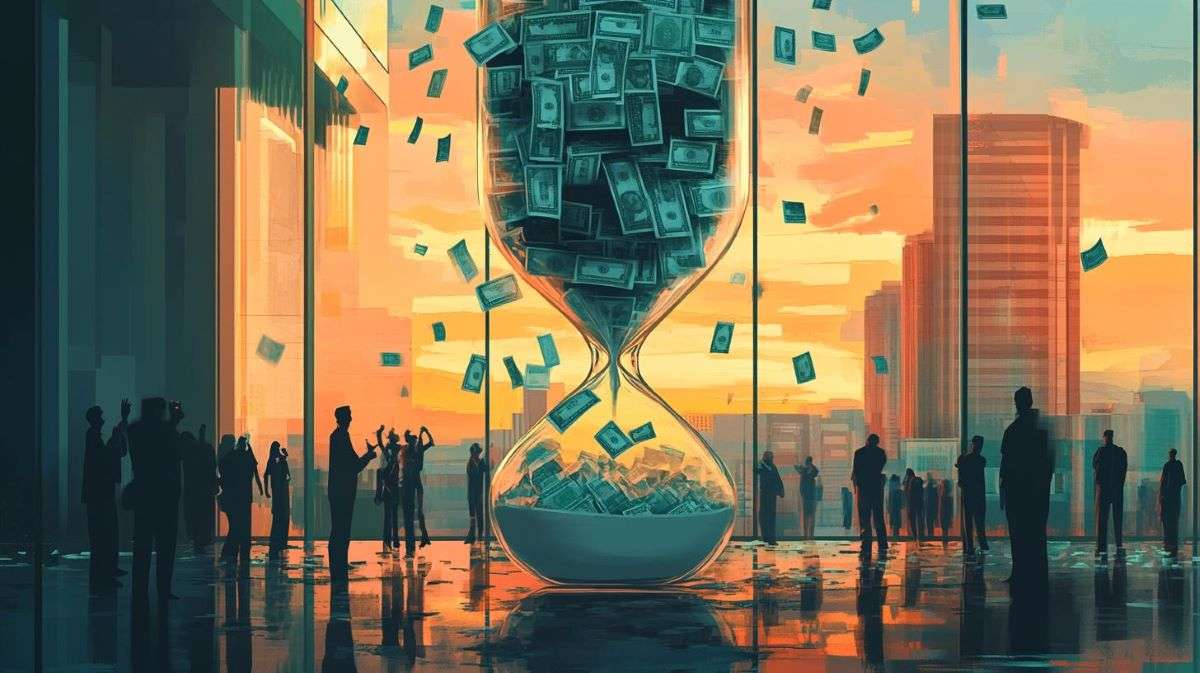 Picture this: while we’ve been told everything is improving, housing prices soar and your cost of living jumps by 20%. Now, think about how this truly affects your financial future. With inflation slowly easing, is cutting interest rates really the right move? The decisions made today by those in power might seem beneficial short-term, but could sacrifice your long-term financial security. Let’s explore the truth behind these economic strategies and what it means for you and your hard-earned savings. Wealth Outside Wall Street explains this very well in the following video:
Key Takeaways
- The FED’s strategies might harm your retirement plan.
- Rising costs challenge financial security and planning.
- Economic decisions impact long-term financial health.
How the Federal Reserve Affects Retirement Savings
Have you ever noticed how the decisions made by the Federal Reserve impact not just the economy but also your retirement plans? Many people think that lower interest rates are a solution to economic slowdowns. Yet, these measures can often create unexpected consequences for your future savings. When rates drop, it can lead to higher prices, meaning your hard-earned money doesn’t stretch as far as it used to. Take a moment to consider the way these low rates have affected the housing market. The Federal Reserve’s policy of ultra-low rates has made borrowing cheaper, but it has also pushed home prices through the roof. This means the gap between what people can afford and what homes actually cost has grown wider. For those of us trying to save for retirement, this can be a troubling scenario as it places extra pressure on our financial planning. To add another layer, let’s look at the overall cost of living. While the Federal Reserve assures us inflation is under control, reality tells a different story. Although inflation rates have come down from their peak, we are witnessing a permanent increase in everyday expenses. I find it worrisome how this impacts our ability to afford the same lifestyle in the future without significant adjustments to our retirement savings strategy. So, what does this mean for our retirement plans? If interest rates continue to stay low, the value of money might continue to decline by the time it trickles down to the average saver. The key takeaway is that while such policies might seem beneficial in the short term, they could hinder our long-term financial goals. We need to remain vigilant and adapt our plans accordingly to ensure we don’t fall behind in this game.
Revealing the Untold Economic Reality
The Divide in Wealth
Have you ever wondered why the rich keep getting richer while many others struggle to make ends meet? The gap between the wealthy and the rest of us isn’t just a coincidence. It’s all about who gets access to new money first. Imagine a champagne tower: the money starts at the top and flows down. Those at the top, closest to the source, benefit the most. By the time it trickles down to everyone else, the value is mostly gone. This is why the divide keeps widening—it’s set up that way.
Inflation’s Rising Tide and Its Effects on Rates
Think about this: we’ve been dealing with crazy levels of inflation for the past few years. Everything seems to cost more now, doesn’t it? Even though inflation numbers are down a bit, the damage is done. Things are about 20% more expensive than a few years ago. Trying to keep up with that? Tough. And all the while, low interest rates were supposed to help. Instead, they fueled this monster. What’s the real impact on your future plans when rates dip again? It’s like a roller coaster that never stops—just when you think it’s slowing, it speeds up again. Do you feel prepared for the ride ahead?
Analyzing the Federal Reserve’s Economic Plans
Extremely Low Borrowing Costs and Economic Development
Have you ever wondered if keeping borrowing costs nearly zero for over a decade has truly helped us? Since the 1990s, that’s exactly what the Federal Reserve has done. You’d think that this would jumpstart economic progress, right? But instead, growth rates seem to be lagging. Look around—core inflation is climbing, and life’s expenses are increasingly harder to handle. This pressure makes it difficult for many to plan for the future, let alone dream of a comfortable retirement. So, are these low borrowing costs a help or a hindrance? Here’s what’s happening: these low rates are supposed to be a tool for kickstarting economic growth. But what we see is bloated public debt and soaring inflation. It’s like trying to fill a bucket with a giant hole at the bottom. Sure, the Federal Reserve claims the economy is healthy and stable, prompting them to think about lowering rates again. Yet, the truth behind the curtain might be a bit different. We’ve heard that inflation is settling back down to manageable levels, but have you noticed how the cost of everyday living has steadily climbed over the past few years? This is a real concern for anyone trying to save for the future.
Worries About Growing Government Debt
Another critical area is the continuous rise of our national debt. Picture this: debt balloons at over $1 trillion a year—nearing $2 trillion! Yes, two trillion. So, the question is, can our economic growth keep up with this unsustainable cycle? More public debt leads to limited finances for public services and becomes a burden on future generations. It’s essential to reflect on whether we are sacrificing long-term security for the sake of temporary relief. In this scenario, the Federal Reserve’s strategy might feel like a band-aid solution, quick fixes that don’t address the core issue, threatening reliable income during retirement. Instead of solving deep-rooted problems, these moves may be setting us up for a rocky financial future. Wouldn’t you agree that real change needs more than just surface-level tweaks?
Grasping How Interest Rates Impact Our Economy
How Interest Rates Affect Economic Growth and Rising Prices
Have you ever wondered why our economy doesn’t take off even with low interest rates? I believe low interest rates, used to encourage spending, are actually making things worse. They have pumped up debt like blowing up a balloon. While this should spark growth, it feels like the economy is still idling. Prices keep climbing, gnawing away at our savings and making future planning tricky. Just think about how much more it might cost to maintain your lifestyle in 5, 10, or even 20 years at this pace. It’s a bit scary, isn’t it? I worry that these low interest rates are steering us away from the retirement dreams we’ve been working so hard to achieve.
Why the Fed Changes Interest Rates
Now, let’s ask why the FED tweaks these rates. They often say that things are getting better so they can cut rates again. Sounds nice, right? Here’s the catch—this narrative might not reflect reality. Even if inflation seems to dip slightly, it doesn’t wipe out the 20% hike in living costs we’ve seen recently. When rates are low, it hints that cheap money is the only shield against a bigger economic storm. It’s like choosing the easy way out now instead of preparing for the long road ahead. I feel like we’re being told what sounds comforting while missing the deeper concern about long-term economic security.
The Real Price of Low Interest Rates
Inflation’s Impact on Savings and Investments
Think about your savings account for a moment. You worked hard to put money away, expecting it to grow over time, right? But here we are, with low interest rates, and what’s happening to your money? That nest egg meant to secure your future is now under threat from inflation. Prices are shooting up, and what does that mean for your savings? They’re losing value. Your investments aren’t faring any better, either. Why? Because inflation’s squeezing their returns, making it tough just to keep up, let alone get ahead. Now, if continuing this pattern isn’t the answer, what is?
Housing Market as a Sign of Inflation
Have you tried buying a house lately? If you have, you’ve probably noticed something interesting—and by interesting, I mean frustrating. Low interest rates introduced by the Fed were supposed to make homes more affordable. Instead, home prices have surged. How did we end up here? It’s simple: cheaper loans made it easier for many to buy, but it also pushed demand way up, driving prices out of reach for most folks. So what’s the consequence? A widening gap between what you earn and what you can afford in the housing market—a clear sign that lower rates are not solving the inflation problem, but fueling it.
Looking Back at Wealth Inequality
Understanding the Cantillon Effect
Let me take you back to 1734 to unravel something crucial about today’s economic landscape. Have you heard of Richard Cantillon? Imagine this—Cantillon developed a theory so potent, many believe it was the cause of his untimely death. Despite efforts to erase his work, one insightful manuscript survived. This paper held a dangerous truth about how money flows in an economy, revealing why the rich get richer, while others struggle to keep up. This concept, known as the Cantillon Effect, mirrors a champagne tower. When new money is created, those closest to the source, like banks and the wealthy elite, benefit first. By the time this money reaches you and me, its value has diminished. Like glasses left dry, we see the wealth gap widen before our eyes. Cantillon didn’t just foresee inequality; he warned us about the dangers of excessive money printing. He predicted this would make nations slaves to foreign debt, paving the way for an illusion of wealth that might crumble into economic collapse. Think about it. What does this mean for us today?
Reducing the Risks to Retirement Safety
The strategies meant to help the economy might be causing havoc with your retirement plans. The Federal Reserve (FED) has been steering our economy for decades. If you’ve just been going along, you might be set up for a rough retirement. The economy has been through some massive changes in the last decade, the kind we’ve never seen before. Yet, things haven’t grown as expected. Debt is climbing faster than ever, and we’re not seeing the economic growth that was promised. Does this make you wonder if the FED is just putting short-term fixes on deeper problems? Imagine the FED deciding to lower interest rates once again. You might ask, does this really solve anything, or is it adding to the problem? The FED has kept interest rates very low since 2010, which helped for a bit, but at what cost? House prices have soared, making it almost impossible to afford a home. Here’s another thought: while the FED claims inflation is slowing, they don’t mention that your cost of living has rocketed up by 20% since 2020. That’s a daunting number when planning for retirement! So, while they talk about dropping inflation rates, they’re just discussing a small dip from the top of a much larger problem. If we’re going to straighten things out, interest rates might need to stay high for as long as they were low — which was around 20 years. What does it mean for you and your plans for the future? The FED’s move to lower rates now is like saying cheap money is their last resort. It’s settling for quick fixes over real, long-term stability. They’re looking out for political interests over your retirement goals and their lasting impact on your life. Talk about a roller coaster, right? Everyone closer to the money source benefits more than the rest of us. By the time it reaches us, inflation has eaten away at its value. This flow of money highlights the widening wealth gap. So, what can we learn from this?