
Retirement - it’s the golden dream we all chase. But how do we get there faster? I’ve spent years exploring this question, and it often boils down to two main contenders: real estate and business. Both can be powerful wealth-building tools, but which one will rocket you towards retirement quicker?  Real estate typically offers more stable returns and tax benefits, while businesses can potentially yield higher profits but come with more risk. In my experience, real estate investments have provided consistent cash flow and appreciation over time. On the flip side, I’ve seen businesses explode with growth, creating millionaires seemingly overnight. But I’ve also witnessed countless startups crash and burn. So which path should you choose? It depends on your goals, risk tolerance, and skillset. Are you ready to be a hands-on landlord or a high-stakes entrepreneur? Or perhaps a mix of both? Let’s dive deeper into the pros and cons of each to help you chart your course to financial freedom.
Key Takeaways
- Real estate offers stability and tax advantages, while businesses provide higher growth potential
- Your personal skills, risk tolerance, and financial goals should guide your investment choice
- A diversified approach combining both real estate and business can accelerate retirement plans
Understanding Investment Vehicles
Investment vehicles are tools we use to grow our money. They come in different forms, each with its own benefits and risks. Let's look at two popular options: [real estate](/single-family-home-real-estate-investing-vs-stock/) and stocks.Real Estate Fundamentals
Real estate can be a powerful way to build wealth. I’ve seen many people create fortunes through property. Why? It’s tangible. You can see it, touch it, and improve it. Investing in real estate can mean buying a home, rental properties, or even flipping houses. The key is to find properties that will increase in value over time. One big advantage? Leverage. You can use a small down payment to control a large asset. This can amplify your returns if the property value goes up. But remember, real estate isn’t always easy. It requires work, knowledge, and sometimes a lot of cash. You need to consider things like property taxes, maintenance costs, and finding good tenants.
Stock Market Basics
Stocks represent ownership in companies. When you buy a stock, you’re buying a piece of a business. If the company does well, your investment can grow. The stock market can seem complex, but it doesn’t have to be. Index funds and ETFs are simple ways to invest in a broad range of companies at once. This spreads out your risk. One big advantage of stocks? Liquidity. You can buy and sell most stocks quickly and easily. This isn’t always true with real estate. But stocks can be volatile. Prices can change rapidly based on company performance, economic conditions, or even rumors. It’s important to have a long-term perspective and not panic during market dips.
Analyzing Investment Returns
When it comes to building wealth for retirement, understanding [investment returns](/investment-strategies-for-retirement/) is crucial. Let's explore how real estate and stocks stack up in terms of generating income and growth over time.Rentals, Appreciation, and Cash Flow
Real estate can be a powerful wealth-building tool. I’ve seen firsthand how rental properties can provide steady cash flow and potential appreciation. When I buy a property, I look for ones that generate positive monthly income after expenses. This cash flow can help cover mortgage payments and build equity. But that’s not all. Over time, property values tend to rise. This appreciation can significantly boost my overall returns. For example, a $200,000 property that increases 3% annually would be worth over $268,000 in just 10 years. That’s a nice chunk of change! Don’t forget about tax benefits either. Deductions for mortgage interest, property taxes, and depreciation can lower my taxable income. It’s like the government is helping me invest!
Stocks, Dividends, and Market Growth
The stock market offers a different path to retirement riches. When I invest in stocks, I’m buying a piece of a company’s future profits. Over the long term, stocks have historically returned 8% to 12% annually. Not too shabby, right? Dividends can provide a steady income stream, similar to rental properties. Many blue-chip companies pay reliable dividends that grow over time. It’s like getting a raise every year without lifting a finger! Market growth is where stocks really shine. The power of compound interest can turn small, consistent investments into a sizable nest egg. A $10,000 investment growing at 10% annually would be worth over $67,000 in 20 years. Imagine what that could do for your retirement! What about diversification? With stocks, I can easily spread my risk across different companies, sectors, and even countries. It’s like not putting all my eggs in one basket – smart, right?
Leveraging Tax Benefits
 Tax benefits can make a big difference in how fast your investments grow. Let’s look at how real estate and stocks stack up when it comes to tax advantages.
Real Estate Tax Advantages
Real estate offers some great tax perks. I can deduct mortgage interest on my rental properties, which lowers my taxable income. Depreciation is another big plus. I can write off a portion of my property’s value each year, even if it’s actually going up in value! Rental property tax deductions are a gold mine. I can deduct expenses like:
- Property taxes
- Insurance
- Maintenance costs
- Property management fees
The 1031 exchange is a powerful tool. It lets me sell a property and reinvest the proceeds into a new one without paying capital gains taxes. This way, I can grow my real estate empire tax-free.
Stock Investment Tax Considerations
Stocks have some tax benefits too, but they’re different from real estate. Dividends from stocks can be taxed at a lower rate than regular income if they’re “qualified dividends.” Capital gains taxes come into play when I sell stocks for a profit. If I hold a stock for over a year, I’ll pay the lower long-term capital gains rate. This can be a big saving compared to short-term gains, which are taxed as regular income. Tax-advantaged accounts like 401(k)s and IRAs can help me defer taxes on stock investments. But there are limits to how much I can contribute each year. And I’ll have to pay taxes when I withdraw the money in retirement. Unlike real estate, stocks don’t offer ongoing tax deductions. I can’t write off expenses related to my stock portfolio. This is where real estate has a clear edge in the tax game.
Assessing Risks and Barriers
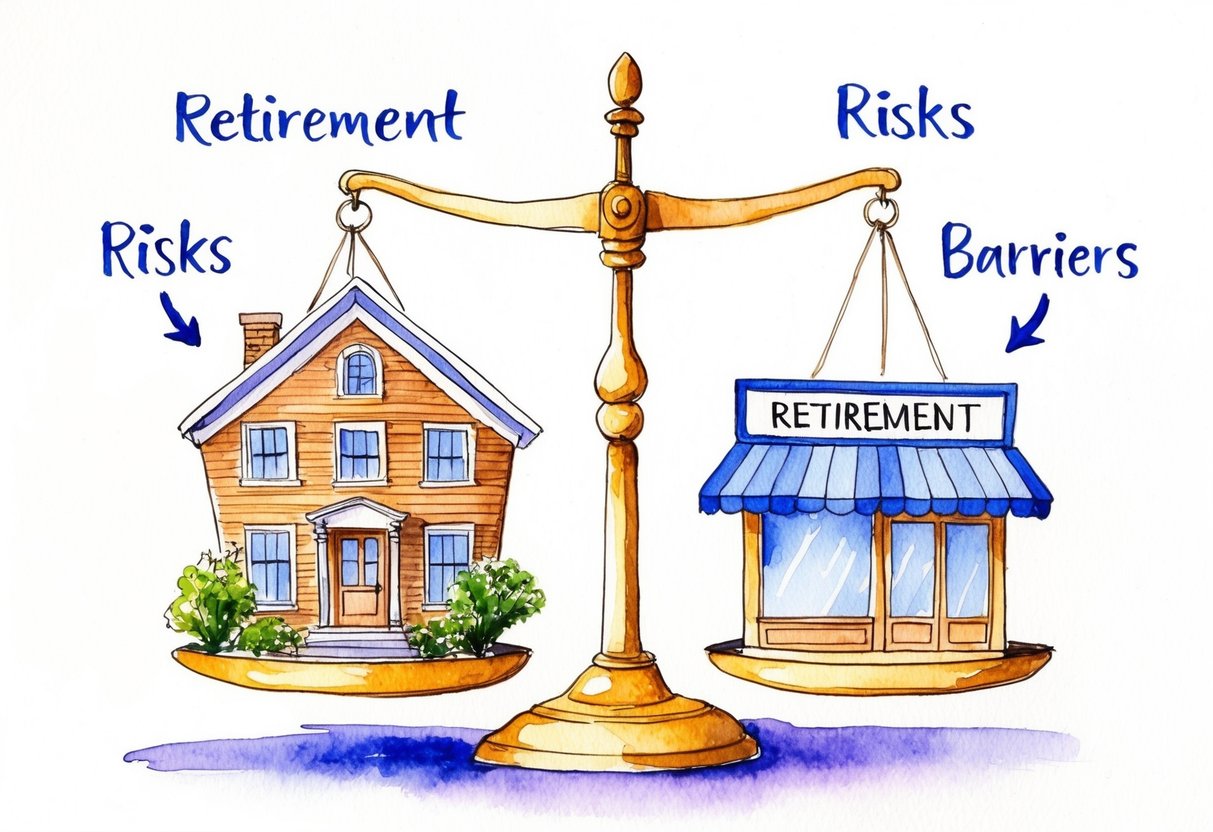 Investing for retirement involves weighing risks and rewards. Let’s look at the key factors that can impact your path to financial freedom.
Volatility and Liquidity in Stocks
Stock markets can be a rollercoaster ride. One day you’re up, the next you’re down. This volatility can be nerve-wracking, especially as you near retirement. But stocks offer something crucial: liquidity. Need cash fast? You can sell stocks in minutes. Try doing that with a house! This liquidity is a double-edged sword. It’s great for emergencies, but it can also tempt you to make rash decisions. I’ve seen too many people panic-sell during market dips, locking in losses. Remember, paper losses aren’t real until you sell. Stocks can be a hedge against inflation, but only if you stay the course.
Real Estate Market Stability and Entry Barriers
Real estate often feels more stable. You can touch it, see it, improve it. But don’t be fooled – property markets have their ups and downs too. The big difference? High barriers to entry. You need significant capital to start. This limits competition and can lead to better long-term returns. Real estate lacks liquidity. Selling a property takes time and money. But this can be a blessing in disguise. It forces you to think long-term and avoid hasty decisions. Property can be a great inflation hedge. As prices rise, so does your property value. Plus, if you’re renting it out, you can increase rents to keep pace with inflation.
Strategies for Growth
 Growing wealth requires smart tactics and a long-term view. Let’s explore some powerful strategies to accelerate your journey to financial freedom.
Building a Diversified Portfolio
I’ve always said, “Don’t put all your eggs in one basket.” This applies perfectly to investing. A diversified portfolio is key to managing risk and maximizing returns. Mix it up with:
- Real estate properties
- Stocks and bonds
- Business investments
- Commodities
Why diversify? Simple. When one asset class dips, others might soar. This balance helps smooth out the bumps in your financial journey. I recommend starting small. Maybe a rental property and some index funds. As you learn and grow, expand your portfolio. Remember, knowledge is power in the investment world.
Maximizing Passive Income Streams
Passive income is the holy grail of wealth building. It’s money that flows in while you sleep. Isn’t that the dream? Here are some ways to boost your passive income:
- Rental properties
- Dividend-paying stocks
- Online businesses
- Royalties from intellectual property
Real estate is my favorite passive income generator. A well-chosen property can provide steady cash flow for years. But don’t stop there. Explore other options. Could you write an e-book? Create an online course? The possibilities are endless.
Tangible Assets vs. Intangible Investments
Tangible assets are things you can touch - like real estate or gold. Intangible investments are less physical - think stocks or intellectual property. Both have their place in a strong portfolio. Here’s a quick comparison:
Tangible Assets
Intangible Investments
Real estate
Stocks
Gold
Bonds
Vehicles
Cryptocurrencies
Art
Patents
Tangible assets often feel safer. You can see and touch them. But intangibles can offer higher returns and more liquidity. I suggest a mix of both. Real estate for stability, stocks for growth. It’s about finding the right balance for your goals and risk tolerance.
Planning for Retirement
 Retirement planning is crucial for financial security. It’s about making smart choices now to ensure a comfortable future. Let’s explore some key strategies to help you reach your retirement goals.
Retirement Account Considerations
I always tell my clients to start with tax-advantaged accounts. Why? They’re like a turbo boost for your savings. 401(k)s and IRAs offer easy tax-free retirement contributions, helping your money grow faster. But here’s the kicker: which one should you choose? It depends on your situation. If your employer offers a 401(k) match, that’s free money! Don’t leave it on the table. Max it out if you can. What about IRAs? They give you more investment options. Roth IRAs are especially sweet - you pay taxes now, but your withdrawals in retirement are tax-free. Imagine not worrying about taxes in your golden years!
Real Estate Investing for Retirement
Can real estate supercharge your retirement plan? You bet! It’s one of my favorite strategies. Why? Rental property can create additional income streams, both now and well into retirement. Think about it: tenants paying off your mortgage while property values potentially appreciate. It’s like having your cake and eating it too! But let’s be real - real estate isn’t all sunshine and rainbows. It requires work and can be risky. You need to be prepared for maintenance costs, vacancies, and market fluctuations. Tax benefits? Absolutely! You can deduct expenses and depreciation, potentially lowering your tax bill. Plus, up to 20% of your rental income might be tax-free. That’s money in your pocket!
Investing in Stocks for Retirement
Now, let’s talk stocks. They’re the bread and butter of many retirement portfolios. Why? Historical returns have been strong, and they’re easy to buy and sell. Index funds are my go-to recommendation for most people. They offer broad market exposure and low fees. It’s like owning a slice of the entire economy! But what about individual stocks? They can be exciting, but they’re also riskier. If you go this route, do your homework and diversify. One big advantage of stocks? Liquidity. Need cash? You can sell stocks quickly. Try doing that with a rental property! Remember, the key is balance. A mix of real estate and stocks can help you reach FIRE (Financial Independence, Retire Early) faster by diversifying your income streams and reducing risk.
Comparative Analysis
 When weighing real estate against business investments, we need to look at key factors that impact our retirement goals. Let’s examine how predictable the returns are and how well each option holds up against inflation over time.
Predictability and Control Over Returns
Real estate often gives me more control over my investment. I can choose the property, decide on improvements, and set rental rates. This hands-on approach can lead to more predictable returns. With a business, I might face more variables. Market trends, competition, and economic shifts can make profits less certain. But here’s a twist - a well-run business can potentially grow faster. I can pivot strategies, expand product lines, or tap into new markets. Real estate growth is often tied to location and market conditions. Which offers better control? It depends on my skills and risk tolerance.
Adjusting for Inflation and Long-Term Value
How do these investments stack up against inflation? Real estate has a built-in hedge. As prices rise, so do property values and rents. I’ve seen real estate appreciate steadily over time, often outpacing inflation. Businesses can be trickier. Some can raise prices easily, passing inflation costs to customers. Others might struggle if their market is price-sensitive. But a scalable business model? That’s where real wealth can be built. Growth potential can far exceed inflation rates. What about long-term value? Real estate is tangible - I can touch it, improve it. Businesses may come and go, but land? It’s not going anywhere. Yet a successful business can create value that surpasses physical assets. Which path leads to faster retirement? It’s about matching my strengths with the right opportunity.
Investment Practicalities
 Investing in real estate or stocks comes with unique challenges and benefits. Let’s explore the nitty-gritty details of managing these investments and how they might impact your journey to retirement.
Maintenance and Management of Real Estate
Have you ever wondered what it takes to keep a property in tip-top shape? As a real estate investor, I’ve learned that property management is no walk in the park. Whether it’s a residential or commercial property, regular maintenance is key. I’ve found that setting aside 1-2% of the property’s value annually for repairs is a smart move. But it’s not just about money. Time is a big factor too. Do you want to be the one getting calls about leaky faucets at 2 AM? Hiring a property manager can ease the burden, but it’ll cost you about 8-12% of your rental income. Is it worth it? That depends on how hands-on you want to be.
Ease of Stock Market Investment
Now, let’s talk stocks. I’ve got to say, investing in the stock market is a breeze compared to real estate. No toilets to fix, no tenants to deal with. With just a few clicks, I can buy or sell stocks from the comfort of my couch. Transaction costs? They’re typically lower than real estate, often less than 1% per trade. But here’s the kicker: stocks can be a rollercoaster ride. Are you prepared for the ups and downs? Unlike housing prices, stock values can change in the blink of an eye. Remember, diversification is key. I never put all my eggs in one basket, whether it’s stocks or real estate. What’s your risk tolerance? That’s the million-dollar question you need to answer.
Personalizing Your Investment Journey
 When it comes to choosing between real estate and business investments, there’s no one-size-fits-all approach. The key is to tailor your strategy to your unique situation and goals. What’s your risk tolerance? Are you comfortable with the ups and downs of business ownership, or do you prefer the stability of real estate? Consider your investment style. Do you want to be hands-on, managing a business or property directly? Or would you rather have a more passive role? Here’s a quick comparison of some factors to consider:
- Time commitment: Business (High) vs Real Estate (Medium to Low)
- Potential returns: Business (Higher) vs Real Estate (Moderate)
- Risk level: Business (Higher) vs Real Estate (Lower)
- Initial capital required: Varies for both
Think about your retirement timeline. Are you looking for quick cash flow or long-term appreciation? Don’t forget about sequence risk. How will your investments perform as you near retirement? I’ve found that diversification is crucial. Why not consider a mix of both? You could invest in a small business while also building a real estate portfolio. Remember, your investment journey is unique. What works for others may not work for you. Take the time to assess your goals, resources, and preferences before diving in.