
Creating an income-generating portfolio that doesn’t rely on stocks can be a game-changer for your financial future. I’ve seen many people struggle with the ups and downs of the stock market, constantly worrying about their retirement savings.
But what if I told you there’s a way to build a steady stream of income without the roller coaster ride?

An income portfolio focused on diverse assets like bonds, real estate, and dividend-paying investments can provide more stable returns and peace of mind. By spreading your money across different income sources, you’re not putting all your eggs in one basket.
This approach can help protect your wealth and generate consistent cash flow, even when the stock market takes a nosedive.
I know what you’re thinking - isn’t this just for the wealthy? Not at all! Anyone can start building an income-producing portfolio, regardless of their current financial situation. It’s about making smart choices and thinking long-term.
Are you ready to take control of your financial future and create a reliable income stream that doesn’t depend on the whims of the stock market?
Key Takeaways
- Income portfolios can provide stable returns without relying on stocks
- Diversification across multiple income-generating assets reduces risk
- Anyone can start building an income portfolio with the right strategy
Understanding Income Portfolios
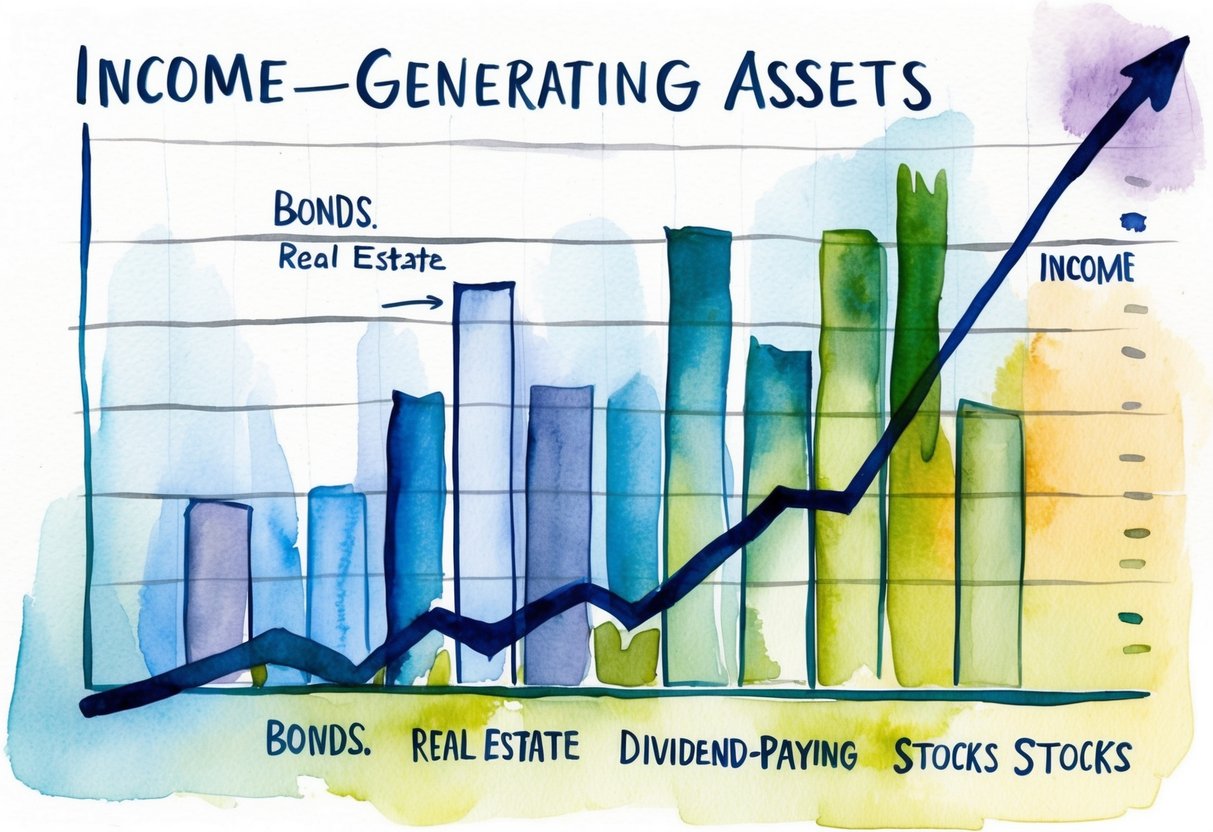
Income portfolios can be a game-changer for those looking to create steady cash flow without relying on stocks. I’ve found that these portfolios offer unique advantages, but they also come with their own set of challenges. Let’s explore what makes them tick.
Defining Income-Generating Investments
Income-generating investments are assets that provide regular payouts. These can include bonds, dividend-paying stocks, and real estate investment trusts (REITs). The key is to focus on investments that offer steady returns.
Bonds are a classic example. When you buy a bond, you’re essentially lending money to an entity. In return, you receive interest payments.
Dividend stocks are another option. These are shares in companies that distribute a portion of their profits to shareholders.
REITs allow you to invest in real estate without buying property directly. They often provide regular income from rent collected on properties.
Benefits of Having an Income Portfolio
An income portfolio can provide a cushion during market downturns. When stock prices fall, you’re still receiving regular payouts.
I’ve seen many investors benefit from the consistent income these portfolios generate. It’s like having a second paycheck that comes in without you having to clock in at work.
Another perk? Income portfolios can help manage inflation. As prices rise, your regular payouts can help maintain your purchasing power.
Lastly, these portfolios can offer peace of mind. Knowing you have a steady stream of income can reduce financial stress.
Risks and Considerations
While income portfolios have their perks, they’re not without risks. Interest rate changes can impact bond values. If rates rise, existing bonds may become less attractive.
There’s also the risk of default. If a company or government can’t meet its obligations, you might lose out on expected income.
Yield can be tempting, but don’t chase it blindly. Higher yields often come with higher risks. It’s crucial to balance the desire for income with the need for safety.
Diversification is key. Spreading your investments across different types of income-generating assets can help manage risk.
Building Blocks of an Income Portfolio
An income portfolio relies on diverse assets that generate regular cash flow. These components work together to provide steady returns while managing risk.
Dividend-Paying Stocks
Dividend stocks are a cornerstone of income investing. I’ve found that companies with a history of consistent dividend payments often signal financial strength and stability. Look for firms with a track record of increasing dividends over time.
When selecting dividend stocks, I focus on the dividend yield. This percentage tells me how much income I can expect relative to the stock price. But be cautious - an unusually high yield might indicate trouble.
Some sectors known for reliable dividends include:
- Utilities
- Consumer staples
- Healthcare
Remember, dividends aren’t guaranteed. Companies can cut or suspend them during tough times. That’s why I always diversify across multiple dividend-paying stocks.
Bonds and Fixed Income Securities
Bonds are loans you make to governments or companies. In return, they pay you interest. I’ve used bonds to add stability to my income portfolio.
Here are key types of bonds to consider:
- Corporate bonds: Issued by companies, often higher yield but more risk
- Treasury bills: Short-term government debt, very safe but lower returns
- Government bonds: Longer-term, backed by the full faith of the government
- High-yield bonds: Riskier, but offer higher interest rates
The bond’s coupon rate tells you how much interest you’ll receive. Bonds can also appreciate in value, but their primary purpose in an income portfolio is steady cash flow.
Real Estate and REITs
Real estate has been a reliable income producer for centuries. But you don’t need to buy property directly. Real Estate Investment Trusts (REITs) let you invest in real estate through the stock market.
REITs own and operate income-producing real estate. By law, they must distribute most of their taxable income to shareholders as dividends. This often results in attractive yields.
REITs can focus on various property types:
- Residential
- Commercial
- Healthcare facilities
- Data centers
I’ve found REITs to be an excellent way to add real estate exposure to my income portfolio without the hassles of property management.
Income Funds and ETFs
For those who prefer a hands-off approach, income funds and ETFs can be great options. These professionally managed portfolios invest in a mix of income-producing assets.
Some popular types include:
- Dividend stock funds
- Bond funds
- Multi-asset income funds
ETFs (Exchange-Traded Funds) offer similar benefits but trade like stocks. They often have lower fees than mutual funds.
When choosing funds or ETFs, I always check the expense ratio. Lower fees mean more of the income goes into my pocket. Also, look at the fund’s holdings to ensure they align with your income goals and risk tolerance.
Diversification Strategies
Creating a varied portfolio is key to generating steady income without relying on stocks. Let’s explore some powerful ways to spread your investments and reduce risk.
Asset Allocation
I’ve found that mixing different types of investments is crucial. Don’t put all your eggs in one basket! Here’s how I break it down:
- Bonds: 40-50%
- Real estate: 20-30%
- Alternative investments: 20-30%
Bonds provide steady income. Real estate offers both income and potential appreciation. Alternative investments like commodities or private equity can boost returns.
Why this mix? It balances safety and growth potential. Bonds are safer but offer lower returns. Real estate and alternatives can provide higher yields but carry more risk. Finding the right balance is key.
Sector and Geographic Diversification
Where should you invest? I recommend looking beyond your backyard. Here’s my approach:
- Spread investments across different industries
- Invest in multiple countries and regions
Why diversify sectors? If one industry struggles, others may thrive. Tech might boom while energy lags, or vice versa.
Geographic diversity is equally important. The U.S. market might stagnate while emerging markets grow. Europe could offer opportunities that Asia doesn’t. By investing worldwide, you’re not tied to any single economy’s fate.
The Role of Diversification in Reducing Volatility
How does diversification calm the choppy waters of investing? It’s simple: not all investments move in the same direction at once.
When stocks tumble, bonds often rise. If domestic markets struggle, international ones might flourish. This balancing act helps smooth out your portfolio’s performance.
Consider this: a well-diversified portfolio might only dip 5% when stocks plunge 20%. That’s the power of diversification at work.
Income Portfolio Management
Managing an income portfolio requires balancing multiple factors to generate steady cash flow. I’ll share key strategies to optimize your income-producing assets without relying on stocks.
Balancing Yield and Growth
When building an income portfolio, I focus on finding the right mix of yield and growth potential. High-yield investments can provide immediate cash flow, but may lack long-term growth. I aim for a blend:
- High-yield assets (6%+): Corporate bonds, REITs
- Moderate-yield (3-6%): Municipal bonds, dividend stocks
- Growth-oriented (0-3%): Index funds, growth stocks
This balanced approach helps maintain consistent income while allowing for capital appreciation.
I regularly review my asset allocation to ensure it aligns with my goals and risk tolerance.
Reinvestment Strategies
Reinvesting dividends and interest can significantly boost overall returns through compounding. I consider two main approaches:
- Full reinvestment: Automatically reinvest all income to maximize growth
- Partial reinvestment: Reinvest a portion while taking some income
My choice depends on my current cash flow needs. If I don’t need the income now, I lean towards full reinvestment to harness the power of compounding.
As I get closer to retirement, I may shift towards partial reinvestment to start generating income.
Adjusting for Interest Rates and Inflation
Interest rates and inflation can erode the value of fixed-income investments. I use these strategies to protect my portfolio:
- Ladder bond maturities to take advantage of rising rates
- Include inflation-protected securities (TIPS) for built-in inflation protection
- Allocate to real assets like real estate that tend to appreciate with inflation
I also regularly rebalance my portfolio to maintain my target allocation as market conditions change. This helps ensure my income strategy remains aligned with economic realities.
Financial Goals and Risk Tolerance

Setting clear financial goals and understanding your risk tolerance are key to building a successful income-generating portfolio. These factors guide your investment choices and help you stay focused on your long-term objectives.
Assessing Your Financial Objectives
What do you want your money to do for you? This is the first question I ask my clients.
Are you looking to fund your retirement, pay for your kids’ college, or generate a steady stream of passive income? Your goals shape your investment strategy.
For example, if you’re aiming for early retirement, you might focus on investments that offer reliable dividends and steady growth. On the other hand, if you’re saving for a down payment on a house, you might prefer more liquid, lower-risk options.
Remember, your goals aren’t set in stone. They can and should evolve as your life changes. I recommend revisiting your objectives annually to ensure your portfolio aligns with your current needs.
Understanding Your Risk Profile
How much risk can you stomach? This is crucial in building an income portfolio that won’t keep you up at night.
Risk tolerance isn’t just about your personality. It’s also about your financial situation, age, and investment timeline.
A young professional might be comfortable with higher-risk, higher-yield investments. A retiree, however, might prioritize capital preservation and steady income.
Here’s a quick risk tolerance checklist:
- How soon do you need the money?
- Can you afford to lose some of your investment?
- How do you react to market fluctuations?
Be honest with yourself. There’s no right or wrong answer, but understanding your risk profile is essential for crafting a suitable income strategy.
Structuring Your Portfolio Accordingly
Now that you know your goals and risk tolerance, it’s time to structure your portfolio. This is where the rubber meets the road.
For a lower-risk, income-focused portfolio, I often recommend a mix of:
- High-quality bonds
- Real estate investment trusts (REITs)
- Dividend-paying stocks
- Peer-to-peer lending
The exact percentages depend on your individual situation. But here’s a rule of thumb: the more risk-averse you are, the more you should lean towards fixed-income investments.
Don’t forget about diversification. Spreading your investments across different asset classes can help manage risk and potentially increase returns. It’s not just about higher yield - it’s about sustainable, reliable income that aligns with your goals and risk tolerance.
Income Portfolio Implementation

Creating an income-generating portfolio that doesn’t rely on stocks requires careful planning and execution. Let’s explore the key aspects of putting this strategy into action.
Choosing the Right Investment Vehicles
When building an income portfolio, I focus on investments that provide steady cash flow. Real estate investment trusts (REITs) are a great option. They offer regular dividends from rental income and property appreciation.
Bond ETFs are another solid choice. They provide interest payments and can be more stable than individual bonds.
I also consider high-yield savings accounts and certificates of deposit (CDs) for a portion of my portfolio. These offer lower returns but are very safe.
Have you thought about peer-to-peer lending? It can offer higher yields, but comes with more risk. I always make sure to diversify across multiple loans.
Tax Considerations and Efficiency
Tax efficiency is crucial for maximizing my income. I place investments that generate regular taxable income, like bond ETFs, in tax-advantaged accounts such as IRAs or 401(k)s.
For my taxable accounts, I prefer municipal bonds. Their interest is often tax-free at the federal level and sometimes at the state level too.
I also look at the tax implications of different income sources. Qualified dividends from REITs are taxed at lower rates than ordinary income. This can make a big difference in my after-tax returns.
Active vs. Passive Management Approaches
Should I actively manage my income portfolio or take a passive approach? Both have their merits.
Active management allows me to adjust my investments based on market conditions. I can seek out higher yields or shift to safer options when needed.
But it requires more time and expertise.
Passive strategies, like using index funds, are simpler and often have lower fees. They can be a great foundation for my income portfolio.
I often use a mix of both approaches.
I might passively invest in broad bond market ETFs while actively selecting individual REITs or peer-to-peer loans. This gives me a balance of stability and potential for higher returns.