
Balancing the costs associated with raising your kids and planning for retirement can feel like a juggling act.
When you’re committed to providing financial support for your children’s education, it’s easy to lose sight of your retirement goals. The key lies in creating a solid financial plan that addresses both immediate needs and long-term security.

Budgeting is crucial to managing these dual priorities. It may seem daunting at first, but allocating funds wisely can help ensure that you’re saving efficiently.
For instance, the 50/30/20 rule suggests dedicating a portion of your income to necessary expenses, desires, and savings. This can make it easier to handle both children’s expenses and retirement savings.
College costs add another layer of complexity to financial planning. Using tax-advantaged accounts like 529 plans can lighten the financial load for education expenses while allowing you to stay on track with your retirement goals. Learning how to balance these aspects effectively leads to greater financial peace of mind.
Key Takeaways
- Create a plan focusing on both current needs and future security.
- Smart budgeting helps manage expenses for kids and retirement savings.
- Use strategic methods to fund college without derailing retirement planning.
Understanding the Basics of Personal Finance

Personal finance can be daunting but is essential for preparing for the future. By managing money wisely, one can ensure a stable path towards paying for kids’ expenses and planning for retirement. Below are key areas to focus on for financial success.
The Role of Budgeting and Saving
When it comes to financial stability, budgeting and saving are fundamental.
I always emphasize the importance of tracking income and expenses. Know where your money goes each month. This gives you control and helps prevent surprises. Why leave things to chance when you can plan?
Creating a budget involves setting realistic limits on spending. Emphasize needs over wants. By doing this, more funds can be directed toward savings or investments.
An effective budget should also include setting aside a portion of your income for an emergency fund. This prepares you for unexpected expenses without derailing long-term financial goals.
Defining Financial Security and Independence
What does financial security mean to you? For me, it’s the peace of mind knowing that my family’s future is secure.
Financial security involves ensuring that there are enough resources to cover basic needs and future goals. Independence, meanwhile, is the ability to live comfortably without having to work indefinitely.
Achieving this requires careful management of resources. I focus on balancing current financial obligations with future aspirations.
It’s crucial to minimize debt and prioritize savings. Taking a proactive approach involves setting specific financial goals and reviewing them regularly. Having these targets creates a roadmap to follow, guiding decisions, and adjusting as needed to stay on track.
Financial Planning for the Long Term
Thinking long term can be tricky, but it’s vital.
While it’s easy to get caught up in daily expenses, long-term planning is about seeing the bigger picture. This involves looking beyond immediate needs and focusing on future aspirations like retirement and college funds for your kids.
Utilize strategies like diversified investments and retirement accounts to grow your wealth over time. Understand the power of compound interest and how it can accelerate financial growth.
Regularly reassess and adjust your financial plan to accommodate life changes, ensuring that long-term objectives remain achievable.
Developing Healthy Financial Habits
Habits shape our lives, and in the realm of finance, they can be a game changer.
Cultivating healthy financial habits ensures that good money practices become second nature. Start by consistently monitoring your spending and regularly updating your budget. This makes financial management less daunting.
Automating savings is another beneficial practice—let technology help you build wealth without effort. Pay off high-interest debts quickly. This reduces financial burdens over time.
Lastly, continually educate yourself about finance. Stay informed about financial trends and strategies. Remember, developing good habits requires dedication and time, but the rewards are worth the effort.
College Funding Strategies
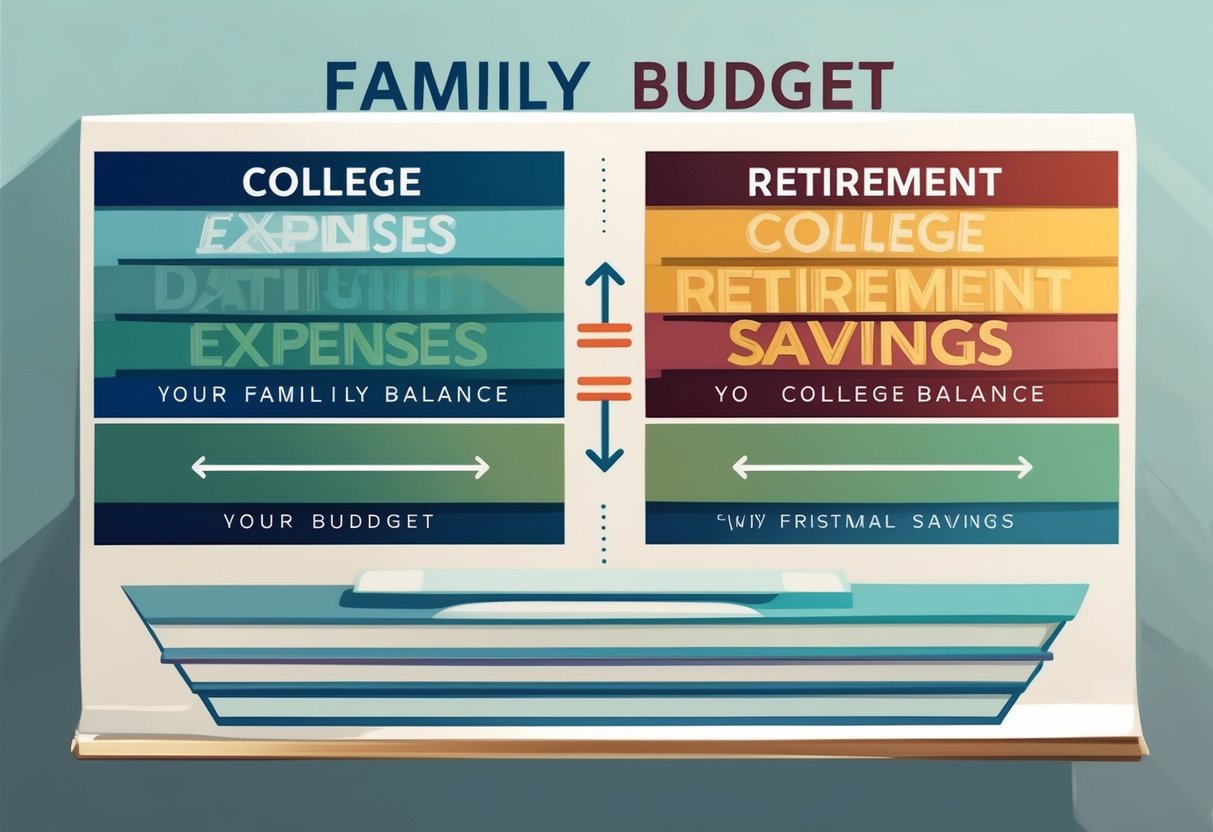
Balancing your child’s college expenses with your retirement plans requires smart strategies. Key options include savings plans, scholarships, understanding costs, and selecting the right school.
Exploring Savings Options: 529 Plans and More
How can we efficiently save for college? One way is through 529 plans. These tax-advantaged accounts allow for education-specific savings. Money invested grows tax-free, and withdrawals for education expenses aren’t taxed.
But 529 plans aren’t the only option. Consider other vehicles like Roth IRAs, which offer flexibility for education and retirement savings. Coverdell Education Savings Accounts also allow tax-free growth but have contribution limits.
Moreover, setting up a high-yield savings account could offer liquidity and growth. Each option has pros and cons, and it’s crucial to understand how these savings strategies align with both immediate goals and long-term retirement plans.
Leveraging Scholarships, Grants, and Financial Aid
Did you know scholarships and financial aid can significantly reduce college costs?
Scholarships come in many forms, such as merit-based and needs-based. They don’t need to be repaid, making them a fantastic way to lower education costs. Encourage your child to apply for national, local, and college-specific scholarships.
Grants, like the federal Pell Grant, are another great resource. Fill out the Free Application for Federal Student Aid (FAFSA) to explore eligibility for both grants and loans.
Don’t forget about work-study programs which provide part-time job opportunities for students, reducing overall expenses and helping your finances.
Understanding the Cost of Higher Education
Have you ever wondered how tuition translates into actual costs? Understanding these details helps avoid surprises.
College expenses go beyond tuition, covering housing, food, books, and personal items. In-state colleges typically offer lower tuition compared to out-of-state institutions.
Private universities can come with steeper price tags, but they may also offer more assistance. Community colleges provide affordability and often serve as stepping stones to four-year programs. Break down these costs with your child to set realistic expectations and ensure you’re prepared for each expense category.
Deciding Amongst College Choices
Choosing the right college is one of the biggest decisions with lasting impacts.
How do you decide what’s best?
Start by comparing the value each school provides—look at graduation rates, job placement, and salary potential.
Visit campuses, if possible, and speak with faculty and current students.
Consider size, location, and programs offered.
Out-of-state options might present more opportunities, though they usually cost more.
Encourage your child to list priorities and align them with realistic financial assessments.
Remember, the goal is to find a fit that balances educational benefits with prudent financial planning.