Are you tired of traditional financial advice that never seems to work out as promised?
If you want to see real growth in your investments, automating your Dividend Reinvestment Plan (DRIP) can be a game-changer.
By allowing your dividends to automatically purchase more shares, you’re leveraging the power of compounding growth without lifting a finger. This approach can help you reach your financial goals faster and with fewer headaches.

Imagine a financial strategy that works silently in the background, steadily building your wealth.
With a DRIP, you can reinvest your dividends automatically and consistently, often without extra fees. This keeps your investment strategy disciplined and aligned with your long-term objectives.
As your investments grow through compounding, you gain the flexibility and control needed for significant portfolio growth.
How many times have you wished you could stop worrying about market fluctuations and start watching your wealth grow steadily?
A well-executed DRIP not only opens doors to achieving your long-term financial goals but also reduces the stress and guesswork involved in managing your investments.
Key Takeaways
- Automate your DRIP to harness compounding growth.
- Consistent reinvestment boosts portfolio growth.
- Achieve financial goals with flexibility and control.
Understanding Dividend Reinvestment Plans (DRIPs)

Dividend Reinvestment Plans (DRIPs) can be an effective tool for investors seeking to maximize growth and compound wealth.
By automatically reinvesting dividends into additional shares, investors can strategically build their portfolios over time. This section discusses the essentials of DRIPs, their benefits, and the different types available.
Basics of Dividend Reinvestment
What exactly are DRIPs?
At their core, they enable investors to use dividends received from stocks to purchase more shares, rather than taking cash payouts. This process is automatic and convenient, eliminating the need for manual reinvestment.
Many companies offer automatic dividend reinvestment plans to shareholders. This means you won’t have to monitor your portfolio constantly or worry about how to reinvest your dividends. Isn’t that a relief?
By reinvesting dividends, you can benefit from the power of compounding. Over time, this can result in owning more shares, increasing potential returns. This approach is especially beneficial if you plan to hold onto your investments for the long term.
Benefits of Automatic Reinvestment
Automatic reinvestment ensures that every dollar of dividend income is put back to work. This disciplined approach can lead to significant accumulation of wealth with minimal effort.
One of the greatest benefits is the ability to buy shares consistently without incurring transaction fees.
Ever thought about seeing growth without the headache of constant decision making?
DRIPs allow you to do just that. With the dividends automatically reinvested, you don’t need to decide how to use each payment.
This strategy takes advantage of dollar-cost averaging, reducing the impact of market volatility. Over time, consistently reinvested dividends can grow substantially, bolstering your stock holdings and potentially increasing dividends in the future.
Types of DRIPs: Company-Operated and Broker-Operated
There are two primary types of DRIPs: company-operated and broker-operated. Each has its unique features and benefits.
A company-operated DRIP is managed directly by the company paying the dividends. These plans often allow for buying shares at a discount, offering potential extra value.
Broker-operated DRIPs, meanwhile, are handled through brokerage firms. They provide more flexibility, including the ability to reinvest dividends from different companies into a single DRIP account. This can be appealing if you have investments spread across various stocks.
With both types, you gain the advantage of growing your investments steadily without the hassle of individual trade decisions. Which path will drive your investing journey?
Setting Up a Dividend Reinvestment Plan

Maximizing investment growth with a Dividend Reinvestment Plan (DRIP) involves strategically enrolling in a program and choosing the right investment style.
By automating the reinvestment of your dividends, you create a path toward potential growth without constant oversight.
Enrollment in DRIPs
Have you ever wondered how to start with dividend reinvestment?
To begin, you need to enroll in a DRIP. Many brokers offer this service, making it simple to opt into. Often, this process is as easy as checking a box during your investment account setup. Some companies even offer their own DRIPs directly to investors, providing a way to purchase shares without a brokerage.
The flexibility of these plans can cater to various investor needs. Automatic reinvestment means dividends are used to purchase additional shares, enhancing potential growth through compounding. It’s a hands-off approach. You set it once, and let it work for you. Not needing to pay commission fees on these reinvestments with many DRIPs can be a significant cost-saving advantage, enabling more of your money to stay invested.
Choosing Between Full and Partial Reinvestment
Choosing how much to reinvest is crucial.
A full reinvestment means all dividends will automatically buy more shares. This can be powerful for long-term growth, especially if you believe in the company’s future prospects.
Full reinvestment takes advantage of every possible opportunity for compounding, which can be vital for building wealth over time.
On the other hand, opting for partial reinvestment provides more control over some cash flow. You can reinvest only a portion and keep the rest as cash, offering financial flexibility in case you need funds for other purposes. Each choice has its benefits, and the best option depends on your financial goals and needs. How much growth are you aiming for? With DRIPs, the choice is yours.
Maximizing Growth Through Compounding

Compounding can significantly boost investment returns. By reinvesting dividends, I can grow my investment over time and increase potential income. This section explores how compounding can enhance dividend reinvestment strategies.
The Power of Compounding Over Time
Have you ever wondered why time is such a powerful ally in investing?
Compounding is the magic that happens when my earnings start to generate their own earnings. Imagine planting a seed: over time, it not only grows into a plant but also bears fruit, each containing more seeds. This continuous reinvestment fuels further growth. The earlier I start, the more I can benefit, as compounding magnifies my original investment as well as any reinvested dividends.
Investments automatically reinvest dividends through a Dividend Reinvestment Plan (DRIP), eliminating the need to manually reinvest. This streamlining allows me to acquire additional shares without extra effort, increasing my stake. Over years or decades, these accumulated shares can grow into a significant portfolio, highlighting the potential of compounding.
Compounding Effect on Dividends
How does compounding specifically impact dividends?
Imagine I hold stock in a company that pays regular dividends. Instead of taking these dividends in cash, reinvesting them buys more shares of the stock. This cycle can repeat each time dividends are paid, boosting my holdings. Over time, I enjoy a compounding effect, as each round of reinvestment buys more shares, generating increased future dividends.
This growth isn’t just theory; it’s a strategic approach that can lead to substantial portfolio gains. By reinvesting dividends, I maximize the compounding returns on both my initial investment and reinvested dividends. Utilizing a DRIP enhances this effect, as it can often bypass commission fees, allowing every dollar to work harder in building wealth.
Strategies for Dividend Reinvestment

Investing in dividend reinvestment plans can be a game-changer for building wealth. It’s vital to have a strategy that leverages market conditions and prioritizes balancing growth with stability. Let’s explore how to craft an investment approach that keeps your portfolio on the right path.
Dollar-Cost Averaging and Market Volatility
Have you ever heard of dollar-cost averaging?
It’s like buying groceries when prices are low, and stockpiling them when prices spike. This strategy helps manage market volatility by continually investing the same amount of money over time. By doing so, you end up purchasing more shares when prices drop and fewer when they rise, effectively smoothing out the bumps in the market ride.
This can be especially useful in a volatile market. Instead of worrying about timing stock prices perfectly, I focus on consistent investment. Over time, this can lower the average cost per share and potentially boost returns. It keeps my emotions in check and my investments on track, no matter how turbulent the markets may seem.
Balancing Dividend Reinvestment with Portfolio Diversification
Isn’t it tempting to put all your eggs in one successful basket?
Yet, diversification is just as important with your dividend reinvestment strategy. While reinvesting dividends can compound growth, concentrating too much on one sector or company can increase risk, especially if there’s market turbulence.
I make sure to evaluate my investment portfolio regularly.
By spreading investments across various sectors and asset types, I can mitigate risks and tap into growth opportunities. A well-diversified portfolio can provide a safety net, ensuring not all investments are impacted by a single market event. In doing so, my reinvestment strategy remains robust, steady, and geared towards long-term success.
Financial Considerations and Tax Implications

When choosing to automate your Dividend Reinvestment Plan (DRIP) for maximum growth, it’s crucial to understand how dividends affect taxes. Careful planning can help align your financial objectives with existing tax obligations. Preparing for these considerations will enable informed decision-making, ultimately optimizing your investment strategy.
Understanding Dividend Taxes
Dividends typically count as income, so they’re subject to taxes.
Are you aware that ordinary dividends are taxed just like your personal income? Qualified dividends, however, are treated a bit differently, often taxed at a lower rate. It’s important to determine which category your dividends fall into.
What does this mean for your financial planning? If not managed wisely, taxes may eat away at the gains you’re making through your reinvestment strategy. That’s why knowing the difference and tracking your dividends is key. Consult with a tax advisor if you’re unsure about how your dividends are classified to avoid unwelcome surprises during tax season.
Tax Considerations in Reinvestment Strategies
Automating your dividend reinvestment with DRIPs involves calculating how each new investment fits into your tax landscape.
Have you thought about how every additional share contributes to your holdings? While DRIPs can minimize transaction costs, it’s necessary to pay attention to how incremental gains increase your taxable income annually.
Think of DRIPs as a driving force for compounding growth. Your financial objectives should include strategies to mitigate the potential tax burden. This could mean choosing to reinvest some of your dividends while taking others as cash, depending on your financial needs and tax situation. Proper planning strikes a balance, allowing you to harness the full power of DRIPs while keeping your tax liability in check.
Remember, preparation is the cornerstone of effective tax management within your investments. Leverage it to your advantage, and you may find the path to financial resilience smoother than expected.
Flexibility and Control in DRIPs

Flexibility in managing a Dividend Reinvestment Plan (DRIP) can be crucial to ensuring your investments align with personal financial goals.
I’ll explore how to customize your reinvestment options and how you can pause or modify your DRIP setup.
Customizing Your Reinvestment Options
One aspect of flexibility in DRIPs is the ability to customize reinvestment options.
DRIPs allow you to decide how much of your dividends you wish to reinvest. Want to reinvest only half while taking the rest as cash? That can be done with many DRIPs. Additionally, some plans let you buy additional shares without any brokerage fees.
Different companies offer various features in their DRIPs. Some might allow the purchase of fractional shares, maximizing every penny of your dividend.
Is the plan meeting your investment strategy? Consider whether automatic reinvestment aligns with your financial goals.
Choosing a plan that matches your needs means having more control over your investments.
Pausing or Modifying Your DRIP Setup
Another important area is the ability to pause or change your DRIP setup.
How often do you check if your investments are still meeting your goals? Life changes might make you want to stop reinvesting dividends temporarily. Many DRIPs provide options to pause the reinvestment without withdrawing from the plan.
Altering your DRIP participation can also involve changing which stocks in your portfolio are part of the plan. Want to stop reinvesting in one stock and focus on another? Flexibility here can be especially important in volatile markets.
Evaluate what’s needed to adapt your DRIP to current financial situations without extra costs or complications.
Achieving Long-term Financial Goals

Maximizing your financial future means making smart choices today with your investments. Automating your dividends and reinvesting them can be key to reducing the stress of financial planning.
Allow me to guide you through the significant aspects of retirement and wealth-building strategies using Dividend Reinvestment Plans (DRIPs).
Planning for Retirement with DRIPs
When it comes to securing a comfortable retirement, a Dividend Reinvestment Plan can be a game-changer.
I ask myself—how can I turn short-term income into a long-term wealth strategy? By automatically reinvesting dividends, my holdings can grow substantially over time. DRIPs harness the power of compound interest, as dividends buy more shares without needing additional funds, increasing potential returns.
If retirement is still a few years away, I focus on stocks with a history of consistent dividend payouts. These stocks form a reliable foundation for my retirement portfolio.
With DRIPs, I eliminate the guesswork and manual effort, setting automatic triggers to reinvest dividends. This ensures my investment strategy stays aligned with my financial goals, even as market conditions change.
Planning ahead with DRIPs offers a structured approach to retirement, providing peace of mind.
Accumulating Wealth for Future Financial Success
Building wealth isn’t just about saving—it’s about smart growth. For long-term investors, a DRIP can be pivotal in wealth accumulation.
Investing dividends back into the market compounds my investments, turning even modest gains into significant assets over time.
I often wonder—how will this impact my financial success and security in the future? By maintaining a steady reinvestment strategy, I set the stage for considerable financial growth.
I target dividend-paying stocks that not only return cash but also show potential for appreciation. This dual benefit is essential for anyone looking to grow their net worth consistently.
An automated approach not only frees up time but also reduces emotional decision-making, which can derail long-term plans.
DRIPs are a vehicle for achieving greater financial success, working tirelessly in the background to meet ambitious future goals.
Learn more about dividend reinvestment strategies and how they can fit into your own financial planning.
Portfolio Management and Growth

Managing a dividend reinvestment plan effectively requires a strategy that focuses on portfolio growth and capital appreciation. This includes careful monitoring, strategic adjustments, and sometimes the guidance of a financial advisor to ensure optimal investment returns.
Tracking and Monitoring Reinvested Dividends
How often do we overlook the importance of tracking our reinvested dividends? Monitoring your dividends is crucial for portfolio growth.
This process involves regularly checking the performance of your investments to ensure they align with your financial goals.
I use investment platforms that offer automatic tracking of reinvested dividends, which makes the job easier.
They provide detailed reports and analytics that help me see where my money is growing. I create a simple table or a list to track dividend payments, share increases, and yield percentages regularly.
Adjusting Your Strategy for Optimal Portfolio Growth
When was the last time you adjusted your investment strategy to align with your life goals? Investment markets change, and so should your strategies.
It’s important to review your dividend reinvestment plan periodically and make necessary alterations for capital appreciation.
Sometimes, for optimal growth, I shift my focus between growth stocks and income stocks. If a dividend stock underperforms, I might reinvest elsewhere.
This flexibility allows me to adapt to market conditions and maximize returns. Regularly refining my approach ensures my investments continue to meet my objectives.
Role of Financial Advisors in Managing Your DRIPs
Do you need guidance on managing your DRIPs for better growth? Financial advisors play a crucial role here.
They offer insights that may not be obvious to individual investors, such as tax implications or the latest market trends.
Often, the expertise of a professional can dramatically improve portfolio performance.
By working with a financial advisor, I gain a deeper understanding of complex investment strategies. They help identify new opportunities for long-term growth and assist in assessing risk, providing a well-rounded approach to managing my dividend reinvestment plan.
With their help, I focus on strategic, informed decisions that drive sustained financial success.
Practical Considerations for DRIP Investors

Navigating the world of Dividend Reinvestment Plans demands attention to detail and strategic thinking. By focusing on dividends, managing cash smartly, and utilizing share purchase plans, you can harness the full potential of your investments.
Analyzing Dividend Payouts and Yields
Have you ever wondered if your dividends are working hard enough for you? It’s essential to evaluate the dividend yield of your investments. This metric tells us how much cash we earn relative to the stock price.
Selecting stocks with reliable and growing dividends can enhance gains over time.
Not every company with high yields is a good choice. A sky-high yield might signal company distress. Instead, I focus on sustainable payouts and companies with strong track records. This way, my DRIP investments consistently grow without unnecessary risks.
Managing Cash Balance Within an Investment Account
How do you keep your cash balance from dragging you down? Instead of letting cash sit idle, I make sure every dollar is hard at work through DRIPs.
Having a strategy for managing cash within an investment account is crucial.
With DRIPs, dividends automatically buy more shares. This minimizes cash drag and maximizes growth.
Keeping an eye on the cash balance ensures my money isn’t just parked; it’s moving and compounding every chance it gets.
Accessing Share Purchase Plans Through DRIPs
Did you know DRIPs often allow you to purchase shares at a discount? This is where the magic happens, multiplying dividends even further.
Many companies offer optional cash purchase plans. These plans let investors buy additional shares at discounted share prices.
I make the most of this feature to stack up shares faster. The lower entry price means more shares for every dollar, boosting long-term growth potential. This isn’t just about reinvesting dividends—it’s about leveraging every tool available for greater financial freedom.
Additional Insights on DRIPs
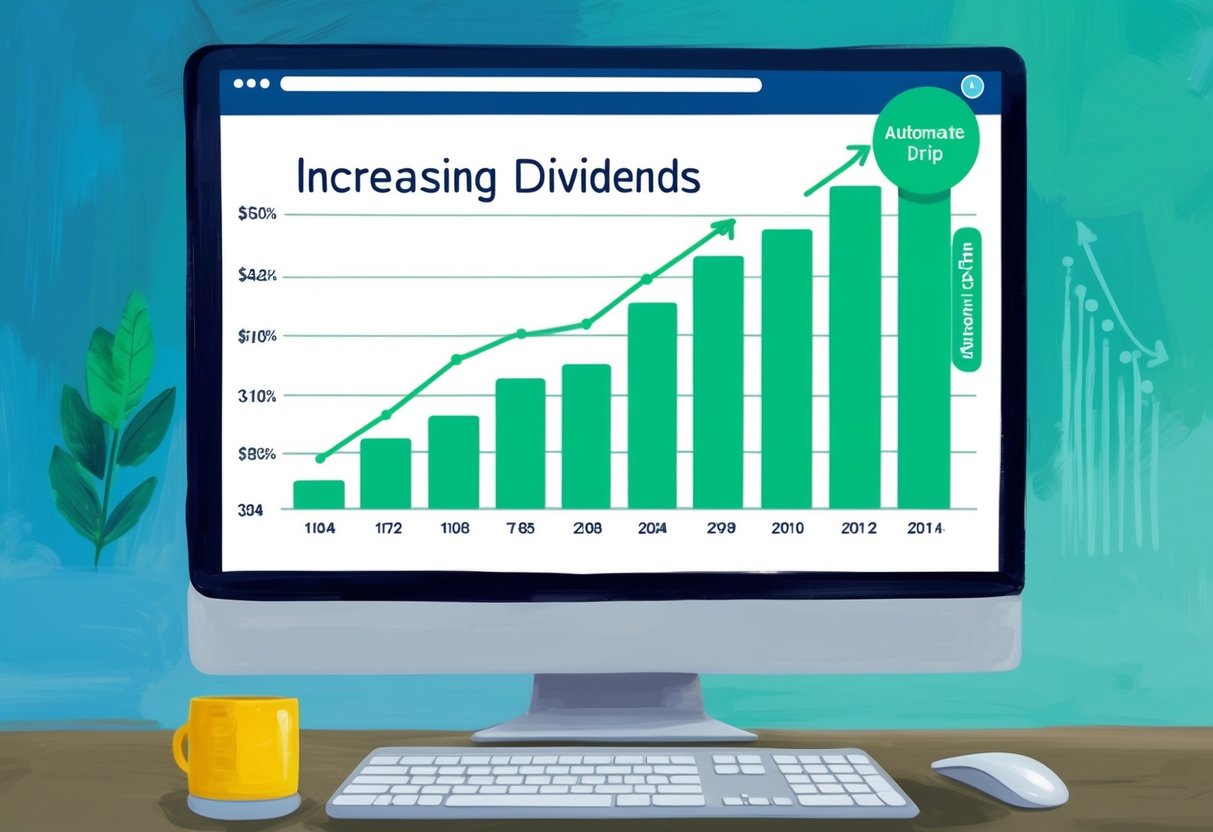
When it’s time to maximize the potential of a Dividend Reinvestment Plan (DRIP), the fine details can make all the difference. Key factors like the timing of dividend payments, minimizing investment costs, and balancing returns with liquidity are crucial elements in achieving financial success.
Impact of Dividend Payment Dates on Reinvestment
Understanding the timing of dividend payments can significantly influence your reinvestment strategy. Dividends received earlier can be reinvested sooner, potentially leading to more compounding. It’s like planting seeds early in the season; the sooner you plant, the sooner they grow.
By aligning reinvestment schedules with dividend payment dates, you can ensure that your dividends are working for you as efficiently as possible. Some companies offer flexibility in how and when dividends are reinvested, giving you control over your strategy. Keep an eye on the dividend payment date to maximize each opportunity.
Minimizing Investment Costs With Commission-Free DRIPs
How do you keep more of your money invested and less lost to fees? Commission-free DRIPs offer a practical solution by eliminating brokerage fees usually associated with purchasing more shares. It’s like having a loyalty card at your favorite store – every dollar saved goes directly back into your investments.
While many traditional brokerages still charge fees, seeking out commission-free options can reduce costs dramatically. This tactic allows your money to focus purely on growth. I’ve found exploring direct stock purchase plans can also help minimize fees, as they offer similar benefits to commission-free DRIPs.
Long-Term Returns vs. Immediate Liquidity
The classic debate: should you focus on long-term growth or have cash readily available?
A well-structured DRIP can balance both needs, offering long-term returns while still allowing for immediate liquidity if necessary. By carefully selecting securities within a DRIP, you can shape the balance that’s most appropriate for your situation.
Investments in steady, reliable companies help in achieving consistent long-term returns, allowing your portfolio to grow steadily. Yet having some accessible cash can offer peace of mind and flexibility for life’s unexpected twists and turns.
Can you strike the perfect balance to meet your goals?