
When it comes to planning for the future, understanding the tools available to us is key. Trusts and wills are two such tools, each offering unique benefits that can help secure our family’s financial future. But what are the main differences between these two important legal documents, and how can they impact our estate planning?  Navigating the world of estate planning can be overwhelming, yet it’s essential for peace of mind. By exploring the distinctions between wills and trusts, I aim to provide clarity and insight. Understanding these differences can empower you to make informed decisions that best suit your needs and those of your loved ones.
1) Beneficiary Designations
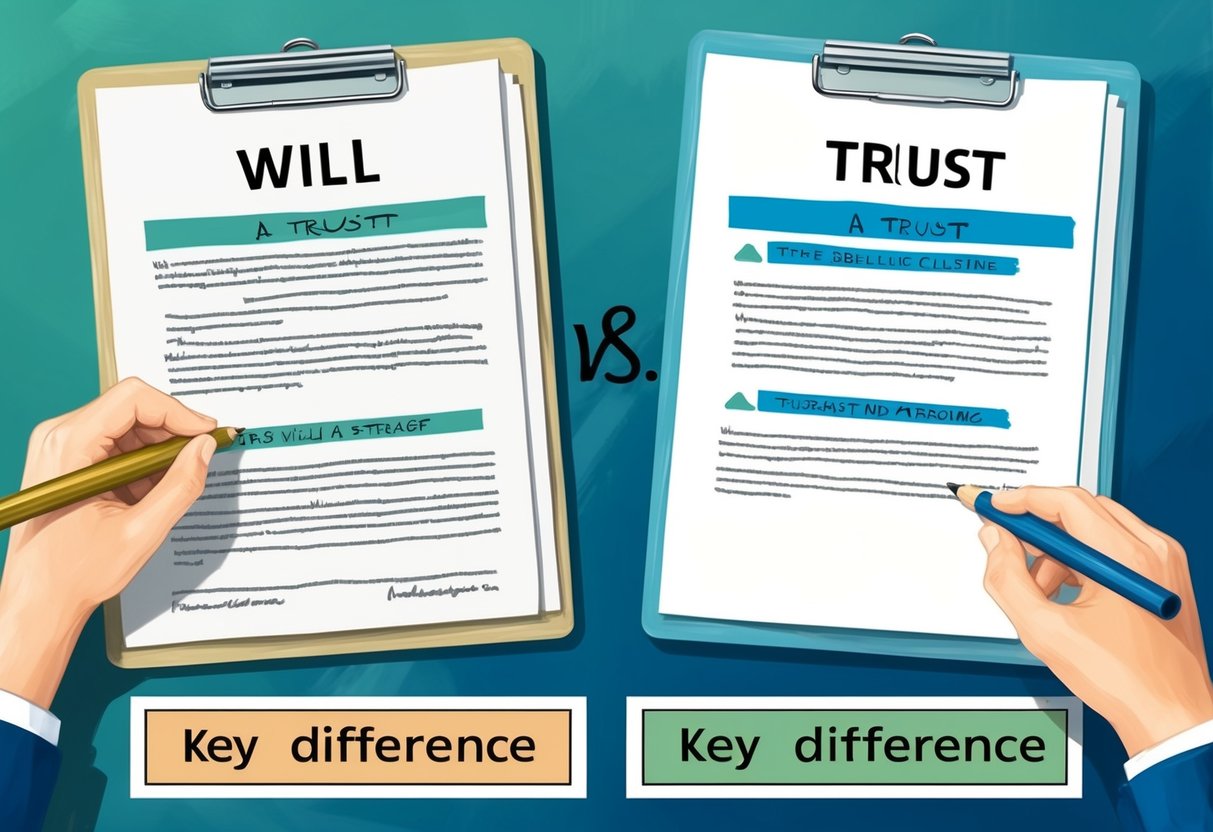 Do you ever wonder how certain assets can bypass the lengthy probate process? Beneficiary designations might be the answer. These are specific designations that allow your assets to go directly to the person you choose. It includes things like retirement accounts, life insurance, and annuities. With these designations, the tough part is making sure they stay updated. It’s not enough to simply set it up and forget it. Life changes, and so should your designations. Whether someone new enters your life or circumstances shift, it’s crucial to keep them current. Think about it this way: a will may not cover everything. While a will handles your estate’s general distribution, a beneficiary designation ensures that specific items, like your retirement accounts, go exactly where you intend. It’s like having a direct line to your preferred beneficiaries. A frequent question arises about conflicts between a will and beneficiary designations. Which one wins out? Typically, the designation takes precedence. So, if you named a specific person as a beneficiary on a retirement account, this choice will usually override your will. The peace of mind that comes from knowing your intentions are clear is invaluable. No one wants their family to face confusion or disputes. Keeping your beneficiary designations in harmony with your overall plan can make all the difference. Want to explore more on this? Check out the Guardian Life for further insights on wills and trusts working together.
2) Probate Process Involvement
 Do you know what happens to your assets when you pass away? Many people think wills cover everything. That’s not entirely true. Wills have to go through a legal process called probate. Probate is a court-supervised procedure to validate the will and ensure your wishes are followed. Probate can be time-consuming and costly. When I look at the big picture, it seems like the last thing you’d want when leaving behind your hard-earned assets is a long and public process. The court checks the will, pays debts, and distributes what’s left. This can be frustrating if you’re waiting to settle an estate. Trusts offer a different path. When I talk about trusts, I’m referring to something more private and direct. Assets in a trust usually avoid probate altogether. The trustee manages and distributes them as per your instructions, without court involvement. This can save time and potentially reduce legal fees. Think about the transparency of the probate process. It might surprise some that probate records can become part of public record. If privacy is something you value, this aspect is crucial. Trusts can keep these matters confidential. It feels more like having control over who knows what about your finances. Questions arise, don’t they? Which option sounds appealing to you? Probate through a will, or a more immediate distribution through a trust? These aren’t just legal details. They directly affect how your loved ones will receive what you’ve worked for. Trusts and probate may not sound exciting, but understanding how they work is key to choosing what’s right for your future.
3) Management Flexibility of Assets
 When it comes to managing your assets, control is everything. This is where trusts shine. With a trust, I can set specific terms on how and when my assets are distributed. This means I can decide if someone gets their share immediately or over time. Wills, on the other hand, lack the same flexibility. They come into play only after I pass away. This means I can’t adjust the terms or adapt to new circumstances once it’s set. It’s like trying to drive a car with no steering—you’re likely to end up where you don’t want to be. For those of us who have worked hard, isn’t it reassuring to know we can keep the reins on our assets? Setting up a trust allows for changes if life throws us a curveball. Maybe I want to add new beneficiaries or change the portion someone receives—that’s within my power. Think about the future. Why wait until it’s too late? Trusts offer this unique ability to adjust while I’m still around. I can manage the assets in real-time, deciding who benefits and how. In a world that’s constantly changing, isn’t that the kind of control we all want?
4) Privacy Levels
 When it comes to privacy, wills and trusts serve different purposes. Have you ever considered who might get access to your personal matters after you’re gone? With a will, once it’s filed for probate, it becomes a public document. This means anyone can eventually access the details, including who gets what from your estate. Trusts, on the other hand, offer a layer of privacy that a will cannot match. A trust does not go through probate, so the distribution of assets remains private. Do you want your finances and asset distribution to stay confidential? Trusts can ensure that your personal matters aren’t publicized. I often find that people don’t think about the importance of privacy until it’s too late. Imagine your loved ones being scrutinized by others after you’re gone. Wouldn’t you prefer to keep things discreet? The privacy offered by trusts could be a significant advantage. You’re the one calling the shots, not an open probate process. It’s important to weigh your options beyond just the financial aspect. There’s no one-size-fits-all answer, of course. Think about who you want to know the ins and outs of your estate after you’re no longer around. Interested in more flexible privacy options? Check out insights from fellow estate planning enthusiasts on sites like Collier Law. Ultimately, privacy can play a big role in peace of mind for your family and yourself. Are you ready to take control of your legacy now and beyond? Consider which pathway respects your need for privacy.
5)Revocation and Amendments
 Have you ever wondered how flexible your estate plan is? When it comes to wills and trusts, understanding the ability to make changes is crucial. With a will, you can change or revoke it as long as you’re alive and mentally competent. This means that as situations change, you can update your wishes by simply creating a new will or adding a codicil. This flexibility can be comforting for those who anticipate changes in their life or assets. In contrast, living trusts offer a different level of flexibility. A revocable living trust allows you to alter or cancel it at any time during your lifetime. You remain in control and can update your trust as often as you need. This feature can be appealing if you expect your family dynamics or financial situation to shift. However, an irrevocable trust is a different story. Once established, it generally cannot be changed or revoked without the consent of the beneficiaries. This rigidity might seem daunting, but it provides certain benefits, such as asset protection and tax advantages. Why do these differences matter? Flexibility can be a key factor in how comfortable you feel about your estate planning tools. Ask yourself: what’s more important, certainty, or adaptability? Each option offers unique benefits and possible drawbacks. Understanding these distinctions provides clarity and empowers you to make informed decisions about planning for your future and your family’s well-being.
6) Costs and Fees
 When thinking about estate planning, costs and fees can be a deciding factor. Have you ever wondered how the expenses of establishing a will compare to creating a trust? Here’s what you need to know. Creating a will is generally less expensive. Legal fees for drafting a will typically range from $0 to $1,000. The maintenance costs over a lifetime can add up to $300. This makes wills an affordable choice for many of us who want simplicity. On the other hand, setting up a living trust may seem more costly initially. It requires an upfront cost ranging from $139 to $3,000. Over time, maintaining a trust could cost between $2,500 and $7,000. That’s something to consider if you’re planning your estate with the intention of avoiding probate or ensuring privacy. Does this mean a trust isn’t worth the investment? Not necessarily. Despite the higher initial and ongoing fees, a trust can offer benefits such as bypassing probate and providing privacy in the transfer of your estate. So, if these factors are essential for you, a trust might be the way to go. The choice between a will and a trust isn’t just about dollars and cents, though. It’s about understanding what each option can do for your family and legacy. Are you ready to decide what’s best for your financial future?
Legal Fundamentals
 Navigating the legal differences between wills and trusts can be essential for effective estate planning. I’ll break down their roles, how they are made, and their specific functions to help clarify their significance.
Definition and Purpose
A will is a legal document that outlines how you want your assets and affairs handled after your death. It allows you to name beneficiaries for your property, designate guardians for minor children, and specify funeral arrangements. Wills are typically navigated through the probate process, which can be time-consuming and costly. This process ensures that your wishes are legally recognized and adhered to. On the other hand, a trust involves transferring assets to a trustee to manage on behalf of beneficiaries. Trusts do not always go through probate, which could save both time and money. This setup provides more control over when and how your assets are distributed. Trusts can also offer protection from certain taxes and can be activated while you are still alive.
Creation and Implementation
To create a will, you need to draft a document that clearly states your final wishes. This document generally requires witnesses and sometimes notarization, depending on state laws. Once completed, a will only becomes effective after death. It should be reviewed and updated as life circumstances change to ensure it reflects your current intentions. Setting up a trust involves more complex steps compared to a will. It requires identifying assets to include, choosing a trustee, and crafting a trust agreement that details asset management and distribution. Some trusts become active immediately, allowing the trustee to manage your estate while you are alive. This can offer peace of mind by securing your financial plan and helping avoid unnecessary legal hurdles.
Differences in Flexibility
 When deciding between a will and a trust, understanding the flexibility each option offers can help in making the right choice. I’ll explore how modifying terms and controlling assets differ between these two estate planning tools.
Modification of Terms
One of the important aspects of estate planning is knowing how easily you can adjust your strategy. Wills are typically easier to modify. You can create a new will or add a codicil to change its terms. This simplicity is beneficial if your circumstances or preferences frequently change. In contrast, trusts are more complex when it comes to modifications. Revocable trusts allow changes, but the process can still be more involved than editing a will. Click here for more on this distinction. Irrevocable trusts, however, are generally set in stone once established, offering little room for adjustment without formal legal proceedings. Why does this matter? If you anticipate needing to change asset distributions or other terms often, a will might suit you better. That said, the rigidity of a trust can also be an advantage, providing a stable plan that doesn’t shift with every change in your personal situation.
Control Over Assets
Another key difference lies in the control you have over assets. Wills go into effect after you pass away, meaning you maintain full control during your lifetime. This can be reassuring if you wish to manage your estate until the very end. On the other hand, trusts offer a unique advantage by allowing you to manage and disburse assets even before your death. This might benefit those who want to ensure asset management during periods of incapacity. For more detailed insights, check out this resource. Trusts also bypass probate, meaning distribution can be smooth and private, without the need for court involvement. For those who value privacy and efficient asset management, this might be an appealing feature. When considering what’s best, think about how much control and flexibility you need now and in the future.