Are you tired of the old advice about working a 9-to-5 job until retirement? I was too. That’s why I started looking for new ways to build wealth and secure my financial future. The truth is, relying solely on a traditional job for financial security isn’t always the safest bet anymore.  Many people are waking up to this reality. Workers are rethinking what they want from their careers and questioning if the 9-to-5 grind is worth it. I’ve found that exploring other paths can lead to more freedom and better financial outcomes. What if I told you there are ways to create income streams that don’t involve sitting in an office all day? From starting a side business to investing in assets that generate passive income, the options are endless. It’s time to think outside the box and take control of your financial destiny.
Key Takeaways
- Traditional jobs no longer guarantee long-term financial security
- Exploring alternative income streams can lead to greater financial freedom
- Taking control of your finances requires thinking beyond the 9-to-5 mindset
Redefining Job Security
 The concept of job security is changing rapidly. We need to adapt our thinking about careers and income to thrive in this new landscape.
From Traditional Roles to Flexible Careers
Remember when a 9-to-5 job meant stability? Those days are fading fast. Companies downsize and restructure regularly, leaving even long-time employees vulnerable. So what’s the alternative? I’ve seen many smart professionals create their own security by developing multiple income streams. They might have a day job, but also consult on the side or start an online business. This flexibility protects them if one source dries up. Continuous learning is key. Are you keeping your skills sharp? The most in-demand roles today might not exist in 5 years. I always advise investing in yourself through courses, certifications, or even learning a new language. Networking isn’t just for job hunters. Building strong professional relationships across industries can lead to unexpected opportunities. Have you reached out to an old colleague lately?
The Rise of the Gig Economy and Freelancing
The gig economy isn’t just for millennials anymore. It’s reshaping how we all think about work. Platforms like Upwork and Fiverr have made it easier than ever to offer your skills directly to clients worldwide. Freelancing offers freedom, but it comes with challenges. You’ll need to manage your time, finances, and client relationships carefully. But for many, the benefits outweigh the risks. Consider this: as a freelancer, you’re not putting all your eggs in one basket. You can work with multiple clients, diversifying your income and reducing risk. Want to test the waters? Start small. Take on a few gigs in your spare time. You might discover a whole new way of working that suits you better than the traditional 9-to-5 grind.
Exploring Self-Employment
Self-employment offers a path to [financial security](/financial-freedom-vs-financial-security/) that many overlook. It's not just about escaping the 9-to-5 grind; it's about taking control of your financial future. Let's dive into the benefits and challenges of being your own boss.Benefits of Being Your Own Boss
As a self-employed individual, I’ve found that the freedom to make my own decisions is priceless. I can set my own hours, choose my projects, and work from anywhere. This flexibility allows me to balance work and family life better than ever before. But it’s not just about lifestyle - the financial rewards can be significant. When I’m self-employed, there’s no ceiling on my income. I can scale my business, take on more clients, or raise my rates as I see fit. Plus, I have more control over my taxes and can take advantage of deductions that employees can’t. Another big plus? I’m building an asset. My business has value that can grow over time, potentially providing a nest egg for retirement or a legacy for my kids.
Understanding the Challenges
Self-employment isn’t all roses, though. It comes with its fair share of hurdles. One of the biggest? Inconsistent income. Some months I’m flush with cash, others I’m tightening my belt. This unpredictability can be stressful, especially if you’re used to a steady paycheck. Then there’s the responsibility. As an entrepreneur, the buck stops with me. I’m in charge of everything from finding clients to managing finances. It’s a lot of hats to wear, and it can be overwhelming at times. Health insurance and benefits are another consideration. When I left my 9-to-5, I had to figure out my own healthcare plan and retirement savings. It’s doable, but it requires more effort and planning than simply signing up for company benefits. Lastly, there’s the isolation factor. Working for yourself can be lonely. I miss the water cooler chats and team lunches sometimes. But is the trade-off worth it? For me, absolutely. What about you? Are you ready to take the leap into self-employment?
Leveraging the Digital Landscape
 The digital world offers new paths to financial freedom. It’s not just about tech skills - anyone can tap into these opportunities with the right mindset and approach.
Digital Marketing as a Foundation
Digital marketing is a goldmine for those willing to learn. I’ve seen countless people build thriving businesses from scratch using these skills. Start with the basics - social media management, content creation, and email marketing. These are in high demand and can be learned quickly. Platforms like Google Ads and Facebook Business Manager are powerful tools. Master them, and you’ll be invaluable to businesses of all sizes. Don’t forget about SEO - it’s the backbone of online visibility. Want to test the waters? Offer your services on freelance platforms. It’s a low-risk way to gain experience and build a portfolio.
E-Commerce Platforms and Opportunities
E-commerce isn’t just for big players anymore. Platforms like Shopify and Amazon have leveled the playing field. I’ve watched friends turn hobbies into profitable online stores. Here’s a quick breakdown of popular platforms:
- Amazon: Huge customer base, but fierce competition
- Shopify: More control, great for building a brand
- Etsy: Perfect for handmade or vintage items
Don’t have products to sell? Consider dropshipping or print-on-demand services. They allow you to start with minimal upfront investment. Remember, success in e-commerce is about finding your niche. What unique value can you offer?
Building Your Personal Brand Online
Your personal brand is your most valuable asset in the digital age. It’s how you stand out in a crowded marketplace. I’ve built my brand through consistent messaging and valuable content. Start by defining your unique value proposition. What makes you different? Then, choose your platforms wisely. LinkedIn is great for professional networking, while Instagram works well for visual industries. Create content that showcases your expertise. This could be blog posts, videos, or podcasts. The key is consistency and quality. Engage with your audience - respond to comments and join relevant discussions. Remember, your personal brand isn’t just about making money. It’s about building trust and credibility in your field.
Diversifying with Side Hustles
In today's economy, relying on a single income stream can be risky. Side hustles offer a way to boost earnings and build financial security outside of a traditional job.Identifying Lucrative Side Gigs
When I look for side hustles, I focus on skills I already have or can easily learn. Tech workers often have a leg up here. They can offer freelance coding, web design, or data analysis services. But don’t worry if you’re not tech-savvy. There are plenty of other options. Have you considered tutoring or teaching online courses? What about pet-sitting or house-sitting? These gigs often have flexible hours and can pay well. For those with a creative streak, selling handmade items or digital products on platforms like Etsy can be profitable. Photography, graphic design, and content writing are also in high demand. Remember, the best side hustle is one you enjoy and can sustain long-term.
Balancing Multiple Income Streams
Managing a side hustle alongside a full-time job takes planning. I’ve found that setting clear boundaries is key. Dedicate specific hours to your gig work to avoid burnout. Use tools to stay organized. A simple spreadsheet can track your earnings and expenses. This helps at tax time and shows your progress. Be realistic about your time and energy. It’s better to excel at one or two side gigs than to spread yourself too thin. Quality always trumps quantity in the gig economy. Consider automating parts of your side hustle. Could you use scheduling software for appointments? What about templates for invoices or social media posts? Juggling a side hustle and a 9-to-5 job can be challenging, but the financial rewards are often worth it. With careful planning, you can create a robust income portfolio that provides security and flexibility.
Financial Planning for Independence
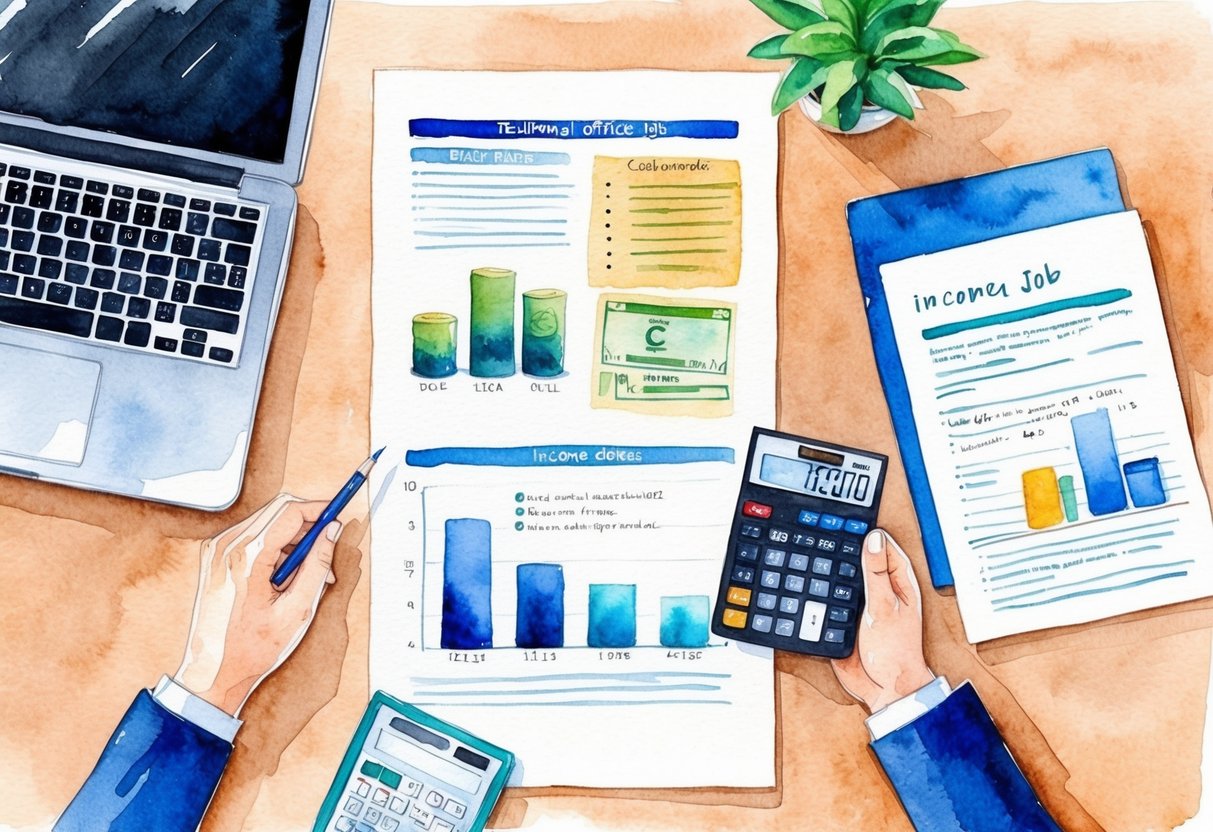 Planning for financial independence requires a shift in mindset and strategy. It’s about creating multiple income streams and building wealth over time. Let’s explore two key aspects of this journey.
Budgeting for the Self-Employed
As a self-employed individual, I’ve learned that budgeting is crucial. It’s not just about tracking expenses, but planning for irregular income. I recommend creating a bare-bones budget covering essential needs. This helps during lean months. What about the good months? I always advise setting aside a portion for taxes and savings. Automation is your friend here. Set up automatic transfers to separate accounts for these purposes. Remember, as a business owner, you’re responsible for your own benefits. Budget for health insurance, retirement contributions, and professional development. These aren’t luxuries - they’re investments in your future.
Investing in Your Future
Investing is where the magic happens. It’s how we turn our hard-earned money into a wealth-building machine. But where should you start? I’m a big believer in diversification. Don’t put all your eggs in one basket. Consider a mix of stocks, bonds, and real estate. Index funds can be a great way to get broad market exposure with low fees. Have you thought about passive income? Rental properties or dividend-paying stocks can provide steady cash flow. This is key to achieving financial freedom. Don’t forget about retirement accounts. As a self-employed person, you have options like SEP IRAs or Solo 401(k)s. These offer tax advantages and can supercharge your savings.
Cultivating a Sustainable Career
 Building a career that lasts isn’t just about clocking in and out. It’s about growing, adapting, and staying relevant in a changing world. How can we do this? Let’s explore.
Continuous Learning and Skill Development
I’ve seen too many people get stuck in their jobs, thinking they’re set for life. But that’s a risky bet. The world is changing fast. To stay ahead, we need to keep learning. What skills are hot in your industry? Find out and start building them. Online courses, workshops, or even YouTube videos can be great starting points. Don’t wait for your company to train you - take charge of your own growth. Remember, the future of work points to more flexible ways of working. Are you ready for that? Can you adapt to new technologies or work styles? If not, it’s time to start.
Networking and Professional Growth
Ever heard the saying “Your network is your net worth”? It’s true. Who you know can be just as important as what you know. But networking isn’t just about collecting business cards. It’s about building real relationships. Join professional groups, attend industry events, or even start a LinkedIn conversation. You never know where these connections might lead. Reid Hoffman, who predicted social media’s rise, emphasizes the importance of professional networks. Why? Because they open doors to opportunities you might never find on job boards. And here’s a secret: networking isn’t just for job hunting. It’s for learning, growing, and staying in the loop. What trends are shaping your industry? Your network can give you insider insights.
Assessing Employment Trends
 The job market is changing fast. Traditional 9-to-5 jobs are facing new challenges. Let’s look at how automation is shaking things up and what experts think the future holds.
Influence of Automation on Job Security
Automation is transforming the workplace. Many tasks that were once done by humans are now handled by machines. This shift is making some jobs disappear. I’ve seen entire departments replaced by software. It’s not just factory work anymore. Even white-collar jobs are at risk. But it’s not all doom and gloom. New jobs are popping up too. The key is to stay adaptable. I always tell people to keep learning new skills. Here’s a quick look at jobs affected by automation:
- Data entry clerks
- Bookkeepers
- Bank tellers
- Travel agents
Predictions for the Future of Work
The future of work looks very different from what we’re used to. Experts think the 9-to-5 job might become extinct. That’s a big change! I believe we’ll see more flexible work arrangements. Remote work and freelancing will likely become more common. The gig economy might grow even larger. What does this mean for you? It’s time to think beyond the corporate ladder. Ask yourself: How can I create value outside of a traditional job? Remember, change brings opportunity. Those who adapt quickly will thrive in this new world of work.