
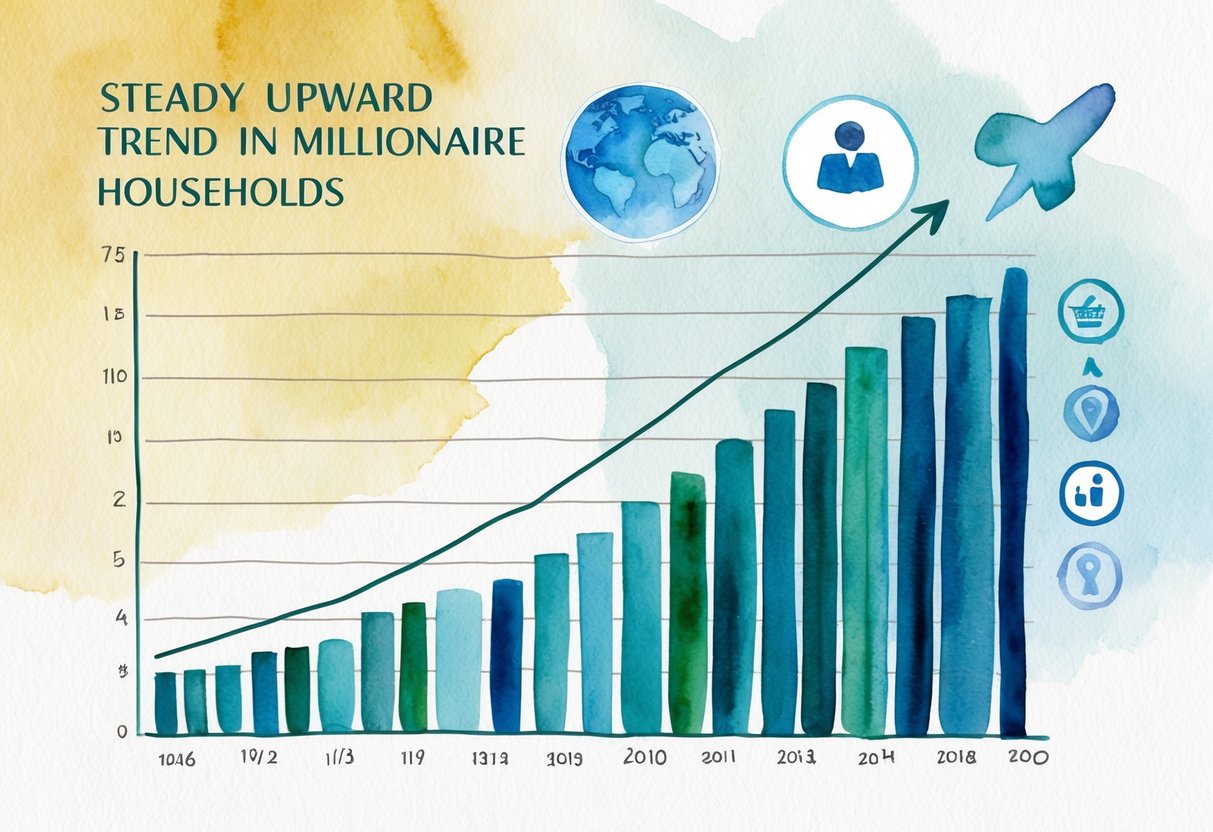
The number of millionaire households in America is growing fast. More and more people are joining the ranks of the wealthy, changing the face of our economy.
The number of millionaire homeowners quadrupled between 2017 and 2022. This surge isn’t just about houses - it’s a sign of a broader trend.

What’s driving this rise? Is it smart investing, new business opportunities, or something else? I’ve been watching this trend closely, and it’s not just the usual suspects getting rich.
Even renters are part of this wave, with millionaire renters tripling since 2015. This shift is reshaping our cities and suburbs alike.
Are you wondering how this affects you? Whether you’re aiming to join the millionaire club or just trying to keep up, understanding this trend is key.
Let’s dig into what’s behind this wealth explosion and what it means for the average American.
Key Takeaways
- Millionaire households have grown dramatically in recent years, spanning both homeowners and renters
- This wealth surge is changing the makeup of communities and consumer spending patterns
- Understanding these trends can help individuals make informed financial decisions for their future
Demographics of Millionaire Households
Who are America’s millionaires? Let’s take a closer look at where they live and how diverse this wealthy group really is. You might be surprised by some of the trends we’re seeing.
Geographical Distribution
Where do millionaires call home? It’s no shock that big cities attract big money. New York tops the list, with its bustling financial sector and luxury real estate market. But don’t count out other hotspots.
California’s tech hubs like San Francisco and Silicon Valley are minting new millionaires daily. What about the South? Atlanta and Miami are rising stars, drawing wealthy individuals with their growing economies and tax benefits.
Rural areas aren’t left out either. I’ve noticed a trend of millionaires seeking out scenic locales in Montana and Wyoming. Why? They’re after a quieter lifestyle and potentially lower taxes.
Millionaires by Race and Ethnicity
Now, let’s talk diversity. Are millionaires as varied as the general population? Not quite, but things are changing.
Millionaires by race and ethnicity show some interesting patterns. White households still make up the largest group, but Asian Americans are gaining ground fast. They now have the highest median household wealth among all racial groups.
What about Black and Hispanic millionaires? Their numbers are growing, but there’s still a significant wealth gap. Historical factors play a role, but so do current disparities in education and entrepreneurship opportunities.
I’ve seen a rise in immigrant millionaires too. Many are bringing skills, determination, and sometimes capital from their home countries. They’re shaking up traditional wealth demographics in exciting ways.
Factors Contributing to Wealth Accumulation
Wealth accumulation is driven by several key factors that work together to grow your net worth over time. Let’s explore the main contributors that can help you build substantial wealth and potentially join the ranks of millionaires.
Income and Employment Trends
Your income is the foundation of wealth building. I’ve seen firsthand how higher salaries and multiple income streams can accelerate wealth accumulation. Did you know that 8.8% of U.S. adults are millionaires? That’s a significant number!
High-paying jobs in tech, finance, and healthcare often lead to faster wealth growth. But don’t overlook entrepreneurship - starting a successful business can create substantial wealth.
Side hustles and passive income sources are game-changers. They provide extra cash flow that can be invested or used to pay off debt faster.
Investment Strategies
Smart investing is crucial for growing wealth. The stock market has historically been a powerful wealth-building tool, but it requires knowledge and patience.
Diversification is key. I recommend spreading your investments across stocks, bonds, real estate, and other assets. This helps manage risk while pursuing growth.
Have you considered real estate investing? Owning property can be a significant contributor to wealth, providing both appreciation and rental income.
Index funds are a simple yet effective way to invest in the stock market. They offer broad exposure and low fees, making them ideal for long-term wealth building.
Don’t forget about tax-advantaged accounts like 401(k)s and IRAs. They can supercharge your savings by deferring or eliminating taxes on investment gains.
Impact of Inheritance and Gifts
Inheritance and gifts can provide a significant boost to wealth accumulation. While not everyone receives an inheritance, it can be a game-changer for those who do.
Family wealth transfers often include more than just money. Real estate, businesses, and valuable assets can all contribute to a person’s net worth.
Gifts, whether monetary or in the form of education funding, can also play a role. They can reduce expenses or provide opportunities for higher earnings.
But here’s a question: If you received a large inheritance or gift, would you know how to manage it effectively? Financial education is crucial for preserving and growing wealth, regardless of its source.
Remember, even without an inheritance, you can create a legacy for future generations through smart financial planning and wealth-building strategies.
Economic Indicators and Millionaire Growth
The number of millionaire households is growing rapidly. This trend is closely tied to economic factors that affect asset values and investment returns.
Effect of Inflation on Assets
Inflation has a big impact on net worth. As prices go up, the value of cash savings goes down. But inflation can boost the value of other assets. Real estate often goes up in price when inflation is high. This helps homeowners build wealth.
I’ve seen many clients become millionaires just by owning a home in a good area for 20-30 years. Have you considered how inflation might be helping your net worth grow?
Businesses can also benefit from inflation by raising prices. This increases revenues and profits, pushing up stock prices. For investors, this means inflation can indirectly grow their portfolio value.
Stock Market Fluctuations
The stock market is a key driver of millionaire growth. When stocks go up, so does the number of millionaires. The U.S. added 500,000 millionaires in 2023, largely due to rising stock prices.
Market ups and downs can create or destroy millionaires quickly. A 20% drop might push someone below the million-dollar mark. But a 20% gain could create new millionaires overnight.
I always tell my readers: “The stock market is like an elevator. It goes up and down, but over time it tends to go up.” Are you positioned to benefit from long-term market growth?
Diversification is key to weathering market storms. A mix of stocks, bonds, and real assets can help protect and grow wealth through different market cycles.
Millionaire Lifestyles and Spendings
Millionaires aren’t just about flashy cars and designer clothes. Their spending habits might surprise you. Let’s look at how these wealthy individuals manage their money and assets.
Real Estate and Luxury Markets
Have you ever wondered where millionaires put their money? I’ve found that real estate is a top choice. The number of millionaire homeowners has skyrocketed in recent years. Why? Because property is a solid investment that often grows in value.
But it’s not just about owning a fancy house. Many millionaires invest in multiple properties. They might rent these out for extra income. Some even flip houses for profit. It’s all about making their money work for them.
What about luxury items? Sure, some millionaires splurge on high-end goods. But you’d be surprised how many drive used, American-made cars. It’s not about showing off. It’s about smart spending and building wealth.
Cost of Living and Expenditures
So how do millionaires handle day-to-day expenses? I’ve noticed they’re often more frugal than you’d expect. Many live below their means. This helps them save and invest more.
Some millionaires struggle with bills, just like anyone else. It’s not about how much you make, but how you manage it. The key is budgeting and prioritizing expenses.
What do they spend on? Education is often a priority. Many invest in their own learning or their children’s schooling. Health and wellness are also important. But they’re smart about it, avoiding unnecessary costs.
Remember, being a millionaire isn’t just about having money. It’s about knowing how to use it wisely. Are you ready to rethink your spending habits?
Financial Planning and Growth Management
As millionaire households increase, smart money management becomes crucial. Proper planning can make the difference between lasting wealth and squandered opportunities.
Retirement Planning
I’ve seen too many people reach their golden years without enough saved. Don’t let that be you! Start by maxing out your 401(k) and IRA contributions. These tax-advantaged accounts are powerful wealth-building tools.
But retirement planning goes beyond just saving. It’s about creating income streams that will support your lifestyle. Have you considered rental properties? They can provide steady cash flow long after you stop working.
Remember, the earlier you start, the more time your money has to grow. Are you taking full advantage of compound interest? It’s like having money make babies - those babies grow up and make more babies!
Savings and Diversification
Saving is great, but where you put those savings matters.
I always say, “Don’t put all your eggs in one basket.”
Diversification is key to protecting and growing your wealth.
Consider this mix:
- 40% stocks for growth
- 30% bonds for stability
- 20% real estate for income
- 10% cash for opportunities
But don’t just diversify across asset classes. Spread your investments geographically too.
The world is full of opportunities - why limit yourself to just one country?
Are you actively managing your portfolio? Regular rebalancing keeps your risk in check and can boost returns.
Legacy and Wealth Transfer
What’s the point of building wealth if you can’t pass it on?
Smart estate planning ensures your hard work benefits future generations.
Start with the basics:
- Write a will
- Set up trusts
- Name beneficiaries on all accounts
But legacy planning isn’t just about money. It’s about values too.
Are you teaching your kids financial literacy? The greatest inheritance you can leave is knowledge.
Consider charitable giving as part of your legacy. It can reduce your tax burden and make a lasting impact.
Have you thought about starting a family foundation?
Impact of Global Events on Wealth
Big changes in the world can shake up our money. Let’s look at how recent events have affected people’s wealth and what it means for your financial future.
The Pandemic’s Financial Impact
The COVID-19 pandemic turned our lives upside down. But did you know it also caused major shifts in wealth? While many struggled, some saw their net worth soar.
Stock markets crashed, then bounced back stronger than ever. This helped wealthy individuals increase their fortunes. If you had money in stocks, you might have benefited too.
Real estate prices went up in many areas. Homeowners saw their property values climb. But this made it harder for others to buy their first home.
Some industries boomed during lockdowns. Tech companies and online retailers saw huge gains. Did you invest in any of these winners?
Economic Policies and Wealth
Governments and central banks took big steps to fight the pandemic’s economic effects. These choices had a major impact on people’s wealth.
Interest rates were cut to near-zero in many countries. This made borrowing cheap but hurt savers.
Did your savings account stop earning much?
Stimulus checks and expanded unemployment benefits helped many stay afloat. But they also led to worries about inflation.
Have you noticed prices going up lately?
Global wealth is expected to grow by 38% in the next five years. But will this growth be equal? Or will it widen the gap between rich and poor?
Taxes might change to pay for pandemic spending. How could this affect your long-term financial plans? It’s crucial to stay informed and adapt your strategy.