
Have you ever wondered what it really means to be a millionaire in today’s world? The term might conjure images of yachts and mansions, but the reality is far more nuanced.
The average American considers a net worth of $2.5 million to qualify as wealthy, up from $2.2 million in previous years.

I’ve spent years studying wealth distribution, and I can tell you that not all millionaires are created equal. From those just crossing the seven-figure threshold to the ultra-high net worth individuals, there’s a vast spectrum of wealth within this elite group.
It’s crucial to understand these differences, especially if you’re aiming to join their ranks.
Let’s take a closer look at how millionaires are spread across different wealth brackets.
Did you know that the share of wealth held by the top 1% has grown from 9% to 14% since 1990? This shift has reshaped the financial landscape, affecting everything from investment strategies to generational wealth trends.
Key Takeaways
- Millionaire status starts at $1 million net worth but extends far beyond that figure
- Wealth inequality in America has increased significantly over the past three decades
- Understanding different wealth brackets can inform smarter financial decision-making
Overview of Net Worth in America
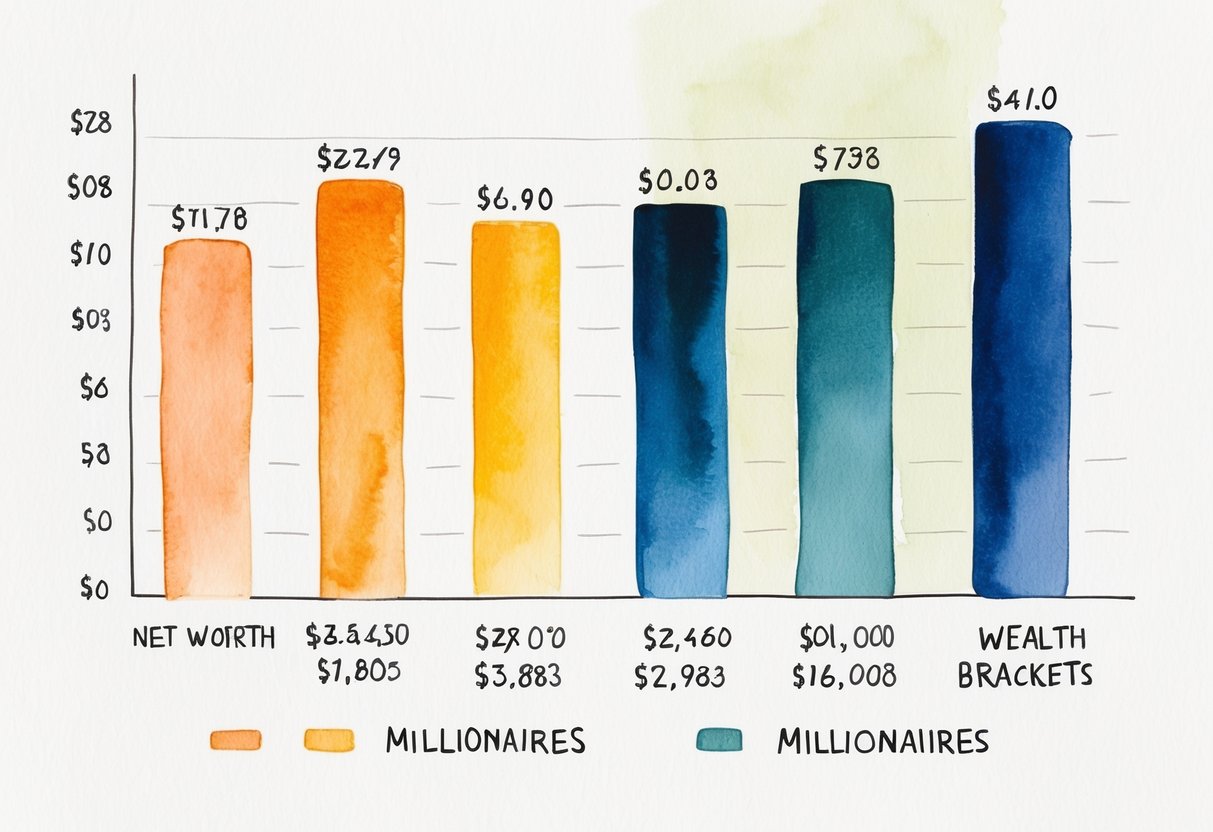
Net worth is a key measure of financial health in America. It shows how much wealth households have built up over time. Let’s take a closer look at what net worth means and how it varies across the population.
Defining Net Worth
What exactly is net worth? I like to think of it as a financial snapshot. It’s the total value of everything you own minus what you owe.
This includes:
- Your home
- Vehicles
- Investments
- Cash in the bank
- Other assets
From this total, we subtract debts like:
- Mortgages
- Car loans
- Credit card balances
- Student loans
The result is your net worth. It’s a simple concept, but it packs a punch. Why? Because it tells you how much wealth you’ve really built.
Net Worth Percentiles Overview
How do you stack up against other Americans? That’s where net worth percentiles come in. They show us how wealth is spread across the country.
According to recent data, the average net worth in the U.S. is $1,063,700. But don’t let that fool you. The median is much lower. Why? Because a small number of very wealthy people pull the average up.
Let’s break it down:
- Top 1%: Over $11 million
- Top 10%: About $1.2 million
- Middle 50-90%: $100,000 to $1.2 million
- Bottom 50%: Less than $100,000
What does this tell us? The wealth gap is real. The richest Americans hold a big chunk of the nation’s wealth. In fact, the top 1% now owns 14% of total household wealth. That’s up from 9% in 1990.
So, where do you fit in? Are you building real wealth? Or are you just treading water?
Millionaires in the United States
The wealth landscape in America is diverse and complex. Let’s explore the different tiers of millionaires and how they shape our economy.
Top 0.1% - The Ultra-Rich
Ever wondered what it takes to join the ultra-rich club? These are the crème de la crème of America’s wealthy. The top 0.1% have seen their share of wealth grow from 9% to 14% since 1990. That’s a huge jump!
What does this mean for you and me? It shows that the richest are getting richer at a faster rate than anyone else. But why? I believe it’s because they have access to investments and opportunities that most people don’t even know exist.
Is this fair? That’s a question we should all be asking ourselves.
Top 1% - The Wealthy Elite
The top 1% is a group we often hear about, but what does it really mean to be in this bracket? These are the movers and shakers of our economy. They’re not just rich – they’re influential.
How much wealth are we talking about? According to recent data, you’d need a net worth of $2.5 million to be considered part of this elite group. That’s a lot of zeros!
But here’s the kicker: the top 1% were one of the only groups to see their share of wealth increase since 1990. What does this tell us about our economy? Is the American Dream still alive, or is it becoming harder for the average person to climb the wealth ladder?
Top 10% - High Wealth Households
Now, let’s talk about the top 10%. These are what I’d call the “comfortably wealthy.” They’re not billionaires, but they’re doing very well for themselves.
What’s interesting is how the wealth is distributed even within this group. The gap between the top 1% and the rest of the top 10% is massive. It’s like comparing a mountain to a hill.
Why does this matter to you? Because understanding these brackets can help you set realistic financial goals. Are you aiming for the top 10%? Or do you have your sights set even higher?
90-99% - The Affluent Upper Middle Class
This group is where many of us aspire to be. They’re not the ultra-rich, but they’re far from struggling. These are often successful professionals, business owners, and savvy investors.
But here’s something to think about: the wealth gap between this group and those above them is growing. The top 20% has over four times as much wealth as the next 20%. That’s a big difference!
What does this mean for you? It shows that there’s still room to grow, even if you’re doing well. But it also highlights the importance of smart financial planning. Are you making the most of your wealth-building opportunities?
Comparative Wealth Analysis
Wealth distribution in America reveals stark contrasts between different income brackets. Let’s examine how the richest compare to the middle class and explore the growing wealth gap affecting the bottom half of earners.
Top 1% vs. Middle Class
The top 1% of Americans have seen their share of wealth grow from 9% to 14% since 1990. That’s a huge jump! Meanwhile, the middle class (50-90% bracket) has experienced the biggest decline. Why is this happening?
I’ve noticed that the wealthy often have different money habits. They invest in assets that appreciate over time, while many in the middle class focus on buying liabilities. Think about it - how many millionaires do you know who got rich from their salary alone?
The middle class typically relies on wages and home equity. But with stagnant incomes and rising costs, it’s getting harder to build wealth. Have you felt this squeeze in your own finances?
The Bottom 50% - Examining the Wealth Gap
Now, let’s look at the bottom 50%. Brace yourself - this group owns only 1.3% of global wealth. That’s a tiny slice of the pie!
Why such a big gap? I see three main factors:
- Limited access to financial education
- Fewer opportunities to build assets
- Higher debt burdens
Many in this group live paycheck to paycheck. They’re trapped in a cycle of working to pay bills, with little left over to invest. Does this sound familiar?
The wealth gap isn’t just about money. It affects quality of life, access to healthcare, and educational opportunities. Have you considered how this impacts society as a whole?
Income and Asset Distribution
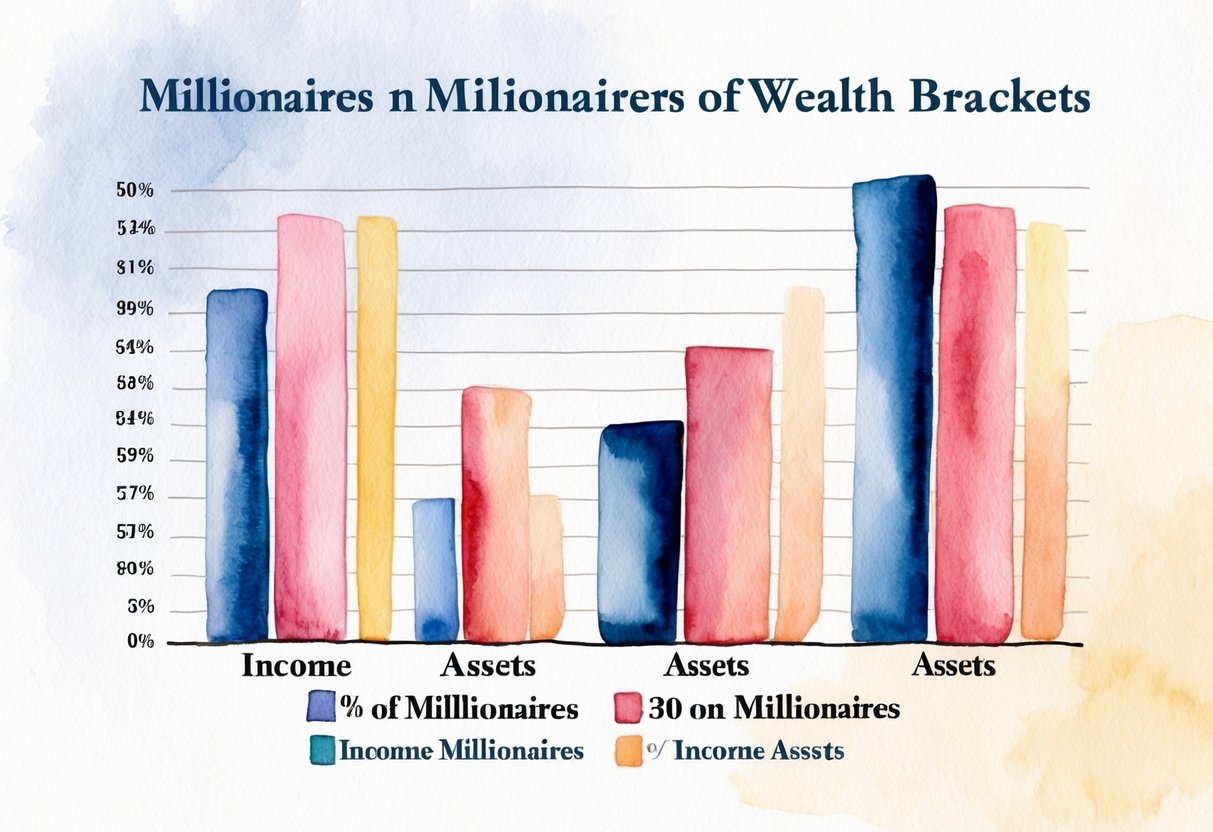
Money doesn’t just appear in bank accounts. It flows from various sources and takes different forms. Let’s take a closer look at how the wealthy earn and allocate their riches.
Income Sources for Different Wealth Brackets
Ever wonder where millionaires get their cash? It’s not all paychecks and bonuses.
For the top 0.1% of earners, the average annual income hits a cool $3.3 million. But here’s the kicker - a big chunk of that isn’t from a 9-to-5 job.
So where does it come from? Investments play a huge role. Think dividends, capital gains, and interest. Business income is another major player. Many millionaires own companies or have stakes in profitable ventures.
What about the rest? Rental income from real estate can be a steady stream. And don’t forget about high-powered executive salaries and bonuses for those corporate bigwigs.
The key takeaway? Diversification. The wealthy don’t rely on just one income source. They spread their bets and let their money work for them.
Asset Allocation
Now, let’s talk about where the rich park their wealth. It’s not all about fancy cars and big houses (though those are nice too).
For the top 1%, stocks and mutual funds are the go-to. These make up over a third of their assets. Why? Because they offer growth potential and can generate passive income through dividends.
Real estate is another big player, but interestingly, it makes up a smaller portion for the ultra-wealthy. Only about 13% for the top 1%, compared to 50% for the bottom half of households.
What about cash? The rich tend to keep less of their wealth in savings accounts. They prefer assets that can grow over time.
Here’s a quick breakdown:
- Stocks and mutual funds: 35%+
- Real estate: 13-15%
- Business interests: 20-25%
- Bonds and cash: 5-10%
- Other assets: 15-20%
Remember, these percentages can vary. The key is finding the right mix for your goals and risk tolerance.
Impact of Inflation and Economic Changes
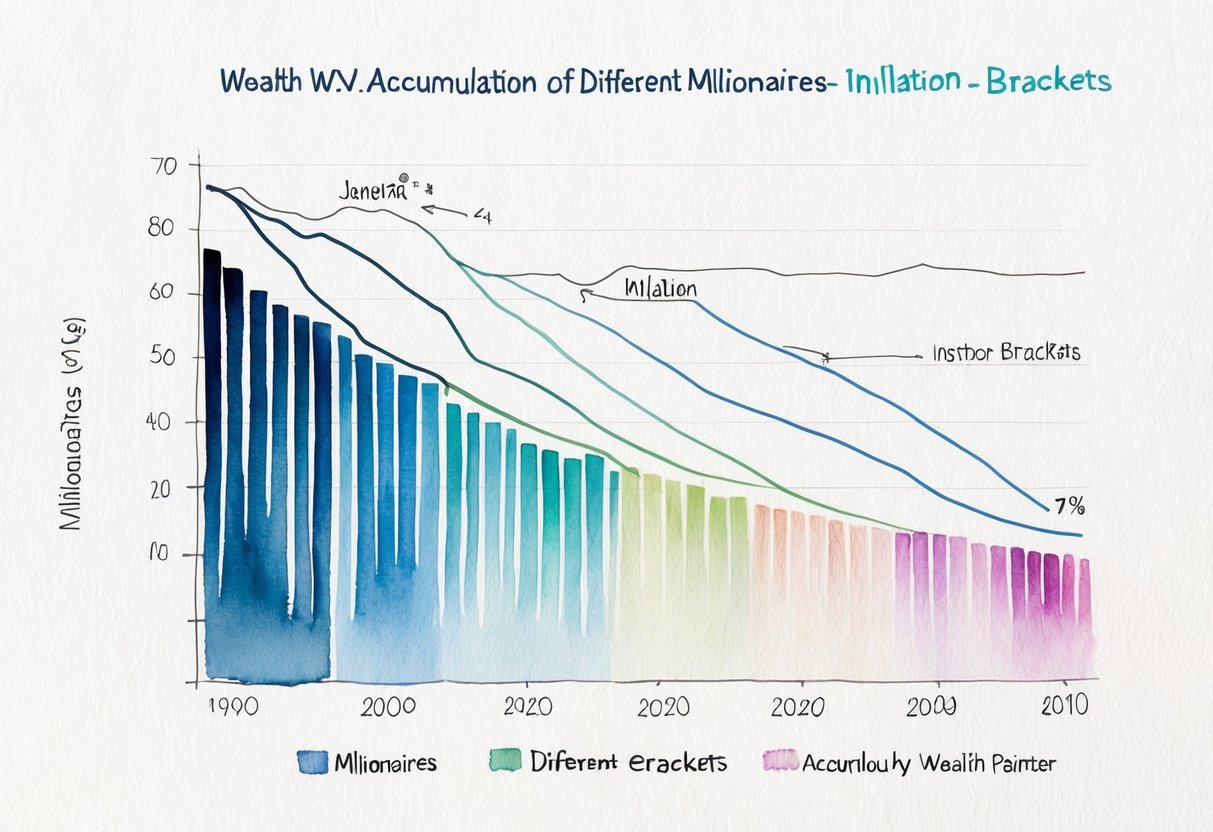
Money isn’t static. Its value changes over time, affecting millionaires differently. Let’s explore how inflation and economic shifts impact wealth across brackets.
Adjusting Net Worth for Inflation
When we talk about millionaires, we need to consider the real value of their wealth. A million dollars today isn’t what it was 20 years ago.
The Consumer Price Index for All Urban Consumers Research Series (CPI-U-RS) helps us understand these changes.
I’ve seen many people overlook inflation’s impact on their savings. It’s like a hidden tax, slowly eating away at your wealth.
For example, $1 million in 2000 would need to be about $1.7 million in 2024 to have the same purchasing power.
Have you ever wondered why some millionaires don’t feel “rich”? This could be why. Their net worth might look impressive on paper, but inflation has reduced its real value.
Economic Factors Influencing Wealth Brackets
Economic changes can shake up wealth brackets faster than you might think. Household net worth percentiles show us how different groups fare during economic shifts.
I’ve noticed that inflation often benefits the wealthy while harming the working class. Why? The rich often have assets that appreciate with inflation, like real estate or stocks.
But it’s not all rosy for millionaires. Economic downturns can hit hard, especially for those heavily invested in volatile markets. Remember 2008? Many millionaires saw their net worth plummet overnight.
What’s your strategy for protecting your wealth from economic changes? Are you diversifying? Building cash reserves? These are questions every aspiring millionaire should ask themselves.
Generational Wealth Trends
Wealth distribution across generations has shifted dramatically in recent years. Baby Boomers hold the lion’s share, but Gen X and Millennials are gaining ground. Let’s explore how each generation’s economic fortunes are shaping up.
Baby Boomers’ Wealth Accumulation
Baby Boomers have amassed an impressive 76.2 trillion dollars in wealth. How did they do it? Many benefited from strong economic growth, rising property values, and long-term stock market gains.
They’ve built their nest eggs through:
- Home ownership
- Long careers with pensions
- Investing in equities
But here’s a question: Will this wealth trickle down to younger generations? Some Boomers are already gifting money to their children and grandchildren. Others are spending it on retirement luxuries. The transfer of this wealth will significantly impact future generations.
Gen X’s Economic Position
Gen X, often overlooked, has been quietly building wealth. They now hold 26% of American wealth, up from 15% in 2013. Not bad for the “forgotten” generation, right?
Gen X’s wealth-building strategies include:
- Investing in real estate
- Climbing corporate ladders
- Entrepreneurship
Many Gen Xers faced setbacks from the 2008 financial crisis. But they’ve rebounded, often juggling mortgage payments, student loans, and saving for their kids’ college. Their resilience is paying off, positioning them as a significant economic force.
Millennials and Emerging Wealth Patterns
Millennials, contrary to the “broke generation” stereotype, are defying expectations. They’re finding innovative ways to build wealth in a changing economy. But how are they doing it?
Some key Millennial wealth trends:
- Embracing the gig economy and side hustles
- Investing in cryptocurrencies and tech stocks
- Prioritizing experiences over material possessions
34% of Gen Z believe starting a business is the best path to wealth, and many Millennials share this entrepreneurial spirit. They’re also more likely to job-hop for better opportunities, challenging traditional career paths.
Investment Strategies of Different Wealth Brackets
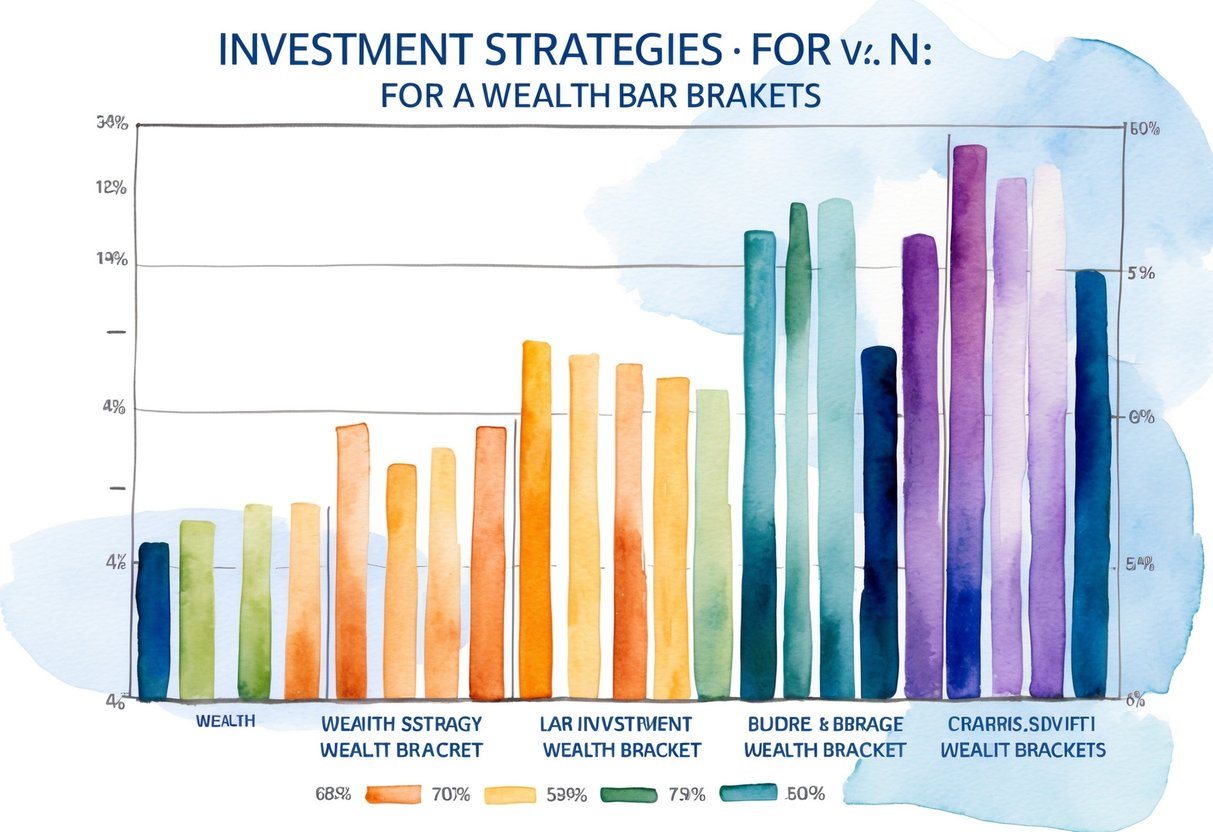
Different wealth brackets tend to use distinct investment approaches. The wealthiest individuals often have access to unique opportunities and resources that shape their strategies. Let’s explore how these strategies vary across wealth levels.
Mutual Fund Shares and Stock Investments
Have you ever wondered why the rich seem to get richer? It’s often because they play the investment game differently. The top 1% of wealthy individuals typically invest heavily in corporate equities and mutual funds, which make up over a third of their assets.
I’ve seen firsthand how this approach can lead to significant wealth growth. These investors often have access to exclusive mutual funds with lower fees and higher returns. They also tend to hold onto their investments for longer periods, riding out market fluctuations.
For stocks, the wealthy often focus on blue-chip companies and dividend-paying stocks. This strategy provides both growth potential and steady income. It’s a powerful combination that can compound wealth over time.
Real Estate and Corporate Equities
Real estate is another favorite playground for the wealthy. But did you know they approach it differently than most? High-net-worth individuals often invest in commercial properties, luxury developments, and even entire apartment complexes.
I’ve noticed that the ultra-wealthy also tend to have significant stakes in corporate equities. This isn’t just about owning stocks - it’s about having substantial ownership in private companies or being major shareholders in public corporations.
These investments often provide multiple streams of income:
- Rental income from real estate
- Dividends from corporate equity holdings
- Capital appreciation on both real estate and equity investments
It’s a powerful strategy that can lead to exponential wealth growth. But remember, with great potential comes great risk. That’s why diversification across these asset classes is key.
Sources and Methodology
To understand millionaire wealth brackets, we need reliable data. Let’s look at where this information comes from and how it’s gathered.
The Federal Reserve’s Survey Methodology
The Federal Reserve’s Survey of Consumer Finances is a goldmine for wealth data. It’s done every three years and digs deep into American families’ finances. How do they do it? They pick about 6,000 families randomly and interview them.
But here’s the kicker - they oversample rich folks. Why? Because wealth is so concentrated at the top. This way, we get a better picture of the whole wealth spectrum.
The survey asks about everything - income, debts, assets, you name it. It’s not perfect (what is?), but it’s the best we’ve got.
Understanding Net Worth Statistics
Net worth is simple: what you own minus what you owe. But interpreting net worth stats? That’s where it gets tricky.
Here’s what I’ve learned:
- Median vs. Mean: Always look at both. The median shows the middle point, while the mean can be skewed by super-rich outliers.
- Age matters: Net worth typically peaks near retirement.
- Regional differences: Cost of living varies, so does wealth.
Remember, these stats are snapshots. They don’t show the whole movie of someone’s financial life. And they don’t account for future earning potential or inherited wealth.