
Millionaires fascinate us. They represent wealth, success, and a lifestyle many dream of.
But who are they really? And where do they live?
The world has 58 million millionaires, making up just 1.5% of adults globally. These millionaires control a whopping 45.8% of the world’s wealth, totaling $208.3 trillion. It’s a staggering figure that shows the concentration of money at the top.
I’ve seen firsthand how wealth can grow over time. From 2012 to 2022, millionaire wealth surged by 138%. That’s not just a statistic - it’s a sign of how the financial landscape is shifting.
Are you positioned to benefit from this trend?
Key Takeaways
- Millionaires make up a tiny fraction of the population but control nearly half of global wealth
- The number of millionaires worldwide has grown rapidly over the past decade
- Wealth inequality remains a significant issue, with most adults holding less than $10,000 in assets
Demographics of Global Millionaires
The world’s millionaire population is growing rapidly and becoming more diverse. Let’s take a closer look at where these wealthy individuals are concentrated and which cities attract them.
Top Countries by Millionaire Population
The United States leads the pack with the highest number of millionaires globally. China comes in second, followed by Japan, the UK, and Germany. I’ve observed that emerging economies like India and Brazil are seeing fast growth in their millionaire ranks.
What’s driving this trend? In my experience, factors include:
• Strong economic growth • Booming stock markets • Rising property values • Thriving tech sectors
The millionaire population expanded by 5.1% in 2023 alone. That’s impressive! Asia-Pacific and North America saw the biggest jumps.
Cities with Concentrations of High-Net-Worth Individuals
Where do the world’s wealthy flock? I’ve found they gravitate to global financial hubs and tech centers.
New York City tops the list, followed by the San Francisco Bay Area, London, and Los Angeles.
Asian cities are rapidly climbing the ranks. Hong Kong, Singapore, Beijing, and Shanghai are now major wealth hotspots. Why? They offer:
• Booming business opportunities • Favorable tax policies • High quality of life
Tokyo remains a key player, while Paris attracts European wealth. Up-and-coming cities to watch? Shenzhen and Taipei are on my radar.
Remember, wealth isn’t just about location. It’s about mindset and opportunities. Where will you find yours?
Wealth Distribution and Inequality
The gap between the rich and poor keeps growing. Let’s look at why this matters and what’s causing it. Are you ready to see how the world’s wealth is really spread out?
Global Wealth Inequality Trends
Did you know that just 1.1% of adults own nearly half of all global wealth? It’s true. The richest people control $208.3 trillion, which is 45.8% of the world’s money. That’s a huge chunk!
On the flip side, over half of adults worldwide have less than $10,000 to their name. They only own 1.2% of global wealth. Can you believe that difference?
I’ve seen this trend growing for years. The rich keep getting richer, while others struggle to catch up. Why is this happening? It’s not just hard work. It’s about how money makes more money.
Impact of Economic Policies on Wealth Gap
Economic policies play a big role in who gets rich and who doesn’t. Let me explain.
When interest rates are low, it’s easier for wealthy people to borrow money and invest. They can buy more assets that grow in value. But what about everyone else?
Inflation is another key factor. It eats away at savings, especially for those who can’t invest in things that beat inflation. The impact on millionaire numbers is significant.
Tax policies matter too. Who pays more? Who gets breaks? These choices shape wealth distribution. I’ve seen how small changes can have big effects over time.
What do you think? Are current policies helping or hurting the average person’s chance to build wealth?
Millionaires and Economic Dynamics
The global economy and technological advancements are reshaping wealth creation. These forces are changing who becomes a millionaire and how they achieve that status.
Influence of Global Economy on Millionaire Growth
The world’s millionaire population is growing fast. In 2022, there were about 58 million millionaires globally. That’s 1.5% of all adults! But why?
I’ve seen economic ups and downs create opportunities. When markets shift, smart investors jump in. They buy low and sell high. It’s not just luck - it’s strategy.
Emerging markets are key players now. Countries like Brazil are adding millionaires quickly. Why? Growing economies mean more chances to build wealth.
But watch out! Economic uncertainties can shake things up. A recession can wipe out fortunes overnight. Are you prepared for that?
Role of Technology in Wealth Creation
Have you noticed how tech is changing the game? It’s not just for the young anymore. I see people of all ages using tech to get rich.
Artificial intelligence is opening new doors. It’s creating jobs we never imagined. Are you ready to adapt?
Online platforms let anyone start a business from home. No huge costs, no fancy degrees needed. Just skills and determination.
Crypto and blockchain? They’re shaking up finance. Some have made millions. Others have lost it all. It’s high risk, but high reward.
Remember, tech moves fast. Yesterday’s hot trend is today’s old news. Stay curious, keep learning. That’s how you stay ahead in this tech-driven world of wealth.
Key Financial Entities and Reports
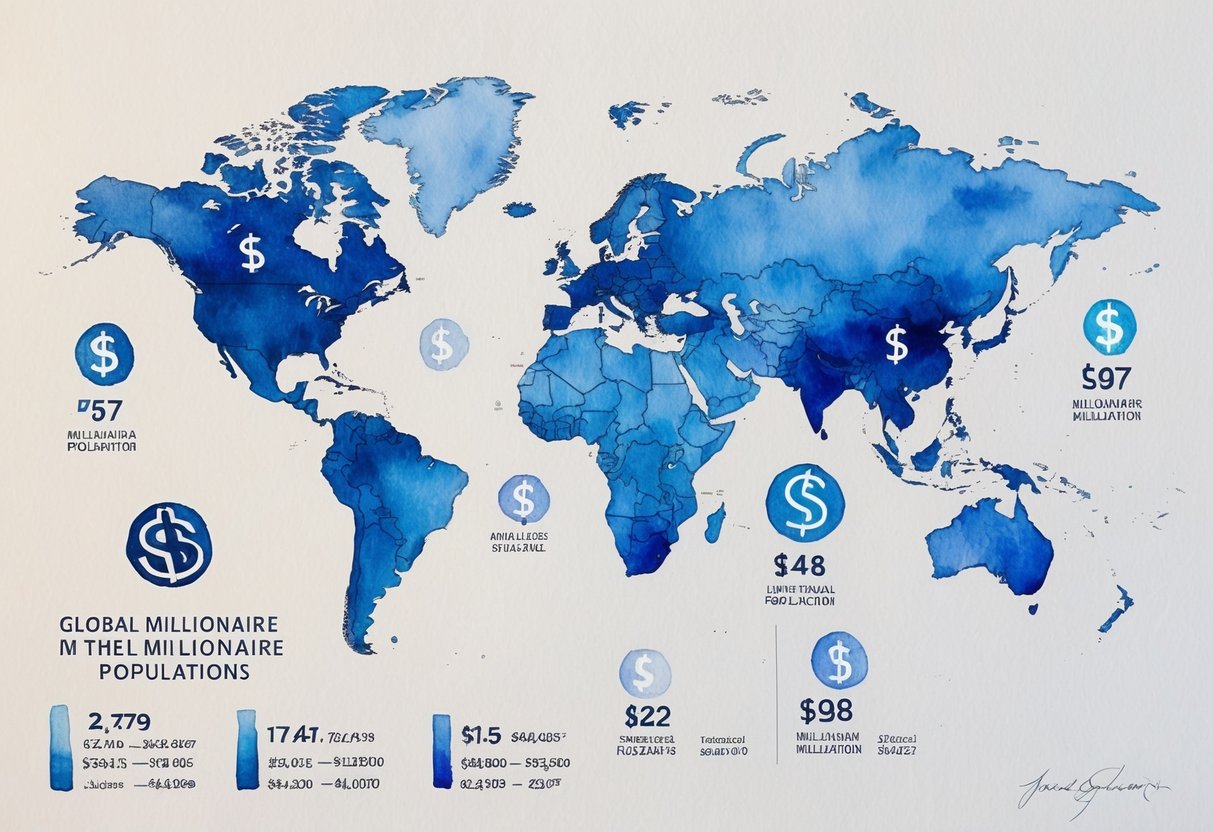
The financial world relies on trusted reports to understand wealth trends. I’ve found two key players that provide valuable insights into global millionaire populations and wealth distribution.
Analysis of UBS and Credit Suisse Wealth Reports
UBS and Credit Suisse are giants in the wealth management industry. Their annual reports offer a goldmine of information. The UBS Global Wealth Report is a treasure trove of data on worldwide wealth trends. It breaks down wealth distribution by region and income level.
Did you know that in 2022, millionaires held $208.3 trillion in wealth? That’s a staggering 45.8% of global wealth! The report also predicts future trends. By 2027, global wealth might reach $629 trillion. That’s a 38% increase in just five years!
Significance of Liquid Investable Wealth
Liquid investable wealth is the key to financial freedom. It’s the money you can quickly turn into cash for new opportunities. UBS focuses on this crucial metric in their reports.
Why does this matter to you? Liquid wealth gives you options. It’s your ticket to seizing unexpected chances in the market. The more liquid wealth you have, the more flexible your financial strategy can be. Are you building your liquid wealth or letting it stagnate in low-yield accounts?
Regional Millionaire Populations
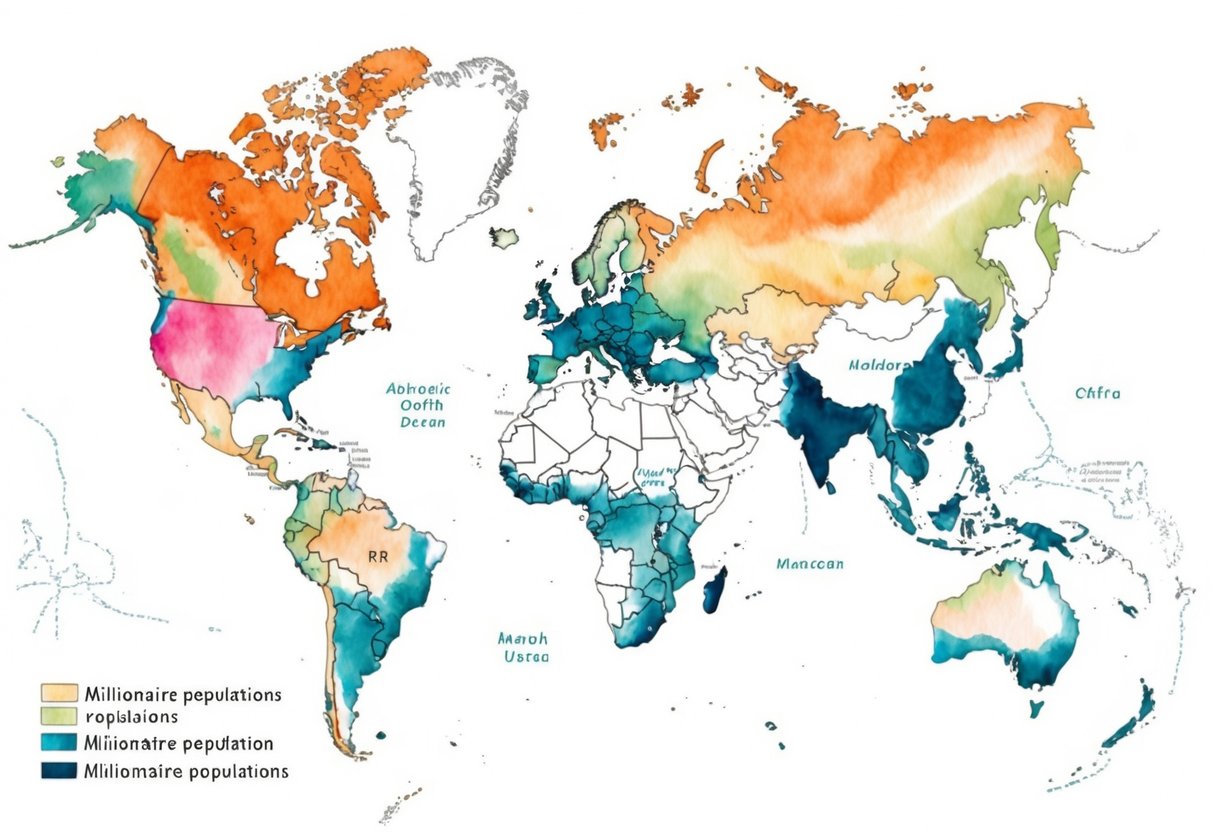
The global millionaire landscape is shifting dramatically. Asia’s rapid wealth creation and emerging financial hubs are reshaping the world’s millionaire map.
Growth of Millionaires in Asia
Asia’s millionaire population is booming. China alone has 860,000 millionaires, more than some entire countries! I’ve watched this trend accelerate over the years.
Hong Kong, Taiwan, South Korea, and Singapore are minting millionaires at breakneck speed. Why? Booming tech sectors, savvy entrepreneurs, and global trade connections.
But it’s not just the usual suspects. Second-tier cities like Hangzhou are becoming millionaire factories. Have you considered the opportunities in these rising stars?
Upcoming Wealth Hubs
The Middle East is flexing its financial muscles. Dubai, Abu Dhabi, and Riyadh are attracting global wealth like moths to a flame. Tax incentives, luxury lifestyles, and business-friendly policies are the secret sauce.
Europe’s got some tricks up its sleeve too. Monaco’s long been a playground for the ultra-rich. But have you heard about Malta? This tiny Mediterranean island is becoming a hotspot for tech millionaires and crypto wealth.
I’m keeping my eye on these emerging markets. Are you? The next generation of millionaires might just come from places you least expect.
Wealth Migration and Lifestyle
Rich people are on the move, and it’s changing the global landscape. Let’s explore why they’re packing up and where they’re headed.
Factors Influencing Wealth Migration
Why are millionaires relocating? It’s not just about sunny beaches. Economic uncertainties play a big role. I’ve seen how political instability, high taxes, and strict regulations can push the wealthy to seek greener pastures.
Quality of life is another key factor. Who doesn’t want better healthcare, education, and safety? And let’s not forget business opportunities. Many millionaires are entrepreneurs looking for new markets to conquer.
Climate change is also on their minds. Some are moving to places less affected by natural disasters. Others are drawn to countries with strong environmental policies.
Popular Destinations for Wealthy Individuals
Where are these millionaires heading? I’ve noticed some clear favorites emerging.
Dubai and Abu Dhabi are topping the lists. These UAE cities offer tax benefits, luxury living, and a strategic location for global business.
Singapore is another hotspot. Its stable government, low crime rates, and world-class education system are major draws. Australia is also gaining popularity, especially among Asian millionaires.
Europe hasn’t lost its charm either. Monaco, with its zero income tax policy, remains a favorite. Malta is rising in the ranks, thanks to its “Golden Visa” program.
What about you? Have you considered where you’d move if money was no object?
Economic and Social Impacts of Millionaire Populations
The rise of millionaire populations around the world has far-reaching effects on economies and societies. Let’s explore how this wealth concentration shapes markets and communities.
Effects on Local and Global Markets
Have you ever wondered how a growing millionaire class impacts the economy? It’s not just about fancy cars and big houses. Millionaire wealth now accounts for 45.8% of global wealth, a staggering increase from just a decade ago. This concentration of capital has profound effects on markets.
In my experience, local real estate often sees the first impact. Luxury properties boom, driving up prices across the board.
But it doesn’t stop there. High-end retail, fine dining, and premium services all expand to cater to this wealthy clientele.
Globally, we see millionaires influencing stock markets and investment trends. Their choices can make or break emerging industries. Think about how early investors shaped the tech boom. It’s a powerful reminder of how wealth can steer entire economies.
Social Implications of Concentrated Wealth
But what about the rest of us?
The growth of millionaire populations often comes hand-in-hand with increasing wealth inequality.
I’ve seen this create tension in communities, where longtime residents get priced out of their neighborhoods.
On the flip side, philanthropy can increase. Millionaires often fund educational initiatives, healthcare improvements, and cultural institutions. But is this a fair trade-off for systemic inequality?
Another trend I’ve noticed is the rise of investment migration programs.
Wealthy individuals from developing countries seek better opportunities abroad, leading to brain drain in their home nations. This mobility of millionaires reshapes not just economies, but entire social structures.