
Money talks, but who’s listening? When we look at millionaires by race and ethnicity, we uncover some eye-opening patterns about wealth in America.
I’ve always been fascinated by how different groups build and maintain wealth. It’s not just about who has the most, but how they got there.
The wealth gap between racial and ethnic groups in the U.S. is striking, with White and Asian households holding significantly more wealth than Black and Hispanic households. This divide isn’t new, but it’s changing.
During the pandemic, we saw some interesting shifts. Have you ever wondered why some groups seem to bounce back faster from economic shocks?
Let’s dig into the numbers. They tell a story of historical inequalities, different financial habits, and varying access to wealth-building opportunities. But it’s not all set in stone.
I believe understanding these patterns is the first step to creating a more level playing field. Are you ready to see where you stand and how you can use this knowledge to your advantage?
Key Takeaways
- Wealth disparities between racial and ethnic groups persist, reflecting historical and systemic factors
- Asset ownership and financial patterns vary significantly across different racial and ethnic communities
- Understanding wealth gaps can inform strategies for building personal wealth and addressing broader economic inequalities
Historical Context of Wealth Disparities
The racial wealth gap in America has deep roots that stretch back generations. Let’s explore how past policies and economic events have shaped the financial landscape we see today.
Effects of Redlining and Discriminatory Policies
Have you ever wondered why some neighborhoods thrive while others struggle? The answer often lies in past housing policies.
Redlining, a practice that denied services to certain areas based on racial makeup, had a huge impact.
Banks refused loans in “high-risk” neighborhoods, mostly where Black families lived. This made it hard for them to buy homes and build wealth. Even when redlining became illegal, its effects lingered.
I’ve seen how this plays out in real estate. Homes in formerly redlined areas are often worth less today. This means less wealth to pass down to kids and grandkids.
Impacts of the Great Recession on Racial Wealth
Remember 2008? The Great Recession hit everyone hard, but some groups suffered more. Black and Hispanic families lost a bigger chunk of their wealth than white families.
Why? Many had been pushed into subprime mortgages, even when they qualified for better loans. When the housing market crashed, they were left underwater.
I watched friends lose homes they’d worked years to buy. Recovery was slower in minority communities too. By 2019, white wealth had bounced back, but Black and Hispanic wealth was still below pre-recession levels.
Intergenerational Wealth and Inheritance
Ever notice how some families seem to always land on their feet financially? That’s often the power of inherited wealth at work.
White families are more likely to receive inheritances. They also tend to get larger amounts. This gives each generation a head start.
I’ve seen how this plays out in my own life. Friends whose parents could help with college or a down payment on a house got ahead faster. It’s not just about working hard - it’s about starting from a stronger position.
Racial disparities in homeownership play a big role too. Homes are often a family’s biggest asset. When parents own a home, they’re more likely to leave something behind for their kids.
Overview of Wealth Among Racial and Ethnic Groups
Wealth in America isn’t distributed evenly. I’ve seen stark differences in how different racial and ethnic groups build and maintain their assets. Let’s explore these disparities and what they mean for financial success.
Comparison of Median and Mean Wealth
When I look at the numbers, they tell a compelling story. The median wealth of White households far outpaces that of other groups. Why is this important? It shows us the typical family’s financial situation.
But median doesn’t tell the whole story. Mean wealth often skews higher due to ultra-wealthy individuals. This gap between median and mean is especially wide for White and Asian households.
Here’s a quick breakdown:
- White households: Highest median and mean wealth
- Asian households: Close second, with high mean wealth
- Hispanic and Black households: Significantly lower on both measures
What causes these differences? It’s a mix of historical factors, income gaps, and inheritance patterns.
Distribution of Assets Among Racial Groups
Now, let’s talk about who owns what. The distribution of assets in America is eye-opening. White households control the lion’s share of wealth, despite making up a smaller portion of the population than in past decades.
Did you know that in 2022:
- White households: 64% of all households, but held 81% of assets
- Other races (including Asian): 10% of assets
- Black and Hispanic households: Smaller slices of the pie
This uneven distribution affects everything from homeownership to investment opportunities. It’s not just about having money – it’s about the power to grow wealth over time.
Why does this matter to you? Understanding these gaps can help you position yourself for greater financial success, regardless of your background.
Financial Patterns and Asset Ownership
Wealth building isn’t just about income - it’s about how we use our money to create lasting value. Let’s explore the key areas where different racial and ethnic groups are building their wealth.
Homeownership Rates and Home Equity
Owning a home is often seen as the cornerstone of wealth. But who’s really benefiting? White households lead in homeownership, with 73% owning homes compared to just 45% of Black households.
Why does this matter? Home equity is a major source of wealth. The average white homeowner has $230,000 in home equity, while Black homeowners average $130,000.
But here’s the kicker: even when minorities own homes, they often face lower appreciation rates. This creates a compounding effect on wealth disparities over time.
Retirement Accounts and Stock Ownership
Ever wonder why some people seem to grow their wealth effortlessly? The secret often lies in retirement accounts and stocks.
White and Asian households are more likely to own stocks, either directly or through retirement accounts. In fact, 61% of white households own stocks compared to just 31% of Black households.
Why is this important? Stock ownership provides exposure to market gains and compounds wealth over time. It’s not just about savings - it’s about making your money work for you.
Retirement accounts also offer tax advantages, further boosting wealth accumulation. Yet many minority households miss out on these benefits.
Business Equity and Capital Gains
Want to know where the real wealth is built? It’s often in business ownership and capital gains.
White households are more likely to own businesses and benefit from capital gains. About 15% of white households own business equity, compared to just 7% of Black households.
The value of these businesses also differs significantly. The median value of white-owned businesses is $50,000, while Black-owned businesses average just $15,000.
Capital gains from investments and property sales further widen the wealth gap. These gains often come with tax advantages, compounding wealth disparities over time.
Debt and Financial Security by Race
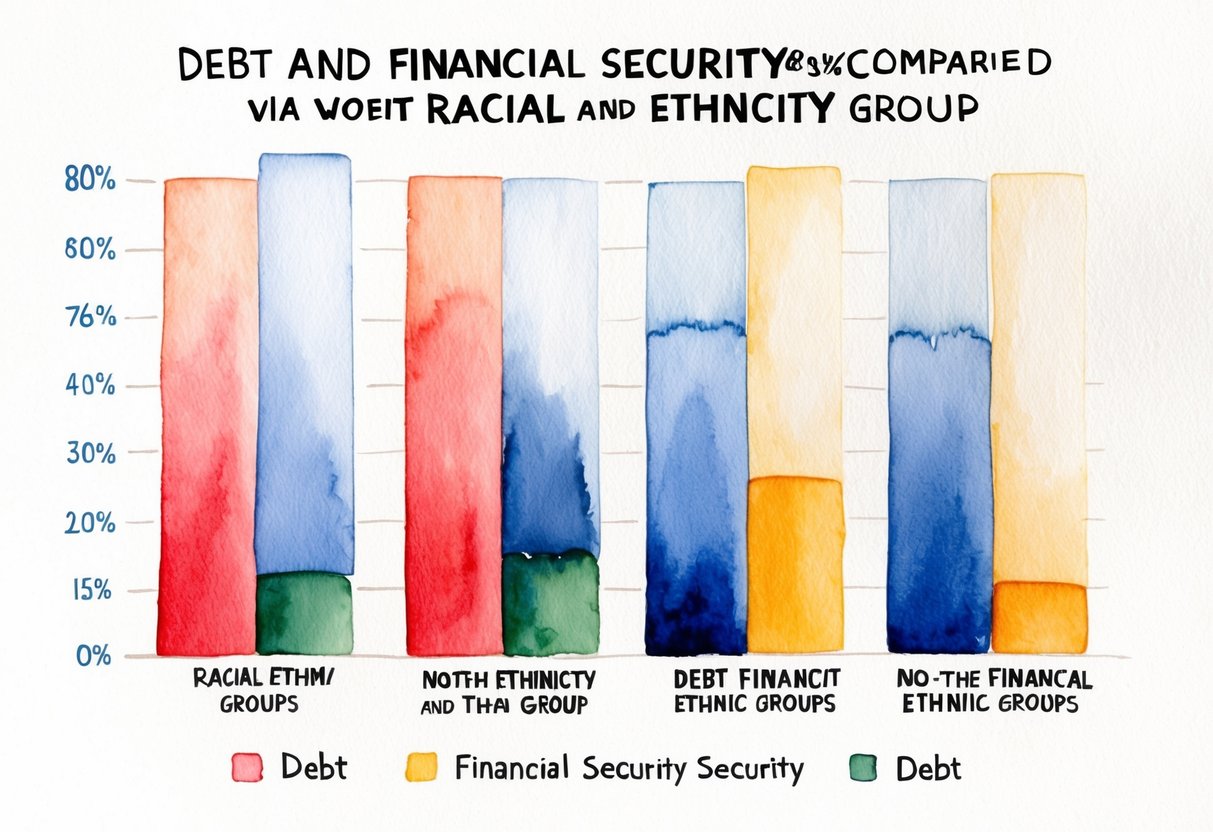
Racial disparities in debt and financial security can significantly impact long-term wealth building. Let’s explore how different types of debt and savings patterns affect various racial and ethnic groups.
Understanding Unsecured vs. Secured Debt
When it comes to debt, not all types are created equal. Unsecured debt, like credit cards, can be a major drain on wealth. On the other hand, secured debt, such as mortgages, can help build assets over time.
Did you know that White households are more likely to have assets like checking and savings accounts compared to other racial groups? This financial cushion can provide a buffer against unexpected expenses.
But here’s the kicker: even when minorities have these accounts, the balances are often much lower. This gap in liquid assets can make it harder to weather financial storms.
Student Loans and Minority Households
Student loans are a hot topic, and for good reason. They can be a heavy burden, especially for minority families trying to climb the economic ladder.
Black and Hispanic students often take on more student debt than their White counterparts. Why? Many come from families with less wealth to begin with, so they have to borrow more to pay for college.
Here’s a sobering thought: this debt can follow them for decades, making it harder to save for a home, start a business, or invest for the future. It’s a cycle that can be tough to break.
Emergency Savings and Economic Stability
Racial wealth gaps mean that many minority households have less in emergency savings. This leaves them more vulnerable to financial shocks like job loss or medical emergencies.
Without this buffer, many are forced to turn to high-interest debt or payday loans. It’s like trying to climb a mountain with weights on your ankles. How can we level the playing field?
Building emergency savings is crucial for economic stability. It’s not just about having money in the bank – it’s about peace of mind and the ability to seize opportunities when they arise.
Wealth Inequality and Economic Outcomes
Wealth inequality shapes economic outcomes in profound ways. I’ve seen how it impacts income growth, education, and even pandemic recovery. Let’s explore these crucial factors.
Income Growth and Wealth Accumulation
Income growth and wealth accumulation are closely linked, but they don’t always move in lockstep. I’ve noticed that wealthier households tend to see faster wealth growth compared to lower-income families. Why? They often have more diverse investments and better access to financial services.
For example, a family with stocks and real estate might benefit from market gains, while a family living paycheck-to-paycheck struggles to save. This creates a snowball effect. The rich get richer, while others fall behind.
But here’s a question: How can we break this cycle? I believe financial education is key. Learning to invest wisely, even with small amounts, can make a big difference over time.
Higher Education and Economic Mobility
Higher education has long been seen as a path to economic mobility. But is it still the golden ticket?
I’ve found that college graduates generally earn more and accumulate more wealth than those without degrees. However, the rising cost of education is a double-edged sword.
Student loan debt can offset the income benefits of a degree, especially in the early career years.
Here’s something to consider: Are there alternative paths to building wealth?
Trade schools, entrepreneurship, or investing in oneself through skills development can sometimes offer better returns than traditional college routes.
Effects of the COVID-19 Pandemic
The COVID-19 pandemic shook our economic foundations. But did it affect everyone equally?
I’ve observed that the wealth gap widened during this crisis.
Lower-income households, often working in sectors hit hardest by lockdowns, faced job losses and financial strain. Meanwhile, many wealthier individuals saw their assets grow as stock markets rebounded.
This raises an important question: How can we build a more resilient financial system?
I believe diversifying income sources and having emergency savings are crucial steps.
The pandemic also accelerated digital trends. Those able to adapt to remote work or online business models often fared better.
It’s a reminder that in today’s world, financial well-being is closely tied to adaptability and tech-savviness.
Household Wealth and Demographics
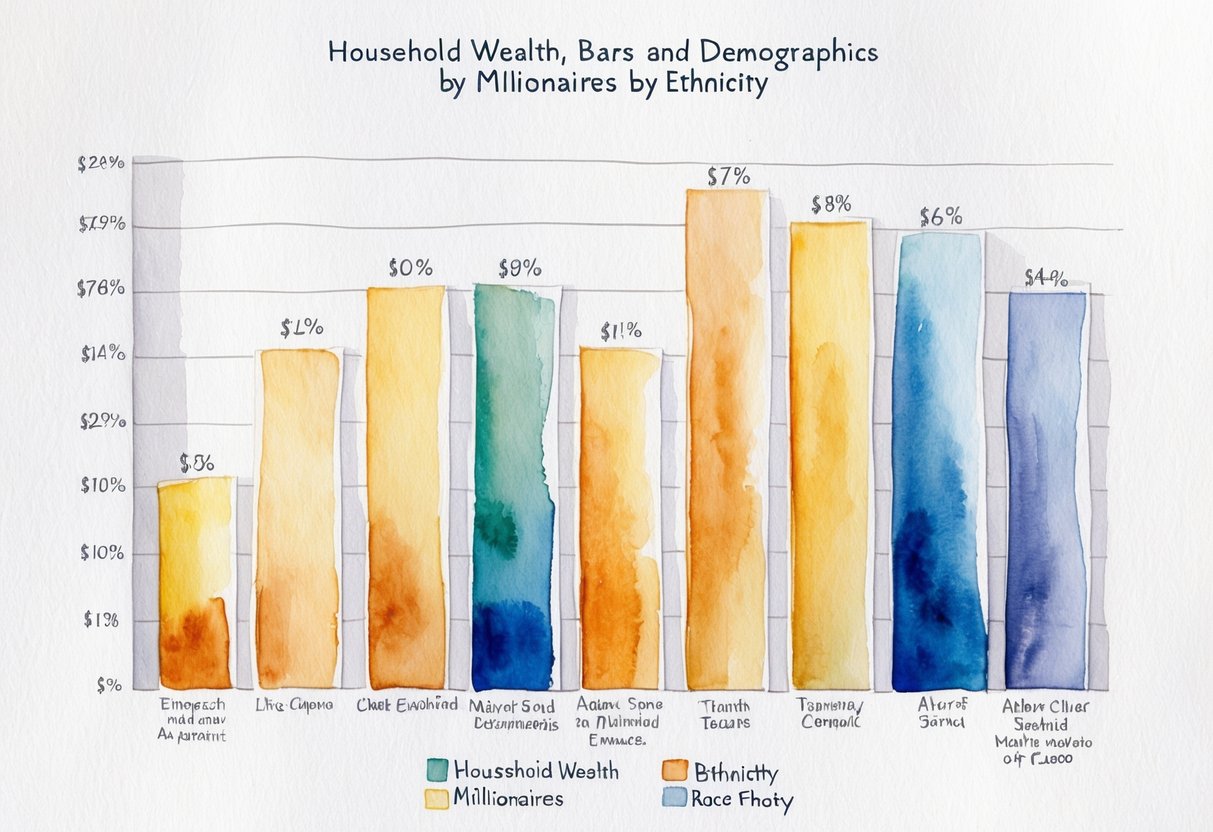
The wealth gap between racial and ethnic groups in the US is stark and persistent. Let’s look at how different demographics stack up financially and what factors contribute to these disparities.
Wealth Status Among White Americans
White households have historically held the most wealth in America. In 2021, households with a White, non-Hispanic head had 10 times more wealth than those led by Black individuals. This gap is huge, isn’t it?
White families tend to have:
- Higher homeownership rates
- More valuable real estate
- Larger retirement accounts
- Greater stock market investments
These advantages compound over time, allowing wealth to grow and be passed down through generations. But is this the whole story? Not quite.
Economic Standing of Black and Hispanic Households
Black and Hispanic families face significant economic hurdles. Why do these disparities persist?
Key factors include:
- Lower incomes
- Less access to credit
- Discrimination in housing and lending
- Fewer inherited assets
The wealth gap has widened since the Great Recession, with Black and Hispanic households struggling to recover.
During the pandemic, these groups saw their wealth grow, but not as much as other demographics.
What can we learn from this? Building generational wealth takes time and often requires overcoming systemic barriers.
Comparing Wealth in Asian and Other Racial Groups
Asian households present an interesting case. On average, they have more wealth than Black and Hispanic families, but less than White households.
Why the difference? Some factors include:
- Higher education levels
- Concentration in high-paying industries
- Cultural emphasis on saving
But it’s not a monolithic group. There’s significant variation among Asian subgroups based on country of origin and immigration status.
Other racial groups, including Native Americans and Pacific Islanders, often face economic challenges similar to Black and Hispanic households. Isn’t it time we addressed these persistent inequalities?
Potential Solutions to Narrow the Wealth Gap
The wealth gap is a complex issue, but there are concrete steps we can take to address it. Let’s explore some key strategies that could make a real difference in narrowing this divide.
Reparations and Systemic Interventions
Reparations are a hot topic, and for good reason. They could be a game-changer in addressing historical injustices. But what exactly would this look like?
One approach could be direct cash payments to descendants of enslaved people. This isn’t just about money - it’s about acknowledging past wrongs and investing in communities.
Another option is targeted investments in education, healthcare, and infrastructure in underserved areas. This could help level the playing field and create more opportunities for wealth building.
But here’s a question: Are reparations enough on their own? I’d argue we need broader systemic changes too.
This might include:
- Reforming the criminal justice system
- Addressing discrimination in lending practices
- Improving access to quality education
Promoting Homeownership and Business Ownership
Homeownership has long been a key path to building wealth. So how can we make it more accessible?
One strategy is expanding down payment assistance programs. This could help more families overcome the initial hurdle of buying a home.
We could also focus on increasing access to credit for underserved communities. Fair lending practices are crucial for closing the homeownership gap.
But what about business ownership? This is another powerful wealth-building tool. Here are some ways to promote it:
- Expanding access to small business loans
- Providing mentorship and training programs
- Creating tax incentives for new businesses in underserved areas
Policy Recommendations for Wealth Equality
Policy changes can have a big impact on wealth equality.
So what specific policies should we consider?
One idea is implementing a baby bonds program. This would provide every newborn with a savings account, with additional funds for low-income families.
Over time, this could significantly reduce wealth disparities.
We could also look at tax reforms.
Progressive taxation and closing loopholes that benefit the wealthy could help level the playing field.
What about minimum wage?
Raising it could provide more income for savings and investment. But is it enough on its own?
Finally, let’s consider policies to protect against economic downturns.
This might include:
- Stronger unemployment benefits
- Improved job training programs
- Measures to prevent predatory lending