
Ever wonder if there’s a smarter way to grow wealth than just sticking with mutual funds and IRAs? Real estate investing in Northern Virginia offers a unique path to building financial security, especially when traditional investments feel slow or shaky.
This area’s strong economy, high demand for housing, and competitive market really open doors for anyone wanting to move beyond the usual stock market playbook.

I’ve noticed a lot of people my age—me included—start to get anxious about saving enough for retirement or covering family expenses down the line. The good news? Investment properties in Northern Virginia aren’t just for the wealthy or real estate pros.
With careful planning and a solid understanding of local market trends, it’s possible to make moves that create long-term income and protect your future.
Key Takeaways
- Northern Virginia’s robust real estate market creates unique investment opportunities.
- Understanding local demand, trends, and risks is critical for real estate investors.
- Regional growth and specific market drivers shape your investment’s potential.
Overview of the Northern Virginia Real Estate Market
Northern Virginia’s real estate market stands out from other areas. It benefits from strong job growth, proximity to Washington, D.C., and high demand for housing.
With a limited supply of homes, this region keeps drawing buyers and investors who want stability and long-term appreciation.
Current Housing Market Trends
What makes Northern Virginia different? I see steady market activity even when other regions slow down. Right now, inventory is tight—far fewer active listings than in years past.
Buyers compete for a small pool of homes. This high demand has caused home prices in many neighborhoods to rise.
Many homeowners don’t want to sell, often hanging on to their low mortgage rates from years ago. Homes that do hit the market tend to sell fast—sometimes in days.
It’s not just about price. Buyers seem willing to pay a premium for move-in ready homes, especially in top school districts or areas with short commutes.
As an investor, these trends matter. Low supply and firm demand create a market where rental properties can deliver solid returns.
Northern Virginia’s stability, backed by government, tech, and health care jobs, gives a sense of security for long-term investment.
Housing Forecast and Regional Growth
Thinking about the future? Many experts expect moderate growth in the Northern Virginia housing market through 2025 and beyond.
Regional market forces—like population growth and business expansion in Fairfax, Arlington, and Alexandria—drive this outlook.
I’ve watched the local economy stay strong, even as national trends shift. The forecast calls for steady price increases, low inventory, and strong competition among buyers and renters.
The expansion of the tech sector and steady federal employment provide a reliable economic base for the region.
If you’re tired of low-interest savings accounts, investing here starts to look pretty appealing. Why rely only on volatile stocks or questionable financial advice?
Real estate in Northern Virginia can offer both appreciation and regular rental income, supported by ongoing growth and stable jobs.
Recent Market Data and Key Metrics
Looking at the numbers, I find some eye-opening stats. According to the Northern Virginia Association of Realtors (NVAR), the residential real estate industry added $17 billion in local economic activity in 2023, supporting over 88,400 jobs.
Key metrics for March 2025:
- Median sold price: Up compared to the previous year
- Average sold price: Also showing steady growth
- Homes sold: Strong but limited by tight inventory
- Active listings: Still historically low
March 2025 showed steady growth in home prices, which points to the market’s continued strength. Low inventory means every listing is valuable.
As an investor, I keep a close eye on these figures. Returns backed by these data points show why Northern Virginia remains a prime place to invest.
Investment Opportunities in Northern Virginia Real Estate

Northern Virginia’s real estate market is growing fast. Home prices keep climbing, and rental demand stays strong.
Each investment choice here can impact your wealth, security, and peace of mind.
Types of Properties to Consider
When I look at Northern Virginia, I see options for different investment styles. Single-family homes attract those who want stable tenants and long-term growth.
Families often seek good school districts, which keeps demand high for these homes. Condos and townhomes, meanwhile, offer easier upkeep and attract younger renters or first-time buyers who care more about location than space.
Multi-family buildings can deliver stronger cash flow than single-family options. If you want to scale up, these let you multiply rental income and spread out risk.
Another route? Fix-and-flip homes. When I spot undervalued properties needing updates, I can turn a profit quickly—especially in sought-after neighborhoods.
Check out this local guide to getting started for more details.
Emerging Investment Hotspots
I don’t have to look far to find areas where value is trending up. Arlington, Reston, and Tysons Corner lead the way.
These neighborhoods benefit from tech company growth, new transit lines, and a steady flow of job seekers. Even pockets of Alexandria and Fairfax are seeing new interest. New apartment complexes and mixed-use projects often signal rising potential for investors.
When Amazon opened its HQ2 in Crystal City, property values in nearby communities jumped. Major business investments can have a huge influence on real estate activity.
You can find more practical tips in this collection of landlord articles.
Here’s a glance at some active markets:
Area
Key Drivers
Recent Growth
Arlington
Tech, Metro Access
Strong appreciation
Reston
Business Hubs
High rental demand
Tysons Corner
Redevelopment
Job additions
Economic Impact of Real Estate Investments
When I invest in Northern Virginia real estate, I’m not just buying a property. I’m part of the region’s growth story.
Real estate activity here supports construction jobs, property management firms, and small businesses that serve new residents. Rising home prices boost local tax revenue, helping fund schools and transportation projects.
Every new home, rental, or renovation adds to this cycle. Job growth in tech and business clusters keeps demand up for both rentals and homeownership.
Even a single rental or flip can create ripples. The economic impact stretches beyond my property line to the whole neighborhood.
There’s real power in participating in this expansion—especially when traditional investments have left me feeling unsure.
Market Drivers and Challenges for Investors

Navigating Northern Virginia real estate isn’t always easy, even for seasoned investors. I see both big opportunities and clear headwinds shaping today’s market.
Housing Inventory Shortage and Supply
Have you checked out the homes for sale lately? Many investors feel squeezed by the tight housing inventory shortage.
Available listings often sit below what most would call comfortable. Months of supply—a metric showing how fast homes would sell if no new listings arrived—usually stays low, sometimes under two months.
The local job market keeps drawing people from around the country, especially with tech and government work nearby. That demand keeps supply tight.
For investors, this means more competition and fewer “deals.” But let’s be honest—scarcity also supports higher rents and reduces vacancy risk.
Here’s the trade-off: little inventory means you must act fast, but you might collect better returns if you do.
Mortgage Rates and Financing Landscape
Rising mortgage rates have changed how investors look at deals. Interest rates now hover higher than in recent memory, putting pressure on returns.
Cash flow calculations that worked five years ago might not hold up now. I see buyers pausing or focusing on creative financing.
Adjustable-rate mortgages, seller financing, and even direct partnerships are back in play. It’s risky to ignore what’s happening in the broader market—especially with the stock market’s recent volatility.
Higher rates mean higher payments and less room for error. If you want leverage, you’ve got to work harder to make the numbers work.
Price Increases and Appreciation Trends
Do you remember when homes here were thousands less? In March 2025, the average home price jumped to about $680,000.
That’s not a typo. Appreciation has been strong, partly because low supply meets big demand.
Price increases create wealth for those who already own property. But fast appreciation can cut out newer investors or raise the stakes for mistakes.
Rents have gone up, but not always as quickly as home prices. Smart investors look beyond sticker shock.
I study which neighborhoods still have room for growth and which numbers actually work—because not every rising market offers real value.
Key Metrics to Track in the Northern Virginia Market
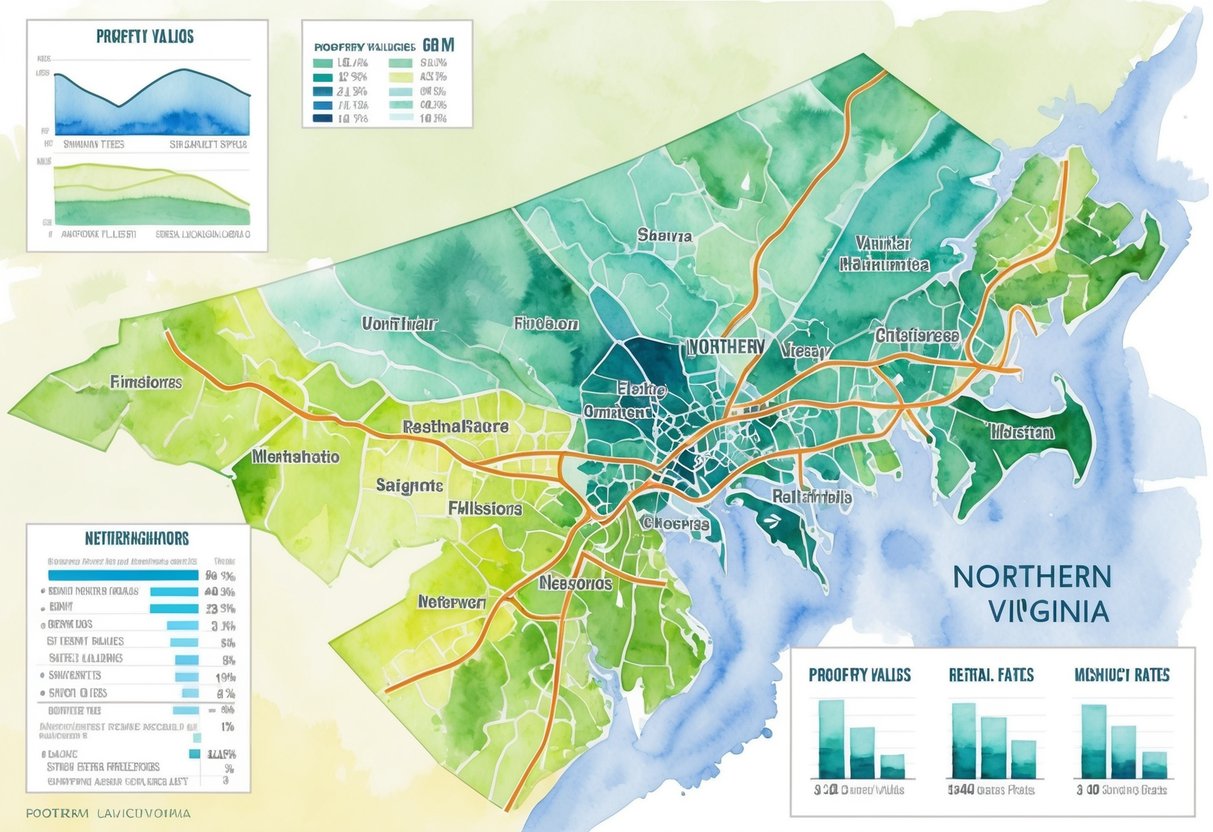
I don’t rely on guesswork—I follow the numbers. Wise investors know that measuring the right facts leads to better decisions.
That’s why I focus on data like market velocity, how long homes sit unsold, and what buyers are doing right now.
Days on Market and Market Velocity
Days on market (DOM) tracks how fast homes sell after being listed. A low DOM tells me demand is high.
A high DOM? It means buyers might be pausing. This one number is a window into the true speed of the market.
For example, when Northern Virginia homes sell within a couple of weeks, I see strong demand. When they linger for a month or more, I start asking: are prices too high, or are buyers waiting for a better deal?
Market velocity also holds clues about negotiation power. If homes move fast, sellers might get close to their asking price—or even above it.
But with slower sales, buyers can negotiate better deals. I always watch DOM together with the median sold price and average sold price to see if momentum matches value.
Sometimes a rising price with a fast DOM signals an overheated market, but it could also mean more opportunity if you know how to spot value.
New Pending Sales and Listing Activity
Pending sales really show buyer intent. They reveal contracts signed, not just homes listed.
I look for healthy new pending sales numbers, because that proves buyers are making offers—not just window shopping. A sharp rise in new pending sales, especially when matched by a steady stream of active listings, tells me confidence is strong.
But if pending sales drop while active listings climb, it’s a red flag. Northern Virginia’s recent market update notes an increase in active listings even as new listings decline.
For me, it’s critical to track both buyer action and new inventory. I don’t ignore these statistics.
I use new pending sales, homes sold, and active listings data to spot when a shift is coming. Are buyers still signing contracts at the same pace?
Is available inventory stacking up? These clues often show up before headline prices change, and that’s where I find my advantage.
Regional Factors Impacting Real Estate Investing

Northern Virginia’s real estate market gets its fuel from unique economic strengths. Job creation, population trends, and location near major economic centers all push demand and shape investment opportunities in direct and very real ways.
Job Growth and Economic Development
I pay close attention to job growth because it’s the engine behind real estate demand. Northern Virginia has seen a steady stream of high-paying jobs, especially in tech, defense, and government contracting.
Major employers include companies like Amazon, which chose Arlington for its HQ2. That led to a surge in relocations, pushing demand for both rentals and single-family homes.
There’s also a remarkable growth in tech start-ups and established businesses expanding their footprint in the region. For investors, more job additions often translate to a consistently strong rental market.
Regional growth is closely linked to economic impact. Local shops, services, and supporting industries all benefit, creating ripple effects for property owners like me.
Stable and rising employment protects against sudden declines in home prices. It keeps my investments safer during periods when other markets might falter.
Would you rather invest where jobs are shrinking, or where they’re growing faster than most of the country? I know my answer.
Population Growth and Demographics
Nothing moves the real estate needle like people moving in. Northern Virginia’s population keeps climbing every year, driven partly by job seekers and partly by families attracted to good schools and quality of life.
The majority of new residents are skilled professionals, often with kids, which creates long-term needs for housing. With this steady population growth, homes don’t sit on the market for long.
When inventory is limited, it tips the scales even further—prices tend to go up or at least stay steady, making buy-and-hold rental properties especially attractive. Demographic trends also show a healthy mix of younger workers and established professionals, providing a broad pool of potential tenants or buyers.
These trends are measurable and persistent. If you’re like me, you want your investments protected by real demand, not just speculation.
Influence of Nearby Economic Hubs
Proximity to Washington, D.C. is something investors often ignore when they’re chasing the next big thing. Honestly, being close to such a powerful economic hub makes Northern Virginia unusually resilient.
Thousands of federal jobs bring stability. Demand for housing spills over the Potomac River into Virginia communities, which keeps things interesting.
A lot of professionals with D.C. jobs end up living in Northern Virginia for the lower taxes and better amenities. There’s also a steady influx of international folks working in science, tech, and defense.
Cities like Tysons, Arlington, and Reston have turned into economic engines themselves. The region doesn’t just orbit D.C.—it’s got several centers of gravity now.
These connections to D.C. and other nearby economic hubs give investors like me options outside any single industry. That kind of diversification? It feels like a cushion when one sector stumbles—who wouldn’t want that for long-term security?