
Fort Wayne, Indiana is a hidden gem for real estate investors. I’ve seen many cities come and go as investment hotspots, but Fort Wayne has stayed strong.
Why? It’s simple - the numbers don’t lie. The median home price in Fort Wayne is $225,000, with values increasing by 6.6% annually.
This growth is steady and sustainable, not the kind of bubble that keeps smart investors up at night.
But it’s not just about the prices. Fort Wayne’s economy is diverse and growing. I’ve watched as new businesses set up shop and bring jobs to the area.
This means more people looking for homes to rent or buy. As an investor, that’s music to my ears. Have you ever thought about how population growth affects your real estate investments?
Fort Wayne offers opportunities for both new and seasoned investors. Whether you’re looking to flip houses, become a landlord, or explore commercial real estate, there’s something here for everyone.
I’ve found that the key is to start small, learn the market, and grow your portfolio over time. What’s stopping you from taking that first step?
Key Takeaways
- Fort Wayne’s real estate market shows steady growth with affordable entry points
- Diverse investment strategies cater to different risk levels and goals
- Building a network and understanding local regulations are crucial for success
Understanding the Fort Wayne Real Estate Market
Fort Wayne’s real estate market is dynamic and offers promising opportunities for investors. The city’s economic landscape, population growth, and housing trends create a unique environment for real estate ventures.
Assessing the Economic Landscape
Fort Wayne’s economy is on the rise. The city has seen growth in manufacturing and logistics sectors, driving demand for housing.
I’ve noticed that this economic diversity makes Fort Wayne more resilient to market fluctuations.
Fort Wayne’s development in key industries is a positive sign for real estate investors. Why? Because job growth often leads to increased housing demand.
The city’s unemployment rate is lower than the national average. This stability attracts new residents and businesses, further boosting the real estate market.
Population Growth and Housing Demand
Fort Wayne’s population is growing steadily. As the second-largest city in Indiana with over 272,000 residents, it’s attracting newcomers looking for affordable living and job opportunities.
This population growth directly impacts housing demand. More people mean more potential buyers and renters. It’s simple supply and demand economics at play.
I’ve seen how this growth affects different neighborhoods. Some areas are experiencing rapid development, while others offer untapped potential for savvy investors.
Analysis of Median Home Prices and Days on Market
Fort Wayne’s housing market is competitive, but still affordable compared to many other cities. The median home price in Fort Wayne was $220,000 as of last month, up 4.8% from the previous year.
What does this mean for investors? There’s room for appreciation, but properties are still within reach for many buyers.
Days on market is another crucial metric. Homes in Fort Wayne are selling quickly, indicating high demand.
This fast-paced market requires investors to be prepared and act decisively.
I’ve found that some neighborhoods offer better value than others. It’s essential to research local trends and work with a knowledgeable real estate agent to find the best deals.
Key Investment Strategies in Fort Wayne
Fort Wayne offers exciting opportunities for real estate investors. I’ve found several strategies that can help you build wealth and generate income in this market.
Flipping Houses for Profit
Flipping houses is a popular strategy in Fort Wayne. I’ve seen investors buy undervalued properties, renovate them, and sell for a profit. The key is finding the right deals.
Look for homes in up-and-coming neighborhoods. Focus on cosmetic updates that boost value without breaking the bank. Kitchens and bathrooms often give the best return on investment.
I recommend working with a local real estate agent to find off-market deals. They can help you spot properties with potential before they hit the MLS.
Be prepared to move quickly when you find a good deal. Have your financing lined up in advance. A hard money lender can help you close fast if needed.
Building Wealth through Wholesaling
Wholesaling is another strategy I’ve used successfully in Fort Wayne. It’s a great way to get started with little cash or credit.
The process is simple: Find a motivated seller, get the property under contract, then assign that contract to another investor for a fee. You make money without ever owning the property.
Networking is crucial for wholesaling. Join local real estate investor groups to meet potential buyers. Build a buyers list so you can quickly sell deals when you find them.
Marketing is key to finding motivated sellers. I’ve had success with direct mail campaigns and driving for dollars. Be persistent - it often takes multiple touches to get a response.
Optimizing Returns with Rental Properties
Rental properties provide steady cash flow and long-term appreciation. Fort Wayne’s strong rental market makes this an attractive option.
Look for properties in areas with good schools and low crime rates. These tend to attract long-term tenants. Multi-family properties can offer higher returns but require more management.
Consider using a property management company to handle day-to-day operations. This frees up your time to focus on finding more deals.
Leverage is your friend with rentals. Use bank financing to control more properties with less of your own cash. Just be sure to maintain adequate reserves for repairs and vacancies.
Financing Your Real Estate Investments
Finding the right funding for your real estate deals in Fort Wayne can make or break your success as an investor. Let’s explore some key strategies to get the money you need.
Utilizing Private and Hard Money Lenders
I’ve found that private and hard money lenders can be game-changers for real estate investors in Fort Wayne. These lenders often move faster than banks and are more flexible with their terms.
Have you considered tapping into your network for private loans? Friends, family, or local business owners might be willing to lend money for a solid return.
Hard money lenders specialize in real estate deals. They focus more on the property’s value than your credit score. This can be great for fix-and-flip projects or when you need to move quickly on a deal.
Remember, these loans usually have higher interest rates and shorter terms. But used wisely, they can help you seize opportunities you might otherwise miss.
Securing Funding for Investment Properties
When it comes to long-term real estate investments in Fort Wayne, traditional financing often makes sense. I recommend building relationships with local banks and credit unions. They may offer better rates and terms for investment properties than big national banks.
Have you looked into FHA loans for multi-family properties? If you’re willing to live in one unit, you can often buy a duplex or fourplex with a low down payment. This strategy can jumpstart your real estate portfolio.
Don’t overlook creative financing options. Seller financing or lease options can sometimes work when traditional loans aren’t available. The key is to stay flexible and always be on the lookout for innovative funding solutions.
Networking and Building Relationships in Real Estate

Making connections and building relationships is crucial for success in Fort Wayne’s real estate market. I’ve found that networking can open doors to new opportunities and valuable insights.
Leveraging the Fort Wayne REIA Community
Have you ever wondered where to find like-minded real estate investors? The Fort Wayne Real Estate Investors Association (REIA) is a goldmine for networking. I’ve attended their meetings and can tell you they’re worth your time.
These events happen regularly, usually on Saturdays. It’s a great place to:
- Meet potential investment partners
- Learn about local market trends
- Share ideas with experienced investors
Don’t forget to bring your business cards! The connections you make here can lead to joint ventures or even private funding opportunities.
Connecting with Local Real Estate Experts
Why reinvent the wheel when you can learn from those who’ve already succeeded? Fort Wayne has a wealth of real estate experts eager to share their knowledge.
I’ve found that local real estate investing groups on Facebook are excellent places to start. Here, you can:
- Ask questions about specific neighborhoods
- Get recommendations for reliable contractors
- Stay updated on local real estate laws and regulations
Have you considered attending real estate seminars in Fort Wayne? These events often feature successful local investors who can provide invaluable insights into the market.
Remember, every conversation is an opportunity to learn and grow your real estate network.
Legal and Regulatory Considerations for Landlords

As a landlord in Fort Wayne, I’ve learned that understanding the legal landscape is crucial. It can make or break your real estate investing journey. Let’s explore two key areas that every landlord should know inside and out.
Understanding Foreclosure Proceedings
Have you ever wondered what happens when a property goes into foreclosure? In Indiana, it’s a process that can take several months. The lender must file a lawsuit and get a court order before selling the property. As an investor, this knowledge can be powerful.
Here’s a quick breakdown of the foreclosure timeline in Indiana:
- Notice of default (after 3 months of missed payments)
- Lawsuit filed (typically 30 days after notice)
- Judgment (usually 1-2 months after lawsuit)
- Sheriff’s sale (at least 3 months after judgment)
Remember, during this time, there might be opportunities for you as an investor. Could you negotiate with the homeowner? Or perhaps buy the property at the sheriff’s sale?
Navigating Landlord-Tenant Laws in Indiana
Did you know that Indiana law favors landlords more than many other states? It’s true, but that doesn’t mean we can ignore our responsibilities.
Prompt response to maintenance issues is key to avoiding legal troubles.
What are some crucial points to remember?
- Security deposits must be returned within 45 days of lease end
- No limit on late fees, but they must be reasonable
- Tenants have the right to “repair and deduct” if you fail to make necessary repairs
I always recommend joining the Fort Wayne Real Estate Investors Association. It’s a great place to network and stay updated on local laws and regulations.
After all, isn’t it better to learn from others’ experiences than make costly mistakes yourself?
Exploring Alternative Real Estate Investment Options
Fort Wayne offers diverse real estate investment opportunities beyond traditional methods. Let’s look at some exciting alternatives that could boost your portfolio and cash flow.
Investing in Airbnb and Other Short-term Rentals
Have you considered the potential of short-term rentals in Fort Wayne? Airbnb and vacation rentals can provide higher rental income than long-term leases. I’ve seen investors turn ordinary properties into lucrative short-term stays.
Fort Wayne’s growing tourism sector makes this option attractive. Think about it - events, conferences, and sports tournaments bring visitors year-round. Your property could cater to these needs.
But remember, short-term rentals require more hands-on management. You’ll need to handle frequent turnovers, cleaning, and guest communication.
Is the extra work worth the potential higher returns? That’s a question only you can answer.
Examining Traditional Vs. Non-traditional Investment Routes
Traditional real estate investing usually means buying properties to rent out long-term or flip for profit. But what if I told you there are other ways to get into the Fort Wayne market?
Alternative investments like real estate crowdfunding or REITs (Real Estate Investment Trusts) let you invest without directly owning property. These options can be less hands-on and require less capital upfront.
Fort Wayne’s real estate market is growing. This growth creates opportunities in both traditional and non-traditional routes. The key is finding what fits your goals and risk tolerance.
Have you thought about real estate syndications? They allow you to pool resources with other investors for larger projects. This could be a way to access bigger deals in Fort Wayne’s commercial sector.
Analyzing Investment Property Metrics
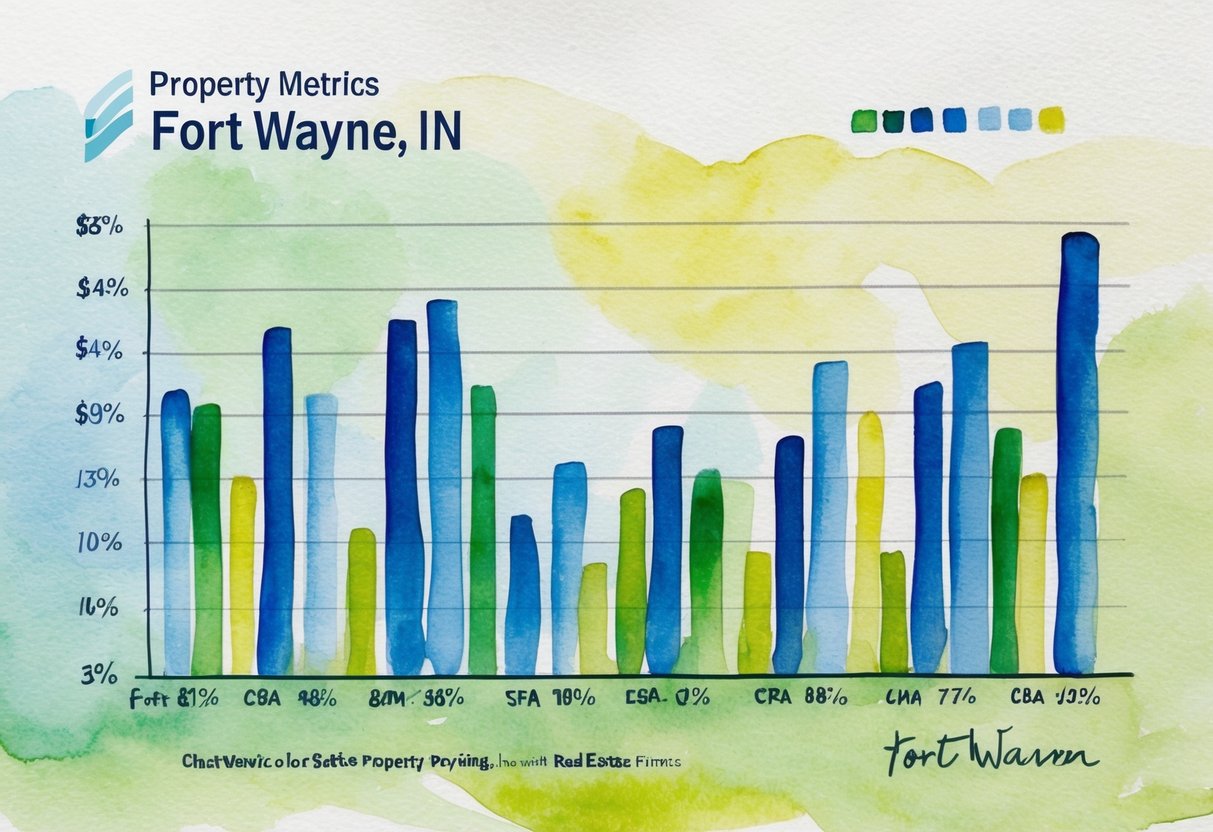
Knowing how to analyze investment property metrics is crucial for making smart real estate decisions in Fort Wayne. Let’s look at two key metrics that can help you evaluate potential investments and maximize your returns.
Interpreting Cap Rates for Investment Decisions
Cap rates are a vital tool for assessing property values and potential returns. In Fort Wayne, I’ve found that cap rates typically range from 5% to 8% for residential properties. Here’s how to use them:
A higher cap rate usually means higher risk but potentially better returns. For example, a property with an 8% cap rate might be in a less desirable area but could generate more cash flow. On the flip side, a 5% cap rate might indicate a safer investment in a prime location.
To calculate the cap rate, divide the property’s net operating income by its purchase price. For instance, if a $200,000 property generates $16,000 in annual net income, the cap rate would be 8%.
Calculating Potential Rental Income and Cash Flow
Estimating rental income and cash flow is essential for determining an investment property’s profitability. Here’s how I approach it:
First, research local rental rates for similar properties. In Fort Wayne, rental prices vary by neighborhood and property type. Be conservative in your estimates to avoid overestimating income.
Next, factor in all expenses:
- Property taxes
- Insurance
- Maintenance costs
- Property management fees (if applicable)
- Vacancy allowance (typically 5-10%)
Subtract these expenses from your estimated rental income to get your cash flow.
Remember, positive cash flow is key to a successful investment. Don’t forget to account for mortgage payments if you’re financing the property.
Education and Resources for Real Estate Investors

Real estate investing in Fort Wayne offers many learning opportunities. I’ve found that the right education and resources can make a big difference in your success.
Enrolling in Courses at the Member Academy
The Fort Wayne REIA Member Academy provides top-notch training for investors like us. I’ve seen firsthand how their courses cover essential topics:
• Property analysis • Financing strategies • Rehab techniques • Landlord best practices
What I love is the mix of online and in-person classes. This flexibility lets you learn at your own pace. The instructors are active investors themselves, sharing real-world examples.
I recommend starting with their “Foundations of Real Estate Investing” course. It gives a solid overview of key concepts. From there, you can dive into specialized topics that interest you most.
Applying the Association Equation in Real Estate
The Association Equation is a powerful tool I use in my investing. It’s about leveraging relationships to grow your business.
Here’s how I apply it:
- Network at REIA meetings
- Find mentors with proven track records
- Partner on deals to share knowledge and risk
I’ve found that joining a local REIA opens doors to valuable connections.
These groups often host speakers and workshops too. It’s a great way to stay updated on market trends.
Remember, success in real estate isn’t just about what you know. It’s also about who you know. By building a strong network, you’ll uncover more opportunities and grow faster.