
Boulder, Colorado is a hidden gem for real estate investors. I’ve seen many cities come and go as investment hotspots, but Boulder stands out.
Why? It’s got that perfect mix of natural beauty, a thriving economy, and a quality of life that keeps people coming back.

The average home value in Boulder is over $1 million, with a 1.7% increase in the past year. This steady growth is music to an investor’s ears.
But it’s not just about the numbers. Boulder’s unique charm, from its stunning Flatirons to its vibrant downtown, creates a demand that savvy investors can tap into.
Are you ready to make your money work for you in Boulder’s real estate market?
There are opportunities for everyone, from flipping properties to becoming a landlord. The key is knowing where to look and how to play the game.
Let’s dive into what makes Boulder a prime spot for real estate investing.
Key Takeaways
- Boulder’s real estate market offers steady growth and high property values
- Diverse investment strategies cater to different investor goals and risk levels
- Local insights and professional guidance are crucial for success in Boulder’s unique market
Understanding Boulder’s Real Estate Market

Boulder’s housing market is a unique blend of stability and growth. Let’s explore the key factors shaping this vibrant real estate landscape.
Market Dynamics and Housing Demand
Boulder’s real estate market is driven by strong demand and limited supply. Why? The city’s charm, quality of life, and economic opportunities make it a magnet for homebuyers.
Boulder’s housing market shows a 1.7% increase in average home values over the past year. This growth reflects the area’s desirability.
But what about inventory? The number of homes for sale remains tight. This scarcity pushes prices up and creates a competitive environment for buyers.
Who’s buying in Boulder? Young professionals, families, and investors are all vying for properties. The tech industry’s presence adds another layer of demand.
Boulder County Real Estate Overview
Boulder County’s real estate scene is diverse and dynamic. From urban condos to mountain retreats, there’s something for everyone.
As of June 2024, the median home sold price in Boulder was $1,007,105. This figure gives us a snapshot of the market’s high-end nature.
What about different property types? Single-family homes dominate, but condos and townhouses are gaining popularity. These offer more affordable entry points into the market.
Is Boulder County only for the wealthy? Not necessarily. Surrounding towns like Longmont and Lafayette provide more budget-friendly options while still offering access to Boulder’s amenities.
Price Per Square Foot and Median Home Prices
Let’s talk numbers. The price per square foot in Boulder tells an interesting story about property values.
In August 2024, Boulder’s median home price reached $1,019,722. This represents a 4.0% increase from the previous year.
How does this translate to price per square foot? While exact figures vary, Boulder’s prices are among the highest in Colorado. Luxury properties can command even steeper rates.
What influences these prices? Location, property condition, and lot size all play a role. But remember, in real estate, it’s not just about the house – it’s about the lifestyle and opportunities that come with it.
Are these prices sustainable? That’s the million-dollar question. As long as Boulder remains a desirable place to live and work, demand is likely to stay strong.
Key Investment Metrics

Investing in Boulder real estate requires a deep understanding of crucial metrics. These numbers can make or break your investment decisions. Let’s dive into the key metrics that will help you navigate the Boulder market with confidence.
Cap Rate Calculations
Cap rates are a vital tool in my real estate investing toolbox. They help me quickly assess a property’s potential return.
In Boulder, cap rates typically range from 4-6%. But what does this mean for you?
A higher cap rate might signal a riskier investment, but it could also mean higher returns. I always ask myself: Is the risk worth the potential reward?
To calculate the cap rate, I use this simple formula:
Cap Rate = (Net Operating Income / Property Value) x 100
For example, if a $1 million property generates $50,000 in net operating income, the cap rate would be 5%.
Property Values and Appreciation Rates
Boulder’s real estate market has been on fire lately. Did you know that the average home value in Boulder is over $1 million? That’s a staggering figure, but what’s even more impressive is the appreciation rate.
In the past year alone, Boulder has seen a 1.7% increase in home values. While this might seem small, remember that compound growth can lead to significant gains over time.
But here’s the million-dollar question: Is this growth sustainable? I always look at long-term trends and local economic factors before making a decision.
Price to Rent Ratios
The price to rent ratio is a key metric I use to determine whether it’s better to buy or rent in a specific market.
In Boulder, this ratio tends to be high due to the steep property values.
To calculate it, I divide the median home price by the annual rent:
Price to Rent Ratio = Median Home Price / Annual Rent
A high ratio (typically above 20) suggests it might be more financially beneficial to rent. A lower ratio could indicate a good buying opportunity.
In Boulder, with median home prices over $1 million, the price to rent ratio often exceeds 20. But does this mean you should avoid buying? Not necessarily. It’s just one piece of the puzzle.
Investment Strategies for Boulder Real Estate

Boulder’s real estate market offers exciting opportunities for savvy investors. Let’s explore some powerful strategies to build wealth and secure your financial future in this vibrant Colorado city.
Buy and Hold Strategy
The buy and hold strategy is a classic approach I’ve seen work wonders in Boulder. Why? Because property values here tend to appreciate over time.
I recommend looking for properties in up-and-coming neighborhoods or near the University of Colorado campus.
Key benefits of this strategy:
- Long-term appreciation
- Potential for rental income
- Tax advantages
Remember, patience is key. Don’t expect overnight riches. Instead, focus on properties with strong fundamentals and growth potential. I’ve found that single-family homes and small multi-unit buildings often make great buy and hold investments in Boulder.
Passive Income Through Rental Properties
Want to create a steady stream of income? Rental properties in Boulder can be your ticket to financial freedom. The city’s large student population and thriving tech sector create a constant demand for quality rentals.
Tips for success:
- Target properties near campus or major employers
- Consider short-term rentals for higher yields
- Invest in property management to minimize headaches
Boulder’s average home value is over $1 million. That might seem steep, but remember - high prices often mean higher rental income. Plus, you’re building equity as your tenants pay down your mortgage.
1031 Exchange Overview
Ever heard of a 1031 exchange? It’s a powerful tool that can help you defer taxes and grow your real estate portfolio faster. Here’s how it works:
- Sell an investment property
- Reinvest the proceeds into a like-kind property
- Defer capital gains taxes
In Boulder’s competitive market, a 1031 exchange can give you an edge. It allows you to leverage your gains and potentially acquire more valuable properties. But be careful - there are strict rules and timelines to follow.
Have you considered using a 1031 exchange to upgrade your Boulder investments? It could be the key to unlocking significant wealth in this dynamic market.
Exploring Property Types in Boulder
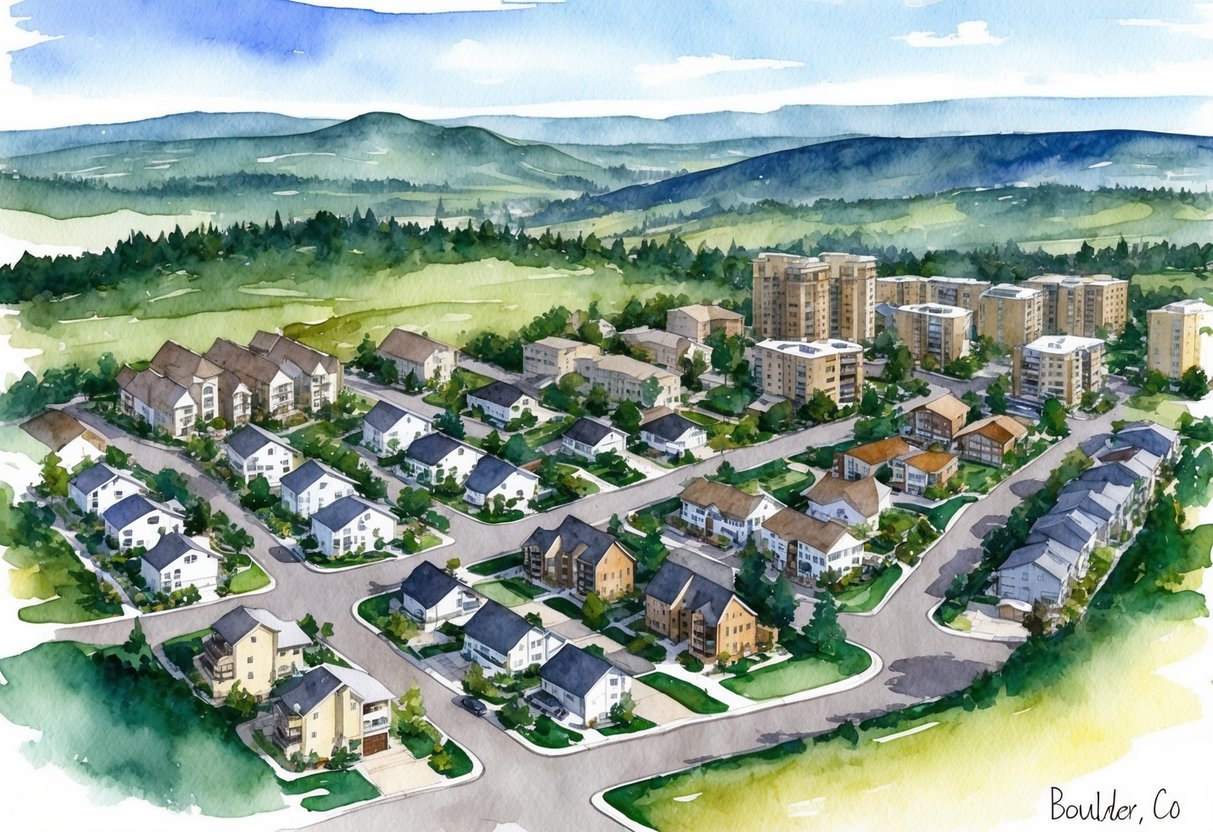
Boulder’s real estate market offers diverse investment opportunities. Let’s look at the main property types and rental trends that smart investors should know about.
Single-Family Homes vs. Condos
Single-family homes in Boulder are often prized investments. They typically appreciate well over time and attract families looking for space and privacy. I’ve seen many investors do well with these properties.
Condos, on the other hand, can be easier to manage and more affordable. They’re popular with young professionals and students. In my experience, condos near the University of Colorado Boulder or downtown areas tend to have high rental demand.
Both types have pros and cons. Single-family homes might need more upkeep, but they often have fewer restrictions on renovations. Condos usually have lower maintenance costs, but you’ll need to factor in HOA fees.
Understanding Boulder County’s Rental Market
The Boulder rental market is robust, driven by students, tech workers, and outdoor enthusiasts. As of 2024, the average home value in Boulder is over $1 million. This high price point can translate to strong rental income potential.
Rental prices vary widely depending on location and property type. Areas close to Pearl Street Mall or the university command premium rents. I’ve found that well-maintained properties in these areas rarely sit vacant for long.
Short-term rentals have become popular too, especially during tourist seasons. But be aware of local regulations - they can impact your investment strategy.
Remember, successful real estate investing is about understanding market trends and tenant needs. In Boulder, that often means catering to a mix of students, professionals, and outdoor lovers.
Financing Real Estate Investments

Getting the right financing is key to successful real estate investing in Boulder. I’ve learned some important strategies over the years that can make a big difference.
Mortgage Rates and Down Payment Requirements
Mortgage rates in Boulder tend to be competitive, but they can fluctuate. As of 2024, I’m seeing rates around 5-6% for investment properties. Remember, these are usually higher than primary residence rates.
Down payments are crucial. Most lenders require at least 20% down for investment properties. Some may even ask for 25-30%. I always recommend having a solid cash reserve too.
Boulder’s strong real estate market can make financing easier. Lenders see it as less risky. But don’t get complacent - your credit score and income still matter a lot.
Refinancing and Equity
Refinancing can be a powerful tool for investors. I’ve used it to lower my monthly payments and free up cash for new investments.
Boulder’s appreciation rates have been solid. This builds equity fast. I’ve seen investors tap into this equity through cash-out refinances or home equity lines of credit (HELOCs).
Be careful though. Refinancing costs money and resets your loan term. Make sure the numbers make sense for your long-term strategy.
Getting Preapproved for Investment
Getting preapproved is a must in Boulder’s competitive market. It shows sellers you’re serious and can close the deal.
Start by gathering your financial documents - tax returns, bank statements, and proof of income. Lenders will scrutinize these closely for investment properties.
I always shop around for the best rates and terms. Local lenders often understand the Boulder market better than national banks.
Remember, preapproval isn’t a guarantee. Keep your finances stable until closing. Any major changes could derail your loan.
Working with Real Estate Professionals

Teaming up with experts can make a big difference in your Boulder real estate investing journey. The right professionals will guide you through the local market and help you make smart choices.
Hiring a Local Real Estate Agent
Finding a good real estate agent in Boulder is key. I’ve learned that local knowledge is priceless. A skilled agent knows the neighborhoods, pricing trends, and hidden gems.
Look for an agent with investor experience. They should understand your goals and the numbers that matter. Ask about their track record with investors. How many deals have they closed?
Investor-friendly agents can help you spot opportunities others might miss. They often have insider info on off-market deals. This can give you an edge in Boulder’s competitive market.
Don’t be shy about interviewing multiple agents. It’s your money on the line. Find someone who gets your vision and can help make it happen.
Networking with Seasoned Investors
Building relationships with other investors is crucial. These connections can lead to deals, advice, and partnerships.
Where can you find other investors? Try local real estate meetups or online forums. Boulder has a thriving investor community. Tap into it.
Listen more than you talk at first. Experienced investors have war stories and wisdom to share. What mistakes did they make? What would they do differently?
Consider joining an investor network. These groups often share deals and resources. They can be a goldmine of information and opportunities.
Remember, real estate is a people business. The more connections you make, the better your chances of success.
Choosing a Property Management Company
If you’re not planning to manage properties yourself, a good management company is essential. They’ll handle tenants, repairs, and day-to-day operations.
What should you look for? Experience in Boulder is a must. The local rental market has its quirks. You want a team that knows the ropes.
Ask about their tenant screening process. Good tenants are the backbone of successful rentals. How do they handle maintenance issues? What’s their average vacancy rate?
Professional management can free up your time and reduce stress. But it comes at a cost. Make sure you understand all fees upfront.
Don’t just go with the cheapest option. Quality management can make or break your investment. It’s worth paying a bit more for peace of mind and better returns.
Local Insights and Opportunities

Boulder’s real estate market offers unique opportunities for savvy investors. The city’s vibrant culture, strong economy, and quality of life make it an attractive destination for both residents and businesses.
University of Colorado’s Influence
The University of Colorado Boulder plays a huge role in shaping the local real estate landscape. With over 35,000 students, it creates a steady demand for housing. I’ve seen many investors profit from student rentals near campus.
The university also attracts research companies and startups. This boosts demand for office and lab space. Smart investors are looking at mixed-use properties that can cater to both students and businesses.
CU Boulder’s expansion plans are worth watching. New facilities often lead to property value increases in nearby areas.
Employment Industry Diversity and Job Growth
Boulder’s job market is thriving. It’s not just tech - we’re seeing growth in aerospace, natural foods, and renewable energy sectors too. This diversity makes the local economy more stable.
New jobs are being created at a steady pace. More jobs mean more people looking for homes. I always say, “Follow the jobs, and the real estate opportunities will follow.”
The influx of remote workers is another trend to watch. They’re often looking for homes with dedicated office space or guest houses.
City of Boulder’s Quality of Life
Boulder’s quality of life is a major draw for homebuyers and renters. The city consistently ranks high for health, education, and outdoor activities. This creates a strong, stable buyer demand.
The city’s commitment to open spaces and sustainability is a big plus. Properties near parks or with mountain views tend to hold their value well.
Boulder’s foodie scene and cultural events add to its appeal. Areas near popular restaurants or venues can be great investment spots.
Emerging Areas like Superior and Longmont
While Boulder proper is pricey, nearby areas offer great potential. Superior, just southeast of Boulder, is growing fast. Its new Downtown Superior development is attracting both businesses and residents.
Longmont, to the northeast, is another area to watch. It offers more affordable housing options while still providing easy access to Boulder. The city is actively working to attract tech companies and startups.
These emerging areas often provide better cash flow opportunities than Boulder itself. But remember, location is key. Look for properties near major transportation routes or planned developments.
Tax Considerations for Investors

Investing in Boulder real estate comes with unique tax implications. Let’s explore how property taxes work and the potential tax benefits for savvy investors.
Understanding Property Taxes in Boulder
Boulder’s property taxes can be tricky. Did you know that property values in Boulder are among the highest in Colorado? This means higher tax bills for investors like us.
The county assesses properties every two years. They base the tax on the property’s value and the local mill levy. It’s crucial to budget for these taxes in your investment analysis.
But here’s a silver lining: Colorado has relatively low property tax rates compared to many other states. This can help offset the high property values in Boulder.
Investment Analysis for Tax Benefits
Smart investors look beyond just buying and selling. We need to consider the tax advantages of real estate investing.
One major benefit? Depreciation. For residential properties, we can deduct about 3.636% of the cost basis each year for 27.5 years. This can significantly reduce our taxable income.
What about selling? Capital gains taxes come into play. But if we live in the property for at least two of the five years before selling, we might qualify for an exemption.
Remember, tax laws change. It’s wise to consult with a tax professional familiar with Boulder’s real estate market. They can help us maximize our returns while staying compliant.