
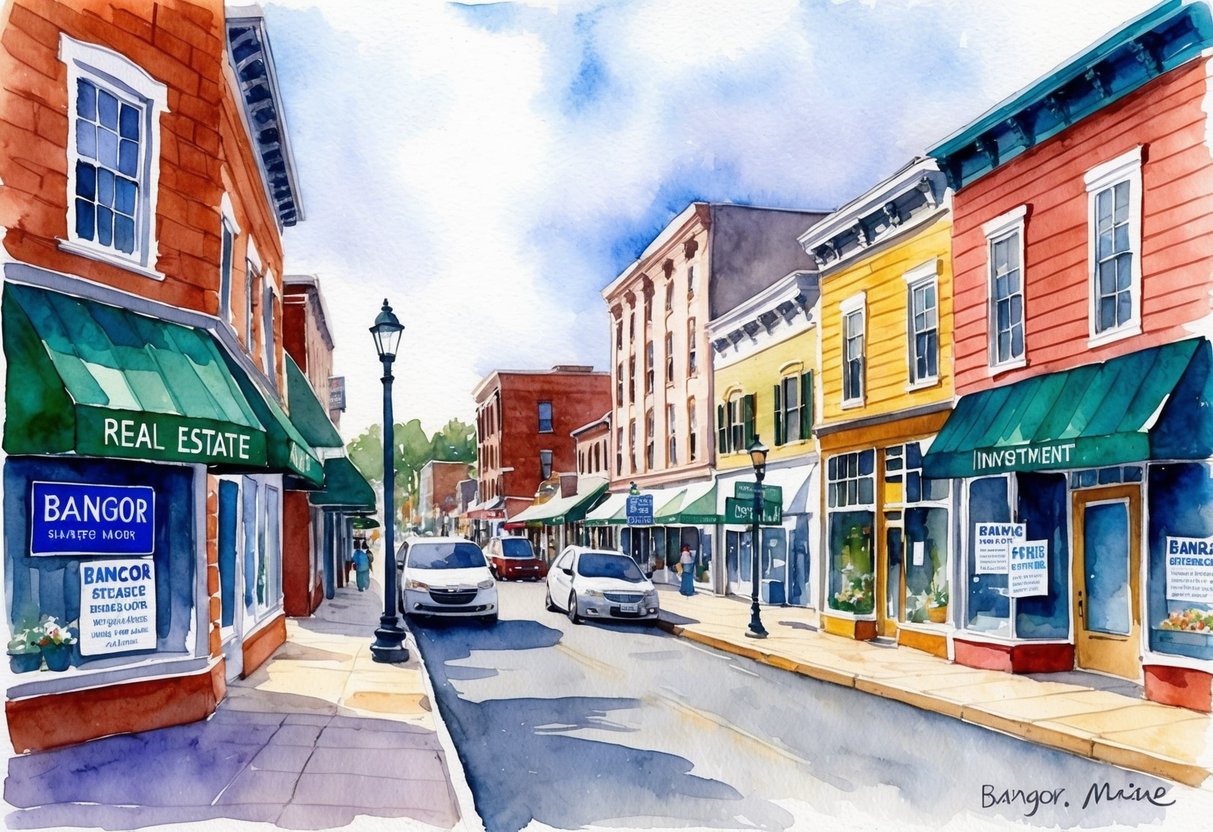
Bangor, Maine is a hidden gem for real estate investors. I’ve seen many cities come and go, but Bangor’s potential is hard to ignore.
Right now, the average home value in Bangor stands at $270,000, down 6.9% from last year, creating a prime opportunity for savvy investors to enter the market.

Are you tired of the same old investment advice? Maybe it’s time to look at Bangor’s real estate market. With homes typically pending within 18 days, this market is moving fast. But don’t let that scare you off.
I’ve found that speed often signals opportunity for those willing to act.
Bangor isn’t just about single-family homes. The city offers a range of investment properties, from condos to townhouses. Each type has its own potential for cash flow and appreciation. Are you ready to diversify your portfolio and secure your financial future?
Key Takeaways
- Bangor’s real estate market offers diverse investment opportunities at competitive prices
- Due diligence and local market knowledge are crucial for successful real estate investing
- Building a strong investment team and having clear exit strategies can maximize returns
Understanding the Bangor, ME Real Estate Market

Bangor’s real estate market offers unique opportunities for savvy investors. I’ve seen firsthand how understanding local trends can lead to profitable investments. Let’s explore the key factors shaping this market.
Key Market Trends
Bangor’s housing market is evolving rapidly. The city is somewhat competitive, with a score of 61 out of 100. This means investors need to act fast when good deals appear.
What’s driving this competitiveness? I’ve noticed a few key trends:
- Limited inventory pushing buyers to make quicker decisions
- Growing interest from out-of-state investors
- Increasing demand for rental properties
These factors create a dynamic market where opportunities can disappear quickly. As an investor, I always keep my finger on the pulse of these trends.
Price Dynamics
Bangor’s real estate prices have been on an interesting journey. The average home value in Bangor stands at $296,283 as of August 31, 2024. This represents a slight increase from previous years.
Here’s a breakdown of recent price trends:
- Median sale price: $289,833 (July 31, 2024)
- Year-over-year change: -7.1%
- Median price per square foot: $178
Why the recent dip? I believe it’s a market correction after a period of rapid growth. This could spell opportunity for investors looking to enter the market at a more favorable price point.
Demographic Insights
Understanding who lives in Bangor is crucial for real estate investors. The city’s demographics shape housing demand and rental markets.
Key demographic factors I’ve observed:
- Aging population creating demand for accessible housing
- Influx of young professionals seeking affordable urban living
- Growing number of students due to local universities
These trends impact what types of properties are in demand. For example, I’ve seen increased interest in multi-family homes that can accommodate both students and young professionals.
Bangor’s changing demographics also influence neighborhood development. Areas close to universities or major employers often see faster appreciation rates. Smart investors keep an eye on these demographic shifts to spot emerging opportunities.
Types of Real Estate Investments in Bangor

Bangor offers a variety of real estate investment options. Each type has its own benefits and challenges. Let’s explore the main categories you can consider for your investment portfolio.
Single Family Homes
Single family homes are a popular choice in Bangor. These properties are easier to manage and attract long-term tenants. The median price for a home in Bangor is $270,000, which is relatively affordable compared to other cities.
I’ve found that single family homes often appeal to families and professionals. They usually have lower turnover rates, which means less work for you as a landlord.
The downside? You’re putting all your eggs in one basket. If the property is vacant, you lose 100% of the income. But don’t let that scare you off. With proper management, single family homes can be a stable investment.
Multi-Family Units
Multi-family properties, like duplexes or small apartment buildings, can offer higher returns. They’re my go-to for cash flow. Why? Multiple units mean multiple streams of income.
In Bangor, you’ll find a mix of older and newer multi-family properties. Older buildings might need more work, but they often come at a lower price point. Newer units typically require less maintenance but cost more upfront.
One big advantage: if one unit is vacant, you still have income from the others. It’s a great way to spread your risk. Plus, managing multiple units in one location is often easier than dealing with scattered single family homes.
Mobile Homes
Mobile homes are an interesting niche in Bangor’s real estate market. They offer a lower entry point for investors. Many people overlook this sector, but I see opportunity here.
Bangor has a market for mobile homes, especially for those seeking affordable housing options. These properties can provide steady cash flow if managed well.
The key is to understand the unique aspects of mobile home investing. You’ll need to know about lot rents, depreciation, and specific financing options. It’s not for everyone, but for those willing to learn, it can be a profitable niche.
Commercial Properties
Commercial real estate in Bangor can include office spaces, retail locations, and industrial properties. These investments often come with longer leases and potentially higher returns.
I’ve seen investors do well with smaller commercial properties in Bangor. Think local shops, professional offices, or small warehouses. The key is location and understanding the local business climate.
Commercial properties can be more complex to manage. You’ll need to deal with zoning laws, business tenants, and possibly more significant maintenance issues. But don’t let that scare you. The rewards can be substantial if you do your homework.
Vacant Land
Vacant land is often overlooked, but it can be a hidden gem in your investment strategy. In Bangor, you might find opportunities for both short-term and long-term gains.
Short-term, you could look at land for parking lots near busy areas. Long-term, consider land that might be developed in the future as the city grows.
The beauty of land? It’s low maintenance. No tenants to manage, no buildings to repair. But remember, it typically doesn’t produce income unless you develop it or find a use for it. It’s a play on appreciation, not cash flow.
Navigating Real Estate Listings
Finding the right investment property in Bangor, ME requires knowing how to navigate listings effectively. Let’s explore the key strategies for uncovering hidden gems in this market.
Utilizing the MLS
The Multiple Listing Service (MLS) is a goldmine for real estate investors. How can we tap into this resource? I’ve found that Maine Listings provides comprehensive data on Bangor properties. It’s a treasure trove of information, offering details on pricing, property features, and market trends.
To make the most of the MLS:
- Set up alerts for new listings that match your criteria
- Compare property prices in different neighborhoods
- Track how long properties have been on the market
Remember, timing is crucial in real estate. The MLS can help you spot opportunities before others do.
Understanding Listing Descriptions
Decoding listing descriptions is an art. What do those cryptic phrases really mean? I’ve learned to read between the lines.
Key points to watch for:
- “Needs TLC” often translates to “major repairs required”
- “Cozy” might indicate a small living space
- “Potential” could suggest the property needs significant work
Don’t be fooled by flowery language. Focus on the hard facts: square footage, number of rooms, and property condition. These details will help you assess the true value and potential of a property.
Identifying Investment Potentials
How do we spot a diamond in the rough? It’s all about recognizing untapped value. Bangor’s real estate market offers diverse opportunities for savvy investors.
I look for:
- Properties in up-and-coming neighborhoods
- Houses with outdated features that can be easily updated
- Multi-unit buildings with steady rental income potential
Remember, the best investments aren’t always the prettiest properties on the block. Sometimes, the ugliest house on the street can become your most profitable venture.
Legal Considerations in Real Estate Investing

Real estate investing in Bangor, ME comes with important legal factors to keep in mind. I’ll break down the key areas you need to know about to protect your investments and stay compliant.
Zoning Regulations and Restrictions
Bangor’s zoning laws can make or break your investment plans. Have you checked if your property is zoned for your intended use? It’s crucial.
Bangor divides areas into residential, commercial, and industrial zones. Each has its own rules. For example, you can’t run a business from most residential properties.
Some areas have height limits or require certain setbacks from property lines. Historic districts have extra rules to preserve character.
Before buying, I always get a zoning verification letter from the city. It confirms allowed uses and any restrictions. This small step can save big headaches later.
Property Taxes and Implications
Property taxes in Bangor can take a big bite out of your profits. Are you factoring them into your investment calculations?
As of 2024, Bangor’s property tax rate is about 2.3% of assessed value. That’s higher than the Maine average.
Taxes are based on the city’s assessment, not purchase price. Assessments can increase, raising your tax bill. I keep an eye on local real estate trends to anticipate changes.
Some properties may qualify for tax breaks. Veterans, seniors, and homesteaders can get exemptions. Certain improvements might also lower your tax bill.
Remember, property taxes are usually paid twice a year in Bangor. I budget for these big expenses to avoid cash flow issues.
Equal Housing Opportunities
Fair housing laws are non-negotiable in real estate investing. Breaking them can lead to hefty fines and legal trouble.
The Fair Housing Act bans discrimination based on race, color, national origin, religion, sex, family status, and disability.
This applies to selling, renting, advertising, and lending.
In practice, this means I can’t refuse to rent to families with kids or people with service animals. I can’t advertise a property as perfect for a specific race or religion.
I make sure all my policies and practices treat everyone equally. A diverse tenant base can lead to more stable, profitable investments.
Financing Real Estate Investments
Securing the right financing is crucial for real estate investing success in Bangor.
I’ve found several options that can help you get started or expand your portfolio.
Traditional Mortgages
When it comes to financing investment properties in Bangor, traditional mortgages are often the go-to choice. I’ve seen many investors use conventional loans from banks or credit unions.
These typically require a down payment of 20-25% for investment properties.
Fixed-rate mortgages offer stability with consistent monthly payments. Adjustable-rate mortgages might start lower but can change over time.
Here’s a quick comparison:
Loan Type
Pros
Cons
Fixed-rate
Predictable payments
Higher initial rates
Adjustable-rate
Lower initial rates
Payments may increase
Keep in mind that qualifying for investment property mortgages can be tougher than for primary residences. Lenders often want to see higher credit scores and more cash reserves.
Creative Financing Options
I’ve discovered that thinking outside the box can open up new opportunities for financing real estate investments in Bangor. Here are some creative options I’ve seen work well:
- Owner financing: The seller acts as the lender, often with more flexible terms.
- Hard money loans: Short-term, higher-interest loans based on the property value.
- Private money lenders: Individuals or groups who lend their own funds.
Private and hard money lenders in Bangor can be great resources for quick funding, especially for fix-and-flip projects.
Another strategy I’ve used is partnering with other investors. This can help split costs and risks while pooling resources and expertise.
Assessing Loan Terms
When evaluating financing options for Bangor real estate investments, I always pay close attention to the loan terms.
It’s not just about getting approved – it’s about finding the best deal for your situation.
Key factors to consider:
- Interest rates
- Loan duration
- Prepayment penalties
- Closing costs
- Fees
I recommend creating a spreadsheet to compare different offers side by side. This helps me see the true cost of each loan over time.
Don’t forget to factor in potential rental income when assessing affordability. Bangor’s emerging housing market could mean good opportunities for cash flow.
The Importance of Due Diligence

Due diligence is crucial when investing in real estate in Bangor, ME. It helps me uncover potential issues and make informed decisions. Let’s explore key aspects of this process.
Conducting Property Inspections
Property inspections are a must-do for any real estate investment. I always hire a professional inspector to examine the property’s condition. They check the roof, foundation, plumbing, electrical systems, and more.
Why is this important? Well, hidden problems can cost a fortune later. I once looked at a charming old house in Bangor that seemed perfect. But the inspection revealed major foundation issues. That saved me from a costly mistake!
I also walk through the property myself. I look for signs of water damage, pest infestations, or outdated systems.
This hands-on approach gives me a real feel for the property’s potential.
Evaluating Neighborhood Viability
The neighborhood can make or break an investment. I research local crime rates, school quality, and future development plans. These factors affect property values and rental demand.
I drive around at different times of day. This helps me gauge traffic, noise levels, and the overall vibe. Are there empty storefronts? Or new businesses opening? These are clues about the area’s direction.
I talk to locals too. They often have insider knowledge about the neighborhood’s pros and cons.
This on-the-ground research is invaluable for making smart investment choices.
Analyzing Cash Flow Projections
Cash flow analysis is key to profitable real estate investing. I start by estimating potential rental income based on local market rates. Then, I factor in all expenses: mortgage payments, property taxes, insurance, maintenance, and vacancies.
I create best-case and worst-case scenarios. This helps me prepare for different outcomes. What if rents drop? Or if major repairs are needed? I want to know my investment can weather these storms.
I also consider long-term trends. Is Bangor’s population growing? Are new industries moving in? These factors can boost property values and rental demand over time.
Remember, positive cash flow is the lifeblood of real estate investing. Without it, even a seemingly great deal can turn into a financial drain.
Building a Real Estate Investment Team

Creating a strong team is key to success in real estate investing. I’ve found that having the right people in your corner can make all the difference. Let’s look at the key players you’ll want on your team.
Real Estate Agents
A good real estate agent is worth their weight in gold. I always look for agents who know the Bangor market inside and out. They should understand:
- Local trends
- Up-and-coming neighborhoods
- Fair market values
The best agents have a network of contacts that can help you find great deals. They’ll bring you off-market properties before they’re listed. This gives you an edge over other investors.
I recommend interviewing several agents before choosing one. Ask about their experience with investment properties. How many deals have they closed? Can they provide references?
Remember, the right agent will save you time and money in the long run.
Financial Advisors
Why do so many investors overlook financial advisors? They’re crucial for maximizing your returns and minimizing risk.
A skilled advisor will:
- Help structure your investments
- Provide tax strategies
- Analyze potential deals
Look for advisors with experience in real estate investing. They should understand concepts like:
- Cash flow analysis
- Leverage
- Depreciation
I’ve found that the best advisors ask tough questions. They’ll challenge your assumptions and help you avoid costly mistakes.
Don’t be afraid to ask about their fee structure. Some work on commission, others charge flat fees. Choose the option that aligns with your goals.
Property Managers
Do you want to be a hands-off investor? Then you need a top-notch property manager. They’ll handle:
- Tenant screening
- Rent collection
- Maintenance issues
A good manager will keep your properties full and your tenants happy. This means more cash flow and fewer headaches for you.
When choosing a manager, I look for:
- Clear communication
- Transparent pricing
- Proven track record
Ask how they handle emergencies. Do they have a 24/7 hotline? How quickly do they respond to tenant issues?
Remember, property managers are your eyes and ears on the ground. Choose wisely, and they’ll help your investments thrive.
Exit Strategies for Investors

When investing in Bangor real estate, having a solid exit strategy is crucial. I’ve found that planning your exit before you even enter a deal can make all the difference. Let’s look at some key strategies I’ve used successfully.
Selling the Investment
Selling is often the most straightforward exit strategy. In Bangor, I’ve seen property values rise steadily, making this a viable option.
When I’m ready to sell, I focus on:
- Timing the market
- Making strategic improvements
- Setting the right price
I always keep an eye on Bangor’s property market trends. With a median property price of $296,650, there’s room for profit if you buy smart.
Remember, selling costs money too. I factor in agent fees, closing costs, and potential capital gains tax. Sometimes, I’ll offer seller financing to attract more buyers and potentially earn interest income.
Lease-to-Own Arrangements
Lease-to-own can be a win-win in Bangor’s market. I give tenants a path to ownership while securing a future sale. Here’s how I structure these deals:
- Set a fair purchase price upfront
- Charge above-market rent
- Apply a portion of rent to the down payment
This strategy works well in Bangor, where some buyers might need time to improve their credit or save for a down payment. It’s less common, but can be very profitable if done right.
I’m careful to have clear contracts and communicate expectations. This approach can lead to a smoother exit and potentially higher returns.
1031 Exchange Opportunities
The 1031 exchange is a powerful tool in my real estate toolkit. It allows me to sell a property and reinvest the proceeds into a new property while deferring capital gains tax.
In Bangor, I might use this to:
- Upgrade to a larger property
- Diversify into different types of real estate
- Move into a more profitable area of the city
Weighing exit options is crucial. A 1031 exchange can help me grow my portfolio faster by keeping more money working for me.
I always consult with a tax professional before executing a 1031 exchange. The rules are strict, and timing is critical. But when done correctly, it’s an excellent way to build long-term wealth in Bangor’s real estate market.