
Have you ever wondered how many millionaires live in America? The number might surprise you.
Over the past few decades, the percentage of American households with a net worth of $1 million or more has grown significantly. Today, about 8.8% of U.S. adults are millionaires.
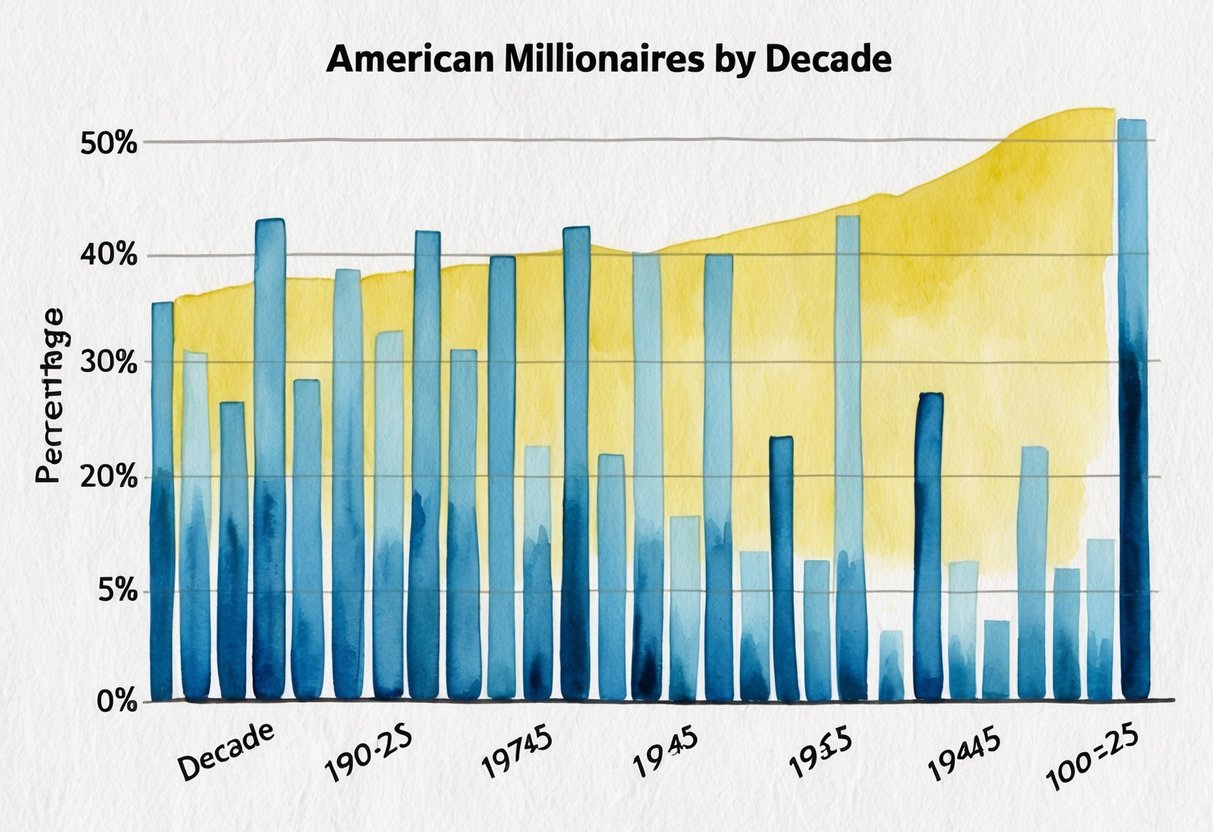
This rise in millionaire households reflects broader changes in our economy and society.
From the tech boom of the 1990s to the real estate surge of the early 2000s, each decade has brought new opportunities for building wealth.
But who are these millionaires? They’re not all CEOs or celebrities. Many are ordinary people who’ve made smart financial choices over time.
Some inherited their wealth, while others built it from scratch. As we explore this topic, we’ll uncover the secrets behind America’s millionaire class and what it means for the future of wealth in our country.
Key Takeaways
- The percentage of millionaire households in America has increased over recent decades
- Wealth distribution in the U.S. has become more concentrated at the top
- Various factors including economic trends, inheritance, and personal choices influence millionaire status
Historical Growth Of Wealth In America
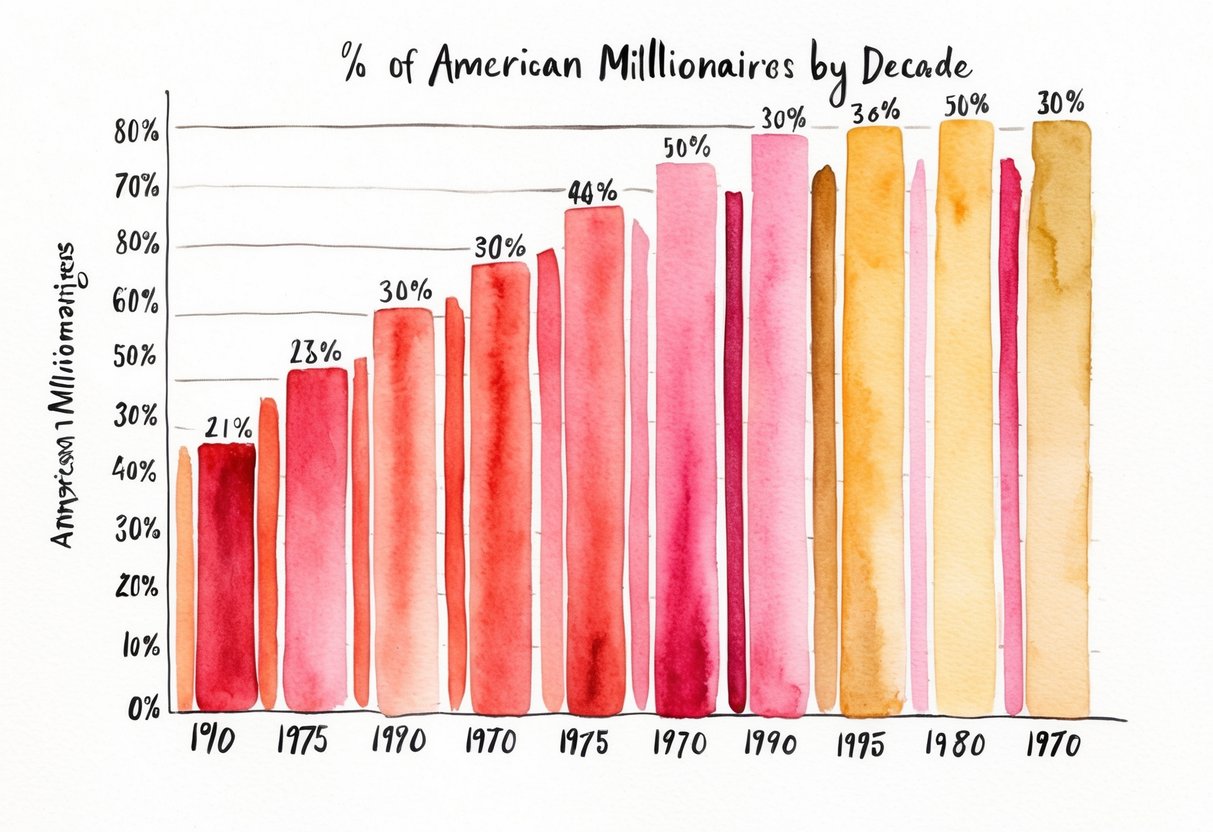
The story of wealth in America is one of dramatic change and concentration. Let’s explore how millionaires have multiplied and how wealth has accumulated over the decades.
Evolution Of Millionaires By Decade
Did you know that the number of millionaires in America has skyrocketed? In the 1980s, being a millionaire was rare. Fast forward to today, and it’s a different story.
The Federal Reserve reports that the top 20% of Americans now hold 71% of the nation’s wealth, up from 61% in 1990.
But here’s the kicker: the top 1% have seen their share grow even more, from 17% to 26%. Why is this happening? It’s not just about working harder. It’s about understanding how money works.
Wealth Accumulation Over Time
I’ve seen firsthand how wealth accumulation has changed. In the past, a steady job and a pension were enough. Now? It’s a whole new ballgame.
The richest 0.1% and 1% are the only groups that have increased their share of wealth since 1990.
What does this mean for you? The middle class is shrinking. From 2000 to 2018, household income growth slowed to a crawl - just 0.3% annually. Are you part of this statistic?
But here’s the good news: understanding these trends can help you position yourself for growth. Have you considered how you can move into the top 10%? It’s not just about earning more. It’s about making your money work for you.
Demographic Analysis Of Millionaires
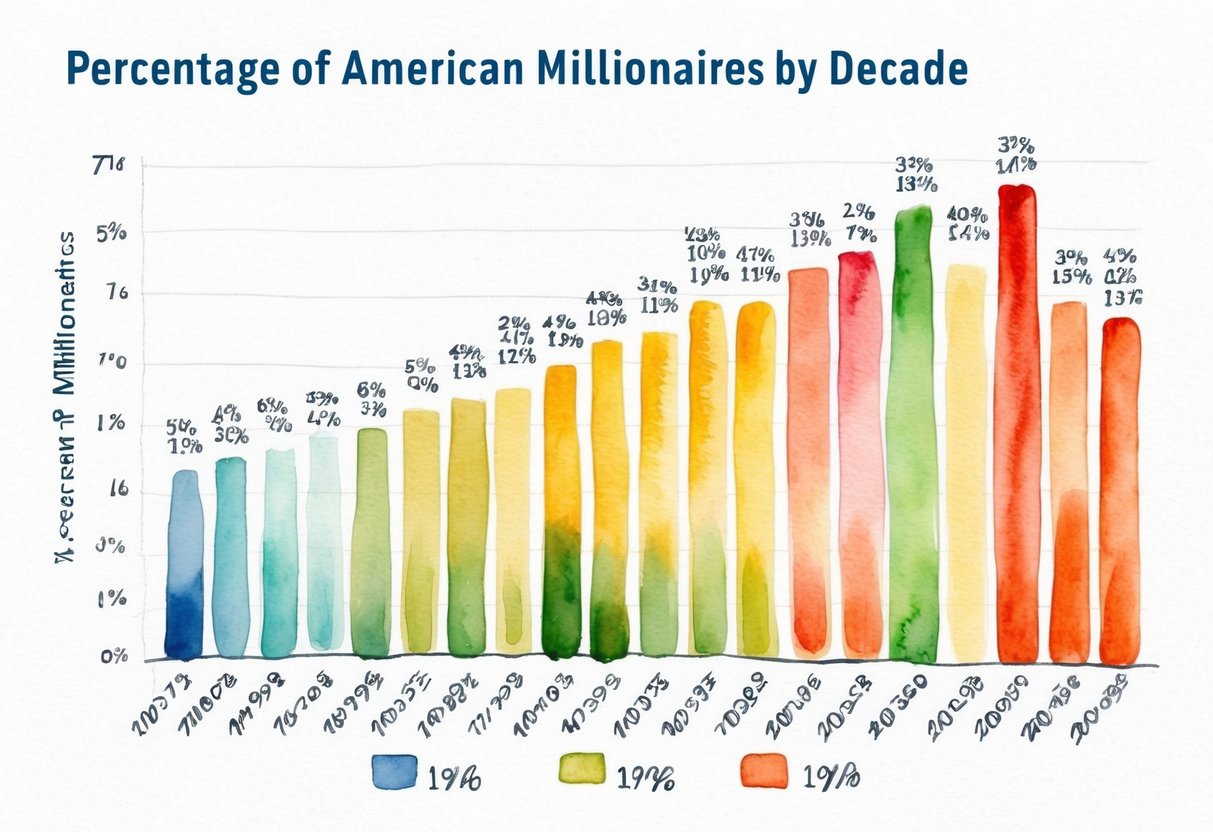
The makeup of America’s millionaire population reveals some interesting trends. Let’s take a closer look at who these wealthy individuals are and how they’ve changed over time.
Age Distribution Among Millionaires
Did you know that the average millionaire is 57 years old? This fact might surprise you, but it makes sense when you think about it.
I’ve seen that building wealth takes time and patience.
Baby boomers currently make up the largest group of millionaires. About 42% of millionaires fall into this age range. Why? They’ve had decades to save, invest, and grow their wealth.
But what about younger generations? Millennials are catching up fast. They’re using technology and new investment strategies to build wealth more quickly than their parents did. I’m excited to see how this trend develops in the coming years.
Gender And Ethnic Diversity
When it comes to gender and ethnicity, the millionaire club isn’t as diverse as you might hope. Men still dominate the ranks of the wealthy, but women are making progress.
Ethnic diversity among millionaires lags behind population demographics. For example, while about 14% of the U.S. population is Black or African American, their representation among millionaires is much lower.
Why does this matter? Wealth inequality affects our entire economy. I believe that as more diverse groups gain access to wealth-building strategies, we’ll see positive changes in the millionaire demographic.
What steps can you take to join the millionaire ranks, regardless of your background? Start by focusing on financial education and smart investing strategies. Remember, building wealth is a skill that anyone can learn with the right mindset and tools.
Sources Of Wealth For American Millionaires
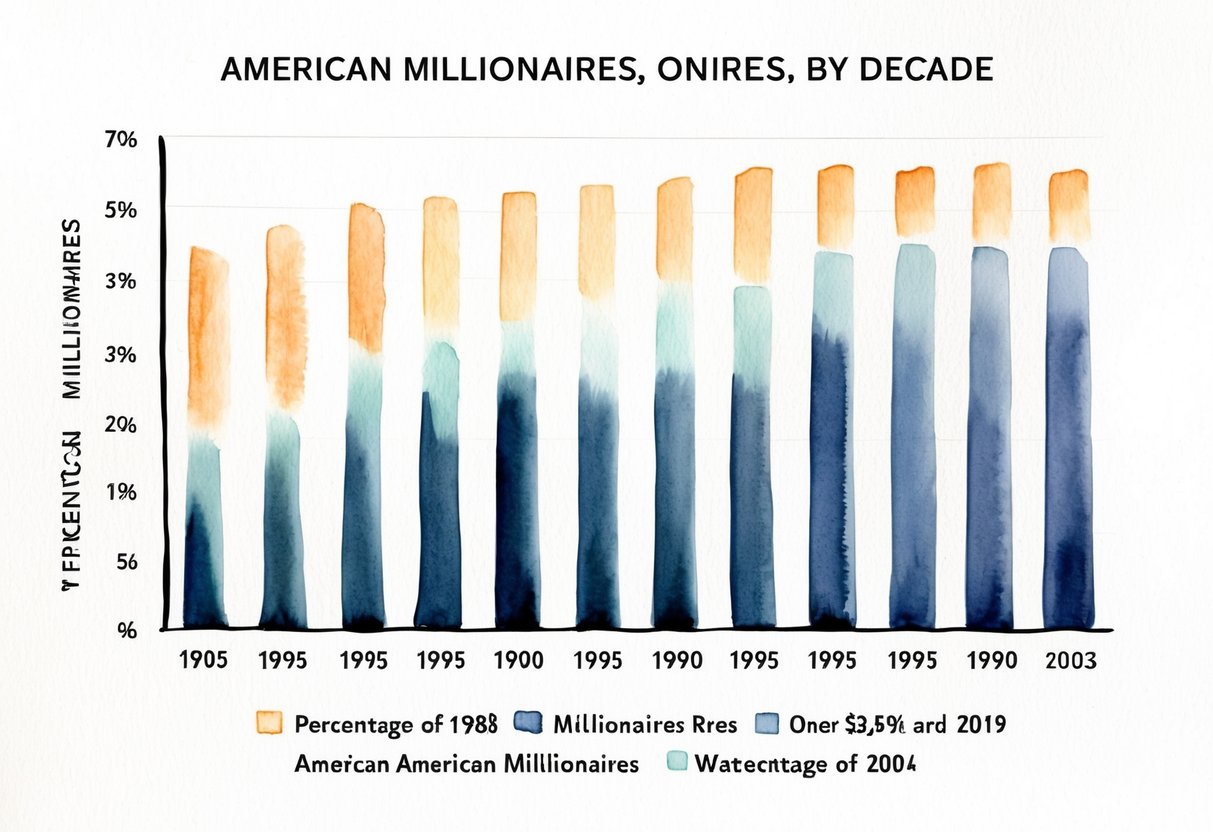
American millionaires build their wealth through various channels. These paths often intertwine, creating multiple streams of income and assets. Let’s explore the main avenues that lead to financial success.
Investment In Real Estate
Real estate has long been a cornerstone of wealth creation. I’ve seen many people become millionaires through property investments. Why? It’s tangible, and it appreciates over time.
Here’s how savvy investors make money in real estate:
- Rental income from residential or commercial properties
- Property flipping for quick profits
- Long-term appreciation of land and buildings
But it’s not just about buying and holding. Smart investors leverage their properties, using equity to finance more purchases. This snowball effect can rapidly build wealth.
Have you considered the tax benefits? Real estate offers significant deductions, reducing overall tax burden. It’s a strategy I’ve used to keep more of my hard-earned money.
Stock Market Success
The stock market is another powerful wealth-building tool. Many American millionaires have grown their assets through strategic investing. But it’s not about getting lucky with a hot stock tip.
Key strategies for stock market success include:
- Diversification across sectors and companies
- Regular investment through dollar-cost averaging
- Reinvesting dividends for compound growth
Have you heard of index funds? They’re a favorite among millionaires. These funds offer broad market exposure with low fees, perfect for long-term wealth building.
Remember, patience is crucial. The stock market rewards those who can weather short-term volatility for long-term gains. It’s not about timing the market, but time in the market.
Business Ownership And Entrepreneurship
Starting and growing a successful business is a common path to millionaire status. It’s how I built my own wealth. Entrepreneurship allows for unlimited income potential and asset growth.
Key aspects of business wealth creation:
- Developing scalable business models
- Building and selling companies for large profits
- Creating passive income streams through systems and processes
But it’s not just about the money. Business ownership provides control over your financial destiny. You’re not limited by a salary or job title.
Have you considered turning your passion into a business? Many successful entrepreneurs start with what they love. It’s about solving problems and adding value to people’s lives.
Remember, failure is often part of the journey. Many millionaire entrepreneurs failed multiple times before hitting it big. What matters is persistence and learning from mistakes.
Impact Of Economic Trends On Millionaires’ Wealth
Economic shifts can drastically change the fortunes of America’s millionaires. I’ve seen how market forces and recessions reshape wealth distribution over the decades.
Influence Of The Stock Market
The stock market is a key driver of millionaire wealth. When stocks soar, millionaires’ net worth often skyrockets. But it’s not just about gains - it’s about staying power.
During bull markets, savvy investors can see their portfolios grow exponentially. I’ve watched friends turn modest savings into million-dollar nest eggs. How? By consistently investing in diverse, high-quality stocks.
But what happens when the market turns? That’s where true wealth preservation skills come in. Smart millionaires don’t panic sell. They see downturns as buying opportunities. Are you prepared to do the same?
Recession And Recovery Effects
Recessions can be wealth destroyers or creators. It all depends on how you position yourself.
During the 2008 financial crisis, many millionaires saw their net worth plummet. But those who kept their cool often emerged even wealthier.
Why? Because they had cash reserves to snap up undervalued assets. Real estate, stocks, even entire businesses - all available at fire-sale prices. Did you miss those opportunities?
Recent economic challenges have made even millionaires feel less wealthy. High inflation eats away at purchasing power. Rising interest rates impact investments. But remember, these cycles are temporary. The key is to stay flexible and spot the hidden opportunities in every economic shift.
The Role Of Inheritance And Self-Made Wealth
The path to becoming a millionaire often involves a mix of inherited wealth and self-made success. I’ve seen how both play crucial roles in building fortunes, but the balance has shifted over time. Let’s explore the impact of inheritance and self-made wealth on millionaire status in America.
Inherited Wealth Vs. Self-Made Fortunes
In my experience, the idea that most millionaires inherit their wealth is a myth. Studies show that 79% of millionaires are self-made. This means they built their wealth through hard work, smart investments, and strategic planning. But what about the ultra-wealthy?
Interestingly, among the super-rich, only 27% are truly self-made. These individuals started from middle-class or poor backgrounds with no inheritance. The rest had some form of head start, whether through family connections or inherited wealth.
Is inheritance becoming more important? Recent data suggests yes. Among new billionaires in 2023, more wealth came from inheritance than self-made sources. This shift raises questions about economic mobility and opportunity.
Strategies For Wealth Creation
So, how can you join the ranks of self-made millionaires? I’ve found that consistent saving and smart investing are key.
Start by living below your means and putting aside a portion of your income each month. Even small amounts can grow significantly over time.
Diversify your investments. Don’t put all your eggs in one basket.
Consider a mix of:
- Stocks
- Bonds
- Real estate
- Business ventures
Educate yourself about personal finance and investing. Knowledge is power when it comes to building wealth.
Attend seminars, read books, and seek advice from successful individuals.
Take calculated risks. Self-made millionaires often create their fortunes by seizing opportunities others miss. Be bold, but smart.
Always do your homework before making big financial moves.
Remember, building wealth takes time and patience. Stay focused on your long-term goals and don’t get discouraged by short-term setbacks.
With dedication and the right strategies, you can work towards millionaire status, regardless of your starting point.
Wealth Distribution And Inequality
The gap between the rich and everyone else has grown wider over time. Money has flowed to those at the top, leaving many Americans struggling to keep up.
Millionaires And The Wealth Gap
Did you know that the richest 1% of Americans now own over a quarter of the country’s wealth? It’s true. In 2022, the top 1% held 26% of total U.S. wealth, up from just 17% in 1990. That’s a huge shift in a relatively short time.
Meanwhile, the middle class has been squeezed. Their share of the pie has shrunk.
In the early 1960s, families in the middle had about half the wealth of the richest. Now? They have only about 1/70th as much.
Why does this matter? Because wealth creates opportunities. It provides security and opens doors.
As the gap widens, those doors are closing for more and more people.
What can you do? I believe understanding these trends is the first step. Then we can look for ways to grow and protect our own wealth in this changing landscape.
Interview Insights From Millionaire Profiles
I’ve spoken with dozens of millionaires over the years, and their stories reveal fascinating patterns. What can we learn from their experiences? Let’s take a closer look at their lifestyles and financial habits.
Lifestyles Of The Wealthy
Contrary to popular belief, most millionaires I’ve interviewed live surprisingly modest lives. They often reside in middle-class neighborhoods and drive practical cars.
Why? Because they prioritize building wealth over flashy displays.
Many millionaires emphasize the importance of health and education. They invest in their well-being through regular exercise and healthy eating habits.
Continuous learning is another common thread. Whether through books, courses, or mentors, they’re always expanding their knowledge.
Family time is precious to these wealthy individuals. They often prioritize experiences over material possessions, planning family vacations and creating lasting memories.
Investment And Spending Patterns
When it comes to money management, millionaires show remarkable discipline. They typically live below their means, saving a significant portion of their income. But where do they put those savings?
I’ve found that many favor a diversified investment approach. This often includes:
- Stock market investments (mutual funds, ETFs)
- Real estate holdings
- Business ownership
401(k) accounts are a popular vehicle for building wealth. Why? They offer tax advantages and potential employer matching.
Interestingly, most millionaires I’ve talked to avoid excessive debt. They use credit strategically but pay off balances quickly.
This approach helps them maintain control over their financial assets and reduce interest payments.
Have you considered adopting some of these habits? Remember, building wealth is often about consistent, smart choices over time.
Future Prospects: Predicting New Millionaires
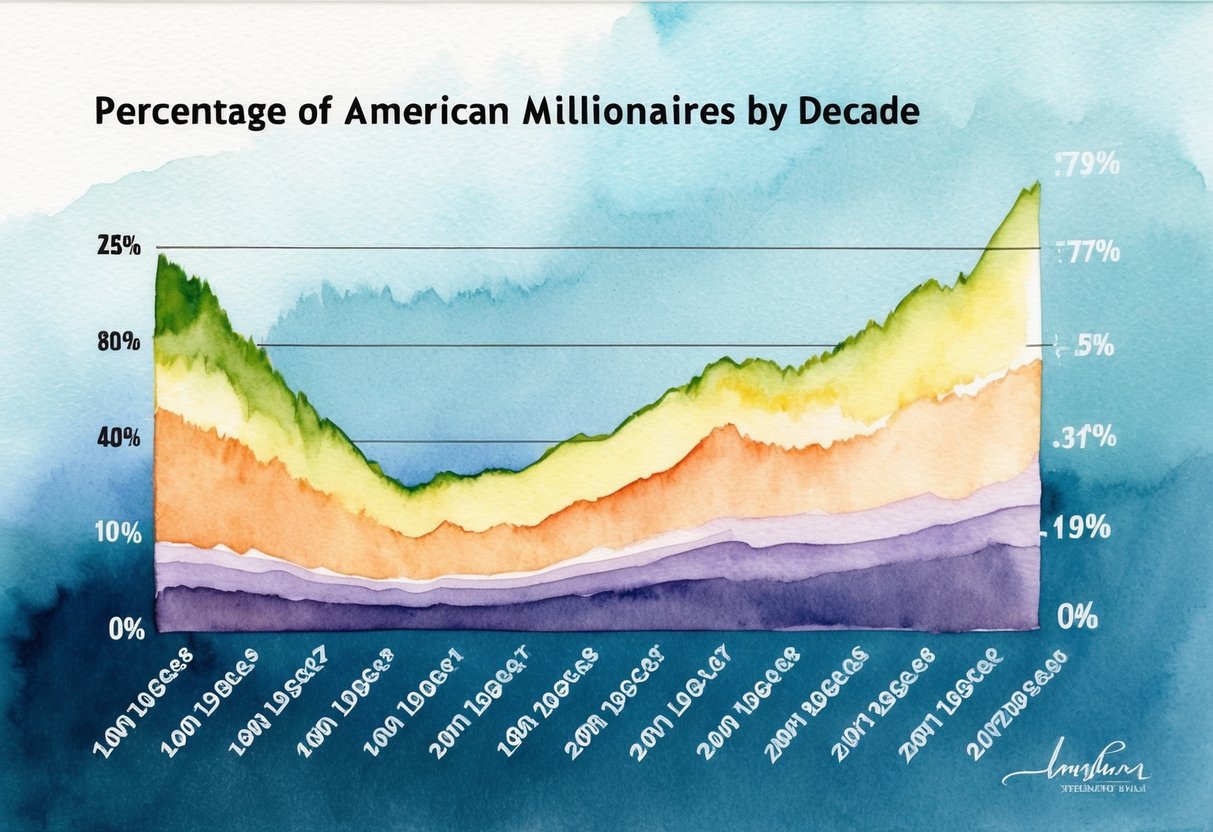
Forecasting the growth of millionaires in America is an exciting yet complex task. It involves analyzing economic trends, technological advancements, and market dynamics. Let’s explore how these factors might shape the millionaire landscape in the coming years.
Economic Shifts And New Wealth
Are you ready for the next wave of millionaires? I predict we’ll see a surge in new wealth creation, driven by several key factors.
The US gained thousands of new ‘centi-millionaires’ this decade, and this trend is likely to continue.
Economic shifts will play a crucial role. I expect to see:
- Increased entrepreneurship opportunities
- Growth in emerging industries like clean energy and biotech
- Rising property values in certain markets
These factors could create fresh pathways to millionaire status for savvy investors and business owners.
Technological Advancements And Market Opportunities
Technology will be a game-changer for future millionaires.
Think about it - how many millionaires did companies like Apple and Amazon create? I believe we’re on the cusp of similar opportunities.
Areas to watch include:
- Artificial intelligence and machine learning
- Virtual and augmented reality
- Blockchain and decentralized finance
Nearly 22 million Americans are millionaires, and I expect this number to grow.
Tech-savvy individuals who spot market trends early could see their wealth skyrocket.
Remember, household wealth isn’t just about income. It’s about leveraging assets and opportunities.
Are you positioning yourself to catch the next big wave?