Expanding your passive income portfolio can seem like a daunting task, especially when you’re already juggling life’s numerous responsibilities. So, how can you grow your income without spreading yourself too thin? It’s all about strategically diversifying your investments and focusing on options that align with your financial goals. By selecting income streams that resonate with your objectives, you can maintain focus and not get overwhelmed.  I’ve been in your shoes, questioning traditional investment paths and seeking new strategies for financial independence. Imagine having more control over your financial future, achieving the freedom that an effective passive income portfolio can provide. It’s not just about additional revenue; it’s about creating a life where you have choices. The right investments can serve as the pillars supporting your financial goals. Passive income isn’t just a dream; it’s a journey toward financial freedom. Are you ready to explore the income-generating opportunities beyond the norm? Let’s dive into practical and realistic ways to bolster your portfolio without losing sight of what matters—your path to financial independence.
Key Takeaways
- Diversify your passive income to align with financial goals.
- Focus on income streams that support financial independence.
- Strategic diversification can lead to greater financial freedom.
Understanding Passive Income
 Passive income can be the key to breaking free from the stress of daily work. It focuses on creating income streams that require minimal active involvement. Below, I will explore what passive income truly means and how it can play a vital role in achieving financial freedom.
Defining Passive Income
What exactly is passive income? It’s the money you earn without constant effort. Some people earn it through rental properties, where monthly rent becomes a consistent source of funds. Others tap into the power of digital content, earning royalties from books or courses. Investing in stocks that pay dividends is another way. These stocks give you payouts simply for holding shares. What do all these methods have in common? They allow you to earn while focusing on other life goals. Passive income might not come instantly, but the steady flow can transform your financial landscape over time. The trick is choosing methods that fit your skill set and comfort zone. Once you start, you’ll see the benefits build up gradually.
The Role of Passive Income in Achieving Financial Freedom
Ever dream of stepping away from the daily grind without sacrificing your lifestyle? That’s where passive income steps in. It lets you escape the constraints of a single paycheck, opening up numerous opportunities. Consider an income-generating business that works for you even when you’re not around. Or think about the possibility of using investments to bring in money, like bonds or real estate, which can help you avoid tapping into savings prematurely. While traditional jobs are important, depending entirely on them can be risky. Passive income offers a safety net, allowing for greater financial stability. By diversifying your income streams, you can work towards a future of financial freedom. Isn’t that a game-changer?
Setting Financial Goals for Passive Income Growth
 To grow passive income effectively, it’s crucial to set clear, actionable financial goals. These should be designed to cover both short-term objectives and meaningful long-term achievements.
Short-Term vs Long-Term Objectives
Setting financial goals often involves balancing short-term objectives with long-term ambitions. Short-term goals might involve setting aside a fixed percentage of your income to invest in passive income streams like renting out household items or using cashback rewards. These quick wins can build confidence and provide a sense of progress. On the other hand, long-term goals focus on significant milestones such as achieving full financial independence. Perhaps you want to use passive income to supplement or replace your current salary. Think about what timeline makes sense for your lifestyle and how much risk you’re willing to take to achieve these goals. The balance you find between these objectives will guide your financial strategy.
Measuring Your Financial Independence Milestones
How do you know when you’re truly reaching your financial independence goals? It starts with setting benchmarks. Try using measurable milestones to track your progress. This could involve reaching a certain net worth or generating a specific amount from a passive income stream like stock market investments. In the pursuit of financial stability, it’s important to celebrate small victories along the way. These could be as simple as covering monthly living expenses through passive income or having the luxury to invest more creatively. Achieving these milestones not only boosts confidence but also provides a clearer picture of how close you are to financial independence.
Diversification of Income Streams
 Expanding your passive income portfolio requires strategic thinking and a focus on variety. It’s like building a safety net of different income sources that can secure your financial future. Let’s explore why diversification matters and identify opportunities for diversifying passive income.
The Importance of Diversification
Why should I diversify my income streams? Imagine depending on just one source. If that fails, everything could fall apart. Diversification spreads risk, enhancing financial security by buffering your investments against fluctuations in the market. Having multiple passive income streams means I’m not putting all my eggs in one basket. This approach gives me flexibility and resilience. It also increases my earning potential without needing constant, hands-on work. Think of real estate, dividends, and other avenues. These different assets can work together, balancing out setbacks from one investment with gains from another. With a mixture of assets, my overall stability grows, making economic challenges easier to face.
Identifying Diverse Passive Income Opportunities
What options do I have for diversifying income? There are several passive income opportunities to consider. Real estate investments can be lucrative through rental properties or REITs. These allow me to earn money through property earnings without physical property ownership. Dividend stocks offer another channel. With the right choices, I can receive regular payouts while my shares grow in value. Peer-to-peer lending provides a chance to earn interest by financing loans to individuals or businesses. Intellectual property like book royalties or patents can also generate income. By exploring these varied channels, I can create a robust portfolio. Investing in different opportunities reduces dependence on a single income source and steers me toward financial independence.
Real Estate Investments
 Investing in real estate can provide a solid foundation for passive income. It’s crucial to understand both the financial benefits and challenges involved in managing properties to make informed decisions. Let’s delve into these key aspects to help maintain focus and maximize returns.
Rental Properties and Financial Stability
Owning rental properties can be a reliable way to achieve financial stability. By purchasing viable real estate and renting it out, I create a steady income stream. One key advantage is the potential for property value appreciation, which can boost my investment over time. Rental income can cover property expenses, and what’s left can build wealth, making it a dual-benefit strategy. I carefully assess property location and demand trends. Prime locations often yield higher rent and attract stable tenants. I set competitive rent prices and maintain the property to ensure tenant satisfaction and retention. This approach helps avoid vacancies and loss of income. Real estate investment trusts (REITs) can also offer exposure to real estate markets without direct property management, combining benefits of diversification and professional management.
Challenges in Property Management
While rental properties can boost financial stability, they come with challenges. Managing a property means dealing with maintenance, tenant issues, and legal obligations. It’s crucial to address repairs promptly. Delays can lead to bigger problems and tenant dissatisfaction. I maintain a network of reliable contractors to handle maintenance efficiently. Tenant management is another challenge. Screening tenants carefully reduces risks like late payments or property damage. I enforce lease agreements and maintain consistent communication to prevent misunderstandings. Sometimes, I might need to tackle evictions, which require strict adherence to legal processes to avoid costly disputes. To minimize stress, I consider hiring a property manager. They can handle day-to-day operations, allowing me to focus on strategy and expansion. This way, I ensure my investment runs smoothly while I concentrate on growth.
Stock Market Investments
 When it comes to expanding your passive income portfolio, engaging with the stock market is a powerful path. Focusing on dividend stocks allows you to earn regular income through dividend yields and payouts, offering financial stability and growth potential.
Dividend Stocks and Growth
I often consider dividend stocks as a cornerstone of my investment strategy. These stocks not only provide regular income as companies distribute their profits, but also potential for long-term growth. Imagine owning shares in companies like Verizon, which has a reliable dividend yield over 6.5%. Doesn’t it make sense to have a diversified portfolio of dividend stocks? This way, I can be part of growing businesses while reaping steady financial rewards. Choosing companies with a track record of increasing dividends boosts my confidence in their financial health and future prospects.
Understanding Dividend Yield and Payouts
Dividend yield and payout ratios are crucial metrics in my investment analysis. The dividend yield explains how much I earn in dividends relative to a stock’s current price. A higher yield may seem attractive, but I always assess it against potential risks. I focus on companies that consistently pay dividends and have a reasonable payout ratio. This tells me the business can comfortably cover its dividends while reinvesting in its growth. Calculating a company’s payout, I look for a balanced ratio, ensuring my investment remains secure and promising. Navigating dividend yields and payouts requires a keen eye on company performance and market conditions. Balancing yield with growth opportunity helps me optimize my passive income potential thoughtfully.
Exploring Bonds and Peer Lending
 Expanding your passive income can feel complex, but bonds and peer lending offer practical pathways. These methods not only enhance your financial diversification but also create steady income streams with less stress.
How Bonds Contribute to a Balanced Portfolio
Bonds can provide stability to a financial portfolio. They offer fixed income, which can be reassuring, particularly when stock markets become unpredictable. By purchasing bonds, I gain interest payments over time, which helps me plan for future expenses.
Diversification is Key to Managing Risk
Diversification is key to managing risk, and bonds are excellent for this. Including bonds in my portfolio reduces exposure to volatile markets. I sometimes explore options like bond ETFs, which combine different bonds into a single investment. This adds variety to my holdings, potentially improving returns without increasing complexity.
Peer-to-Peer Lending as a Revenue Source
Peer-to-peer (P2P) lending is an innovative strategy that I find appealing for generating income. By lending money directly to individuals or small businesses on platforms, I earn returns through interest payments. This direct lending model removes banks from the equation, often resulting in higher returns for me.
Spreading My Loans Across Several Borrowers
I relish the idea of spreading my loans across several borrowers to mitigate risks. This diversification in lending means the impact of a default is lessened. Platforms often provide risk assessments to help me make informed lending decisions, making it easier to secure returns. Earning passive income this way can be both rewarding and efficient, offering another layer to my financial safety net.
Digital and Online Revenue Streams
 Exploring digital and online revenue streams can diversify your income while requiring minimal ongoing management. By focusing on digital products and strategic partnerships, you can create consistent income sources that complement existing financial plans. Let’s break down some key areas to consider.
Ebooks and Online Courses
Creating ebooks and online courses offers a dynamic way to generate passive income. Have you ever considered sharing your expertise in a structured format? I discovered that publishing a digital book or course requires initial effort in content creation and design. Tools like platforms that support course creation simplify this process. Once your content is live, it can continue to sell, bringing in revenue without additional effort. The aim is to craft quality materials that your audience finds valuable and actionable. Are there specific skills or knowledge you possess that others might seek? If you target a niche market, you can find an audience interested in your specific insights. Remember, the value of your content directly impacts sales. This strategy not only provides income but also positions you as an authority in your field.
Affiliate Marketing and Sponsored Content
Can you make money by recommending products or brands? That’s where affiliate marketing and sponsored content come in. By partnering with companies, I earn commissions for driving sales through shared links. Selecting relevant products is key, ensuring they align with your expertise and audience needs. Sponsored content involves collaborating with brands to create and promote posts tailored to their objectives. When authenticity shines through, this approach can be rewarding.
Email Marketing and Product Promotion
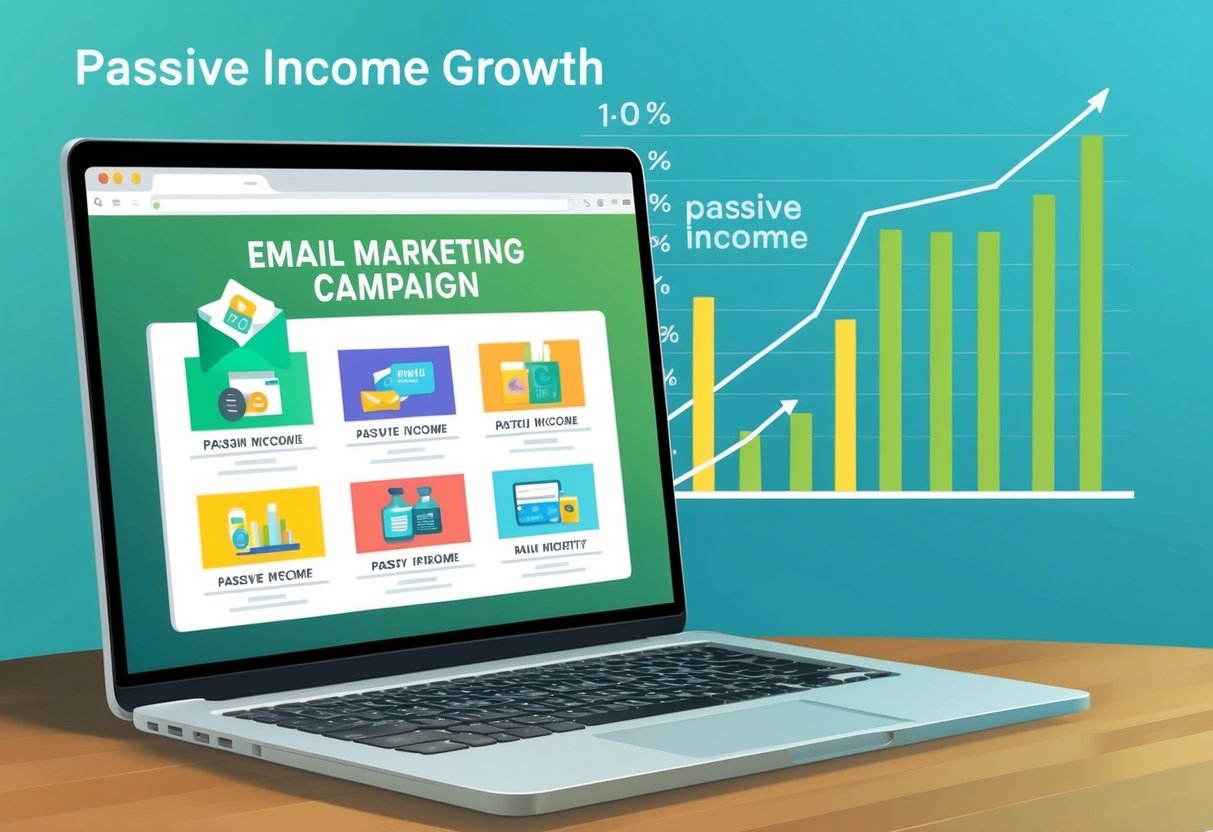 When it comes to expanding your passive income, email marketing is a powerful tool to engage with your audience and promote products effectively. By building a strong subscriber base and using smart strategies to advertise, you can enhance your revenue streams without spreading yourself too thin.
Building a Subscriber Base for Email Marketing
Creating a strong email subscriber base is crucial. How do you start? Focus on content that provides real value. People sign up when they see they’ll receive something beneficial. Think about leading with a free resource like an eBook or a guide. In exchange, they provide their email address. I also suggest making your sign-up form visible on your website, preferably on the homepage or a landing page with a clear call to action. Leverage social media to invite followers to join your email list as well. A consistent email schedule builds trust and sets expectations, nurturing a loyal audience ready for your offers.
Strategies to Promote Products Effectively
Once you’ve built your subscriber base, the next step is maximizing your communication. You want your emails to feel personal and engaging. Use segmentation to tailor content to different audience interests. This could be based on past purchases or specific preferences indicated by your subscribers. Personalized recommendations can turn prospects into buyers. Rhetorical question: why send the same offer to everyone when you have data at your fingertips? Consider mixing sales emails with informative content to keep readers engaged without feeling sold to constantly. By strategically planning your email campaigns and focusing on offering real solutions, you’ll find promoting your products within your emails can boost your passive income significantly.
Additional Passive Income Ideas
 Exploring new avenues for passive income can bolster your financial health without the need for constant attention. Why not let your money work for you? Here are some strategies to consider.
High-Yield Savings Accounts and Compounding
Have you ever thought about how interest can stack up? Let me tell you, a high-yield savings account can be an excellent way to grow your money with little risk. These accounts offer higher interest rates compared to regular savings accounts. The key here is compounding. With compounding interest, the interest you earn also earns interest over time. This creates a snowball effect that accelerates your earnings. How do you choose the right account? Look for one with no fees and a competitive rate. Online banks often offer better rates because they have lower overhead costs. Imagine watching your savings grow faster while you sleep. That’s the power of compounding in action. It’s a smart, low-effort way to increase your financial security.
Investing in Commodities and Collecting Royalties
If real estate doesn’t suit your taste, how about investing in commodities? Gold, silver, or agricultural products can diversify your portfolio. Commodities tend to hold their value during economic downturns, making them a resilient choice. You don’t have to become a trading expert. Many platforms make it simple to invest with minimal hassle. Have you ever thought about owning a piece of intellectual property? Collecting royalties from books, music, or even online courses can create a steady stream of income. You might invest in someone else’s work or create something yourself. Every month, royalties can trickle in, providing extra cash flow. Isn’t that an exciting idea for financial independence?