
Saving for retirement is a hot topic that gets a lot of people worried. I’ve seen countless folks stress about whether they’re putting away enough money for their golden years.
But how much should you really have saved by different ages?
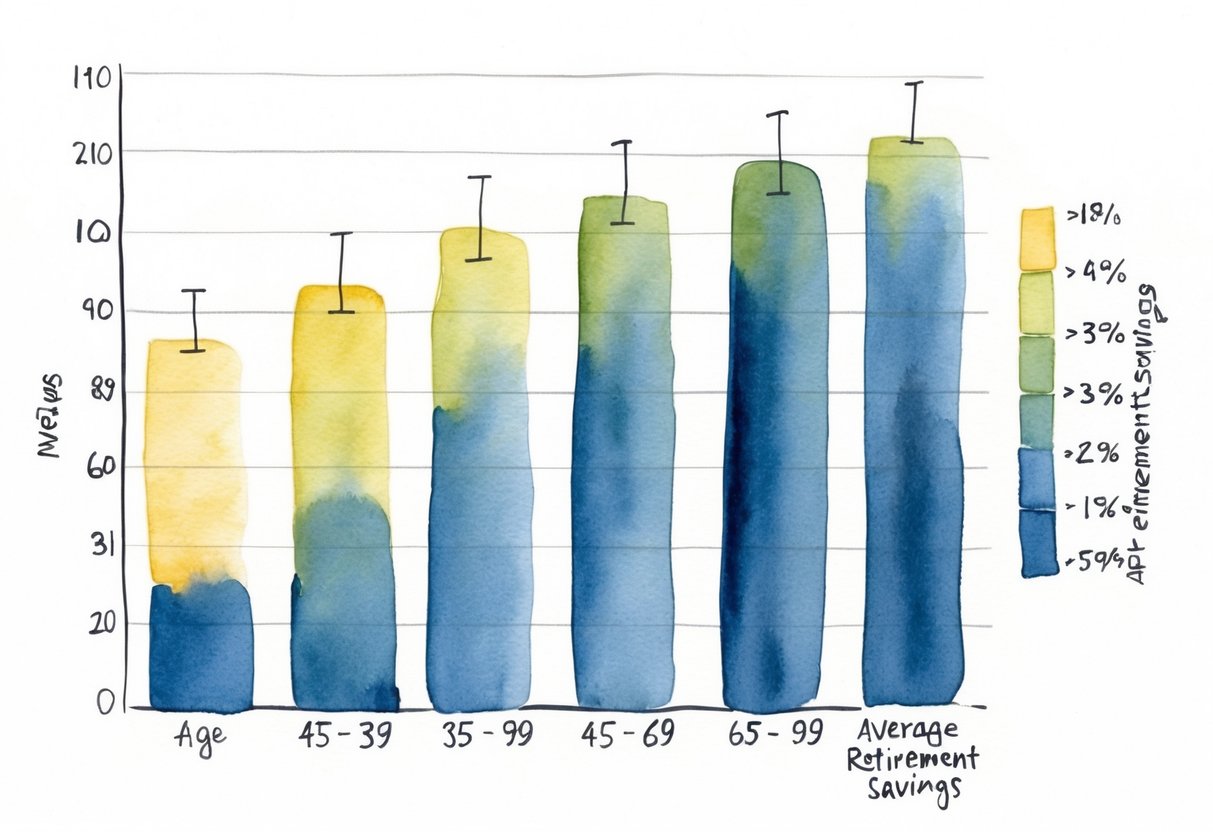
The average retirement savings for Americans aged 65-74 is $609,230. This might sound like a lot, but is it enough? The truth is, there’s no one-size-fits-all answer. Your ideal savings depend on your lifestyle, health, and goals.
I’ve found that many people are surprised when they learn about typical retirement savings. Some feel relieved, while others get a wake-up call.
Where do you stand? Are you ahead of the curve or playing catch-up?
Let’s dive into the numbers and see what they mean for you.
Key Takeaways
- Retirement savings vary widely by age group and individual circumstances
- Regular contributions and smart investment choices can significantly boost your nest egg
- It’s never too late to start saving or to improve your retirement planning strategy
Understanding Retirement Savings
Retirement savings are crucial for securing our financial future. Let’s explore what they entail and why they matter so much.
Defining Retirement Savings
Retirement savings are the funds we set aside during our working years to support ourselves in retirement. These savings can take various forms:
- 401(k) plans offered by employers
- Individual Retirement Accounts (IRAs)
- Roth IRAs
- Pension plans
- Personal savings accounts
Have you ever wondered how much you’ll need to save? It’s not a one-size-fits-all answer. The average retirement savings for American households is $87,000, but this may not be enough for everyone.
Importance of Saving for Retirement
Why is saving for retirement so vital? Simply put, it’s about maintaining our quality of life when we stop working. Here are some key reasons:
- Social Security may not cover all expenses
- Healthcare costs often increase as we age
- We may live longer than expected
Did you know that only 34% of Americans feel confident about their retirement savings? This is alarming. I’ve seen too many people struggle in their golden years because they didn’t save enough.
Starting early and saving consistently can make a huge difference. Even small amounts add up over time thanks to compound interest.
Are you taking full advantage of your retirement accounts?
It’s never too late to start, but the sooner you begin, the better off you’ll be.
Retirement Savings Vehicles
Retirement savings vehicles are essential tools for building wealth over time. They offer tax advantages and investment options to help grow your nest egg. Let’s explore some key retirement account types that can supercharge your savings journey.
Common Types of Retirement Accounts
When it comes to saving for retirement, you’ve got options. I’ve seen many people get overwhelmed by the choices, but don’t worry - it’s simpler than you might think.
The most popular retirement accounts are:
- 401(k) plans
- 403(b) plans
- Traditional IRAs
- Roth IRAs
Each has its own perks. 401(k)s and 403(b)s are typically offered through employers, while IRAs are individual accounts you can open on your own.
Have you considered which might work best for your situation?
401(k) and 403(b) Plans
401(k) and 403(b) plans are powerhouses for retirement savings. They’re employer-sponsored accounts that allow you to save a portion of your paycheck before taxes are taken out.
Key benefits include:
- High contribution limits ($22,500 in 2024 for those under 50)
- Potential employer match (free money!)
- Automatic payroll deductions
The main difference? 401(k)s are offered by for-profit companies, while 403(b)s are for non-profit and government employees. Both can turbocharge your savings, especially if your employer offers a match.
Are you taking full advantage of yours?
Individual Retirement Accounts (IRAs)
IRAs are my go-to recommendation for anyone wanting more control over their retirement savings. You can open these accounts at most financial institutions and choose your own investments.
There are two main types:
- Traditional IRA: Contributions may be tax-deductible, but withdrawals in retirement are taxed.
- Roth IRA: You contribute after-tax dollars, but withdrawals in retirement are tax-free.
IRAs have lower contribution limits than 401(k)s - $6,500 in 2024 for those under 50. But they offer more investment choices and flexibility.
Have you considered adding an IRA to your retirement strategy?
Employer-Sponsored Retirement Plans
Beyond 401(k)s and 403(b)s, some employers offer additional retirement savings options. These can be powerful tools to boost your nest egg.
Common plans include:
- SIMPLE IRAs
- SEP IRAs
- Pension plans
- Profit-sharing plans
Each has unique features and benefits. For example, SIMPLE IRAs are great for small businesses, while pensions provide guaranteed income in retirement.
The key is to understand what’s available to you and maximize your benefits.
Remember, employer-sponsored plans often come with free money in the form of matches or contributions. Are you leaving any of this money on the table?
Retirement Savings by Age
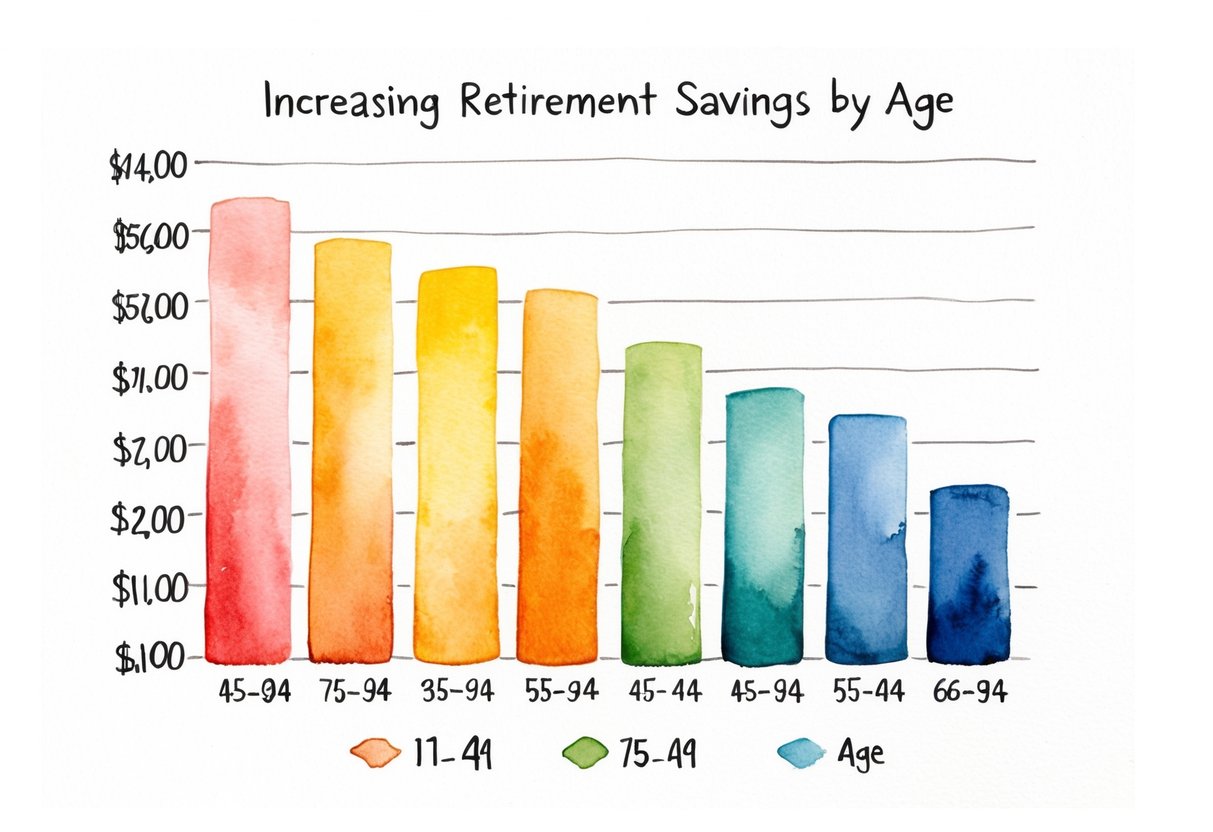
Saving for retirement is a journey that looks different for everyone. Age plays a big role in how much we’ve saved and how much we still need to save. Let’s look at the numbers and see what they mean for our financial futures.
Average Retirement Savings as per Age Groups
I’ve seen a lot of people worry about their retirement savings. But here’s the truth: the average retirement savings for American households is $87,000. That’s not bad, but it’s not great either.
For folks under 35, the average is much lower. They’ve only saved about $49,130 on average. But don’t panic if you’re in this group! You’ve got time on your side.
What about those closer to retirement? People between 55-64 have saved an average of $537,560. That’s a big jump, right? But here’s the million-dollar question: Is it enough?
Remember, these are just averages. Your situation might be different. The key is to start saving early and save often.
Median Retirement Savings by Age
Averages can be tricky. A few high earners can skew the numbers. That’s why I like to look at median savings too. It gives us a clearer picture of what’s typical.
For those under 35, the median savings is only $18,880. That’s a wake-up call, isn’t it?
As we age, the median goes up:
- 35-44: $48,710
- 45-54: $115,590
- 55-64: $164,000
These numbers tell us something important. Half of people have less than this saved. Are you above or below the median for your age?
How Age Impacts Retirement Savings
Age isn’t just a number when it comes to retirement savings. It’s a powerful tool. The earlier you start, the more time your money has to grow.
Think about this: If you start saving at 25, you could have twice as much at retirement as someone who starts at 35. Why? Compound interest. It’s like magic for your money.
But what if you’re older? Don’t worry, it’s never too late. You might need to save more aggressively, but you can still build a nest egg. Plus, catch-up contributions after 50 can give your savings a boost.
Remember, age also affects how you invest. Younger folks can take more risks. As you get older, you might want to play it safer. It’s all about finding the right balance for you.
Factors Affecting Retirement Savings
Saving for retirement isn’t as simple as putting money aside each month. Several key factors can impact how much we’re able to save and how far those savings will go.
Income Levels and Saving Potential
How much can you really save when your paycheck barely covers the bills? It’s a question many of us face. Average retirement savings vary widely by age, but income plays a huge role.
Higher earners have more to set aside, plain and simple. But here’s the kicker - it’s not just about how much you make, it’s about how much you keep. I’ve seen people with six-figure salaries living paycheck to paycheck. Why? They’re trapped in the rat race, always chasing the next big purchase.
On the flip side, I know folks with modest incomes who’ve built impressive nest eggs. How? They mastered the art of living below their means and investing the difference.
Cost of Living
Where you live can make or break your retirement savings. Have you ever wondered why some retirees flock to smaller towns or even overseas? It’s all about stretching those dollars.
High-cost areas like New York or San Francisco can drain your savings fast. You might be earning more, but you’re also spending more on:
- Housing (rent or mortgage)
- Food
- Transportation
- Healthcare
In contrast, areas with a lower cost of living allow you to save more of your income. It’s not just about the present - it affects your future too. A lower cost of living means your retirement savings will last longer.
Inflation and Economic Changes
Here’s a scary thought - the money you save today might not have the same buying power when you retire. Why? Inflation is the silent killer of savings.
Over time, the cost of goods and services tends to rise. This means your retirement nest egg needs to grow just to maintain its value. The Federal Reserve’s consumer finances data shows how savings change over time, but it doesn’t always account for inflation.
Economic shifts can also throw a wrench in your plans. Market downturns, recessions, or changes in interest rates can all impact your savings.
Remember 2008? Many saw their retirement accounts take a big hit.
But here’s the million-dollar question: How can we protect our savings from these forces?
It’s all about diversification and staying informed about economic trends.
Strategies for Maximizing Retirement Savings

Building a comfortable nest egg requires smart planning and consistent action. I’ve found that a few key strategies can make a huge difference in growing your retirement savings over time.
Maximizing Employer Matching Contributions
Are you leaving free money on the table? Many companies offer matching contributions to your 401(k), but you have to contribute enough to get the full match. I always tell people this is an instant 100% return on your investment!
Here’s a typical example:
- Employer offers 50% match up to 6% of your salary
- Your salary: $60,000
- Your 6% contribution: $3,600
- Employer match: $1,800
That’s $1,800 in free money! Plus, it grows tax-deferred. Don’t miss out on this opportunity to supercharge your savings.
Utilizing Catch-Up Contributions
Did you know the government gives you a savings boost after age 50? It’s called catch-up contributions, and it’s a powerful tool to accelerate your retirement savings.
For 2024, you can contribute an extra:
- $7,500 to your 401(k)
- $1,000 to your IRA
This means you could potentially sock away $30,500 in your 401(k) and $8,000 in your IRA each year. That’s a lot of extra compounding power! Don’t wait to take advantage of this opportunity.
Effective Budgeting for Savings
Budgeting isn’t about restricting yourself - it’s about prioritizing your future. I like to think of it as paying yourself first. Here’s a simple method I recommend:
- Track your spending for a month
- Identify areas where you can cut back
- Set up automatic transfers to your retirement accounts
Remember, small changes add up. Cutting out a daily $5 coffee habit could save you $1,825 a year. That’s a nice boost to your retirement savings balance!
Investment Strategies for Retirement Accounts
Are you making your money work as hard as you do? The right investment strategy can significantly boost your returns over time. I’m a big fan of low-cost index funds and mutual funds for their diversification and ease of use.
Consider this allocation strategy based on your age:
- Subtract your age from 110
- That’s the percentage you should have in stocks
- The rest goes into bonds and cash
For example, if you’re 55, you’d aim for 55% in stocks and 45% in bonds/cash. This balances growth potential with stability as you near retirement. Remember, regular rebalancing is key to maintaining your desired allocation.
The Role of Social Security in Retirement
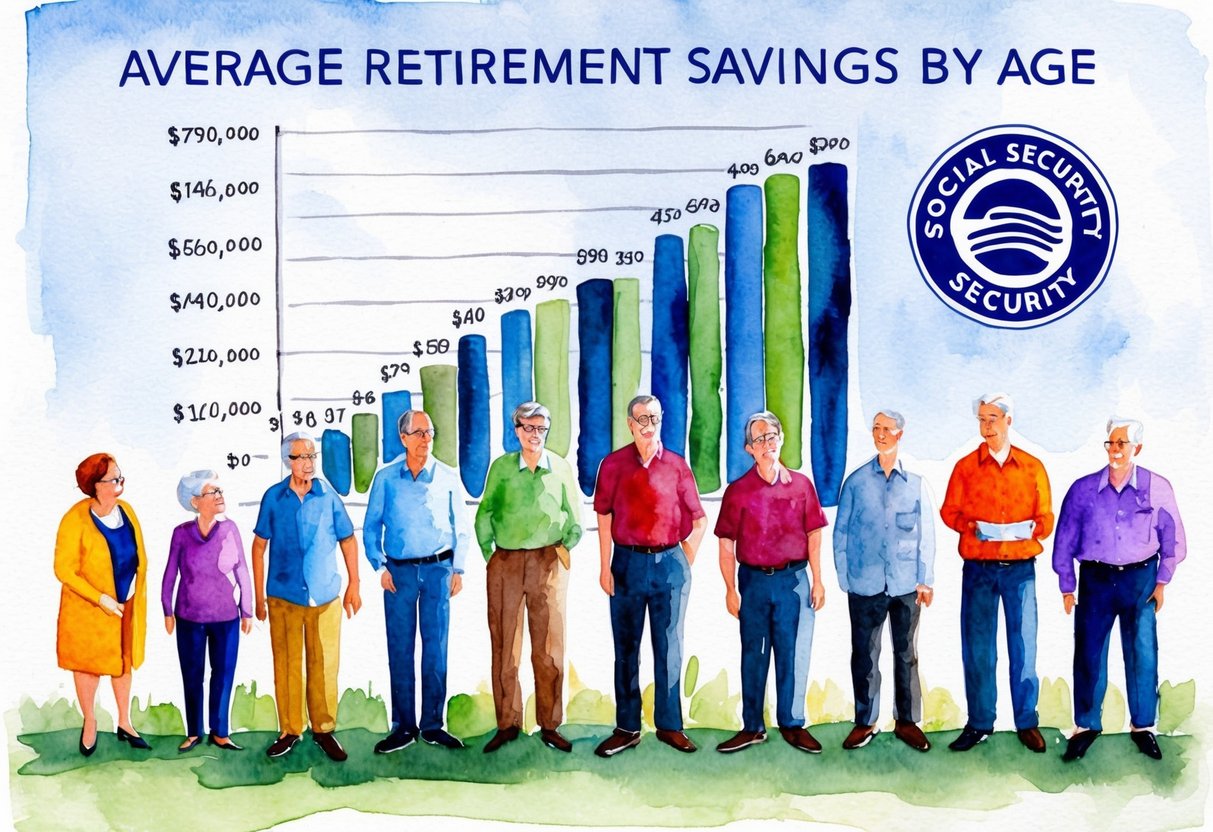
Social Security plays a crucial part in many Americans’ retirement plans. It provides a safety net, but it’s not enough on its own. Let’s look at how it works and where it fits in the bigger picture.
Understanding Social Security Benefits
Social Security benefits are based on your work history and earnings. The more you’ve paid into the system, the more you’ll get back. But here’s the kicker: it’s not designed to replace your entire income.
The average monthly Social Security benefit is about $1,700. That’s not much to live on, is it? And guess what? The maximum benefit at age 65 in 2024 is just $41,112 per year.
Here’s a question for you: Can you live comfortably on that amount? For most of us, the answer is no.
Social Security as Part of Retirement Planning
So, where does Social Security fit in your retirement puzzle? Think of it as a foundation, not the whole house. It’s a steady stream of income, but you’ll need more to maintain your lifestyle.
Have you considered how you’ll supplement your Social Security? Here are some options:
- 401(k) plans
- IRAs
- Personal savings
- Investments
Remember, Social Security benefits can start at 62, but waiting until 70 increases your monthly check. It’s a trade-off between getting money sooner or getting more later.
Advice from Financial Experts
Getting expert guidance can make a huge difference in your retirement planning. Let’s explore how financial professionals can help you create a solid strategy and customize it to your unique situation.
Consulting a Financial Planner
I’ve seen firsthand how a good financial planner can transform retirement outcomes. These pros have the knowledge and tools to analyze your finances and create a roadmap to retirement success. But how do you find the right one?
Look for a Certified Financial Planner (CFP) who specializes in retirement planning. They’ll assess your current savings, income, and goals to develop a comprehensive strategy. A planner can help you:
- Optimize your investment portfolio
- Identify tax-saving opportunities
- Plan for healthcare costs
- Create a sustainable withdrawal strategy
Remember, a good planner is an investment in your future. Their expertise can potentially save you thousands in the long run.
Personalized Retirement Planning
Cookie-cutter approaches don’t work when it comes to retirement. Your plan should be as unique as you are. But how do you create a truly personalized strategy?
Start by defining your retirement vision. Do you want to travel? Start a business? Help your grandkids with college? Your goals will shape your financial needs.
Next, consider your risk tolerance and time horizon. Are you comfortable with market fluctuations? How many years until you retire? These factors will influence your investment choices.
Don’t forget to account for potential curveballs. What if you face unexpected health issues or need to support a family member? A good plan includes contingencies for life’s surprises.
Remember, your plan isn’t set in stone. Review and adjust it regularly as your circumstances change. This flexibility is key to long-term success.
Statistical Insights and Studies
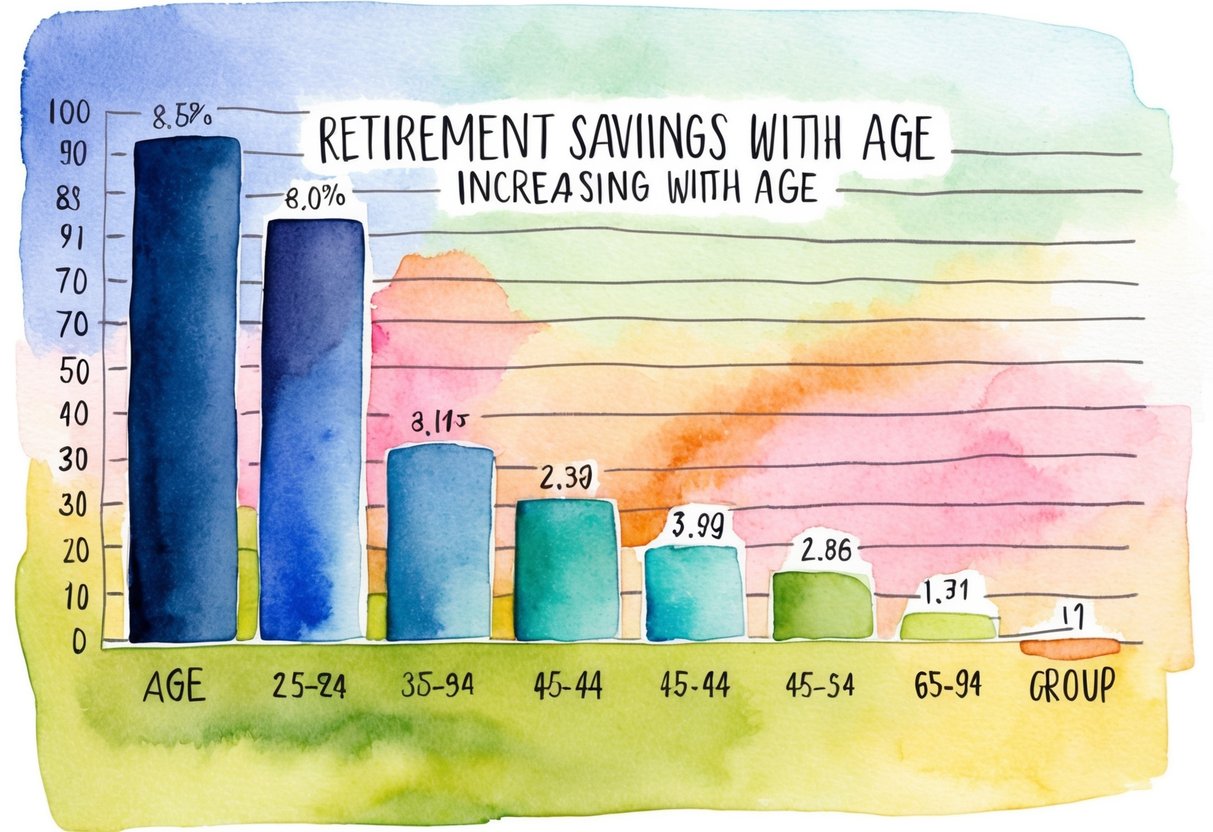
Let’s dive into what the data really tells us about retirement savings in America. I’ve analyzed the latest studies and surveys to uncover some eye-opening trends that might surprise you.
Federal Reserve and Consumer Finances Data
Did you know the Federal Reserve tracks our nation’s financial health? Their data paints an interesting picture of retirement savings. The median retirement account balance for American households is $87,000. But here’s the kicker - that number varies wildly by age group.
For those under 35, the median savings is just $18,800. Think about that for a moment. Is that enough to secure a comfortable future?
As we age, the numbers improve. But are they improving fast enough? I’ve often wondered if traditional financial advice is truly serving us well.
Survey of Consumer Finances Findings
The Survey of Consumer Finances digs even deeper into our financial habits. It reveals some startling facts about how we’re preparing for retirement.
Did you know that 67% of Americans have a retirement account, but only 34% feel confident about their retirement savings? That’s a huge gap between action and confidence.
Here’s another nugget to consider: the average retirement savings for those aged 55-64 is $537,560. Sounds like a lot, right? But is it really enough to maintain your lifestyle for 20+ years of retirement?
These numbers make me question: Are we thinking big enough about our financial future?
Additional Retirement Planning Considerations
Planning for retirement goes beyond just saving money. It involves careful preparation and strategic thinking. Let’s explore some key factors that can make a big difference in your financial future.
Creating an Emergency Fund
An emergency fund is your financial safety net. It’s the cash you set aside for unexpected expenses or income disruptions. I recommend aiming for 3-6 months of living expenses.
Why is this important? It prevents you from dipping into your retirement savings when life throws you a curveball. Job loss, medical emergencies, or major home repairs can happen to anyone.
Here’s a quick guide to building your emergency fund:
- Start small - Even $500 can make a difference
- Automate your savings
- Keep it liquid - Use a high-yield savings account
- Review and adjust regularly
Remember, your emergency fund is separate from your retirement savings. It’s your first line of defense against financial setbacks.
Setting Realistic Retirement Goals
What does your ideal retirement look like? It’s a question many of us struggle to answer. But setting clear, achievable goals is crucial for effective planning.
Start by considering these factors:
- Desired retirement age
- Expected lifestyle in retirement
- Potential healthcare costs
- Inflation
I’ve found that many people underestimate how much they’ll need. A common rule of thumb is to aim for 70-80% of your pre-retirement income. But this can vary widely based on your plans.
Use tools like the 4% rule as a starting point. This suggests you can withdraw 4% of your savings annually in retirement without running out of money.
Remember, these are guidelines. Your personal situation may require adjustments. The key is to set goals that motivate you to save consistently.
Millennials and Retirement Readiness
Are millennials prepared for retirement? It’s a question that’s been on my mind lately. This generation faces unique challenges, but also has some advantages.
Challenges:
- Student loan debt
- Rising housing costs
- Gig economy and less stable employment
Advantages:
- Longer time horizon for investing
- Access to better technology and information
- More flexible work arrangements
Many millennials are behind in retirement savings. But there’s still time to catch up. The key is to start now, even if it’s small.
I encourage millennials to:
- Take full advantage of employer 401(k) matches
- Consider opening a Roth IRA for tax-free growth
- Explore side hustles to boost income and savings
Remember, compound interest is your friend. The earlier you start, the more time your money has to grow.
Use of Retirement Calculators
Retirement calculators can be powerful tools in your planning arsenal. They help you visualize your financial future and adjust your strategy as needed.
Why use a retirement calculator?
- Estimate how much you need to save
- See the impact of different saving rates
- Understand how investment returns affect your goals
- Plan for various retirement scenarios
Most calculators ask for:
- Current age and desired retirement age
- Current savings and income
- Expected rate of return
- Estimated Social Security benefits
Be cautious with the assumptions you input. Small changes can lead to big differences in the results.
I recommend using multiple calculators to get a range of estimates.