
When it comes to estate planning, few strategies are as rewarding as charitable giving. Reducing estate taxes while supporting causes you care about is not just a possibility—it’s a reality.
By learning to integrate charitable donations into your estate plan, you can make a lasting impact and also enjoy potential financial benefits.

Imagine turning a portion of your wealth into a legacy that benefits future generations while simultaneously lessening your tax burden. This isn’t just a theory; many have already taken advantage of these strategies to enrich their lives and communities.
Are you curious about how you can do the same? You’ll find that it’s not only beneficial for those in need but also for you and your heirs in the long run.
1) Setting up a Charitable Remainder Trust

Have you ever thought about making a difference while also benefiting your own financial future? A Charitable Remainder Trust (CRT) lets you do just that.
It’s a powerful tool to reduce estate taxes and support the causes you care about.
How does a CRT work? It begins as an irrevocable trust you choose to create.
You transfer assets into the trust, which could include appreciated stocks or real estate. This step helps avoid capital gains taxes if you were to sell these assets yourself.
Once the trust is funded, it provides you (or other beneficiaries) with income for a specified time. This can be a fixed dollar amount or a percentage of the trust’s value, depending on whether you choose a Charitable Remainder Annuity Trust (CRAT) or a Charitable Remainder Unitrust (CRUT). For more on these options, explore the benefits of a CRAT and CRUT.
What happens to the remaining assets? After the income period ends, the remaining value in the trust goes to a charity or charities you select. This not only fulfills a philanthropic goal but also provides a significant tax deduction for you. It’s a win-win for you and your favorite charities.
Setting up a CRT can be complex, so it’s important to work with legal and tax professionals to ensure everything is done correctly. By using a charitable remainder trust, you have the opportunity to protect your estate for future generations while also giving back to the community.
2) Donating appreciated securities

Have you ever wondered how to make your investments work harder for you? Donating appreciated securities might be the answer.
When you give stocks, bonds, or mutual fund shares that have increased in value, you can skip the capital gains tax you’d normally pay if you sold them first.
Think about the stocks in your portfolio that have been there for over a year. Their value may have gone up, and donating these to charity can mean two big wins: avoiding capital gains tax and getting a tax deduction for the full market value. Doesn’t that sound like a smart move?
Plus, opening a donor-advised fund is another way to maximize giving. It lets you bundle your donations into a single transaction, potentially increasing your tax benefits. Curious to know more? You can explore this strategy further at Fidelity’s insights on charitable tax strategies.
Appreciated securities are more than just a smart investment—they’re a tax-savvy giving strategy. Take this opportunity to reduce your taxable estate while supporting causes you care about. By thinking strategically, you can protect your financial future and make a difference. Interested in finding the most appreciated securities in your portfolio? Check out Fidelity’s Wealth Management Insights.
Why wait? Review your portfolio today and consider how donating appreciated securities might enhance your charitable plans.
3) Establishing a Family Foundation
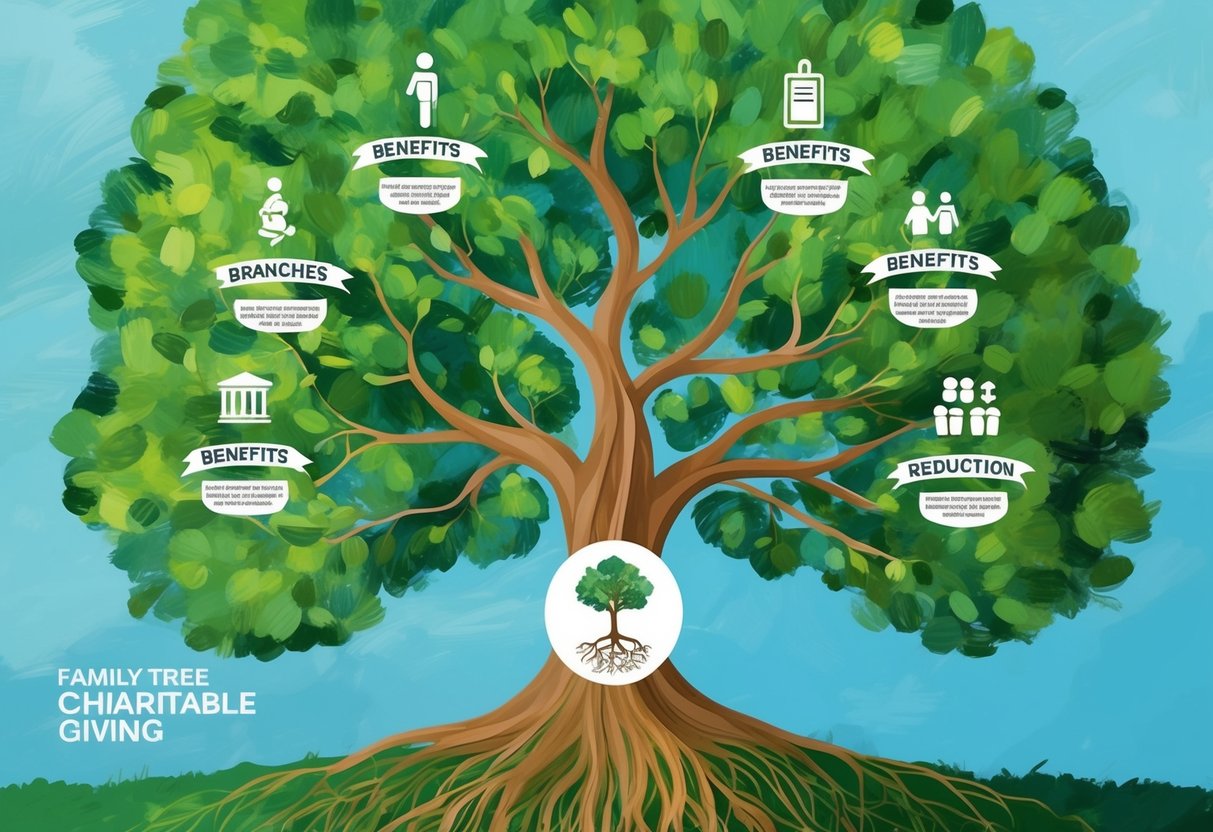
Have you ever considered how a family foundation could be a game-changer for your estate? Establishing one not only amplifies your charitable impact but also brings significant tax benefits. Trust me, it’s not just for billionaires—you can harness this powerful tool too.
Imagine having a dedicated vehicle for your philanthropy. A family foundation allows you to direct money to causes that matter most to you. This control ensures your values are front and center, guiding your legacy in meaningful ways.
From a tax perspective, family foundations offer great advantages. When you donate to your foundation, you can claim a tax deduction. This deduction can apply to up to 30% of your adjusted gross income if you’re contributing cash.
Let’s dive deeper. You might be thinking about estate taxes. Upon your passing, your private foundation can receive gifts excluding federal and state estate taxes. Assets like IRAs can also be designated to your foundation, securing your donations’ impact.
Establishing a family foundation requires a financial and time investment. Typically, it costs between 2% and 5% of its assets annually to operate. Yet, this commitment allows for targeted giving and a structured philanthropic approach.
Could this be the right fit for you? Setting up a family foundation is a strategic move that aligns with your philanthropic and tax-saving goals. It’s about taking charge and securing your future impact.
4) Qualified Charitable Distributions

Have you ever thought about how you could give to charity and also ease your tax burden? Qualified Charitable Distributions (QCDs) might be the answer.
As someone over 70½ with a traditional IRA, I can use QCDs to donate directly to qualified charities. This allows me to make a real difference and manage my taxes more efficiently.
Imagine not having to pay taxes on a chunk of your Required Minimum Distributions (RMDs). By directing these RMDs to a charity through a QCD, I can reduce the taxable amount. This can significantly lower my adjusted gross income. It’s like hitting two birds with one stone, isn’t it?
How much can be given through a QCD, you ask? I can donate up to $100,000 per year without it being counted as taxable income. This approach not only benefits the charities I care about but also preserves more of my wealth from taxation.
It’s crucial to report QCDs correctly on tax returns. For example, the IRS website provides guidance on this. Documenting these distributions accurately can save me from potential headaches during tax season.
I find it empowering to blend philanthropy with financial strategy. It’s about ensuring my contributions align with my values while also optimizing my estate planning. Have you considered making QCDs a part of your financial strategy? They might just be the tool you need to achieve your goals.
5) Donor-Advised Funds

Ever felt like traditional financial advice just doesn’t cut it anymore? I understand the frustration. That’s why I want to talk about a great tool you might not have considered yet: donor-advised funds (DAFs). These funds offer a strategic way to manage your charitable giving, and they can significantly reduce taxes on your estate.
Imagine having a charitable account where you call the shots. With a DAF, you decide when and how much to give to charities. You contribute money or assets into the fund, and these contributions are eligible for an immediate tax deduction. Sounds appealing, right?
Another perk is the ability to grow your contributed assets. The funds in a DAF can be invested and grow tax-free over time. This means more potential money for charities when you’re ready to make a grant. It’s like having a mini trust fund but aimed at causes you care about.
But there’s more! Donor-advised funds provide immense flexibility. You’re not pressured to decide on a recipient immediately. You can take your time to choose the charities you want to support. It’s ideal for those who want control over their philanthropic efforts without immediate commitment.
DAFs also play a key role in estate planning. By including a DAF, you can make a larger impact with the philanthropic legacy you leave behind. Since these funds help in reducing taxable estate value, they provide a powerful way to manage taxes while supporting causes you love.
Consider the option of a donor-advised fund as a long-term strategy for charitable giving. It’s more than just a financial tool; it’s a way to make sure your values and investments align seamlessly. If you’re ready to take control and maximize your charitable impact, a DAF might be the solution you’ve been looking for.
6) Charitable Lead Trusts

Charitable lead trusts offer a smart way to balance your giving with financial planning. By setting up one of these trusts, I can support charities over a set period while also planning for my estate. Does it seem like a win-win situation? It certainly can be.
I deposit cash or assets into the trust, which pays a charity of my choice for a specified time. Once this period ends, the remaining assets go to my selected beneficiaries. Why is this beneficial? It helps reduce the value of my taxable estate, possibly lowering estate taxes in the future.
There are different types of charitable lead trusts, like the charitable lead annuity trust, which pays a fixed amount yearly. Understanding these options can seem complicated, but they each offer unique benefits based on my goals and the economic climate.
Higher interest rates affect the trust’s value, impacting both the charity and my estate plan. For example, as interest rates rise, the value of the charity’s annuity interest may decrease, influencing the gift value to my beneficiaries. This impacts my financial strategy.
Through strategic planning, I align my charitable goals with my financial needs. This way, I maintain control and make a significant impact, both now and for the future. Isn’t balancing generosity and financial security a desirable goal for anyone looking ahead?
7) Leaving a Charitable Bequest

Have you thought about leaving a charitable bequest in your will? It’s not as daunting as it might seem.
By choosing to give a portion of your estate to charity, you can reduce the size of your taxable estate. This might allow you to preserve more of your assets for your loved ones.
Charitable bequests are straightforward. You simply update your estate planning documents with the name of the chosen charity and the specific amount or assets you’re leaving to them.
This way, you clearly communicate your wishes and ensure your generosity has the desired impact.
Here’s a tip: bequests can take the form of a set dollar amount, a percentage of your estate, or particular assets. By specifying your preferred method, you can retain control over how your estate is distributed, providing peace of mind about your legacy.
What’s great about this approach? The assets you leave to the charity aren’t subject to estate taxes. This can significantly lighten the estate tax burden, making it a strategic and thoughtful move. You benefit, your family benefits, and the charity benefits.
Imagine the impact your contribution could have! Whether you choose a local nonprofit or a major organization, your bequest can make a substantial difference.
Incorporating a charitable bequest into your estate plan is a powerful way to achieve multiple goals. It respects your financial legacy while also supporting causes you care about deeply. Is there a better way to make a lasting impact?
8) Gifting tangible personal property

Have you ever considered how the items you own—like artwork or collectibles—could impact your estate taxes? Let me share how gifting tangible personal property can be a strategic move.
When you gift items like these to charity, you’re not just clearing out your closet. You also potentially reduce your taxable estate. Could this solution help achieve your estate planning goals?
Many people accumulate personal property over the years without considering the implications for their taxes. These can include valuable antiques or even a classic car. By donating them, you help a cause and possibly receive a tax deduction based on the item’s fair market value.
What about the items currently collecting dust? Before deciding, review how these gifts align with your charitable goals.
It’s essential to ensure the property holds significant value and appeals to the charitable organization. This step ensures your gifts are both meaningful and advantageous tax-wise.
Some charities may sell the gifted property for funds, expanding their reach and enhancing your gift’s impact. For example, gifts of tangible property are considered a unique and often underutilized strategy for donors by organizations like the AARP Foundation.
Explore these opportunities and speak with tax professionals or financial advisors to understand the potential benefits and challenges. It’s about making smart decisions that benefit both your financial future and the causes you care about. How will gifting tangible personal property fit into your estate plan? Surely, there’s value waiting to be realized.
Understanding Charitable Giving

Charitable giving can play a crucial role in managing taxes on your estate. It not only supports causes you care about but also provides tax benefits that can help reduce your financial burden.
Definition and Types of Charitable Contributions
Charitable giving encompasses a variety of contributions. Cash donations to public charities are the most common and are eligible for tax deductions.
Contributions can also include non-cash items, like securities or real estate, which often have distinct tax advantages. Did you know that even artwork or jewelry might be eligible if donated correctly? Each type of donation comes with its criteria and potential benefits. Understanding these can tailor your strategy to fit your goals and maximize impact.
Legal Framework and Taxation Laws
The legal framework around charitable giving is quite specific. Donations must be made to recognized 501(c)(3) organizations to qualify for tax deductions.
Here’s a question: Is your charity qualified? Taxation laws also stipulate limits on how much you can deduct.
For example, cash contributions to public charities may be deductible up to 60% of your adjusted gross income. Knowing these rules helps you plan more effectively and avoid surprises. Additionally, staying informed about changes in tax laws ensures your estate planning remains aligned with your financial objectives.
Impact of Charitable Giving on Estate Taxes

When considering estate planning, I’ve found that charitable giving plays a crucial role. It not only supports causes you care about but also offers substantial tax benefits. These benefits can directly affect how your estate is valued and the deductions you might qualify for. Let’s examine these aspects more closely.
How Donations Affect Estate Valuation
Donations can significantly reduce the value of your taxable estate. How does this work?
When you allocate part of your estate to charity, that portion is excluded from estate taxes. For example, if you leave $500,000 to a qualified charity, your estate’s taxable value decreases by that amount.
The opportunities to decrease your tax liability offer you flexibility in managing your estate.
Many people don’t realize the impact this can have. A well-planned charitable gift can not only lower your tax bill but also enable you to allocate more to your heirs.
This balance can be particularly beneficial if you’re looking to optimize both your philanthropic goals and your family’s financial future.
Exemptions and Deductions
Why are exemptions and deductions important? They have the power to transform how much tax you owe.
Current U.S. tax laws allow charitable donations to be 100% deductible when given to qualified organizations. This is a major advantage.
By taking full advantage of these deductions, you free up more resources for other expenses or investments.
Different tools like trusts and donor-advised funds can enhance these benefits.
These instruments can help you manage your charitable contributions more effectively, ensuring that your tax strategy aligns with your long-term financial plans.
If you’re feeling stuck in your current approach, these options might just provide a refreshing new path forward.