Are you tired of waiting for that elusive raise to boost your income? Good news! You don’t have to rely on your boss to fatten your wallet. I’m here to share a game-changing strategy that can help you grow your income by 25% in just six months, without begging for a raise or switching jobs.  By focusing on smart money moves and leveraging your existing resources, you can significantly increase your income in a short time. Think about it - what could you do with an extra 25% in your pocket? Pay off debts faster? Save for that dream vacation? Or maybe kickstart your retirement fund? This plan isn’t about working harder. It’s about working smarter with the money you already have. We’ll explore practical strategies to maximize your current income, find new investment opportunities, and harness the power of compounding. Are you ready to take control of your financial future?
Key Takeaways
- You can boost your income by 25% in six months without relying on a raise
- Smart investment choices and side hustles can significantly increase your earnings
- Consistent saving and compounding interest are key to long-term wealth growth
Understanding Income Growth
Income growth is about more than just getting a raise. It's about expanding your financial horizons and creating multiple streams of income. Let's explore how to assess your current position, set achievable targets, and implement effective strategies to boost your earnings.Assessing Your Current Financial Position
To grow my income, I first need to know where I stand. I start by calculating my total annual salary and any additional income sources. This gives me a clear picture of my financial baseline. Next, I review my monthly expenses and savings. How much am I setting aside? Is my contribution amount to my savings account sufficient? I also evaluate my investments. Am I diversifying? Are my stocks paying dividends? Understanding these aspects helps me identify areas for improvement and potential growth.
Setting Realistic Income Targets
With a clear view of my finances, I can set meaningful goals. But what’s realistic? A 25% increase over six months is ambitious but achievable with the right approach. I use a salary calculator to project potential growth. This helps me visualize my target and break it down into monthly milestones. I ask myself: What percentage increase do I need each month to reach my goal? How will this impact my savings goal? Setting specific, measurable targets keeps me motivated and on track.
Income Growth Strategies
Now, how do I actually increase my income? I consider multiple avenues:
- Skill development: Can I learn new skills to increase my value at work?
- Side hustles: What talents can I monetize outside my day job?
- Investments: How can I make my money work harder for me?
I look into different types of investments that align with my risk tolerance and goals. Maybe I can boost my portfolio with high-dividend stocks or explore real estate opportunities. Remember, income growth isn’t just about a higher wage. It’s about creating a robust financial ecosystem that generates wealth from multiple sources.
Maximizing Your Current Income
Boosting your income without changing jobs is possible with smart strategies. Let's explore two powerful approaches that can help you make the most of your current [financial situation](/how-to-earn-financial-freedom/).Effective Budgeting Techniques
Creating a solid budget is key to growing your wealth. I’ve found that tracking every dollar you earn and spend can be eye-opening. Start by listing all your income sources and expenses. Then, look for areas where you can cut back. Try the 50/30/20 rule: 50% for needs, 30% for wants, and 20% for savings or debt repayment. This simple framework can help you prioritize your spending. Consider using a budgeting app to automate the process. Many apps can link to your bank accounts and categorize your expenses for you. This makes it easier to spot trends and adjust your habits. Don’t forget to review your budget regularly. As your income or expenses change, your budget should too. Aim to increase your savings rate over time.
Negotiation Skills for Pay Increases
Asking for a raise can be intimidating, but it’s often necessary for income growth. Start by researching your market value. Websites like Glassdoor or Salary.com can give you a good baseline. Prepare a list of your accomplishments and how they’ve benefited the company. Quantify your achievements whenever possible. For example, “I increased sales by 15% last quarter.” Practice your pitch with a friend or family member. Be confident but not aggressive. Focus on your value to the company, not personal financial needs. Timing is crucial. Ask for a raise after a big win or during your annual review. If the answer is no, ask what you need to do to earn a raise in the future. Set a follow-up meeting to revisit the topic.
Investment Opportunities
 Let’s talk about smart ways to grow your money. I’ve found some powerful investment tools that can boost your income without relying on a raise from your boss. Ready to take control of your financial future?
Understanding Stocks, Bonds, and Dividends
Stocks are like owning a piece of a company. When the company does well, your stock value can go up. I love stocks that pay dividends because they give you regular income. It’s like getting paid just for owning something! Bonds are loans you give to companies or the government. They’re usually safer than stocks but might grow slower. I use bonds to balance out my riskier investments. Here’s a quick comparison:
Investment
Risk Level
Potential Return
Stocks
Higher
Higher
Bonds
Lower
Lower
Dividends
Varies
Regular Income
Remember, diversifying across these can help manage risk while aiming for growth.
Real Estate and REITs
Ever dreamed of being a landlord without the headaches? That’s where REITs come in. Real Estate Investment Trusts let you invest in property without buying a whole building. I like REITs because:
- They often pay good dividends
- You can invest with less money than buying property
- They’re managed by professionals
Real estate can be a great way to build wealth over time. Whether it’s through REITs or owning property, it’s worth considering as part of your investment mix.
Certificates of Deposit and Money Markets
Looking for a safe place to park your cash? Certificates of Deposit (CDs) and Money Market accounts might be your answer. They’re like savings accounts on steroids. CDs lock your money away for a set time, usually giving you a better interest rate in return. Money Market accounts often offer higher rates than regular savings but with more flexibility. Why consider these?
- Low risk
- Predictable returns
- Can be a good place for your emergency fund
Have you checked the rates lately? You might be surprised at how much more your money could be earning.
The Power of Compounding
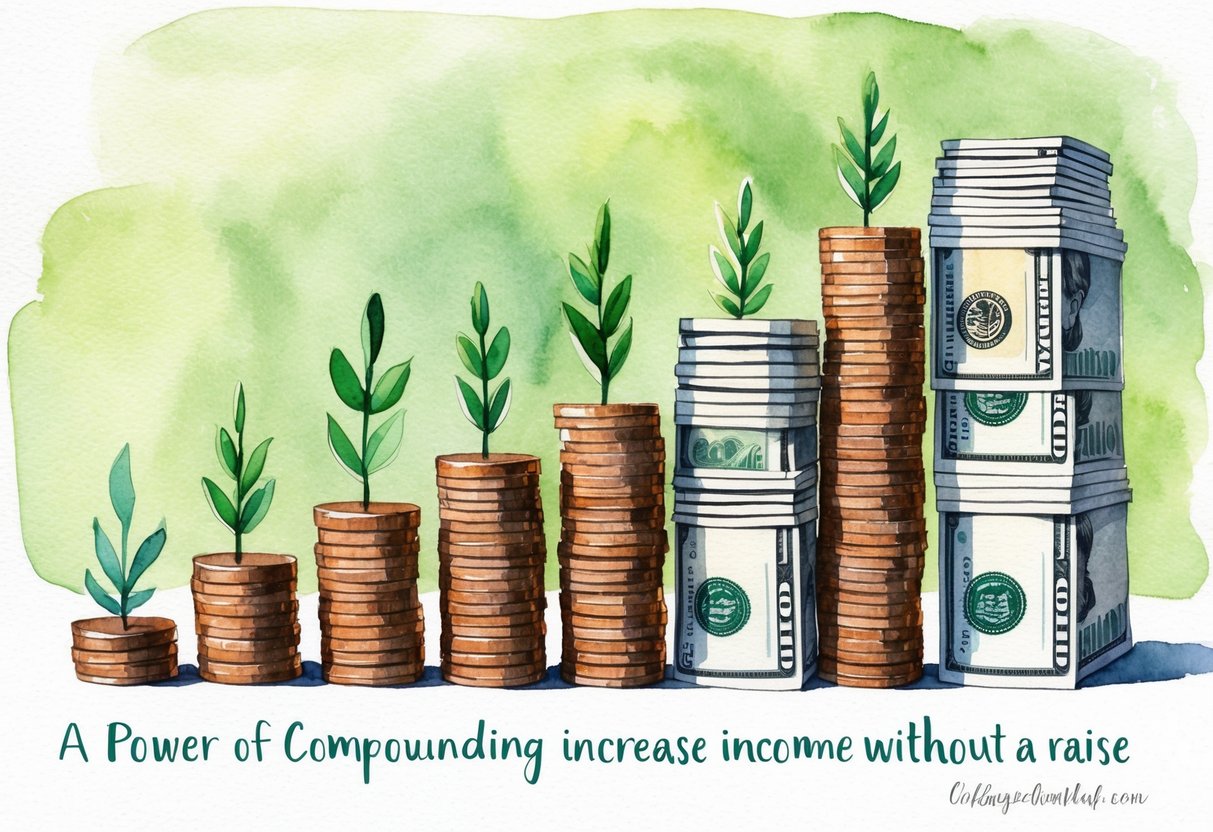 Compounding is like a financial superpower. It can turn small, consistent investments into a fortune over time. Let’s explore how this magic works and how you can harness it to boost your wealth.
Compound Interest Explained
Compound interest is money making money on your money. It’s the secret sauce of wealth building. When you invest, you earn interest on your initial amount. But here’s where it gets exciting - you also earn interest on the interest you’ve already earned. Let’s say you invest $1,000 with a 5% annual interest rate. After one year, you’d have $1,050. The next year, you earn interest on $1,050, not just the original $1,000. This snowball effect can be huge over time. Want to see the real power? If you kept that $1,000 invested for 30 years at 5% interest, you’d end up with over $4,300. That’s the magic of compound interest.
Choosing the Right Compounding Frequency
How often your interest compounds can make a big difference. The more frequent the compounding, the faster your money grows. Common frequencies are yearly, quarterly, monthly, or even daily. Let’s compare. If you invest $10,000 at 6% interest for 10 years:
- Annual compounding: $17,908
- Monthly compounding: $18,193
- Daily compounding: $18,221
The difference might seem small, but it adds up. When choosing investments, look for ones with more frequent compounding. Many banks offer savings accounts with daily compound interest. Remember, time is your friend with compounding. The earlier you start, the more your money can grow. So why wait? Start putting your money to work today.
Saving Strategies
 Saving money is about more than just cutting expenses. It’s about making your money work harder for you. Let’s explore some powerful strategies to supercharge your savings.
Automating Your Savings
I’ve found that automating savings is one of the most effective ways to grow your wealth. It’s like putting your financial growth on autopilot. How can you do this? Set up automatic transfers from your checking account to your savings account each payday. Start with a small contribution amount, maybe just 5% of your income. Then gradually increase it. What about your 401(k)? If you’re not maxing it out, bump up your contribution by 1% every few months. You’ll hardly notice the difference in your paycheck, but your future self will thank you. Remember, it’s not about how much you start with. It’s about consistency. Even small amounts add up over time.
High-Interest Savings Accounts
Are you letting your money collect dust in a low-interest account? That’s like leaving money on the table. Let’s change that. Look for high-yield savings accounts with competitive interest rates. Some online banks offer rates well above the national average. Why settle for less? But don’t just chase the highest rate. Consider factors like:
- Minimum balance requirements
- Monthly fees
- Ease of access to your funds
- FDIC insurance
Remember, your emergency fund should be easily accessible. But for longer-term savings goals, consider certificates of deposit (CDs) or money market accounts. They often offer higher rates in exchange for less liquidity. Is your money growing as fast as it could be? If not, it’s time to make a change.