
Manchester, NH is a hidden gem for real estate investors. I’ve seen many cities come and go, but this one has staying power.
With its mix of historic charm and modern amenities, Manchester offers unique opportunities for savvy investors.

Real estate investing in Manchester, NH can be highly profitable if you know where to look and how to play the game. The city’s diverse property market includes everything from single-family homes to commercial developments.
Are you ready to tap into this potential goldmine?
I’ve found that networking is key in Manchester’s real estate scene. The New Hampshire Real Estate Investors Association holds monthly meetings in Manchester, connecting investors, realtors, and other industry professionals.
Have you considered the power of building relationships in growing your real estate portfolio?
Key Takeaways
- Manchester’s diverse property market offers multiple investment opportunities
- Networking with local real estate professionals can lead to lucrative deals
- Understanding Manchester’s economic drivers is crucial for successful investing
Understanding Real Estate Investing Fundamentals

Real estate investing in Manchester, NH offers exciting opportunities. Let’s explore the key aspects you need to know to get started on your investment journey.
Types of Real Estate Investments
When it comes to real estate investing, there are several options to consider. Here are the main types:
- Residential properties: Single-family homes, duplexes, and small multi-unit buildings
- Commercial properties: Office spaces, retail stores, and warehouses
- Mixed-use developments: Combining residential and commercial spaces
- Real Estate Investment Trusts (REITs): Investing in real estate companies
Each type has its own pros and cons. I find that residential properties are often a good starting point for new investors. They’re easier to understand and manage.
Commercial properties can offer higher returns, but they also come with more complexity. Mixed-use developments are gaining popularity in Manchester, providing diverse income streams.
Pros and Cons of Real Estate Investing
Real estate investing has its upsides and downsides. Let’s take a look:
Pros:
- Potential for steady cash flow
- Property appreciation over time
- Tax benefits
- Leverage to build wealth
Cons:
- Requires significant upfront capital
- Property management responsibilities
- Market fluctuations
- Potential for unexpected expenses
I believe the benefits often outweigh the drawbacks. Real estate can be a powerful tool for building long-term wealth. But it’s crucial to understand both sides before diving in.
Setting Investment Goals
What do you want to achieve with your real estate investments? Setting clear goals is essential for success. Here are some questions to ask yourself:
- Am I looking for short-term gains or long-term wealth building?
- Do I want passive income or am I willing to be more hands-on?
- How much risk am I comfortable taking?
- What’s my target return on investment?
Your answers will shape your investment strategy. Maybe you’re aiming for rental income to supplement your retirement. Or perhaps you’re interested in flipping properties for quick profits.
I recommend starting with one or two specific, measurable goals. This focus will guide your decisions and help you stay on track.
Real Estate Market Overview: Manchester, NH
Manchester’s real estate scene is buzzing with activity. The city offers a mix of opportunities for savvy investors looking to grow their wealth through property.
Median Home Price and Market Trends
The median sale price of a home in Manchester was $450K last month. That’s an 8.2% jump from last year. Not too shabby, right? I’ve seen markets with worse returns.
Homes are flying off the shelves here. On average, properties get 2 offers and sell in about 26 days. That’s a hot market if you ask me.
The price per square foot is up too. It’s now at $260, a 7.9% increase from last year. What does this mean for you? There’s room for appreciation, folks.
Understanding the Unemployment Rate
Now, let’s talk jobs. A strong job market often leads to a robust real estate market. Why? Because employed people need places to live.
Manchester’s job scene is stable. While I don’t have the exact unemployment rate, I can tell you that New Hampshire as a whole is doing well.
A healthy job market means more potential tenants if you’re thinking about rental properties. It also means more potential buyers if you’re looking to flip.
Location Analysis for Property Investments
Location, location, location. Isn’t that what we always hear? Well, in Manchester, it rings true.
Downtown Manchester home prices have skyrocketed, with a 63.2% increase. That’s a goldmine for those who got in early. But is it too late now?
Not necessarily. Manchester remains the #1 hottest market in the U.S. That’s saying something, isn’t it?
What makes Manchester so attractive? It’s the largest city in New Hampshire, offering a mix of urban amenities and New England charm. Plus, it’s just an hour from Boston. Commuter heaven, anyone?
Financing Real Estate Investments

Investing in Manchester’s real estate market requires smart financing strategies. Let’s explore some key options that can help you maximize your returns and minimize risks.
Traditional Mortgage vs. Hard Money Lenders
When it comes to financing investment properties, we have two main choices: traditional mortgages and hard money lenders.
Traditional mortgages often offer lower interest rates and longer repayment terms. They’re great for long-term investments.
But what if you need quick cash for a fix-and-flip? That’s where hard money lenders come in. They can provide fast funding, often within days. The catch? Higher interest rates and shorter terms.
I’ve used both options in my investing career. Traditional mortgages work well for rental properties. Hard money loans are my go-to for quick flips.
Creative Financing Options
Who says you need a bank to invest in real estate? There are plenty of creative ways to finance your deals.
- Owner financing: The seller acts as the bank.
- Lease options: Rent-to-own agreements.
- Partnerships: Pool resources with other investors.
- Private money lenders: Friends, family, or other individuals.
I’ve used lease options to control properties with little money down. It’s a powerful strategy for building wealth quickly.
Importance of Lenders in Investing
Lenders are the lifeblood of real estate investing. Without them, most of us couldn’t grow our portfolios beyond a few properties.
Building strong relationships with lenders is crucial. I always make sure to:
- Maintain a good credit score
- Keep detailed financial records
- Communicate openly and honestly
Remember, a good lender can be the difference between a successful deal and a missed opportunity. In Manchester’s competitive market, having reliable financing options gives you an edge.
Are you leveraging your relationships with lenders to their full potential?
Investment Property Acquisition
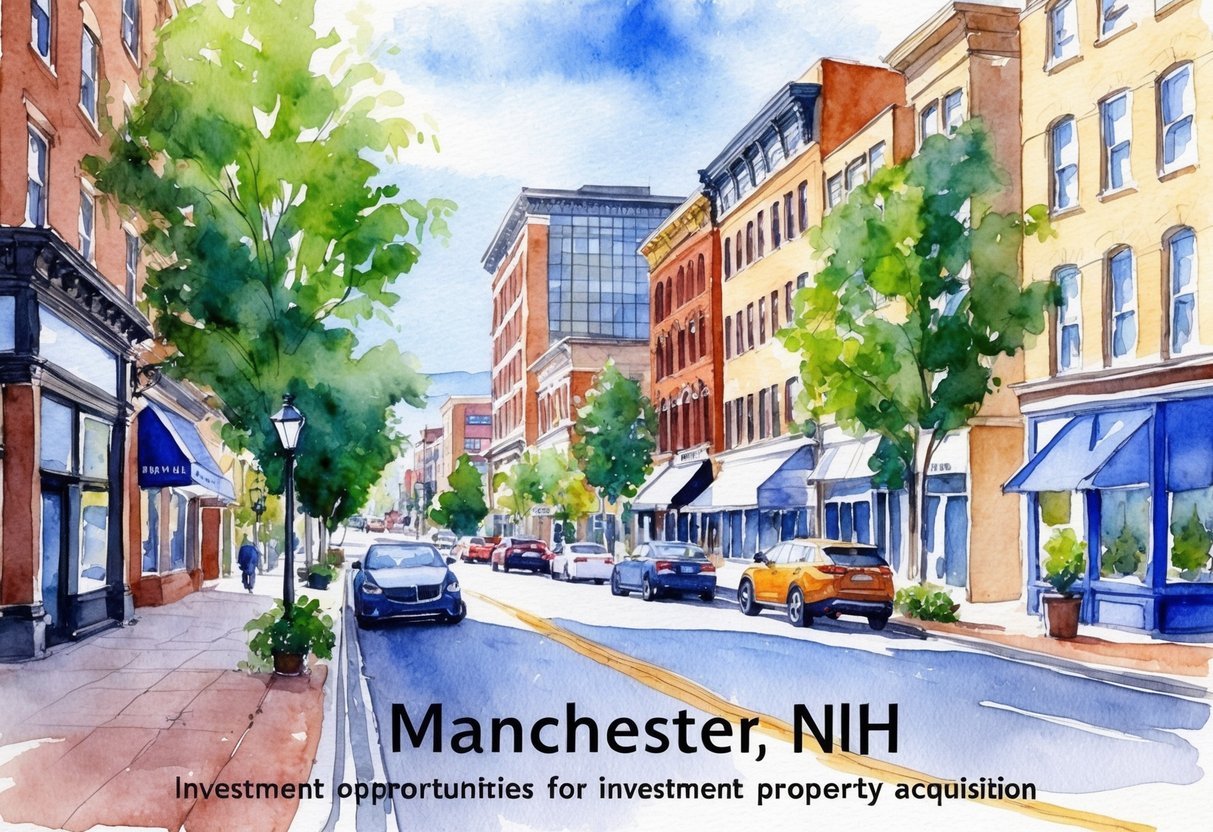
Buying investment properties in Manchester, NH can be a smart way to build wealth. I’ve found that knowing the right strategies makes all the difference. Let’s look at how to find great deals, use tax benefits, and handle different property types.
Finding the Right Investment Properties
Are you ready to spot hidden gems in Manchester’s real estate market? I always start by connecting with local investors to get insider tips. They know which neighborhoods are on the rise.
I also look for off-market deals. These can be gold mines! Many aren’t listed publicly. How do you find them? Build relationships with real estate agents, join investor groups, and drive around looking for distressed properties.
Don’t forget to crunch the numbers. What’s the potential rental income? How much will repairs cost? I always factor in taxes, insurance, and a cushion for unexpected expenses.
The Process of 1031 Exchange
Ever wondered how to avoid a big tax hit when selling a property? A 1031 exchange is your answer. It lets you sell one investment property and buy another without paying capital gains taxes right away.
Here’s how it works:
- Sell your property
- Find a qualified intermediary to hold the funds
- Identify a new property within 45 days
- Close on the new property within 180 days
The key is timing. You must follow these rules strictly. But done right, a 1031 exchange can help you trade up to bigger, better properties without losing money to taxes.
Dealing with Foreclosures and Multi-Family Homes
Foreclosures can be great deals, but they come with risks. I always inspect these properties carefully. Sometimes banks won’t let you inside before buying. That’s when experience really counts.
Multi-family homes are my favorite for cash flow. Why? More units mean more rent checks. They can be easier to finance too. Banks like the steady income.
In Manchester, I’ve seen many investors focus on multi-family properties. They often provide better returns than single-family homes. But they also require more management. Are you ready for that challenge?
Remember, each property type has its pros and cons. What fits your goals and skills best?
Real Estate Networking in Manchester, NH
Building connections is key to success in real estate investing. Manchester offers plenty of chances to meet fellow investors and learn from experts.
Why Networking is Essential for Investors
I’ve found that networking is the lifeblood of real estate investing. Why? It opens doors to deals you’d never find otherwise. Have you ever wondered how some investors always seem to snag the best properties?
It’s often through their network. In Manchester, I’ve seen investors team up on projects, share insider knowledge, and even find private lenders through networking. Isn’t it time you tapped into this goldmine?
Real estate networking events in Manchester bring together a mix of newbies and seasoned pros. This blend creates a perfect learning environment. You can find mentors, partners, or even your next big opportunity.
Identifying and Attending Past Events
I’ve noticed Manchester has a thriving real estate community with regular meetups. The New Hampshire Real Estate Investors Association holds monthly meetings in Manchester.
These gatherings are goldmines for learning and connecting.
Have you considered joining a Real Estate Investing Meetup Group? They often host events at local venues like The Standard Social Club.
It’s a great way to network in a relaxed setting.
For those looking to dive deeper, I’ve found the Real Estate Wealth Institute-New England offers specialized networking events.
They focus on creating assets and growing passive income. Isn’t that what we’re all after?
Remember, consistency is key. Attend these events regularly, and you’ll soon become a familiar face in Manchester’s real estate circles.
Working with Real Estate Professionals

Teaming up with experts is key to success in Manchester’s real estate market. Their knowledge and connections can make or break your investments.
The Role of Agents and Property Managers
Real estate agents are my go-to resource for finding great deals in Manchester. They have insider info on properties before they hit the market.
Isn’t that an advantage we all want?
I always ask agents about neighborhood trends and future development plans. This helps me spot areas with growth potential.
Property managers are worth their weight in gold. They handle tenant screening, rent collection, and maintenance. This frees up my time to focus on growing my portfolio.
Here’s a quick breakdown of what these pros can do:
- Agents: Market analysis, property sourcing, negotiations
- Property Managers: Tenant management, repairs, financial reporting
Building Relationships with Landlords and Professionals
Networking is crucial in real estate. I make it a point to attend local investor meetups and join groups like the New Hampshire Real Estate Investors Association. These connections often lead to off-market deals.
I’ve found that building rapport with experienced landlords is invaluable. They share practical tips on managing properties and avoiding common pitfalls.
Don’t forget about other professionals:
- Lawyers for contract reviews
- Accountants for tax strategies
- Contractors for reliable renovations
I keep a list of trusted pros on speed dial. When a deal comes up, I can move fast and with confidence.
Beginner’s Guide to Real Estate Investment in Manchester, NH

Real estate investing in Manchester, NH can be a great way to build wealth and secure your financial future. It offers unique opportunities for both new and experienced investors.
Initial Steps for New Investors
As a beginner, I recommend starting with thorough research. Learn about Manchester’s real estate market trends.
What areas are up-and-coming? Which neighborhoods offer the best rental yields?
Next, I suggest networking. Join the New Hampshire Real Estate Investors Association. It’s a great place to meet experienced investors and learn from their successes and mistakes.
Don’t forget about financing. Explore different mortgage options. Can you leverage your existing assets?
Remember, creative financing can often make or break a deal.
Lastly, consider partnering with a local real estate agent. They can provide invaluable insights into the Manchester market and help you spot good deals.
Building a Real Estate Investment Portfolio
Once you’ve got your feet wet, it’s time to think bigger.
How can you diversify your Manchester real estate portfolio?
I recommend looking into different property types.
Single-family homes, multi-family units, and commercial properties each have their pros and cons.
Manchester offers 5,693 investment opportunities, giving you plenty of options to choose from.
Consider your long-term strategy.
Are you aiming for steady rental income or hoping to flip properties for quick gains? Maybe a mix of both?
Don’t shy away from fixer-uppers.
They can offer great returns if you’re willing to put in the work. Just make sure you accurately estimate renovation costs.
Remember, successful real estate investing is about playing the long game.
Be patient, keep learning, and don’t be afraid to take calculated risks.