
Are you tired of the same old investment advice that just doesn’t move the needle? I totally get it—watching money crawl in standard retirement accounts, wondering if there’s a better way.
Real estate investing in Madison, WI gives me the chance to take control, build real wealth, and reshape my financial future in ways that stocks and bonds just can’t.

Madison isn’t just another city on the map. It’s a thriving hub with a steady economy, strong demand for housing, and a culture that pulls in new residents year after year.
But why should I care? Those steady trends mean real opportunities for income and growth, whether I’m looking at duplexes, multi-family properties, or other investment options.
If I want to break free from traditional financial strategies and create lasting results, leveraging Madison’s real estate market could be the smartest move I ever make.
Key Takeaways
- Madison offers strong potential for real estate investment returns.
- Understanding local trends is key to smart investing decisions.
- The right strategies and team set investors apart in this market.
Understanding the Madison, WI Real Estate Market
Madison offers stable home values, diverse neighborhoods, and developments that keep attracting buyers and renters. This city in Wisconsin has become a hotspot for real estate investing with strong long-term growth and solid value retention.
Current Trends in Home Values
When I look at Madison’s real estate market, I can’t ignore how home values continue to rise. Unlike other Midwest cities, Madison’s housing prices not only stayed strong through past downturns but also bounced back quickly.
In 2025, low housing inventory and steady demand keep pushing prices up. For anyone frustrated by slow stock market returns, these home values offer a form of real wealth that’s less likely to vanish overnight.
Why ride Wall Street’s rollercoaster when Madison homes keep gaining value, year after year?
Key facts:
- Price growth is supported by population increases and limited supply.
- Homes often sell above asking price, with days on market staying low.
- Demand from students, workers, and families produces stable rental returns.
Neighborhood Overview
Do you want a walkable area, or are you looking for space for your family to grow? Madison’s neighborhoods offer choices for every lifestyle.
- Downtown & Capitol: Great for professionals and students, with high demand and strong rental rates.
- Near West Side: Established homes, good schools, and a family-friendly vibe.
- East Side: Growing with new shopping and dining, attracting young families and professionals.
- Suburbs (Verona, Fitchburg, Middleton): Larger homes, quieter streets, and excellent schools make these popular with parents.
I focus on areas that blend appreciation potential with rental income. Finding a community with parks, easy commutes, and solid infrastructure matters as much to me as the numbers.
Recent Developments and Amenities
Recent years have brought plenty of improvements across Madison. New mixed-use projects and apartment buildings now rise near the downtown lakes.
Popular grocery stores, gyms, and local restaurants have opened in revitalized corridors. What does this mean for a real estate investor like me? More amenities make an area attractive, which drives demand and lifts property values.
Whether it’s a new bike path, a modern school, or medical centers, these features bring both buyers and renters to your door. If you invest near the heart of these upgrades, your returns can be even stronger.
These recent developments and amenities make Madison a city that keeps growing and evolving.
Advantages of Real Estate Investing in Madison, WI

Madison is a city with strong job growth, great schools, and a vibrant cultural scene. Property demand keeps rising as more families, workers, and students move to the area.
Economic Growth and Job Market
When I look at investments, I want cities with real growth. Madison stands out because it isn’t a boom-and-bust town.
The job market here is built on a mix of healthcare, tech, research, and public service. Large employers like the University of Wisconsin-Madison, Epic Systems, and multiple hospitals keep the economy stable.
This diverse job base means employment usually stays strong, even when other markets face layoffs. Low home vacancy rates in Madison mean demand for rentals is steady, making passive income much more reliable for investors.
As wages rise and rents continue to climb, property owners can see rents outpace inflation.
Here’s a quick look at why Madison’s job market matters:
Factor
Madison, WI Highlights
Major Employers
University, tech, health care, public
Vacancy Rate
Among the lowest in Wisconsin
Job Growth
Strong and consistent
Quality of Life and Outdoor Activities
Location is more than just a pin on a map. Madison boasts some of the best biking trails, lakes, and parks in Wisconsin.
It’s not uncommon for families to bike around Lake Monona, paddleboard on Lake Mendota, or enjoy the city’s 260+ parks. Because outdoor activities are easy to find, demand for living space near trails and water stays high.
I’ve seen more people moving in just to be close to the city’s recreational perks. Madison also has a lively cultural scene and events, from music festivals to farmers markets.
This combo gives the city lasting appeal, making it attractive for long-term tenants. Higher tenant satisfaction often leads to lower turnover and better property care.
Educational Opportunities
Education is non-negotiable for many families and young professionals. The University of Wisconsin-Madison draws thousands of students, researchers, and faculty from around the world every year.
That’s predictable rental demand for any investor. The public school system in Madison is known for high ratings and competitive programs.
Newcomers often choose Madison for their kids, which fuels consistent housing needs. There’s also a steady stream of graduates who decide to start their careers and families in the area, so the renter pool stays fresh.
For me, this means properties rarely sit empty. Strong education benefits everyone involved—students, families, and, ultimately, real estate investors who want dependable income streams.
Types of Real Estate Investments in Madison
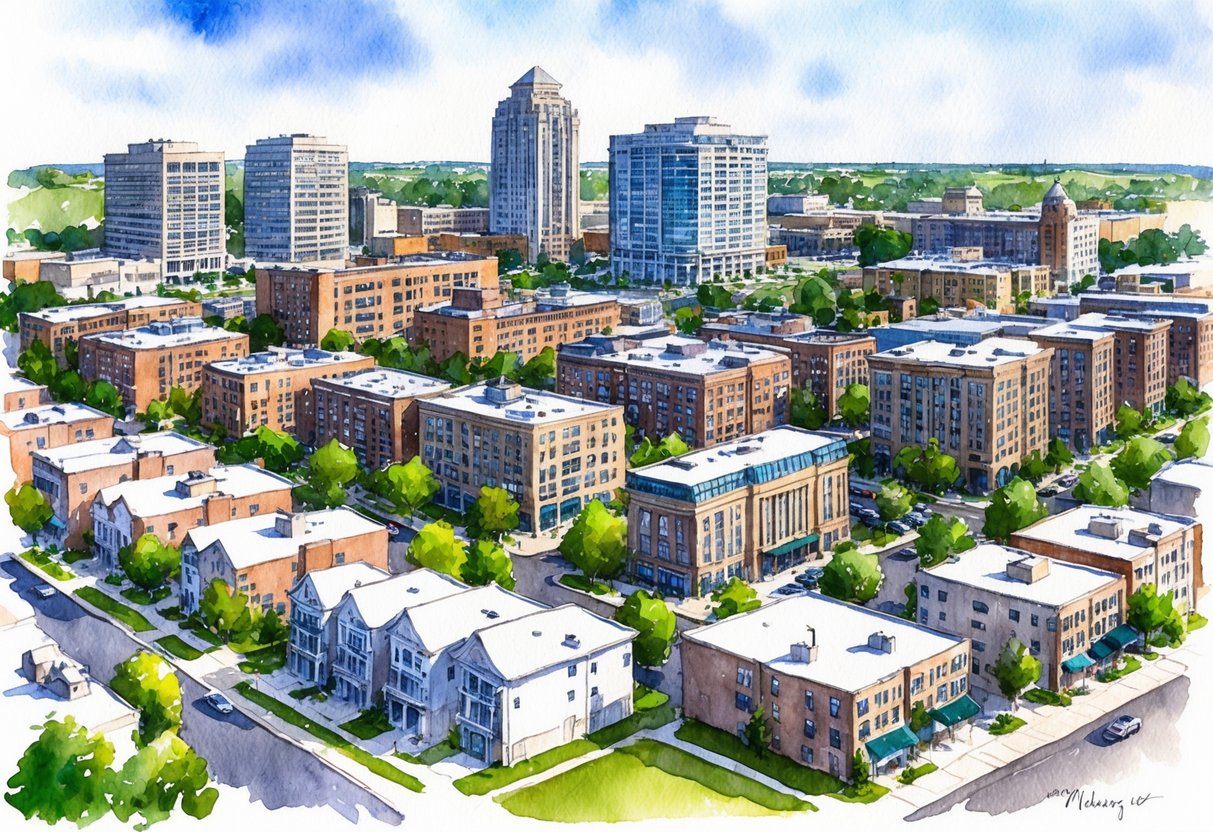
Madison offers several avenues for real estate investors to consider. Each option brings its own set of financial benefits, risks, and management needs.
Residential Properties
When I look at the Madison real estate market, single-family homes and condos are some of the most dependable investments. High demand for housing has kept home values rising at a steady pace.
Many people, including young professionals and families, want to live near the city’s parks, schools, and tech employers. Buying a home to rent can provide steady monthly income.
If I buy in neighborhoods with good schools and low crime, I usually see fewer vacancies and higher rents.
Here’s a quick breakdown:
Type
Typical Rent Range
Common Tenants
Upside
Single-family
$1,500 - $2,500
Families, couples
Lower turnover, stable
Condo/Townhome
$1,200 - $2,000
Young professionals
Easy maintenance, affordable
I also get the benefit of building equity over time, which can help offset the impact of inflation and market swings.
Commercial Real Estate
Unlike residential options, commercial properties—like office spaces and retail buildings—cater to the needs of businesses. Madison’s economy is strong, with plenty of stable employers and a growing healthcare and tech sector.
This creates strong demand in areas close to downtown or popular business districts. If I’m thinking about diversifying my real estate portfolio, commercial real estate can provide higher returns, but with added complexity.
Leases are usually longer and tenants are responsible for some expenses, but vacancies can last longer if a business leaves.
Here’s what I focus on when weighing commercial real estate:
- Location: Proximity to business districts.
- Tenant Quality: Well-established companies.
- Lease Length: Multi-year agreements.
Investors ready to manage longer vacancy periods may find commercial properties offer solid opportunities for growth.
Multi-Family Units
Multi-family units—like duplexes, triplexes, and apartment buildings—can be powerful wealth builders. I see these as the bridge between residential and commercial investing.
They bring multiple rental incomes under one roof, which helps smooth out cash flow if a unit sits empty. In Madison, multi-family properties often attract college students, young families, and professionals.
The rental market is strong, especially in areas near the University of Wisconsin or bus lines. Owning a duplex or four-plex lets me spread risk.
Managing several apartments in a single location is more efficient than owning properties all over town. Madison’s multi-family real estate inventory includes a mix of small and large buildings.
If my goal is long-term income, tax advantages, and equity growth, I pay close attention to location, building condition, and the strength of neighborhood rental demand.
Strategies for Successful Real Estate Investing

Consistent cash flow and the right timing are both critical to making your money work. Every move matters, from the property you choose to how you manage it over time.
Buy and Hold Approach
When I look at the buy and hold approach, I see a method that prioritizes steady, long-term gains. I acquire a property—often a single-family home or a small multi-family unit—and rent it out to generate passive income month after month.
Over time, I benefit from rent payments as well as property appreciation. For investors like me, this method is attractive because it can cushion against inflation and build equity with each mortgage payment.
In Madison, having a reliable tenant pool from the university and local workforce makes vacancy risks lower than in many other markets. I pay close attention to location, access to schools, and employers, because these details drive future value.
For more on the local market advantages, investing in Madison real estate offers more stability than most expect.
I also keep my finances healthy by planning for repairs and budgeting for slow months. Real estate investment isn’t just about buying—it’s about holding wisely.
Fix-and-Flip Opportunities
Fix-and-flip isn’t for the faint of heart. Still, if I do my homework, it can create real income.
In this strategy, I hunt down properties that need work, renovate them efficiently, and then sell for a profit. This is hands-on—attention to detail and planning matter a lot.
Many investors like fix-and-flip for its potential speed. A successful flip in Madison might take a few months, depending on how much work the place needs.
I stick to a strict checklist:
- Calculate renovation costs accurately
- Know the after-repair market value
- Work with contractors I trust
- Prepare for surprises
Location matters just as much as the numbers. I look for neighborhoods on the rise and close to Madison’s best amenities, since that adds appeal for buyers.
Picking the wrong property or cutting corners on renovations can ruin your profits. So I always run the numbers twice—no exceptions.
Sound decisions, not emotion, shape my investments. If you want to dig deeper, check out these key factors in Madison real estate that help with these choices.
Working With a Real Estate Agent in Madison

I know firsthand that the right real estate agent in Madison, Wisconsin, can make or break your investment success. A strong local expert helps you spot hidden opportunities and avoid costly mistakes.
They’ll handle complex deals while you focus on your bigger goals.
Choosing the Right Real Estate Agent
How do I pick an agent who really gets Madison real estate? I start by finding someone with a solid record helping investors—not just regular homebuyers.
I always ask for references and check their recent investment property deals. It’s worth the extra time.
I want agents who know the neighborhoods inside and out. The best ones tell me not just where to buy, but where to avoid.
They answer my questions about zoning, school districts, and rental demand honestly—even when it’s not what I want to hear.
When I interview agents, I focus on these areas:
- Experience with local investment properties
- Communication style and responsiveness
- Willingness to be direct, even when the answer isn’t pretty
- Familiarity with local contractors and lenders
It’s not just about finding someone friendly. I want a real estate agent in Madison who can negotiate, problem-solve, and spot risks before I do.
This is about protecting my money and, honestly, my peace of mind.
Local Expertise and Networking
Why does local expertise matter so much? Real estate in Madison, Wisconsin is competitive.
An agent with strong local roots usually knows about listings before they hit the market. They can share insights about up-and-coming areas—sometimes stuff you just can’t find online.
A connected agent introduces me to trusted inspectors, lenders, and property managers. That saves time and helps me dodge the fly-by-night folks.
The 608 Team even points out that some Madison REALTORS® go way beyond just closing deals. They actually help investors build long-term wealth.
Here’s what local expertise gets me:
Benefit
Example
Off-market deals
Early info about pocket listings
Rental market knowledge
Advice on high-demand areas for investors
Problem-solving
Quick fixes for code, zoning, or tenant issues
I don’t just buy property—I build relationships. When my agent sticks around after closing, I know I’ll have backup for repairs, tenant changes, and the weird surprises that always pop up.