Making $3,000 a month selling digital products might sound like a pipe dream, but it’s more achievable than you think. I’ve seen countless people transform their financial lives by tapping into this lucrative market. With the right strategy and dedication, you can create and sell digital products that generate a steady income of $3,000 or more each month.  Digital products are a goldmine because they’re easy to create, have low overhead costs, and can be sold repeatedly without restocking. From e-books and online courses to digital planners and graphic designs, the possibilities are endless. One person even made $7,000 in six months selling digital stickers on Etsy. Can you imagine the potential? But here’s the secret: success doesn’t happen overnight. It takes smart planning, quality products, and effective marketing. Are you ready to put in the work to build your digital empire?
Key Takeaways
- Create high-quality digital products that solve specific problems for your target audience
- Develop a strong brand and marketing strategy to stand out in the online marketplace
- Continuously improve your products and expand your offerings to increase revenue potential
Understanding Digital Products
Digital products are the key to unlocking [passive income](/passive-income-streams/) streams online. I'll show you why they're so powerful and how you can leverage them to boost your financial freedom.Defining Digital Products
Digital products are intangible goods that exist in electronic form. They’re items you can create once and sell repeatedly without needing to restock inventory. Think of them as assets you build that keep working for you long after you’ve finished creating them. These products come in many forms, from ebooks to online courses. The beauty lies in their scalability. You can sell one copy or a thousand without additional production costs. Are you tired of trading time for money? Digital products break that cycle, letting you earn while you sleep.
Types of Digital Products
The world of digital products is vast and varied. Here are some popular options:
- Ebooks: Share your expertise in written form
- Online courses: Teach skills through video lessons
- Software: Create tools that solve problems
- Templates: Offer time-saving designs
- Digital art: Sell your creative works online
Each type caters to different skills and audiences. PDF ebooks are a great starting point for many. They’re simple to create and can cover any topic you’re knowledgeable about. What unique knowledge do you have that others might pay for?
Why Digital Products Offer Passive Income
Digital products are the ultimate passive income generators. Once created, they can be sold endlessly with minimal ongoing effort. This is the power of scalability in action. Unlike physical products, there’s no need for:
- Inventory management
- Shipping logistics
- Restocking supplies
Your digital product can be automatically delivered to customers 24/7. This means you can make sales while you’re sleeping, traveling, or focusing on your next project. The initial effort to create a high-quality digital product can be significant. But the long-term payoff is worth it. Are you ready to put in the work upfront for ongoing rewards?
Setting Up Your Online Business
Creating an online business is easier than ever. With the right tools and know-how, you can set up shop and start selling digital products in no time.Choosing the Right Platform
When I started my online business, I knew picking the right platform was key. I researched and tested several options before settling on one that fit my needs. Here are some popular choices:
- Shopify: Great for ecommerce and selling physical products
- WordPress: Versatile platform for blogs and online stores
- Etsy: Ideal for handmade or unique digital items
- Gumroad: Simple setup for selling digital products
Each platform has its pros and cons. I recommend trying out a few before deciding. Ask yourself: Which one feels most intuitive? Which aligns best with my products and target audience? Remember, the platform you choose can make or break your business. Take your time and choose wisely.
Creating Your Online Store or Blog
Once you’ve picked a platform, it’s time to set up your store or blog. This is where you’ll showcase your digital products and connect with customers. Here’s what you need to focus on:
- Design: Keep it clean and professional
- Navigation: Make it easy for customers to find what they need
- Product pages: Use high-quality images and clear descriptions
- Payment options: Offer multiple secure payment methods
Don’t forget about branding. Your store should reflect your unique style and voice. This helps you stand out in a crowded market. Think about your customer’s journey. How can you make it smooth and enjoyable? A well-designed store can boost sales and keep customers coming back.
Compliance and Legal Considerations
Starting an online business isn’t just about selling products. You need to protect yourself and your customers. Here are some key legal aspects to consider:
- Business structure: LLC, sole proprietorship, or corporation?
- Taxes: Understand your obligations and keep accurate records
- Privacy policy: Explain how you handle customer data
- Terms of service: Outline the rules for using your site and products
- Intellectual property: Protect your digital products from theft
I always recommend consulting with a lawyer or accountant. They can help you navigate these complex issues. It might seem like a hassle, but it’s worth it for peace of mind. Remember, compliance builds trust with your customers. It shows you’re serious about your business and their safety.
Product Development
 Creating profitable digital products requires careful planning and execution. Let’s explore the key steps to develop products that can generate steady income.
Identifying Profitable Product Ideas
I’ve found that the best digital product ideas solve real problems for specific audiences. Start by researching your target market’s pain points. What challenges do they face? What solutions are they actively seeking? Consider these profitable digital product types:
- E-books and guides
- Online courses
- Templates and printables
- Software tools
- Digital art or graphics
Look for gaps in the market where you can offer unique value. I recommend surveying potential customers or analyzing popular forums in your niche to uncover unmet needs.
Design and Customization of Digital Products
Once you’ve identified a promising idea, it’s time to bring it to life. I always emphasize the importance of professional design and customization. For e-books and courses, invest in clean, attractive layouts. Use high-quality images and graphics to enhance your content. If graphic design isn’t your strong suit, consider hiring a freelancer. For software or templates, focus on user experience. Make your products intuitive and easy to use. Offer customization options to cater to different user preferences. Remember, the visual appeal and functionality of your product can greatly impact its perceived value and success in the market.
Creating High-Quality Content and Courses
Quality content is the backbone of successful digital products. Whether you’re writing an e-book or recording video lessons, aim to provide exceptional value. Tips for creating top-notch content:
- Research thoroughly to ensure accuracy
- Break complex topics into digestible chunks
- Use clear, concise language
- Include practical examples and case studies
- Offer actionable steps and takeaways
For courses, structure your material logically, building from foundational concepts to advanced topics. Consider offering different learning formats to cater to various preferences. Don’t forget to proofread and edit rigorously. Errors can undermine your credibility and turn off potential buyers. Can you afford to lose sales due to simple mistakes?
Branding and Marketing
 Creating a strong brand and marketing strategy is key to selling digital products successfully. I’ve found that focusing on these areas can make a huge difference in attracting customers and boosting sales.
Developing Your Brand Identity
Your brand is more than just a logo. It’s the personality and values that set you apart. I recommend starting with a clear mission statement. What problem do you solve? Who do you serve? Next, choose a color palette and font that reflect your brand’s personality. Are you bold and energetic? Calm and trustworthy? Let these qualities shine through. Create a memorable tagline that encapsulates your brand’s promise. Keep it short and impactful. Consistency is crucial. Use your brand elements across all platforms - your website, social media, and product packaging. This builds recognition and trust.
Email Marketing Essentials
Email marketing is a powerful tool for selling digital products. Why? It lets you speak directly to interested customers. First, focus on building your email list. Offer a free valuable resource in exchange for email addresses. This could be an ebook, checklist, or mini-course. Segment your list based on interests or behavior. This allows for more targeted messaging. Write compelling subject lines. They should pique curiosity or offer clear value. In your emails, provide useful content alongside promotional messages. This keeps subscribers engaged and more likely to buy when you do make offers.
Social Media and Content Marketing
Social media and content marketing go hand in hand when selling digital products. They help you reach a wider audience and establish your expertise. Choose platforms where your target audience hangs out. For most, this might include Facebook, Instagram, or LinkedIn. Create a content calendar to stay consistent. Mix up your post types - educational, promotional, behind-the-scenes, and user-generated content. Use social media graphics that align with your brand. Canva is a great tool for this. Consider starting a blog. It’s an excellent way to showcase your knowledge and improve your search engine rankings. Engage with your followers. Respond to comments and messages promptly. This builds a community around your brand.
Sales Strategies
 Selling digital products can be a game-changer for your income. I’ve seen countless people transform their finances with the right approach. Let’s explore some key strategies to boost your sales and reach that $3,000 monthly goal.
Pricing Your Products
Pricing digital products isn’t just about slapping on a number. It’s an art and a science. For mini online courses with 4-10 videos, I recommend pricing between $47 to $147. Longer, flagship courses can command $1,000 to $3,000. E-books and templates? Think $7 to $27. But here’s the kicker: don’t undersell yourself. Have you ever noticed how people value what they pay for? Price too low, and folks might question your quality. Consider tiered pricing. Offer a basic, standard, and premium version. It gives buyers options and can increase your average sale price.
Creating an Effective Sales Funnel
A sales funnel is your secret weapon. It’s like a path you create to guide potential customers from awareness to purchase. But how do you build one that works? Start with a free offer. Maybe it’s a short e-book or a mini-course. This gets people in the door. Next, offer a low-priced product. It could be a more detailed guide or a set of templates. Now, here’s where it gets interesting. For those who buy, present your main offer. This might be your flagship course or high-end digital product. Remember, people who’ve already bought from you are more likely to buy again. Don’t forget email marketing. It’s not old-school, it’s gold. Use it to nurture leads and showcase your expertise.
Upselling and Cross-Selling Techniques
Ever been to a fast-food joint and been asked if you want fries with that? That’s cross-selling, and it works wonders for digital products too. After someone buys your e-book, offer them a related video course. Or if they’ve bought a course, suggest coaching calls as an upsell. The key is to provide additional value that complements their purchase. Timing is crucial. Make these offers immediately after purchase when the buyer is already in a buying mood. But don’t be pushy. Frame it as an opportunity to get even better results. Bundle products for a slight discount. It increases the perceived value and can boost your average order value. Remember, it’s often easier to sell more to existing customers than to find new ones.
Additional Revenue Streams
 Want to boost your income beyond digital products? Let’s explore some powerful strategies to diversify your revenue streams and increase your earnings.
Affiliate Marketing Strategies
I’ve found affiliate marketing to be a goldmine for generating passive income. By promoting other people’s products, I earn commissions on every sale. It’s like having an army of salespeople working for me 24/7. How do I make it work? I focus on products I truly believe in. My audience trusts my recommendations, so I only promote items that align with their needs. I create honest product reviews, comparison articles, and how-to guides that naturally incorporate affiliate links. To maximize earnings, I:
- Target high-commission products
- Use eye-catching banners and call-to-action buttons
- Track performance with specialized software
- Negotiate better rates with popular brands
Remember, success in affiliate marketing takes time. Be patient and keep providing value to your audience.
Offering Personalized Services
Why stop at selling digital products when you can offer your expertise directly? Personalized services can be a lucrative addition to your income streams. I started by offering one-on-one consulting sessions. People were willing to pay premium rates for tailored advice. As demand grew, I expanded into group coaching and workshops. Here are some service ideas to consider:
- Virtual consulting
- Website audits
- Custom strategy development
- Speaking engagements
The key is to package your knowledge in a way that solves specific problems for your clients. What unique skills do you have that others would pay for? Don’t underestimate the power of personalization. Clients often prefer a human touch over pre-recorded content.
Using SAAS and Subscription Models
Recurring revenue is the holy grail of online business. That’s where Software as a Service (SaaS) and subscription models come in. They provide a steady income stream that grows over time. I’ve seen great success with membership sites. By offering exclusive content, community access, and regular updates, I keep subscribers engaged and paying month after month. For those with technical skills, developing a SaaS product can be incredibly profitable. Think about common problems in your niche. Could software solve them? Some subscription ideas to consider:
- Monthly coaching programs
- Premium content libraries
- Tool subscriptions (e.g., templates, plugins)
- Digital magazines or newsletters
The beauty of these models? They create predictable income and allow you to build deeper relationships with your customers.
Growing Your Business
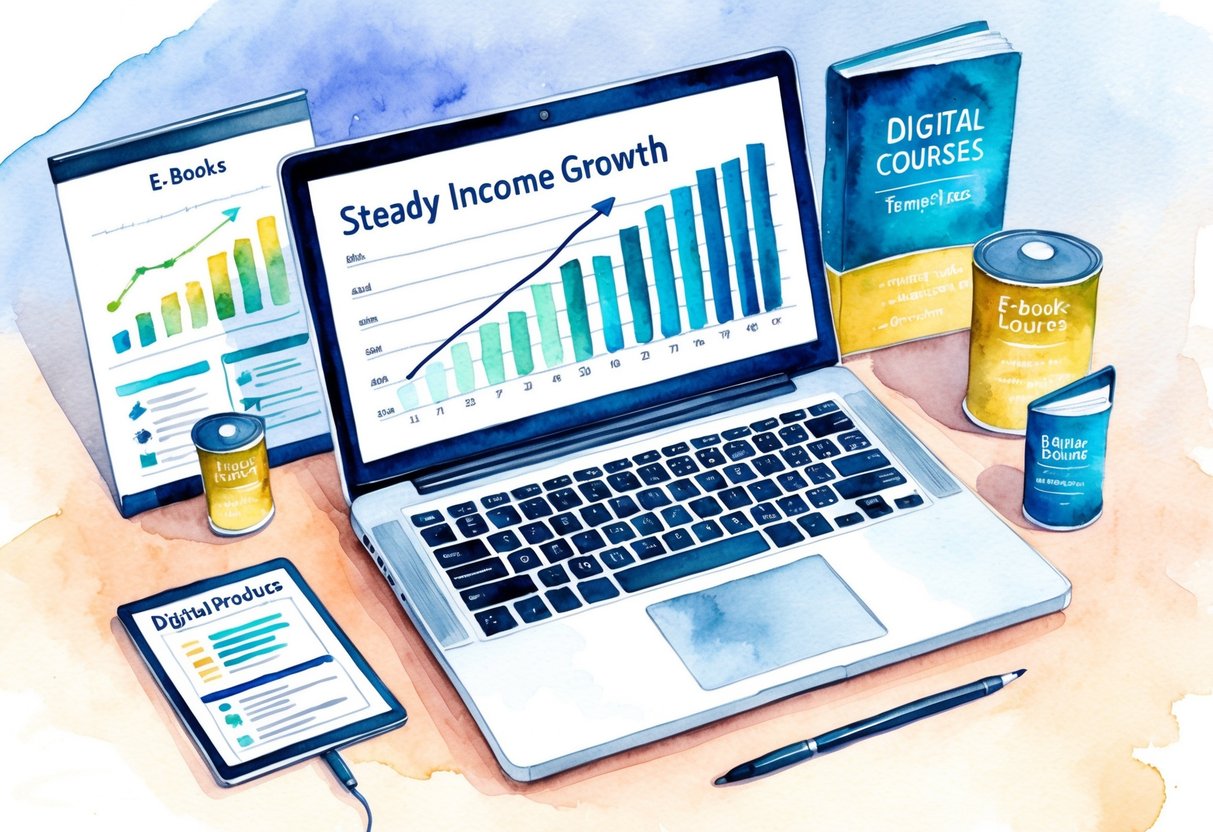 Expanding your digital product business is crucial for reaching that $3,000 monthly goal. I’ve found that focusing on a few key areas can really turbocharge your growth and income.
Expanding Your Product Line
I always tell my students to think about their customer’s journey. What else do they need? Create products that complement your existing offerings. If you sell online courses, consider adding workbooks or templates. For Canva users, why not design a set of branded social media templates? Don’t just create more – create smarter. What problems can you solve? What skills can you teach? I’ve seen businesses explode by simply listening to their customers and filling those gaps. Remember, quality trumps quantity. It’s better to have a small line of stellar products than a huge catalog of mediocre ones.
Driving Traffic to Your Store
Traffic is the lifeblood of your digital business. But how do you get more eyes on your products? I’ve found that content marketing is king. Blog posts, YouTube videos, and podcasts can all drive traffic to your store. Social media is another goldmine. Which platforms do your ideal customers hang out on? Be there, be consistent, and be valuable. Share tips, answer questions, and sprinkle in your product mentions naturally. Have you considered paid advertising? While it requires an upfront investment, it can rapidly accelerate your growth. Start small, test, and scale what works.
Mastering Analytics and Adaptation
What gets measured, gets managed. Are you tracking your key metrics? Sales, traffic sources, conversion rates – these numbers tell a story. Are you listening? I always encourage my students to dive deep into their analytics. Which products are selling best? Why? Can you create more like those? Which marketing channels are bringing in the most customers? Double down on those. Don’t be afraid to pivot. If something’s not working, change it. Test different price points, adjust your marketing messages, try new product ideas. The digital world moves fast – can you keep up?
Operational Excellence
 To make $3,000 a month selling digital products, you need to run a tight ship. I’ve learned that focusing on customer relationships, workflow efficiency, and automation can take your business to the next level. Let’s dive into these key areas.
Customer Support and Relationships
Building strong customer relationships is crucial for success in the digital product world. I’ve found that quick response times and personalized support can turn one-time buyers into loyal fans. Here’s what I do:
- Use a help desk system to track and respond to inquiries
- Set up an FAQ page to address common questions
- Offer live chat during business hours
- Send follow-up emails to check on customer satisfaction
I also create a community around my products. This could be a Facebook group or forum where customers can connect and share experiences. It’s a great way to gather feedback and ideas for new products.
Maintaining an Efficient Workflow
A smooth workflow is key to scaling your digital product business. I’ve streamlined my processes to maximize productivity. Here’s my approach:
- Use project management tools like Trello or Asana
- Set clear deadlines and milestones for product creation
- Outsource tasks that aren’t my strengths
- Schedule dedicated time for product development and marketing
I also make sure to regularly review and optimize my workflow. This helps me identify bottlenecks and areas for improvement.
Automating Business Processes
Automation is a game-changer in the digital product space. It frees up time for me to focus on creating new products and growing my business. Here are some processes I’ve automated:
- Email marketing sequences
- Social media posting
- Invoice generation and payment reminders
- Product delivery
I use tools like Zapier to connect different apps and create automated workflows. This reduces manual tasks and minimizes errors. By implementing these strategies, I’ve been able to scale my digital product business and consistently earn over $3,000 per month. Have you considered which areas of your business could benefit from improved operational excellence?