
Tired of watching your savings gather dust in a low-interest bank account? That’s why I turned to peer-to-peer lending as a way to boost my passive income. With the right strategy, you can earn $500 or more per month through P2P lending platforms.  P2P lending lets you become the bank, lending money directly to borrowers and earning interest. It’s not without risks, but the potential rewards can be significant. I’ve seen returns of 5% to 9% per year on many peer-to-peer loans, with some investors reporting even higher gains. Ready to put your money to work? I’ll show you how to get started with P2P lending and build a portfolio that can generate steady monthly income. Let’s dive in and explore this exciting investment opportunity together.
Key Takeaways
- P2P lending offers potential returns of 5-9% annually on your investment
- Diversifying across multiple loans and platforms reduces risk
- Regular reinvestment of earnings can compound your passive income over time
Understanding Peer-to-Peer Lending
Peer-to-peer lending offers a fresh approach to investing and borrowing. It's a way to potentially earn higher returns while helping others access needed funds. Let's explore how this innovative system works.The Basics of P2P Lending
P2P lending connects investors directly with borrowers through online platforms. It’s like being your own bank, but without the overhead costs. I’ve seen how this cuts out many traditional banking expenses, often resulting in better rates for both sides. How does it work? Borrowers apply for loans, and investors like you and me fund them. We can spread our money across multiple loans to manage risk. It’s not just about making money – it’s about helping real people achieve their goals. Loan types vary widely. You might fund someone’s home renovation, a small business startup, or even debt consolidation. The key is to diversify and not put all your eggs in one basket.
How P2P Lending Works
When you invest in P2P lending, you’re essentially buying portions of loans. Most platforms let you invest as little as $25 per loan. This means you can spread $500 across 20 different loans, reducing your risk. The process is straightforward:
- Choose a P2P platform
- Create an account and deposit funds
- Select loans to invest in
- Collect payments as borrowers repay
P2P platforms assign risk ratings to loans, from low-risk (lower return) to high-risk (higher return). It’s up to you to decide your comfort level. Remember, higher returns come with higher risk. Payments come in monthly, including principal and interest. You can reinvest these payments or withdraw them. It’s your money, your choice.
Benefits of P2P Investing
P2P lending can offer attractive returns. While traditional savings accounts might give you 1% interest, P2P investments have the potential for much more. I’ve seen returns ranging from 5% to over 10%, depending on the risk level. But it’s not just about the money. Here are some other benefits:
- Diversification: Add a new asset class to your portfolio
- Regular income: Monthly payments provide steady cash flow
- Social impact: Help fund dreams and support small businesses
- Control: Choose which loans to fund based on your criteria
P2P lending isn’t without risks. Borrowers can default, and economic downturns can increase default rates. But for many investors, the potential rewards outweigh the risks.
Setting Your Investment Goals
Setting clear goals is key to success in peer-to-peer lending. I'll show you how to define your objectives and balance risk with potential rewards. This approach can help you earn that $500 [monthly income](/how-to-earn-50-000-per-month-passive-income/) you're aiming for.Defining Clear Financial Objectives
What do you want your money to do for you? That’s the first question I ask when setting investment goals. For peer-to-peer lending, I recommend starting with a specific target. Let’s say $500 per month in passive income. To reach this, you’ll need to consider:
- Initial investment amount
- Expected annualized return
- Time horizon
For example, if you’re aiming for a 10% annual return, you’d need about $60,000 invested to generate $500 monthly. But what if you don’t have that much to start? No problem. Start smaller and reinvest your earnings to grow over time. Remember, peer-to-peer lending isn’t a get-rich-quick scheme. It’s a strategy for building steady income over time. Be patient and consistent.
Assessing Risk vs. Reward
How much risk are you comfortable with? That’s the million-dollar question in investing. In peer-to-peer lending, higher potential returns often come with higher risks. Here’s a simple breakdown:
- Low risk: 4-6% annual return
- Medium risk: 7-9% annual return
- High risk: 10%+ annual return
I always suggest diversifying your loans. Don’t put all your eggs in one basket. Spread your investment across different borrowers and risk levels. Consider this: Would you rather have a steady 7% return or swing for the fences with riskier 12% loans? There’s no right answer - it depends on your goals and risk tolerance.
Criteria for Selecting P2P Platforms
 When choosing a peer-to-peer lending platform, I consider several key factors to maximize returns and minimize risks. Let’s explore the essential criteria for selecting the right P2P platform for your investment goals.
Platform Credibility and History
I always start by examining a platform’s track record. How long has it been operating? What’s its reputation in the industry? I look for platforms like LendingClub and Prosper, which have been around since the mid-2000s. These established players often have more robust systems and data to back up their operations. I also check for any regulatory issues or legal troubles. A platform’s financial stability is crucial. I want to know if they’re profitable or at least have a clear path to profitability. User reviews and ratings can offer valuable insights. I pay attention to both positive and negative feedback to get a balanced view of the platform’s performance.
Loan Diversification Options
Diversification is key in P2P lending. I look for platforms that offer a wide range of loan types and risk levels. Can I invest in personal loans, small business loans, or real estate loans? The more options, the better. Some platforms allow me to set criteria for automatic investing. This feature helps spread my investment across many loans, reducing the impact of any single default. I prefer platforms that let me choose individual loans or invest in pre-made portfolios. This flexibility allows me to tailor my strategy based on my risk tolerance and goals.
Interest Rates and Expected Returns
Higher returns often mean higher risk, but I still want competitive rates. I compare the average returns across different platforms. Some may offer 7-11% annual returns, but I’m always cautious of unrealistic promises. I look at historical data to see how returns have fluctuated over time. This gives me a more realistic expectation of what I might earn. It’s important to understand how interest rates are determined. Are they based on the borrower’s credit score, loan term, or other factors? This knowledge helps me make more informed investment decisions.
Fees and Other Charges
Fees can eat into my returns, so I scrutinize the fee structure carefully. Some common charges include:
- Origination fees
- Service fees
- Late payment fees
- Collection fees
I prefer platforms with transparent fee structures. Hidden charges are a red flag for me. I calculate the total cost of investing and compare it across platforms to find the most cost-effective option.
Default Rates and Security Measures
Default rates are a crucial indicator of risk. I look for platforms that clearly disclose their historical default rates. Lower default rates generally indicate better loan quality and risk assessment. I also examine the platform’s security measures:
- How do they verify borrowers’ information?
- What happens if a borrower defaults?
- Do they have a contingency fund to protect investors?
Some platforms offer features like buyback guarantees or provision funds. These can provide an extra layer of protection for my investments. I consider the platform’s collection processes. How aggressive are they in pursuing delinquent borrowers? A robust collection system can help recover some losses from defaults.
Developing Your P2P Investment Strategy
 Creating a solid strategy is key to success in peer-to-peer lending. I’ve found that a well-planned approach can make all the difference in reaching your income goals. Let’s explore the essential elements of a winning P2P investment strategy.
Diversification Across Loan Types
Spreading your investments across different loan types is crucial. I always recommend my clients mix it up. Why put all your eggs in one basket? Here’s a simple breakdown of loan types to consider:
- Personal loans
- Business loans
- Student loans
- Real estate loans
Each type carries its own risk and reward profile. Personal loans might offer quick returns, but business loans could provide higher interest rates. Student loans tend to be stable, while real estate loans can offer security through property collateral. I suggest starting with a mix of 40% personal loans, 30% business loans, 20% student loans, and 10% real estate loans. As you gain experience, adjust these percentages based on your comfort level and market conditions.
Assessing Borrower Creditworthiness
Want to know the secret to minimizing risk? It’s all about the borrower’s creditworthiness. I can’t stress this enough – dig into those credit scores! Most P2P platforms provide credit grades, typically ranging from A to F. Here’s my rule of thumb:
- A to B: Low risk, lower returns
- C to D: Moderate risk, better returns
- E to F: High risk, highest potential returns
Don’t just look at the grade, though. Check out the borrower’s income, employment history, and debt-to-income ratio. These factors give you a fuller picture of their ability to repay. Remember, a higher credit score doesn’t always guarantee repayment. I’ve seen plenty of surprises over the years. That’s why it’s crucial to look beyond just the credit score when making your lending decisions.
Establishing Lending Criteria
Setting clear lending criteria is like building a solid foundation for your P2P investment house. What’s your risk tolerance? How much are you willing to lend per borrower? Here’s a sample criteria list I often recommend:
- Minimum credit score: 660
- Maximum debt-to-income ratio: 40%
- Minimum employment tenure: 2 years
- Maximum loan amount: $10,000
- Loan purpose: Exclude certain categories (e.g., gambling)
Stick to your criteria, but be ready to adjust as you learn. The P2P lending market is dynamic, and what works today might need tweaking tomorrow. I also suggest setting a maximum percentage of your portfolio for any single borrower. For me, it’s no more than 1% per borrower. This way, if one loan defaults, it won’t sink your entire investment.
Investing with Automated Tools
In today’s fast-paced world, who has time to manually review every loan? That’s where automated investing tools come in handy. They’re like having a tireless assistant working 24/7 to match your criteria with available loans. Most major P2P platforms offer these tools. For instance, Prosper provides automatic investing options that can save you time and effort. These tools allow you to set your criteria and let the system do the heavy lifting. Key benefits of automated investing:
- Faster reinvestment of returns
- Consistent application of your criteria
- Time-saving, especially for larger portfolios
But remember, automation isn’t a set-it-and-forget-it solution. I still review my automated investments monthly to ensure they’re performing as expected. It’s all about finding that sweet spot between efficiency and control.
Minimizing Risks in P2P Lending
 When it comes to peer-to-peer lending, smart investors know how to protect their money. Let’s explore key strategies to keep your cash safe while still earning those sweet returns.
Understanding Loan Defaults
Loan defaults are the biggest threat to P2P investors. I’ve seen too many folks lose money by ignoring this risk. To protect yourself, always check the repayment rate of borrowers. Look for platforms that offer detailed credit profiles. How can you minimize default risk? Simple:
- Spread your investments across many loans
- Focus on higher-grade borrowers
- Set strict criteria for loan selection
Remember, even a few defaults can eat into your profits. Stay vigilant and don’t let greed cloud your judgment.
Protecting Against Capital Depletion
Ever heard the saying “don’t put all your eggs in one basket”? It’s crucial in P2P lending. I always tell my clients to diversify their investments. This means spreading your money across different:
- Loan types
- Risk grades
- Platforms
Why is this important? If one sector or platform struggles, your entire investment won’t sink with it. I recommend starting small and gradually increasing your investment as you gain experience.
The Role of Liquidity in Risk Management
Have you ever been caught without cash when you needed it most? That’s a liquidity problem, and it’s just as important in P2P lending. Most P2P loans are locked in for months or years. So how do you manage this? First, only invest money you won’t need in the short term. Second, look for platforms that offer a secondary market where you can sell your loans if needed. I also suggest keeping a portion of your investment in shorter-term loans. This gives you more flexibility and reduces your overall risk exposure.
Managing Taxes and Returns
 Investing in peer-to-peer lending can be a great way to earn passive income, but it’s crucial to understand the tax implications and how to track your returns. Let’s dive into the nitty-gritty of managing your P2P investments come tax time.
Tax Implications of P2P Investing
When it comes to taxes, P2P lending isn’t as straightforward as traditional investments. The interest I earn is typically taxed as ordinary income, not capital gains. This means I could be paying a higher rate, depending on my tax bracket. Key points to remember:
- Interest income is reported on Form 1099-INT
- Losses may be deductible, but rules vary
- State taxes may also apply
It’s wise to set aside a portion of my earnings for taxes. I’ve learned the hard way that unexpected tax bills can eat into my profits. Have you considered how taxes might impact your P2P returns?
Tracking and Reporting Interest Income
Keeping accurate records is crucial for P2P investors like me. Most platforms provide year-end tax documents, but I don’t rely solely on these. I maintain my own spreadsheet to track:
- Interest earned
- Fees paid
- Defaulted loans
This helps me stay on top of my investment performance and makes tax time a breeze. I also use software to categorize my income and expenses. It’s a small effort that pays off big when I’m preparing my tax return. Remember, the IRS expects me to report all income, even if I don’t receive a 1099 form. By staying organized, I avoid headaches and potential audits. Isn’t peace of mind worth a little extra effort?
Building a Portfolio Beyond P2P Lending
 P2P lending can be a great start, but why stop there? I’ve learned that diversification is key to building long-term wealth and creating multiple income streams.
Integrating P2P Lending with Other Investments
I always tell my students to think beyond just one investment type. Why not add some dividend-paying stocks to your portfolio? These can provide steady income alongside your P2P returns. Real estate investment trusts (REITs) are another option I love. They offer exposure to the property market without the hassle of being a landlord. Have you considered how REITs could complement your P2P investments? Bonds might seem boring, but they add stability to a portfolio. I mix in some high-yield bonds for a bit more excitement and return potential.
Exploring Alternative Passive Income Streams
Passive income is my favorite kind of income. Who doesn’t want to make money while they sleep? Rental properties can be a goldmine if you do it right. I started small with a single apartment and grew from there. Crowdfunding platforms offer unique opportunities. Ever thought about funding a startup or a real estate project? It’s easier than you might think. Have you tried creating digital products? E-books, online courses, or even stock photography can generate income long after the initial work is done. Remember, the goal is to build multiple streams of income. Each new stream brings you closer to financial freedom. What will your next income stream be?
Legal and Regulatory Considerations
 Peer-to-peer lending is a great way to earn extra income, but it’s crucial to understand the legal landscape. Let’s explore the key regulations and requirements you need to know.
Understanding Securities Regulations
The Securities and Exchange Commission (SEC) plays a big role in peer-to-peer lending. Why? Because these loans are often considered securities. This means they’re subject to strict rules and oversight. What does this mean for you? Well, most platforms have to register with the SEC. They also need to provide detailed information about their offerings. This helps protect investors like us from fraud and ensures transparency. I’ve found that reputable platforms handle most of the regulatory compliance on their end. But it’s still smart to do your homework. Check if the platform you’re considering is registered with the SEC. Look for their offering circular or prospectus. These documents can give you valuable insights into the risks and potential returns.
Compliance for Accredited Investors
Are you an accredited investor? If so, you might have more options in the peer-to-peer lending space. But what exactly is an accredited investor? Simply put, it’s someone who meets certain income or net worth requirements. The SEC defines these criteria to protect less wealthy individuals from risky investments. Here’s a quick breakdown:
- Annual income of $200,000+ (or $300,000+ with spouse) for the past two years
- Net worth of $1 million+, excluding your primary residence
If you qualify, you might have access to more exclusive lending opportunities. But remember, with great power comes great responsibility. These investments often come with higher risks. I always recommend staying informed about changing regulations. The rules around accredited investors can shift. Keeping up-to-date ensures you’re making the most of your opportunities while staying compliant.
Advancements and Future of P2P Lending
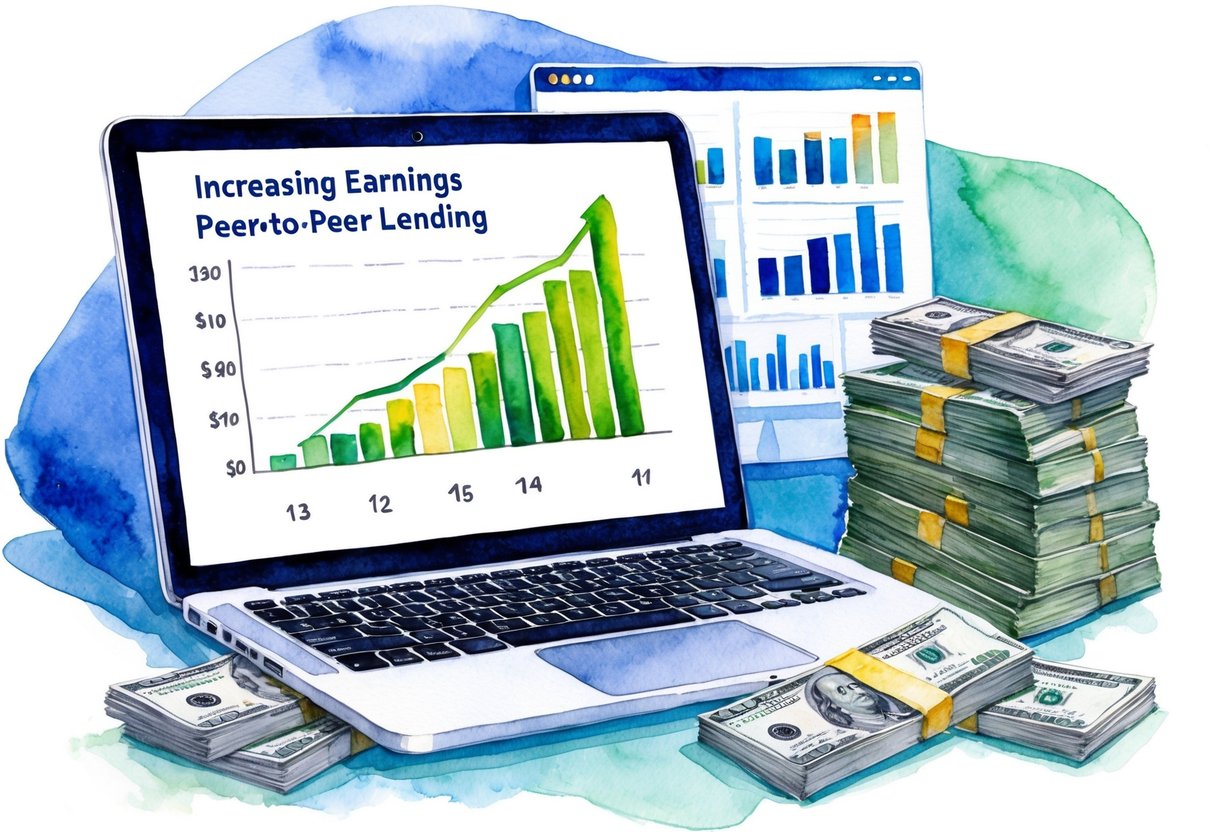 P2P lending is changing fast. New tech and market shifts are creating fresh opportunities for savvy investors like us. Let’s explore what’s ahead.
Impact of Technology and Fintech
I’m excited about how tech is revolutionizing P2P lending. Artificial intelligence and machine learning are making loan assessments faster and more accurate. This means we can make smarter investment choices with less risk. Blockchain is another game-changer. It’s making transactions more secure and transparent. I believe this will attract more investors to P2P lending platforms. Mobile apps are also transforming the industry. They’re making it easier for us to invest on the go. With just a few taps, we can manage our P2P lending portfolios from anywhere.
Market Trends Post-Covid-19 Pandemic
The pandemic has shaken up P2P lending, but I see opportunity in the chaos. More people are turning to online financial services, including P2P platforms. This trend is likely to continue. Interest rates have been low, pushing investors to seek higher returns. P2P lending offers this chance. I expect to see more people exploring P2P investments in the coming years. Risk management is becoming crucial. Platforms are getting better at assessing borrowers’ creditworthiness. This could lead to more stable returns for us investors. Are you ready to ride this wave of change? With the right strategy, P2P lending could be your ticket to financial freedom.