
Navigating the financial landscape as a creative professional can feel like an endless maze. You’ve built your career from the ground up, crafting art, music, or stories that have made an impact. Automating royalty income tracking can be a game-changer, offering a streamlined way to manage your earnings without sacrificing your creative energy. Imagine having more time to focus on your creativity, knowing your royalties are being tracked accurately and efficiently. Why spend precious time manually tracking your royalty income? It’s a challenge many face and often leads to missed opportunities. Leveraging the right tools can transform how you manage this crucial aspect of your finances, ensuring you never miss out on the money you’ve earned. In an ever-evolving digital era, the key to maintaining a successful creative career lies in embracing automation. Let’s delve into how you can use technology to keep your royalty management smooth, allowing you to concentrate on what truly matters: creating your next masterpiece.
Key Takeaways
- Automation makes royalty tracking efficient.
- Manual management can lead to lost income.
- Embrace technology for better royalty operations.
Understanding Royalty Income
 Royalty income is a key financial lifeline for creative professionals. It ensures fair compensation when their work is used. Let’s explore the different types of royalties, important aspects of contracts, and how calculations are made.
Types of Royalties
When creative work is sold or used, different types of royalties apply. For instance, musicians earn from performance royalties when their music is played publicly. Authors often receive publishing royalties based on book sales. There are also mechanical royalties in music, paid when a track is reproduced or streamed. Film and TV creators earn from distribution royalties when their content is licensed. Remember, each royalty type might have unique payment structures and schedules.
Key Components of Royalty Contracts
Contracts specify how and when royalties get paid. They define what work is covered. Key terms often include exclusive rights or non-exclusive licenses, granting certain usage permissions. Payment terms spell out frequency—whether royalties are sent monthly, quarterly, or annually. Contracts might also include escalation clauses, where rates increase after hitting sales benchmarks. Sometimes, there are advances, which are upfront payments recouped from future royalties. Understanding these contract elements ensures you’re getting fair compensation for your work.
Overview of Royalty Calculation
How exactly are royalties calculated? It’s not as mysterious as it sounds. Typically, a royalty rate is a percentage of sales. For books, this might be a percentage of the cover price. In music, it could be a fraction per play or download. There’s an art to negotiating these rates. Some factors affecting them include market demand, the creator’s reputation, and potential sales volume. In all cases, meticulous record-keeping and transparency in sales data are crucial for accurate calculations and payments. By understanding these components, creative professionals can better manage their income streams, ensuring they benefit fully from their creative work. This knowledge turns what could seem like a confusing process into a manageable aspect of financial growth.
Challenges in Manual Royalty Management
 Keeping track of royalty income involves several complex steps. It requires detailed calculations, managing various financial elements, and ensuring legal compliance. Failing to handle these properly can lead to financial loss and potential legal issues.
Complexity of Royalty Calculations
Royalty calculations aren’t straightforward. Each contract can have unique terms and rates. It’s not just about gross revenue; you also have to consider factors like territory and usage rights. Imagine trying to calculate royalties across different countries with fluctuating exchange rates. That’s enough to give anyone a headache, right? The manual process involves multiple spreadsheets, leading to errors and inconsistencies. Without automation, it’s like trying to count grains of sand on a beach. You miss details, and mistakes are costly. I find that automation can really streamline this chaos into a clear, manageable system.
Managing Advances and Recoupments
Handling advances and recoupments manually is tricky. Advances are often paid upfront, but recouping them depends on sales. Tracking this without error is essential. How do you know if an artist has recouped their advance if you’re juggling multiple spreadsheets? Adding to the chaos, these financial elements need constant monitoring. Errors can lead to overpayment or underpayment issues. I see that managing this efficiently is crucial to maintaining trust and financial integrity between parties involved.
Ensuring Compliance and Accuracy
Compliance and accuracy are non-negotiable in royalty management. Legal standards and contracts must be strictly followed. Failure to do so can result in penalties or lawsuits. I ask myself constantly, are we sure all data is accurate and compliant? A manual process lacks an automatic audit trail. Without it, you can’t trace back or verify each step. This opens up risks for discrepancies. Automation provides tools to ensure each entry is correct, making it easier to conduct audits and stay compliant.
Leveraging Technology for Royalty Tracking
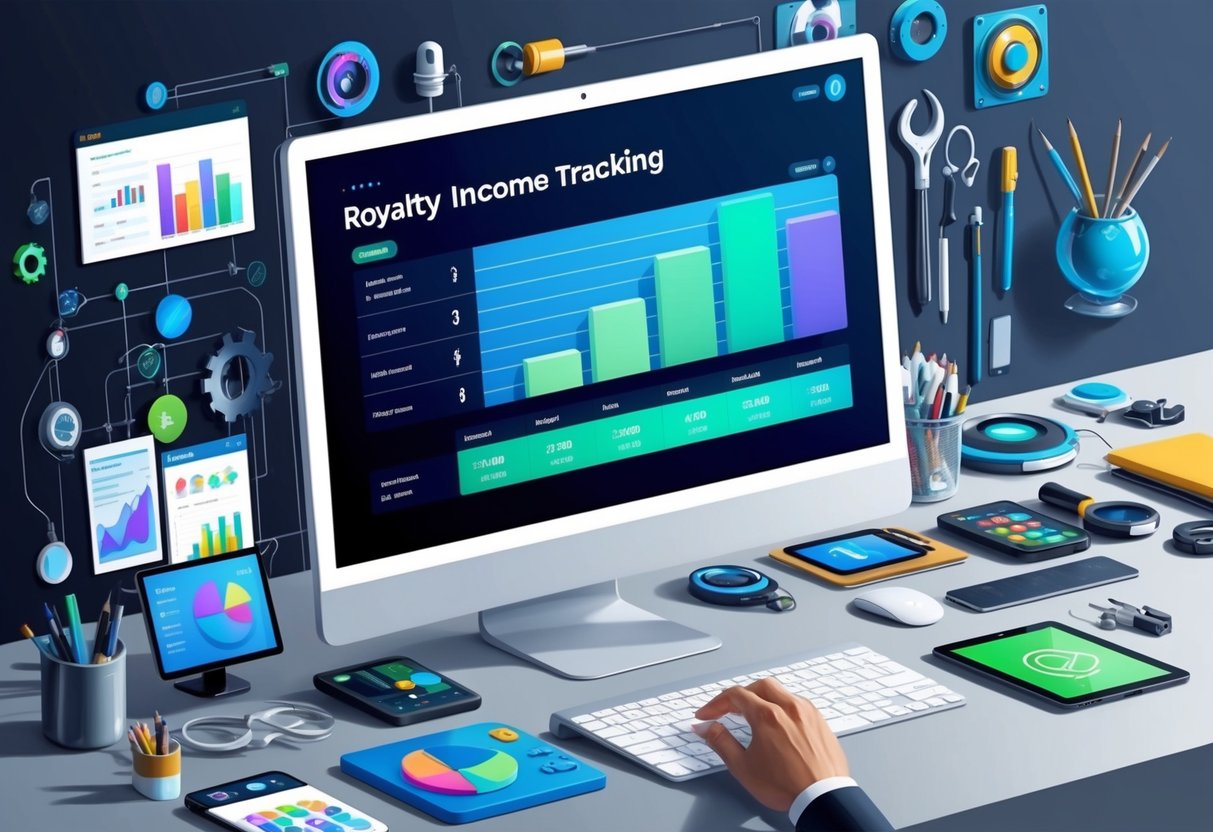 In our digital age, keeping track of royalty income has become more streamlined and efficient. With specialized software, we can ensure timely, accurate payment tracking, while automation and system integration enhance functionality.
Role of Royalty Management Software
Why rely on manual tracking when there’s a better way? Royalty management software helps simplify the process, offering features like cloud-based access and automation. These systems manage contracts, calculate payments, and generate reports. I find it crucial that such software caters to the unique needs of different industries, whether in publishing or music. They allow me to handle vast amounts of data effortlessly and ensure compliance with various agreements and licensing terms. The flexibility and security provided by these tools are indispensable for professionals managing complex royalties.
Benefits of Automation in Royalty Management
What if you could automate tedious tasks and focus on creativity instead? Automation in royalty management reduces errors and saves time. Automated tracking tools ensure that even small royalty payments are not overlooked, maintaining consistent cash flow. This capability significantly reduces the administrative burden. It also means there’s less room for human error, leaving me confident in the accuracy of my reports. By streamlining these processes, automation allows for more strategic planning and decision-making in my creative endeavors.
Integrating Royalty Software with ERP Systems
How do we enhance operational efficiency even further? Integrating royalty software with enterprise resource planning (ERP) systems is the answer. This integration creates a seamless flow of information, reducing manual input and increasing data accuracy across departments. Think about how your business systems can work together harmoniously. With integration, my royalty tracking is part of a larger ecosystem that includes accounting, sales, and inventory. This means I have a comprehensive view of my financial health and can make better, more informed decisions. Such integration is key for businesses aiming to maximize profitability and maintain a competitive edge.
Best Practices for Royalty Management
 Managing royalties is essential for securing financial success for creative professionals. By setting up clear royalty agreements, forecasting and reporting accurately, and maintaining a solid audit trail, I ensure efficient royalty management. Implementing these best practices allows for smoother operations and increased trust between parties.
Setting Up Royalty Agreements
A well-crafted royalty agreement is the foundation of successful royalty management. I start by defining all key terms clearly. This includes specifying the percentage of sales or profits that will serve as the royalty fee. Looking at what the market offers can provide insights into competitive rates. The agreement should also cover the payment frequency, usually monthly or quarterly, to provide regular income for creative professionals. I make sure the agreement outlines all responsibilities and includes a dispute resolution process. Why is this important? It provides a clear path forward if any disagreements arise. Legal consultation can help iron out potential issues before they become problems. Secure contracts create a strong sense of trust and partnership.
Forecasting and Reporting Royalties
Forecasting royalty income allows me to plan finances effectively. Using historical data and market trends helps predict future earnings, which is crucial for budgeting. I often rely on software tools to automate this process, reducing human error and speeding up calculations. Automation allows me to focus on strategic planning rather than tedious number crunching. Accurate reporting solidifies relationships with partners and stakeholders. When I generate royalty statements, I include detailed breakdowns of earnings, deductions, and payment timelines. These reports must be simple yet comprehensive to minimize misunderstandings. Consistently sharing information fosters transparency, ensuring that all parties remain on the same page financially.
Maintaining an Audit Trail
An organized audit trail provides a clear record of all royalty transactions. I keep meticulous track of documents, including invoices and payment receipts, in both digital and physical formats. Why go to such lengths? It’s about protecting my interests and ensuring full compliance with all agreements and regulations. Regular audits verify the accuracy of royalty payments and help identify potential discrepancies. They also build trust with partners who appreciate accountability and transparency. To streamline this process, I use technology that integrates with my existing financial systems, allowing me to quickly access and review all relevant data.
Monitoring and Adjusting Royalty Operations
 Managing royalty operations requires diligence and adaptability. By regularly auditing systems, updating royalty schemes, and managing rights, one can optimize royalty income while staying compliant. These actions ensure accurate tracking and maximize financial potential.
Regular Audits and Reconciliation
Who doesn’t want to get paid what’s rightfully theirs? Regular audits and reconciliation ensure that all data aligns with actual royalty income. By routinely checking these figures, I can spot discrepancies that might otherwise go unnoticed. Errors in data entry or miscommunication with partners can lead to lost income. That’s why consistent auditing is crucial. It’s not just about checking numbers; it’s about safeguarding income streams. Utilizing software designed for royalty management can streamline this process. These tools automatically generate statements and highlight potential issues. With thorough audits, I can adjust discrepancies and secure my financial future.
Updating Royalty Schemes
Adaptation is key in keeping up with market changes. So, how do I ensure my royalty schemes stay relevant? By regularly reviewing and updating them, I ensure they reflect current trends and technologies. Sticking to outdated schemes can be detrimental. It’s important to assess whether the current structure aligns with industry standards and my financial goals. Over time, as the market fluctuates, a flexible approach is necessary. With solutions like Tigunia, I gain real-time insights. This data helps in making informed decisions, allowing for appropriate adjustments and maximizing profitability. Continuous evaluation ensures I’m not leaving money on the table.
Rights Management
Securing rights is vital in protecting royalty streams. Effective rights management includes tracking who owns what, for how long, and ensuring compliance with contractual obligations. Why is this critical? Because it protects my interests and potential earnings. Comprehensive rights management also guards against unauthorized use of intellectual property. This is where tools like Sonomo’s royalty management come into play. They monitor and automate rights processes, reducing manual workload. By combining technology with rights management strategies, I protect my assets. This proactive approach ensures compliance and profitability, creating a stable financial landscape for the future.