
Ever wonder where all the millionaires live? I did too, which is why I dug into the data to find out. What I discovered might surprise you.
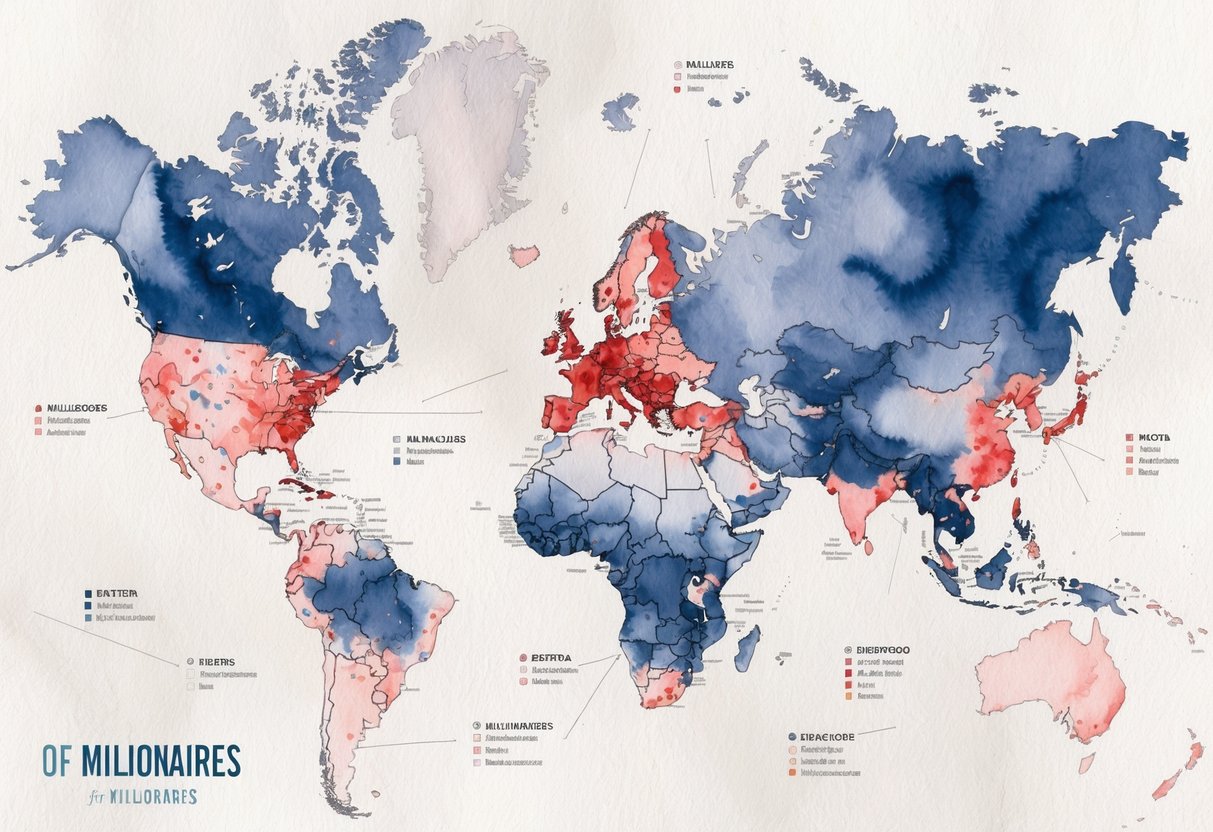
The United States is home to over 20 million millionaire households, with certain states and cities having much higher concentrations than others.
New Jersey, for example, ranks highest in millionaire density, with over 9% of its households having a net worth of $1 million or more. But it’s not just about the big coastal states - even small towns can have surprisingly high numbers of wealthy residents.
Why does this matter? Understanding where wealth concentrates can offer insights into economic trends, investment opportunities, and the factors that contribute to financial success.
As someone who’s spent years studying wealth creation, I find these patterns fascinating. They reveal a lot about how money moves and grows in our economy.
Key Takeaways
- Millionaire households are not evenly distributed across the U.S., with some states and cities having much higher concentrations.
- Small towns can sometimes have surprisingly high percentages of millionaire residents.
- Understanding millionaire distribution patterns can provide valuable insights for investment and economic trends.
Global Distribution of Millionaires
The world’s millionaire population is growing rapidly, with wealth becoming more concentrated in certain regions and cities. Let’s take a closer look at where these wealthy individuals are located and how their numbers are changing.
Top Millionaire Populations by Country
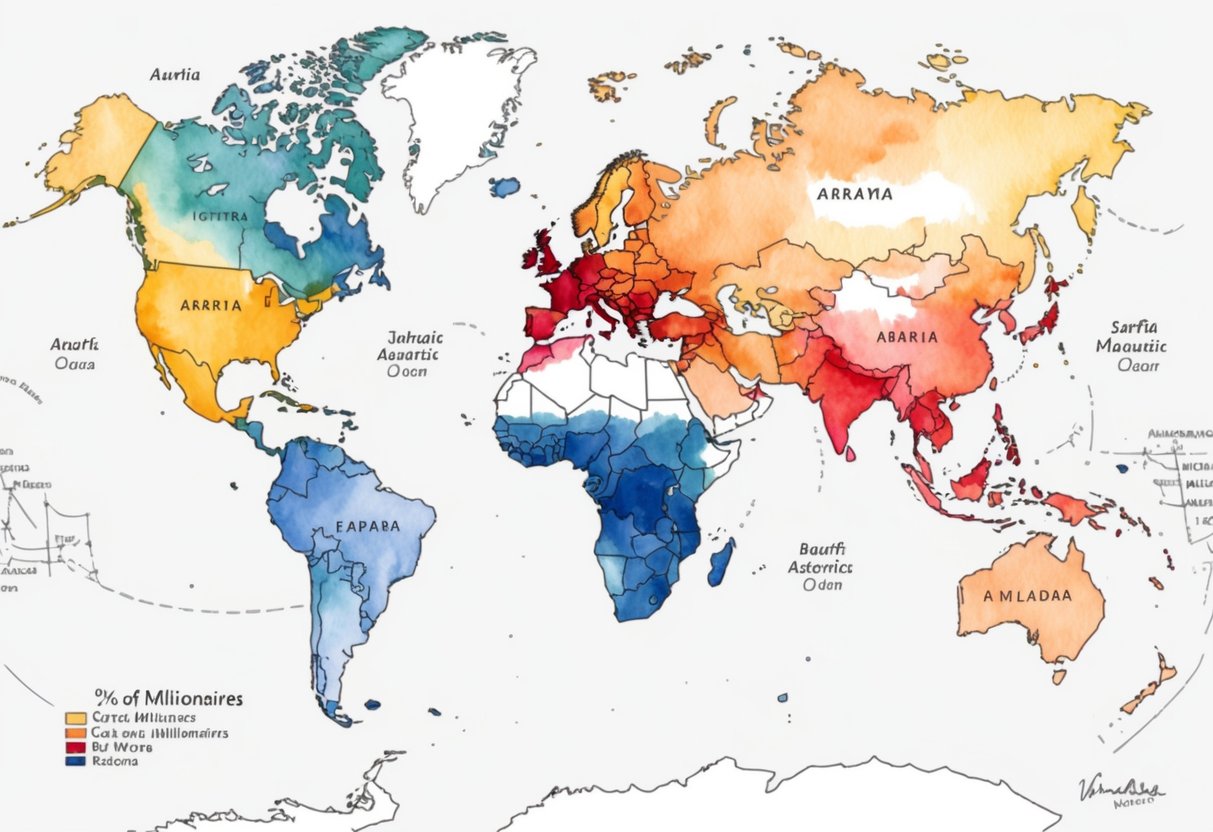
The United States leads the pack with nearly 22 million millionaires, accounting for a whopping 38% of the global total. That’s a staggering number! China and Japan follow, but at a distance.
I’ve noticed that countries with strong economies and stable financial systems tend to have higher concentrations of millionaires. It’s not just about making money; it’s about preserving and growing wealth too.
Germany, the UK, and France also boast significant millionaire populations. Have you ever wondered why these countries consistently rank high? I believe it’s due to their robust industries and long-standing financial institutions.
Surging Millionaire Numbers in Emerging Markets
While established economies dominate, I’m excited about the growth I’m seeing in emerging markets. India and China are particularly interesting to watch. Their millionaire populations are expanding rapidly.
Why is this happening? I think it’s a combination of factors:
- Economic reforms
- Growing middle class
- Booming tech sectors
These countries are creating new opportunities for wealth creation. It reminds me of the early days of Silicon Valley. Are we witnessing the birth of the next generation of global wealth hubs?
Wealthiest Cities Worldwide
When it comes to millionaire hotspots, cities are where the action is. London boasts over 350,000 millionaires, making it a true wealth magnet. New York, Los Angeles, and the San Francisco Bay Area are also teeming with high-net-worth individuals.
But it’s not just about the usual suspects. I’m intrigued by cities like Hangzhou in China and Mumbai in India. They’re quickly becoming wealth centers in their own right. What opportunities might these emerging millionaire hubs offer for savvy investors?
Hong Kong and Singapore continue to attract millionaires, especially from Asia. Their low-tax environments and strategic locations make them ideal for wealth preservation and growth. Have you considered how these cities might fit into your wealth-building strategy?
Millionaires in the United States
The United States is home to millions of millionaire households. Their distribution varies widely across states and cities, reflecting economic disparities and opportunities.
States with the Highest Concentration of Millionaires
When it comes to millionaire density, some states stand out from the pack. New Jersey, Maryland, and Connecticut often top the list. These states have high concentrations of well-paying jobs and thriving industries.
I’ve noticed that coastal states tend to have more millionaires per capita. Why? They often have major financial hubs and tech centers. California, with its Silicon Valley wealth, has the highest number of millionaire households overall.
But don’t overlook smaller states. New Hampshire and Alaska frequently rank high in millionaire concentration. Could it be their unique tax structures or natural resource wealth?
Top U.S. Cities for Millionaire Residents
Cities are where the action is for many millionaires. I’ve found that major metropolitan areas attract and create wealth at impressive rates.
Seattle stands out with 9.4% of households being millionaires. It’s a tech powerhouse, home to Amazon and Microsoft. What other cities are millionaire magnets?
- New York City: Wall Street and finance
- San Francisco: Tech and startups
- Washington D.C.: Government contracts and lobbying
- Boston: Healthcare and education
Are you living in or near one of these millionaire hotspots? If not, what’s stopping you from tapping into these wealth-generating regions?
Economic Factors Affecting Millionaire Wealth
Wealth accumulation for millionaires isn’t just about earning money. It’s influenced by where we live and how we navigate complex financial landscapes. Let’s explore the key factors that shape millionaire wealth in different locations.
Real Estate Market Influence
Real estate can be a game-changer for building wealth. In hot markets, property values skyrocket, boosting net worth. I’ve seen cities where a modest home becomes a million-dollar asset in just a few years.
But it’s not all rosy. High property prices can also be a barrier. They make it harder for newcomers to enter the millionaire club. Plus, hefty mortgages eat into cash flow.
What about rental income? In prime locations, it’s a goldmine. I know millionaires who’ve built empires from a few well-placed properties.
Remember, location is key. A $500,000 home in New York might be a mansion in Texas. Smart millionaires often leverage these differences.
Taxation Policies and Wealth Retention
Taxes can make or break a millionaire’s wealth strategy. Have you ever wondered why some states seem to attract the wealthy? It’s often about tax-friendliness.
Income tax rates vary widely. In some states, high earners might keep 10% more of their income. That’s a big deal when we’re talking millions.
Property taxes are another consideration. They can range from under 1% to over 2% of a home’s value annually. On a million-dollar property, that’s a difference of $10,000 or more each year.
Sales taxes might seem small, but they add up. Luxury purchases in high-tax areas can cost thousands more. It’s why some millionaires shop across state lines.
Investment Trends and Opportunities
Millionaires don’t just sit on cash. They’re always looking for the next big thing. But investment trends vary by location.
In tech hubs, I see a focus on startups and venture capital. It’s high-risk, high-reward. One successful investment can create several new millionaires overnight.
Coastal cities often lean towards real estate investment trusts (REITs). They offer a way to invest in property without the headaches of being a landlord.
In areas with aging populations, healthcare and biotech investments are popular. They’re betting on the future needs of society.
What about retirement plans? They’re crucial everywhere, but the details matter. Some states tax 401(k) withdrawals, others don’t. It’s a key factor in where millionaires choose to retire.
Economic research shows that global high net worth individual wealth hit $86.8 trillion in 2023. But where this wealth concentrates depends on these local economic factors. Are you positioning yourself to take advantage of them?
Demographics and Behavior of Millionaires

The world of millionaires is diverse and complex. Let’s explore how wealth is distributed among them, their lifestyle choices, and the impact they have on local economies.
Wealth Distribution Among Millionaires
Did you know that not all millionaires are created equal? The U.S. alone has about 22 million millionaires, but their wealth isn’t evenly spread. I’ve noticed a fascinating pattern:
- Most millionaires fall in the $1-5 million range
- A smaller group has $5-30 million
- An elite few are ultra-high net worth individuals with over $30 million
This pyramid structure shows how wealth concentrates at the top. But here’s a surprise: 33% of U.S. millionaires are women. This challenges old stereotypes about wealth and gender.
What about race? 76% of U.S. millionaires are white, which is higher than their 60% share of the total population. This points to ongoing wealth gaps that we need to address.
Lifestyle and Consumption Patterns
You might think all millionaires live lavishly, but that’s not always true. Many are surprisingly frugal. Why? Because that’s often how they built their wealth in the first place.
Here are some common traits I’ve observed:
- They budget carefully
- They invest for the long-term
- They avoid unnecessary debt
But it’s not all penny-pinching. Millionaires do splurge on certain things:
- Quality education for their children
- Experiences like travel
- Health and wellness
What’s interesting is how their spending shifts as their wealth grows. Those with $1-5 million might still fly economy, while ultra-high net worth individuals often own private jets.
Impact on Local Economies
When millionaires move in, neighborhoods change. But is it always for the better? Let’s look at the pros and cons:
Pros:
- They boost local tax revenues
- They create jobs through business investments
- They often donate to local charities
Cons:
- Housing prices can skyrocket, pushing out long-time residents
- Local businesses may shift to cater to luxury tastes
The impact varies by location. In tech hubs like San Francisco, the influx of millionaires has dramatically reshaped entire communities. But in smaller towns, even a few wealthy residents can make a big difference.
What’s your take on this? Should we welcome millionaires to our communities, or be wary of the changes they bring?
Methodologies for Assessing Millionaire Wealth
Let’s explore how experts determine who qualifies as a millionaire. I’ll break down the key methods used to measure wealth and identify the world’s richest individuals.
Financial Asset Analysis
When I look at how millionaires are counted, I see that liquid investable wealth is a crucial factor. This includes cash, stocks, bonds, and mutual funds. Real estate often isn’t included, unless it’s an investment property.
Why does this matter? It gives us a clearer picture of available wealth.
Think about it - can you quickly sell your house if you need cash? Probably not.
Credit Suisse and UBS use this method in their wealth reports. They focus on assets that can be easily converted to cash.
Annual Wealth Reports and Surveys
Ever wonder how we know how many millionaires there are? I rely on annual reports from big names like Credit Suisse and UBS. These reports are goldmines of information.
They use complex methods to estimate wealth across different countries. Surveys play a big role too. High net worth individuals are asked about their assets and spending habits.
Forbes takes a different approach with its billionaire list. They dig into public records and even interview the wealthy themselves. It’s fascinating stuff!
Public Record and Market Research
Have you ever thought about how much information is out there if you know where to look? Public records are a treasure trove for wealth researchers.
Companies like Phoenix Marketing International use these records along with market research. They look at things like:
- Property ownership
- Business filings
- Stock holdings
- Luxury purchases
This data helps paint a picture of wealth distribution. It’s not perfect, but it gives us a good idea of where the money is.
Wealth Engine combines public data with predictive modeling. They can estimate someone’s net worth even without all the details. Pretty impressive, right?
Regional Spotlight: Millionaires in Key U.S. States
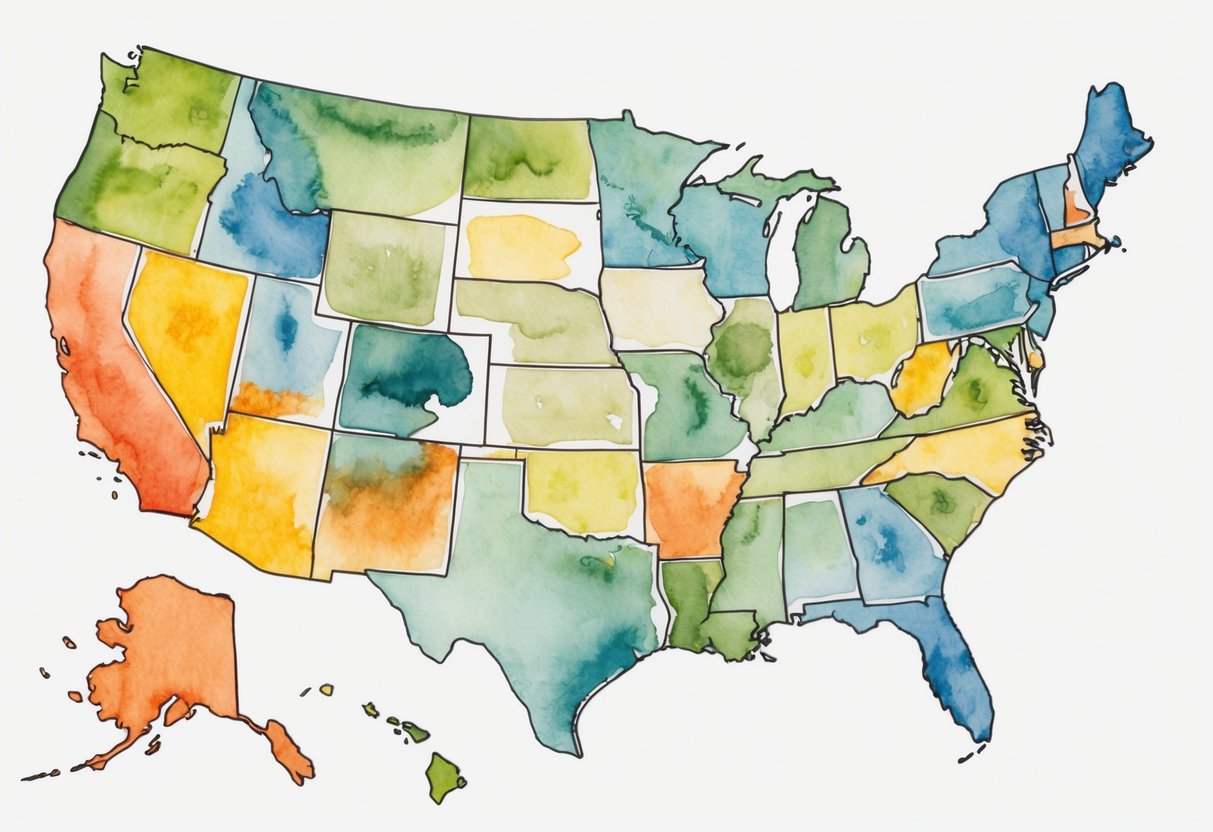
The distribution of millionaires across the U.S. paints a fascinating picture of wealth concentration. I’ve noticed some clear hotspots and emerging trends that might surprise you.
Silicon Valley and Bay Area Affluence
California’s Silicon Valley and Bay Area are millionaire magnets. San Francisco and San Jose lead the pack. Why? Tech giants like Apple, Google, and Facebook call this region home.
Startup culture fuels wealth creation here. Young entrepreneurs strike it rich with innovative ideas. But it’s not just tech. Old money from real estate and finance adds to the mix.
Housing costs are sky-high. A million dollars doesn’t go as far here as elsewhere.
Still, the concentration of wealth is staggering. Have you ever wondered how many millionaires you pass on the street in Palo Alto?
Financial Hubs and Their Millionaire Demographics
New York City, Boston, and Chicago stand out as financial powerhouses. Wall Street’s influence is clear. But it’s not just bankers getting rich.
Lawyers, doctors, and business executives swell the millionaire ranks. These cities attract top talent from around the world. High salaries and bonuses add up fast.
Connecticut and New Jersey benefit from their proximity to NYC. Many millionaires choose to live in these states and commute. Are you surprised that New Jersey ranks so high in millionaires per capita?
Emerging Areas for Millionaire Growth
Keep an eye on places like Austin, Texas and Seattle, Washington. Tech companies are expanding beyond Silicon Valley. This brings high-paying jobs and wealthy individuals.
Southern states are seeing a millionaire influx. Georgia and North Carolina are becoming hotspots. Lower taxes and cost of living are big draws.
Arizona and Tennessee are also on the rise. Retirees with substantial savings boost these states’ millionaire counts. Could moving to one of these areas accelerate your path to wealth?
Challenges and Risks for Millionaire Wealth Accumulation

Building wealth comes with its own set of hurdles. I’ve seen many aspiring millionaires face obstacles on their path to financial success. What are the biggest challenges? Let’s explore.
Market Volatility and Economic Downturns
Economic ups and downs can shake even the most stable fortunes. I’ve watched millionaire populations plummet in cities like Moscow due to geopolitical events. It’s a stark reminder that wealth isn’t guaranteed.
Stock market swings can wipe out years of gains overnight. How do you protect yourself? Diversification is key. I always advise spreading investments across different asset classes.
Real estate, often a cornerstone of millionaire portfolios, isn’t immune to downturns. Property values can crash, leaving investors underwater. Have you considered how you’d handle a housing market collapse?
Political Influences on Wealth Creation
Government policies can make or break wealth accumulation strategies. Tax laws, for instance, play a huge role. A change in capital gains rates could significantly impact your net worth.
Regulations affect industries differently. What happens if new rules hit your primary business sector? I’ve seen fortunes vanish when legislation shifts.
International relations matter too. Trade wars or sanctions can disrupt global markets. Are your investments protected against geopolitical shocks?
Personal Management of Wealth and Assets
Even with millions, poor financial decisions can lead to ruin.
I’ve met countless wealthy individuals who lost it all through mismanagement.
Do you have a solid plan for your assets?
Many millionaire households struggle with proper allocation and risk management.
Lifestyle inflation is a silent wealth killer.
It’s easy to increase spending as your net worth grows. But can you maintain that lifestyle if your income drops?
Family dynamics also play a role.
Have you thought about succession planning?
Without proper guidance, inherited wealth often disappears within a generation.