
Imagine a world where decisions in the financial world are driven by machines that lack the intuition of human experiences. What could this mean for our future? The latest insights from James Records, a respected expert in the field, guide us through the complex relationship between artificial intelligence and our financial systems. 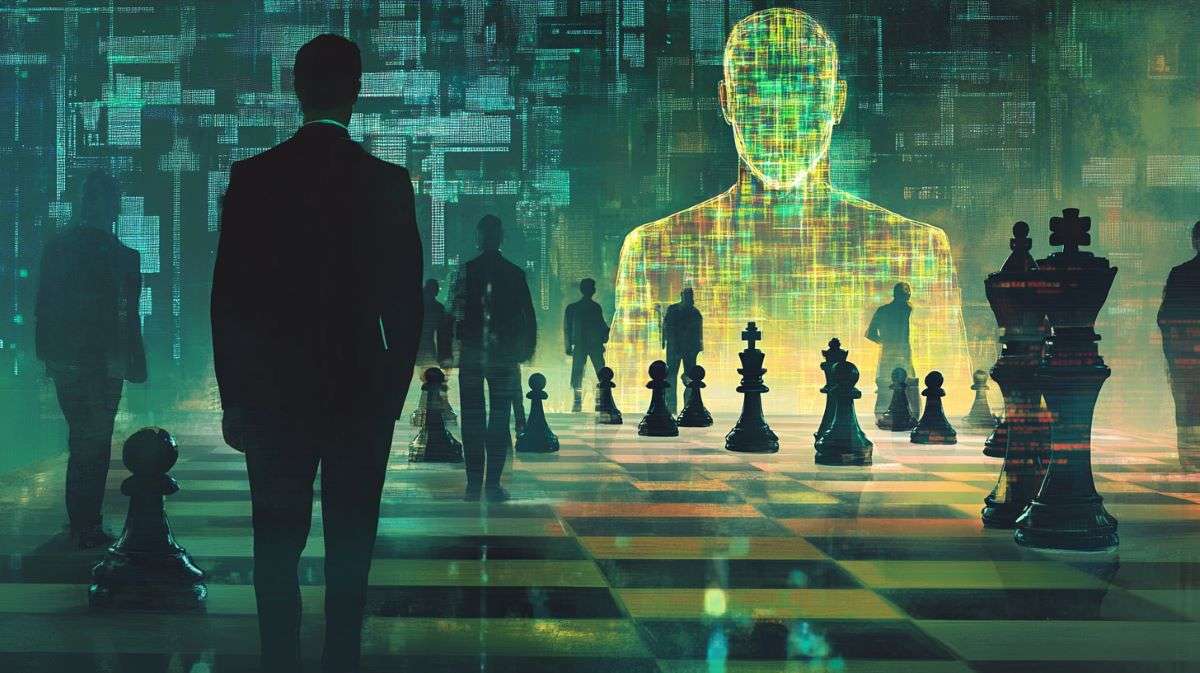 This exploration offers a timely warning for those unfamiliar with the rapid developments in AI technology, especially in how it intertwines with the market forces many rely on for securing their future. With Money GPT, this new book brilliantly breaks down the elements of artificial intelligence and its implications for banking and market systems, emphasizing the critical role of human judgment. Unlike machines, humans have instinct and common sense. These qualities are crucial as AI becomes more prevalent. By understanding these dynamics, readers are better equipped to navigate potential challenges and opportunities. This idea is explored very well by the Rich Dad YouTube Channel below:
Key Takeaways
- AI affects the banking and financial markets deeply.
- Human judgment and common sense are vital in AI-driven systems.
- Navigating future challenges requires understanding AI’s power.
Stories from the Past
Disobedience in Military Orders: U.S. and Soviet Standoff
There were tense moments during the Cold War when two military officers played a crucial role in avoiding nuclear disaster. Each officer, one from the Soviet Union and another from the United States, held the power to escalate tensions into a nuclear confrontation. These leaders made the brave decision to disregard orders, helping to prevent a global catastrophe that could have changed history. In a world teetering on the brink of nuclear war, these officers demonstrated extraordinary courage. They stood against immense pressure, choosing stability and peace over chaos. Their actions remind us of the importance of human judgment even in the most difficult situations. This moment is a powerful example of how sometimes, going against strict commands can lead to better outcomes for the world. It’s worth pondering: What if they had followed orders? Would our world look the same today?
Robert Kiyosaki’s Insights
He highlights the rapid pace of change in the world, where it’s hard to distinguish between what’s recent and what’s outdated. He expresses his respect for James Rickards, the guest of the day. Rickards has released a new book, “Money GPT,” which is timely according to Kiyosaki, especially for those interested in the intersection of AI, the banking system, and financial markets. Kiyosaki appreciates Rickards’ book as both a warning and a detailed exploration of artificial intelligence. The host, known for his financial wisdom, finds the text powerful, requiring careful attention to absorb its messages. He shares his experience of delving into the Advanced Reader’s Copy, recommending it passionately to others. This segment of the show is not only a lesson in financial insight but also a journey through the revolutionary impact of AI on economic systems, as seen through the eyes of experts.
Introduction to James Rickards
James Rickards is an esteemed figure whose insights are highly valued. Known for connecting artificial intelligence with financial systems, Rickards explores the impact of AI on banking and financial markets. His book, centered on “Money GPT,” offers an in-depth look at these subjects. AI is revolutionizing these sectors, and Rickards’ expertise sheds light on the potential benefits and risks involved. Rickards, with extensive experience in AI development, warns of AI’s ability to perform exactly as designed, which might become problematic due to the unpredictable nature of human behavior. He contrasts this with human intuition, which cannot be replicated by machines. It’s this intersection of technology and innate human judgment that forms a crucial part of his narrative. His work is not just technical but also strategic, as he discusses how AI might change sectors like national security. Although some fear AI’s potential for harm, Rickards argues that its development can offer significant advancements if approached wisely. His writings encourage readers to consider these aspects carefully, highlighting the importance of understanding AI’s role in modern financial practices.
Overview of the Book
Understanding Money GPT
What exactly is Money GPT all about? This book, penned by the insightful James Rickards, dives deep into a specific kind of artificial intelligence called GPT, or Generative Pre-trained Transformers. Imagine a tool that can help with writing essays or even entire books—AI has advanced to doing just that. James explains how GPT is not just another tech buzzword but a turning point that connects with real-world systems he knows well, like finance and security. GPT isn’t just about impressive tech jargon; it’s about how this technology influences critical areas such as national security, banking, and markets. The focus is not to alarm but to educate. This book captures the essence of how AI is both a challenge and an opportunity. Are we ready to handle such a powerful tool?
Rewards and Cautions
Using GPT in financial systems can offer exciting opportunities. For instance, the technology holds the promise of improving efficiency and creating solutions for problems that once seemed unsolvable. Imagine the possibilities if AI could identify molecular patterns that humans miss—it’s a thrilling thought. Yet, with all its benefits, AI technology comes with serious warnings. James Rickards points out how this can be dangerous if not managed carefully. Humans have instincts and common sense—traits AI cannot mimic. So, what happens when machines that lack this understanding are used in decision-making roles? What risks do we face if an AI system follows its programming too perfectly, without human oversight? Finally, Rickards emphasizes that while AI can perform tasks as designed, the real challenge is foreseeing how it will interact with unpredictable human elements. This is a crucial warning: AI doesn’t malfunction out of the blue; it’s the developers’ oversight of human nature that might cause oversights. Are we prepared to address this gap?
Effects of AI
Financial Market and Banking System
AI is changing how financial institutions operate. It’s not just about faster transactions. AI tools can analyze data at an incredible speed, identifying risks and opportunities that humans might miss. This means banks can make better decisions, offering improved services to their customers. Are there challenges? Of course. AI lacks the human ability to use instinct or “common sense.” While it can identify patterns, it might not always consider the human emotions or social complexities involved. This gap can create hiccups in financial decision-making. AI might recommend options that make sense on paper but fail to account for the human element. An example is the “fallacy of composition.” Something that works well on a small scale might not be good on a larger scale. If AI decides on investments or financial strategies without considering this, there could be broader issues. The focus on efficiency, while essential, should balance with the realities of human behavior.
Concerns for National Defense
AI’s impact isn’t limited to the economy. In national defense, it plays a significant role, influencing strategies and decision-making processes. AI can process vast amounts of data to help predict threats or make strategic decisions. This can improve responses and enhance security. But there’s a catch. AI’s lack of human intuition means potential risks. A system might respond to a threat with cold precision, overlooking nuanced human factors or unintended consequences. The possibility that untested AI decisions could escalate situations is a concern. AI’s precision and logical processes could misinterpret or escalate conflicts. Therefore, it’s crucial to have constant human oversight. Real understanding of a situation is needed to guide AI appropriately, ensuring that technology supports rather than replaces human judgment in these critical areas.
Final Thoughts on Intelligent Systems
Misconceptions and the Truth
Artificial Intelligence (AI) is often surrounded by myths that can cloud our perception of its true capabilities. Many people worry that AI might someday control the world, but these fears are generally unfounded. Powerful as it is, AI systems are designed to execute tasks exactly as programmed. But why do we worry about AI malfunctioning when the real issue is its precise functioning? It’s because the interactions between AI and human nature are complex and unpredictable. Imagine a world where AI could cure diseases. It’s happening now as AI identifies connections that were invisible to human eyes. Yet, there’s no way to program a machine to understand human instinct or common sense. Instinct is something that has evolved over time and varies from person to person. AI can perform tasks and follow logical paths, but it cannot replicate the intuitive decisions that humans often make. Isn’t it fascinating how technology has advanced, yet it still can’t grasp this essential part of human decision-making? While AI can solve many problems, blending AI with human emotions and reactions remains a challenge. The technology might execute its tasks flawlessly, but discerning emotional subtleties or predicting human reactions isn’t its forte. This creates an intricate dance of technology and humanity, warranting caution and respect as we move forward.
The Human Factor
Engaging with AI
AI systems have made remarkable strides, but what do they really mean for us? While AI can process information at lightning speed, it sometimes lacks what we might call “common sense.” Human intuition is a critical piece that’s challenging to replicate in machines. This intuition often guides people through complex situations, where AI may only see what’s directly in front of it. What is being overlooked? Well, consider the human ability to factor in emotions and instinct. Even the smartest AI doesn’t quite grasp these nuances. Humans can sense when something doesn’t feel right, thanks to years of experience and learned behaviors. Yet, AI doesn’t quite make those connections the same way. Even with incredible programming and sophisticated algorithms, AI can face hurdles when interacting with human nature. For instance, while AI might identify patterns and predict actions, it can misinterpret the unpredictable ways humans behave when under stress or pressure. This difference can become crucial, especially in financial markets or risk assessments, where emotions often drive decisions more than pure data does. How do we bridge that gap between artificial intelligence and human intuition? The answer might not be simple, but understanding how AI sees the world differently brings us a step closer to finding balance. This balance can ensure that technologies complement rather than complicate our decision-making processes.
AI and Practical Judgment
Navigating the intersection of artificial intelligence and practical judgment is like juggling with one hand tied behind your back. It’s a tricky business, but one that deserves attention.
Logical Guesswork
AI can mimic many human reasoning processes, but when it comes to making intuitive leaps, it’s in unfamiliar territory. Logical guesswork, a concept that sounds like sci-fi, is actually rooted in philosophy. It involves forming the most likely explanation given a set of incomplete facts. This process might seem straightforward, but it’s tough to pin down with algorithms. It’s the unsung hero behind hunches and gut feelings that computers can’t yet replicate. How do you teach a machine to “just know” something? That’s the challenge we face. When AI is programmed to solve problems, it can miss the “gut instinct” that makes human decision-making unique. Human intuition often bypasses complex logical steps, relying on experience and practicality. The tech world has not yet deciphered how to encode this into silicon. Practical judgment remains an area where humans excel and machines lag. A balance of both could lead to more informed and resilient decision-making.
Visual Examples
Error of Generalization
Imagine a world where individual successes might not always scale up effectively on a larger level. That’s what this idea is about. While an action could be beneficial for a single person, it doesn’t guarantee the same result when everyone does it together. It seems reasonable for one person to stand up in a crowd to see better, but if everyone stands, nobody gains a better view. This concept often appears in finance and economics, revealing that actions suitable for a single entity may not benefit the whole system. Picture a booming stock as an appealing choice for one investor. They decide to purchase shares, and this choice seems wise on a personal level. But what if every investor rushes to buy this stock? This collective action impacts the market in ways that might not be favorable overall, leading to potential bubbles or volatility. This principle underscores how vital it is to discern between individual and collective outcomes, particularly in the arenas of finance and strategy.